


IBC Series Solar Panel

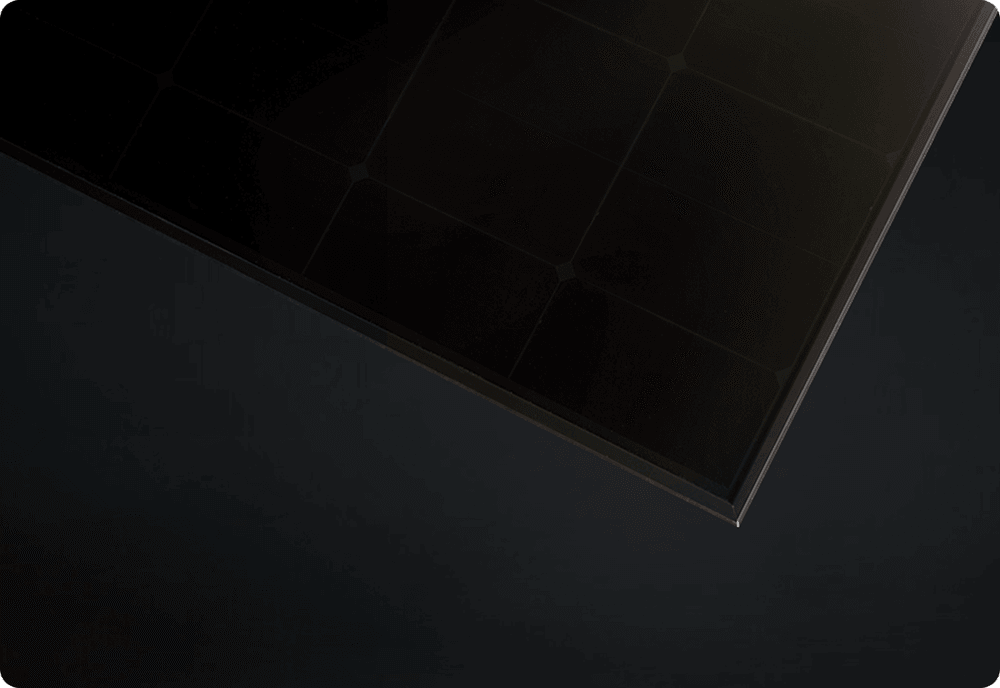
425W-450W IBC Full Black Solar Panel

Power: 425W 430W 435W 440W 445W 450W

Efficiency: 21.8-23.0%

Dimensions (L × W × H): 1722 x 1134 x 30 mm

Weight: 20.8kg

Packaging: 36 pieces/pallet, 936 pcs/40’HQ

Warranty: 25-year performance warranty

Datasheet: Download

425W-450W IBC Solar Panel with Black Frame

Power: 425W 430W 435W 440W 445W 450W

Efficiency: 21.8-23.0%

Dimensions (L × W × H): 1722 x 1134 x 30 mm

Weight: 20.8kg

Packaging: 36 pcs/pallet, 936 pcs/40’HQ

Warranty: 25-year product and performance warranty

Datasheet: Download

560W-600W IBC Solar Module with Silver Frame

Power: 560W 565W 570W 575W 580W 585W 590W 595W 600W

Efficiency: 21.7-23.2%

Dimensions (L × W × H): 2278 x 1134 x 30 mm

Weight: 27.2 kg

Packaging: 36 pcs/pallet, 720 pcs/40’HQ

Warranty: 25-year product and performance warranty

Datasheet: Download

Browse our European localized websites

Country Flags

Find content adapted to local language, regulations and market conditions in Germany, Italy and France.

IBC Solar Panel – Cutting-edge Solar Technology

Interdigitated Back Contact (IBC) solar cells are a type of high-efficiency solar cells where both the positive and negative contacts are located on the back of the cell. This represents the third generation of cell technology, more advanced than TOPCON and PERC technologies. Without busbars on the front, shading losses can be avoided, achieving a higher efficiency. This solar panel (solar module) technology holds significant potential.
IBC Solar Panels|No Front Contacts · Full Black Design · Lower Degradation
IBC solar panel with no front contacts – uniform full black appearance
IBC|Interdigitated Back Contact

No Front Contacts · Full Black Aesthetics · More Stable Performance

The positive and negative contacts are positioned entirely on the rear – with no visible busbars on the front. This reduces reflection and improves effective energy yield while maintaining a perfectly uniform all-black appearance. Ideal for residential and commercial rooftops across Europe that prioritise high-quality IBC solar panels with a refined visual finish.

Panel efficiency: approx. 22.0–23.5 %
Temperature coefficient: ≈ −0.29 %/°C
Low-light range: 300–1200 nm

Why Choose IBC?

IBC solar panels eliminate front contacts, reducing shading and reflection. With a wide-band low-light response from 300–1200 nm, they can deliver up to +2.01% additional yield in the morning and evening, while maintaining stable performance even in summer heat.

Full black appearance with no front contacts and reduced reflection
No Front Contacts · Reduced Reflection|Full black appearance with refined visual harmony
Wide-band low-light solar panel performance with improved yield
300–1200 nm Low-Light Range|Up to +2.01% additional yield in morning/evening; stable in heat
Stronger in Low-Light Conditions

Wide-band low-light response from 300–1200 nm; up to +2.01% additional yield in the morning and evening, ideal for cloudy conditions and low-angle sunlight.

Lower Temperature Coefficient

Reduced power loss on hot days (temperature coefficient approx. −0.29 %/°C); more stable summer output and up to 2% higher long-term energy yield compared to conventional solar panels.

Reduced Hotspot Risk

Rear-side contact design improves performance under partial shading and low-angle light, helping to reduce localised heating and hotspot formation.

Visual Aesthetics|All Black · No Front Grid

A roof should not only be efficient – it should also look good. Low reflection and a uniform all-black appearance integrate seamlessly with modern neighbourhoods and urban architecture.

All-black design example of IBC solar panels
Uniform All-Black Appearance

No visible metal elements – clean panel surfaces for a refined overall look in the streetscape.

Low Glare

Ideal for locations near transport routes or airports that require low reflection levels.

Better for Complex Roofs

Stable under partial shading or low-angle sunlight – a suitable choice for roofs with dormers, windows, or varying pitches.

Low Degradation|Stable Performance Over Decades

The material-optimised structure of IBC solar panels enables an exceptionally long service life. After 25 years, output typically remains at around 88.9%.

100%
Performance Retention After 25 Years
IBC solar panel performance curve – verified degradation data

Note: Chart based on professional test data; the relevant datasheet and certification reports shall prevail.

Materials and Design for Long-Term Reliability
  • The panel uses a highly stable encapsulation system and reinforced rear structure with strong UV and moisture resistance.
  • Stable film adhesion reduces water vapour ingress and minimises ageing between layers.
  • The rear-contact design of IBC solar panels reduces front-side stress and local heat build-up at solder joints.
  • Successfully passed high-temperature, damp heat, thermal shock and UV ageing tests – ensuring long-term reliable energy output.
  • Temperature coefficient approx. −0.29 %/°C – significantly lower performance loss in hot summer months.

Core Technologies Compared

Structural and performance differences between IBC, TOPCon and PERC technologies – and how IBC solar panels compare with conventional PERC and TOPCon panels.

Criteria IBC TOPCon PERC
Appearance No front busbars · All-black design Standard Standard
First-year degradation 1.5 % 1.5 % 2 %
Average annual degradation 0.4 % 0.4 % 0.45 %
Module efficiency (typical) 22.5–23.2 % 22.28 % 21.2 %
Temperature coefficient (%/°C) −0.29 −0.32 −0.35
Note: Values represent typical industry ranges and are for reference only. The relevant datasheet and project specifications shall prevail.

Find the Right IBC Solar Panel

For European rooftops: focusing on uniform appearance, low reflection, strong low-light performance and high temperature stability.

IBC 425–450W mono-glass all-black solar panel All-Black · No Front Contacts

IBC 425–450W (Black Frame)

Ideal for rooftops prioritising aesthetics and low reflection – the IBC solar panel offers a particularly uniform appearance.

Uniform All-Black Appearance Low Reflection Low-Light: 300–1200 nm
IBC 425–450W dual-glass black frame solar panel Black Frame · Universal

IBC · 425W–450W (Black Frame)

Extends the all-black concept – a versatile IBC solar panel with a clean appearance.

Low Temperature Coefficient Low Reflection Low-Light: 300–1200 nm
IBC 540–600W large-format silver frame solar panel Silver Frame · Large Format

IBC 540–600W (Large Format, Silver Frame)

Large-format, high-performance option designed to reduce string count and BOS costs.

Higher Power Class Lower BOS Costs Length 2278 mm

Application Scenarios|From Residential to Commercial Rooftops

Optimised for European rooftops: uniform all-black appearance, stable performance in low light and high temperatures, and better tolerance to partial shading – ideal for modern IBC solar panels.

IBC solar panels on residential rooftops

Residential Rooftops

All-black with low reflection – discreet and neighbourhood-friendly.

IBC solar panel for commercial rooftops

Commercial Rooftops

Brand image and building envelope appear visually integrated.

IBC solar panels with low reflection for sensitive areas

Reflection-Sensitive Areas

Suitable for locations near roads, railways or airports where glare is critical.

IBC solar panels for rooftop refurbishment

Roof Modernisation

Enhances existing roof surfaces with premium aesthetics and more effective sunlight hours.

Strict Quality Control|Full Process Assurance

From incoming material inspection to final delivery, full traceability and reliability testing ensure every solar panel delivers long-term stable performance.

1
Incoming Material Inspection

Full inspection of wafers, glass, backsheet materials (TPE+PVF) and encapsulation films (EPE), including UV, humidity and ageing sampling tests.

2
Process Control

Cell sorting, interconnection and lamination with closed temperature and pressure curves; critical stages supported by online EL/IV testing and fail-safe mechanisms.

3
End-of-Line Testing

Complete inspection covering appearance, EL, IV, insulation, high-voltage resistance and grounding continuity, including power binning and barcode tracking.

4
Reliability Testing

Damp heat, thermal cycling, UV ageing, mechanical load, PID and more — compliant with IEC 61215/61730 and project-specific requirements.

Solar panel reliability testing laboratory
Online EL/IV testing in production
Incoming material inspection for IBC solar panels

Company Strength & Manufacturing Capacity

Automated production and strict process control ensure consistently high quality in every IBC solar panel.

Our Company Advantages

Reliable supply chains, a Europe-wide network, technical expertise and certified quality – the foundation for dependable IBC solar panels and successful projects.

Europe-wide Sales Network

Over 18 years of experience in Europe – presence in key countries and regions, with fast and direct support.

High Stock Availability & Fast Delivery

Stable production and optimised logistics ensure on-time project execution.

Technical Expert Team

Support with solar panel selection, system design and grid connection – all from one source.

TÜV and CE Certifications

Compliant with IEC 61215/61730 – complete documentation for tenders and grid approval.

Over 18 Years of Industry Experience

Long-term development in the European market and a strong base of project partners.

Local Customer Support

Multilingual assistance and fast response times across Europe.

FAQ|Frequently Asked Questions

From installation requirements to compatibility – here we answer the most common questions about IBC solar panels and TOPCon technology.

What is the difference between IBC and TOPCon?
IBC solar panels use a rear-contact structure without visible busbars on the front, reducing series losses and creating a highly uniform appearance. TOPCon panels use tunnel oxide passivation and offer an attractive cost-performance balance with stable efficiencies in mass production.
Are IBC panels compatible with my existing inverter?
IBC solar panels are compatible with most standard string inverters. It is important that the module voltage and short-circuit current remain within the permitted range of your existing system.
Do IBC panels lose significant performance in very warm climates?
IBC panels feature a more favourable temperature coefficient, meaning performance losses at high ambient temperatures are lower. TOPCon panels also generally perform better in heat than traditional PERC panels.
Are IBC panels suitable for roofs with complex shading conditions?
Thanks to their rear-contact design, IBC solar panels are often less sensitive to partial shading. For TOPCon panels, modern cell and string layouts – such as 1/3-cut designs – further improve current distribution under shaded conditions.
Please leave your contact details
so that we can offer you personalized shopping suggestions.

Partnership program

Would you like to become a dealer or installer?

Scroll to Top