Bifacial Solar Panels | Higher Yield – but Only in the Right Application
Bifacial Solar Panels

Bifacial Solar Panels: not automatically better, but more efficient in the right application

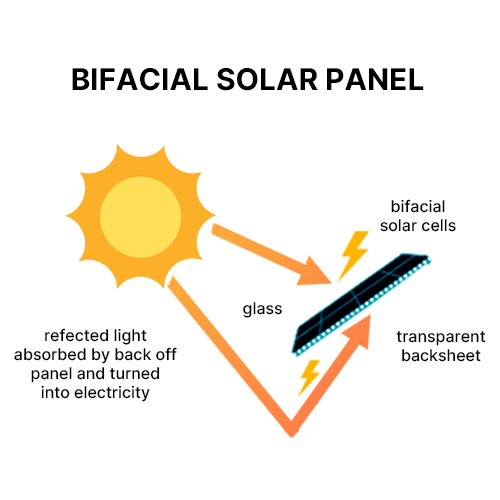
Bifacial Solar Panels generate power from both the front and the rear side. In projects with suitable reflectivity and sufficient installation clearance, the additional yield typically ranges from 5% to 25%. These bifacial Solar Panels are particularly attractive for ground-mounted solar plants, highly reflective environments, and commercial projects with sufficient rear-side irradiance.

Power generation from both sides Uses both direct irradiation and reflected ambient light
5%–25% typical additional yield across many projects
Ground-mounted / Carport / C&I particularly suitable where rear-side light exposure is strong
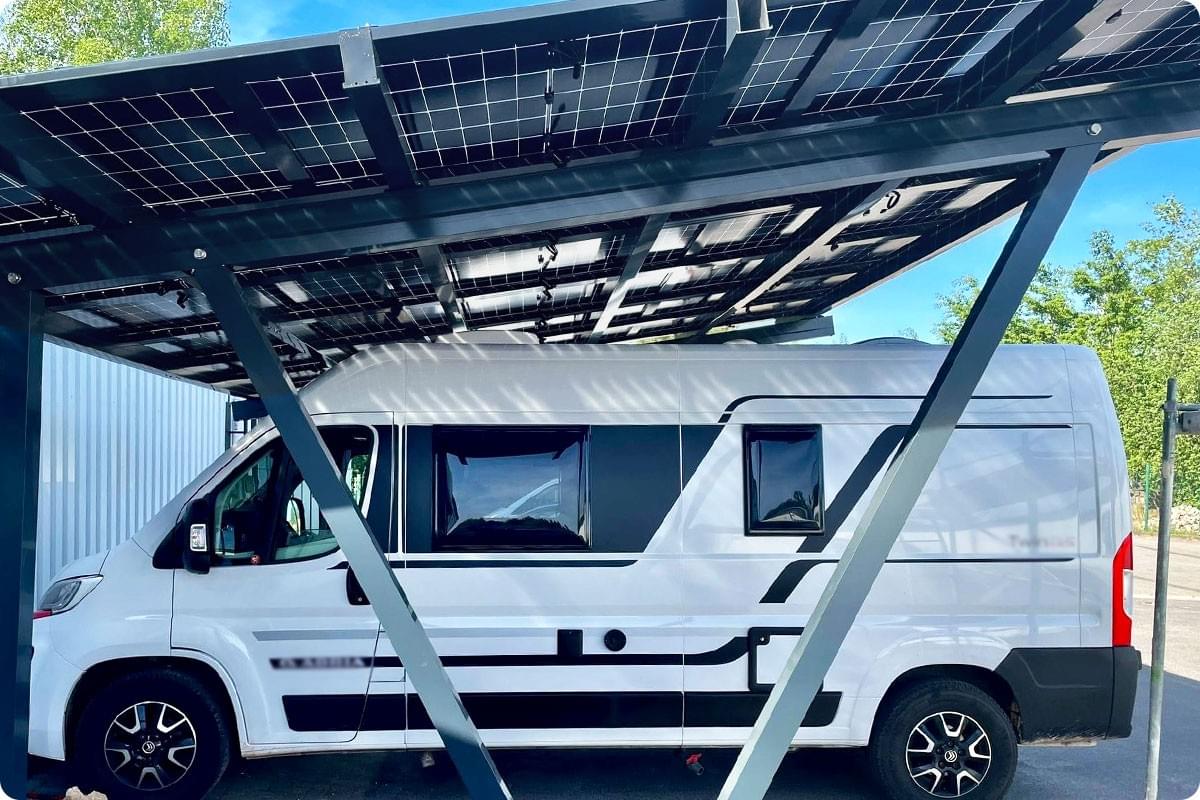
Bifacial Solar Panels used in a project with high surface reflectivity

Bifacial solar panel technology: how does it work?

Bifacial Solar Panels use a cell structure that can generate electricity from both the front and rear side. Unlike conventional monofacial solar panels, they capture not only direct irradiation on the front, but also reflected light on the rear side. This allows bifacial solar panels to deliver additional yield under suitable conditions.

Basic operating principle of bifacial Solar Panels

In a bifacial solar panel, both the front and rear side contribute to power generation. In addition to direct sunlight on the front, the rear side can also make use of light reflected from the ground, the roof surface or the surrounding environment.

That is why the value of such a solar panel depends not only on nominal power, but also on installation height, surface reflectivity and overall system layout.

What is the difference compared with monofacial solar panels?

  • monofacial solar panels: generate electricity primarily from the front side only
  • Bifacial Solar Panels: also use rear-side light, giving them greater yield potential where site conditions are suitable
The key factor is not only the solar panel itself — the real advantage always depends on the installation conditions.

When are bifacial Solar Panels worth considering?

Bifacial Solar Panels are not automatically the best choice for every project. What matters is whether enough reflected light reaches the rear side, whether installation height is sufficient, and whether the system layout actually allows useful rear-side irradiance.

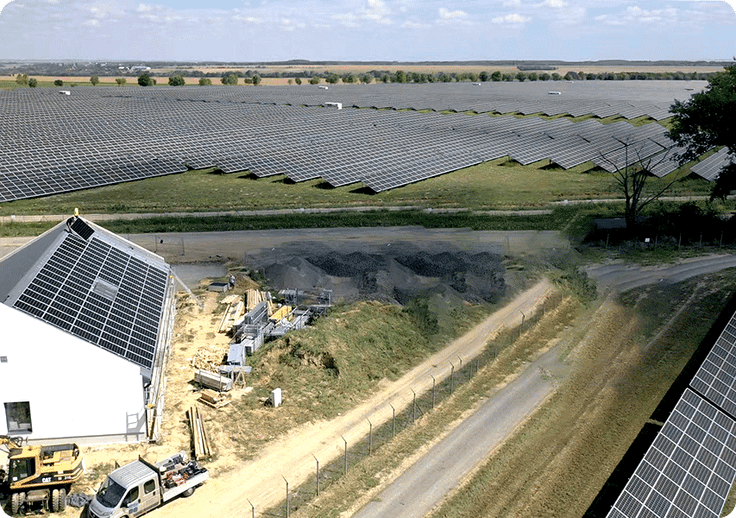
Bifacial Solar Panels in a ground-mounted solar project
Highly suitable

Ground-mounted solar projects

Ground-mounted projects usually offer more space, wider row spacing and greater installation height. This allows the rear side to benefit much more effectively from reflected light.

Why this can be commercially attractive: albedo, installation height and row spacing can all be optimised, making it easier for the bifacial gain to translate into real energy yield.
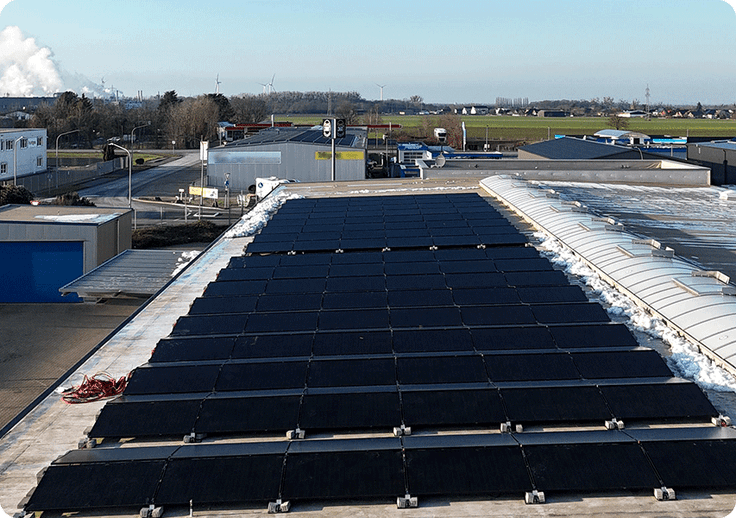
Bifacial Solar Panels in a highly reflective environment
Highly suitable

Highly reflective environments

Snow, light-coloured concrete, white gravel and other bright surfaces reflect more light onto the rear side of the solar panel. In these situations, a bifacial solar panel can make far better use of its strengths.

Why this can be commercially attractive: the higher the surface reflectivity, the closer rear-side output can move towards the technically achievable range.
Bifacial Solar Panels in carport and commercial projects
Highly suitable / conditionally suitable

Carports and commercial projects

Carports, canopies and certain commercial structures often provide more ground clearance and a more open rear side than standard roof-parallel systems. This frequently makes them better suited to bifacial Solar Panels.

Whether bifacial solar panels make economic sense: this depends on installation height, roof surface, shading and the full mounting structure. Not every commercial roof is automatically a strong use case.
Conditionally suitable

Standard commercial roofs: only under the right conditions

A commercial roof is not automatically a sensible application for bifacial solar panels. What matters is whether enough usable light actually reaches the rear side.

  • Is the system tilt-mounted rather than roof-parallel?
  • Does the roof surface have a meaningful level of reflectivity?
  • Are there many rooftop obstacles, shaded areas or a highly fragmented layout?
Usually not the first choice

Typical residential roofs: additional yield is often limited

On many residential roofs, the extra benefit of bifacial Solar Panels is relatively modest. This is usually not due to the solar panel itself, but to the site conditions.

  • Roof surfaces often reflect only a limited amount of light
  • Installation height is usually low, so rear-side exposure remains weak
  • The additional yield does not always offset the extra cost
Bifacial Solar Panels are not universally better — they perform best where reflectivity and rear-side irradiance can be used effectively.

How much additional yield do bifacial Solar Panels deliver?

The yield gain from bifacial Solar Panels is not a fixed value, but depends strongly on the installation scenario. In practice, the performance uplift is often around 5% to 25%. In individual projects with high reflectivity and an optimised structure, it can be even higher.

Scenario 01

Standard roof projects

5%–10%

Reflectivity and installation height are often limited. The bifacial effect is present, but usually remains an incremental benefit.

Scenario 02

Commercial projects

10%–20%

With tilt-mounted systems, light-coloured roof surfaces or a more favourable layout, rear-side output can be utilised much more effectively.

Scenario 03

Ground-mounted solar plants

15%–30%

More space, better reflectivity, and optimisable tilt angle and row spacing make ground-mounted solar particularly suitable for bifacial Solar Panels.

The most important factors influencing bifacial gain are the reflectivity of the surface, installation height, solar panel tilt angle and row spacing. Rear-side output does not automatically reach 100% of front-side output; depending on the technology and solar panel design, it usually falls within a range of around 70% to 95%.

Bifacial vs monofacial Solar Panels: which is better?

Bifacial Solar Panels are particularly attractive when higher energy yield and stronger long-term ROI are the priority. Monofacial Solar Panels, by contrast, are often better suited to budget-driven projects or systems with limited rear-side irradiance.

Comparison point Bifacial Solar Panels Monofacial Solar Panels
Energy yield usually higher, but strongly dependent on installation conditions solid standard yield, easier to forecast
Upfront investment generally higher generally lower
Typical applications ground-mounted, carports, selected commercial roofs standard roofs, low-reflectivity environments, cost-focused projects
Decision logic more focused on long-term yield and ROI more focused on investment control and standardisation
When bifacial Solar Panels are more likely to make sense
  • When the aim is to maximise energy yield per square metre
  • When good reflective conditions are available
  • When slightly higher CAPEX is acceptable in exchange for stronger long-term performance
  • When the focus is more on total system output than on solar panel price alone
When monofacial solar panels are more likely to be suitable
  • For typical residential roofs or weakly reflective environments
  • When the project is strongly budget-driven
  • For roof-parallel installations with limited rear-side irradiance
  • When simple, standardised and fast deployment matters more
There is no universally better option. Whether bifacial or monofacial is the better fit always depends on the combination of project goals, installation conditions and investment logic.

Technologies: PERC / TOPCon / HJT

The underlying cell technology affects efficiency, temperature behaviour and also the potential for rear-side performance. For project decisions, the key point is to understand how these technologies perform in real applications.

PERC

A proven technology with well-controlled costs. It remains relevant in many standard projects, although bifacial gain is usually more limited.

TOPCon

One of today’s mainstream technologies, offering a strong balance of efficiency, temperature performance and bifaciality. Widely suitable across many project types.

HJT

Often associated with higher bifaciality and very good temperature performance. Particularly attractive for highly reflective environments and projects focused on long-term yield.

Our bifacial solar panel solutions

We offer bifacial Solar Panels for a wide range of project types — from commercial rooftop systems and ground-mounted plants to carports and agri-PV applications. The key is not only which solar panel is technically available, but which solution genuinely fits the project.

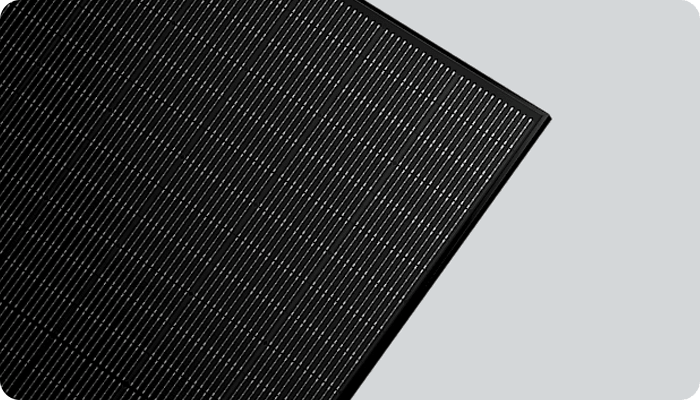
TOPCon glass-glass bifacial solar panel
Recommended solution 01

TOPCon glass-glass bifacial Solar Panels

Suitable for many commercial rooftops, carports and ground-mounted solar plants. This solution combines solid efficiency, good bifaciality and broad system compatibility.

  • Suitable for commercial roofs, carports and ground-mounted applications
  • Strong balance of efficiency, rear-side performance and system compatibility
  • Particularly attractive for customers focused on stable supply and mainstream power classes
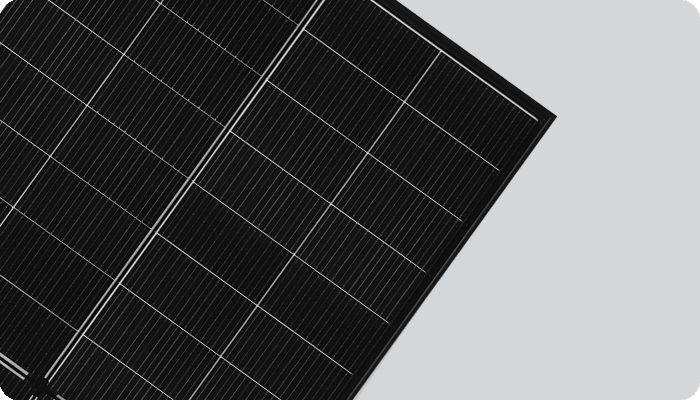
HJT bifacial solar panel with high rear-side performance
Recommended solution 02

HJT Solar Panels with high bifaciality

Particularly suitable for highly reflective environments, carports and specialised structural solutions. A strong option for projects where rear-side performance, long-term yield and temperature behaviour matter most.

  • Suitable for highly reflective surfaces, carports and specialised installation scenarios
  • Attractive for projects focused on long-term yield and temperature stability
  • Its strengths are most visible where the rear side can work effectively

Still unsure whether bifacial Solar Panels are right for your project?

Tell us your project type, roof or ground conditions, target capacity and installation method. We can help you assess quickly whether bifacial solar panels make sense or whether monofacial solar panels would be the more economical choice.

Why choose our bifacial solar panel solutions?

In bifacial projects, solar panel specifications are not the only factor that matters. In practice, supply stability, the right technology, project alignment and reliable availability are often just as important as individual performance figures.

01

Multiple technology options available

Different technologies can be matched more precisely to rooftops, ground-mounted systems, carports or agri-PV, rather than forcing every project into the same solar panel type.

02

European warehousing and delivery

Local stockholding and more flexible delivery options help reduce project lead times and lower uncertainty in the procurement process.

03

Suitable for rolling procurement

For customers with ongoing projects, repeat delivery needs and standardised power classes, availability and supply planning can be managed more effectively.

Frequently asked questions about bifacial Solar Panels (FAQ)

These are exactly the points that often matter most in practice when customers compare bifacial and monofacial solar panels.

Are bifacial Solar Panels suitable for rooftops?

Not always — on many standard roofs, the additional yield remains fairly limited.

This is usually because typical roof surfaces reflect little light and installation height is low. As a result, the rear side receives only a limited amount of usable light. With tilt-mounted systems, light-coloured roofs or more open structures, the situation can look very different.

How much additional yield do bifacial Solar Panels deliver?

Typically, the additional yield is around 5% to 25%.

The real figure depends on the ground surface, reflectivity, installation height, solar panel tilt angle and system layout. The same solar panel can deliver very different results in two different projects.

When are bifacial solar panels less suitable?

Where reflectivity is weak or there is little scope for rear-side irradiance, they are usually not the first choice.

Typical examples include standard residential roofs, roof-parallel systems or installation scenarios where the rear side receives very little light. In such cases, the additional yield is often not sufficient to justify the higher cost.

How can the performance of bifacial solar panels be improved?

Higher reflectivity, more ground clearance, and an optimised tilt angle and row spacing can make a noticeable difference.

In ground-mounted systems, light-coloured surfaces, white gravel or a carefully designed row layout can make rear-side performance much more usable.

Are bifacial Solar Panels more expensive?

In most cases, yes — the upfront investment is usually higher than for monofacial solar panels.

However, if the project offers good conditions for rear-side performance, the additional power generation can partly or fully offset the higher cost over the project lifetime and improve ROI.

Scroll to Top