Conductive adhesives (ECAs) have made significant development in the field of solar panels in recent years. Adhesives are less difficult to process than other types of touch. They can be cured without any additional processes during module lamination. However, not only adhesives, but the entire bonding process, is always striving for better performance.
What exactly are electrically conductive adhesives (ECA)?
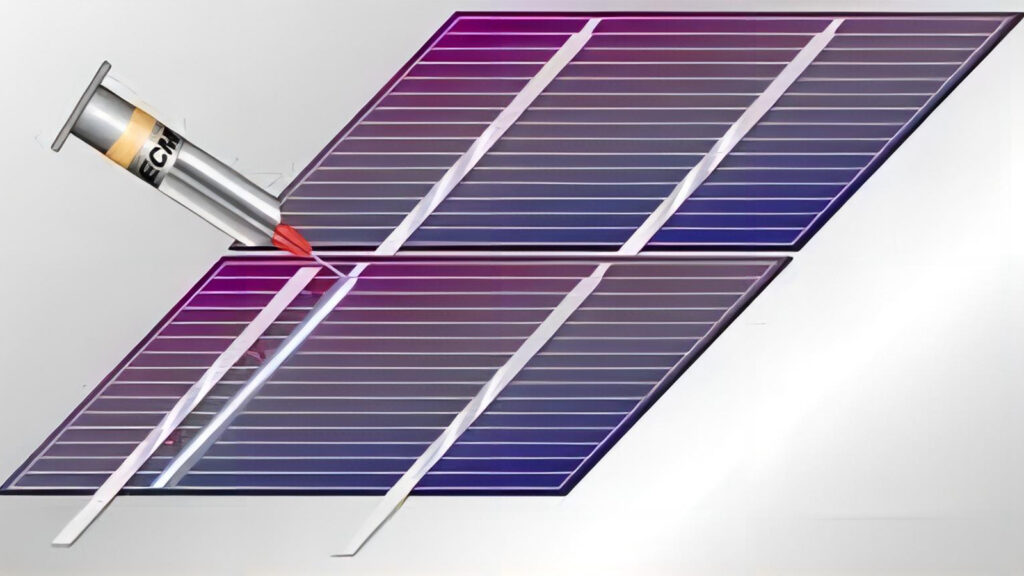
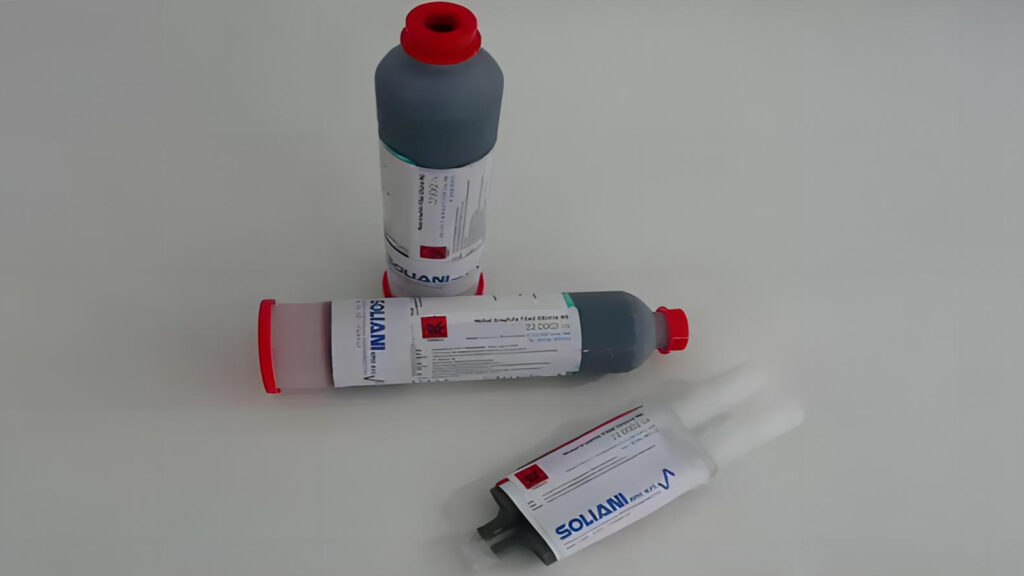
Electrically conductive adhesives (ECA) are often epoxy-based adhesives cured with heat or acrylate-based adhesives cured with UV light. Metallic fillers, such as silver, are used in these adhesives. To improve the conductivity of the glue, consider the filler material’s quality, shape, size, and distribution. The glue curing procedure is critical for conductivity.
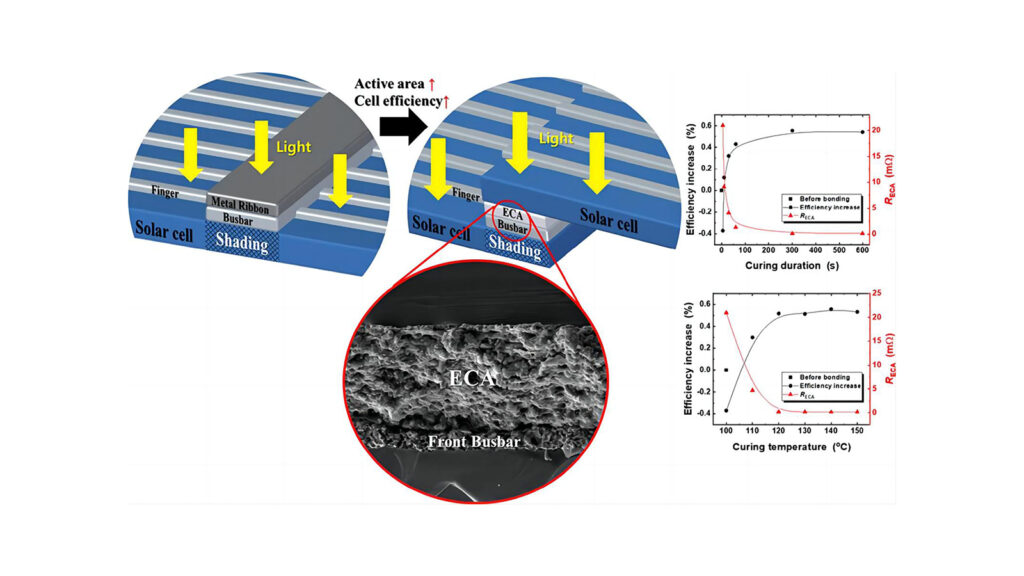
ECAs (electrically conductive adhesives) frequently surpass soldering. They are ideal for electrical contacts on temperature-sensitive surfaces because their curing temperatures are lower than soldering temperatures. Furthermore, because adhesives are more flexible than solder, they can endure vibration better. Another advantage of electrically conductive adhesives (ECA) over soldering is that they are lead- and solvent-free.
What are some of the benefits of electrically conductive adhesives (ECA)?
1. To assist in lowering assembly costs: solar panels, a type of renewable energy, are costly to assemble and operate. Costs should fall in the coming years as more solar panels are manufactured, and robotic glue assembly will make installation easier. As a result, electrically conductive adhesives (ECA) play an important part in the solar industry’s manufacturing and installation processes.
2. Simplify the manufacturing process and enable high-volume production: Adhesives eliminate the need for mechanical fasteners such as screws and U-bolts. They also make it easy to remove the stress points caused by these fasteners.
3.Enhanced performance: Because of qualities such as good thermal and electrical management and UV resistance, they also provide long-term protection, durability, and structural strength to solar panels. As a result, improved performance features and lower assembly costs are some of the major reasons boosting the solar panel adhesives market.
4. Environmental protection: by lowering the process temperature, lead in photovoltaic modules is eliminated, pollution is decreased, and the environmental impact is considerably reduced.
Why is there an increase in market demand for electrically conductive adhesives (ECA)?
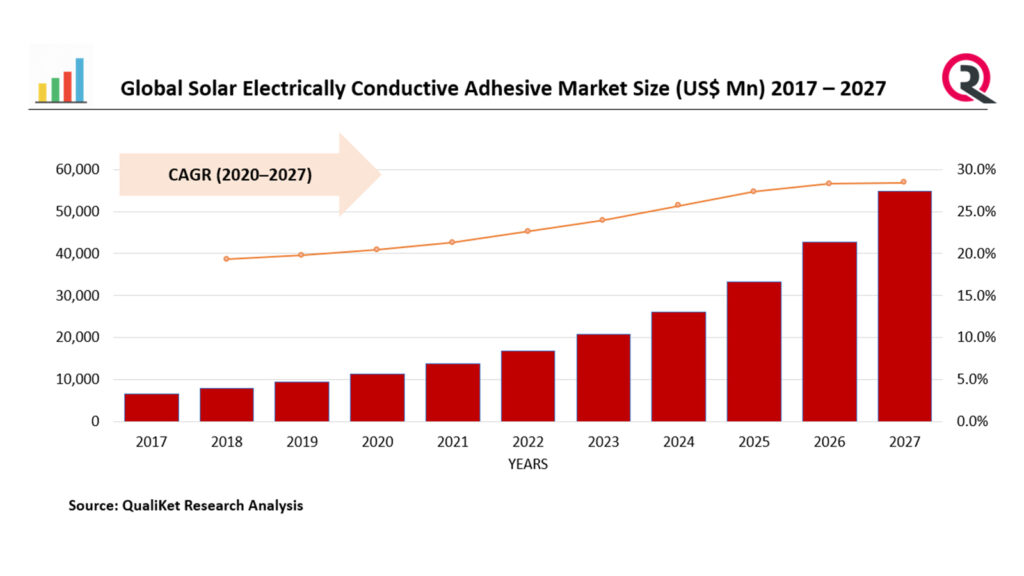
The global electrically conductive adhesives market was worth USD 2275.55 million in 2022 and is expected to increase at a compound annual growth rate (CAGR) of 5.61% between 2023 and 2030.ECAs are suited for a variety of applications, including high-reliability aerospace and defence, automotive, medical, and telecommunications systems, particularly in the solar industry.
1.Rapid development of the solar industry: According to figures supplied by the European solar Association, the 27 EU countries will add 41.4 GW of new photovoltaic installed capacity in 2022, representing a roughly 50% rise year on year. It is expected that new installed photovoltaic capacity will exceed 120 GW by 2026.
Ranks top in 2022 with a new installed capacity of 7.9 GW, followed by Spain with a new installed capacity of 7.5 GW. It is expected that Germany would add more than 10 GW of new installed capacity in 2023, with a total of 62.6 GW added between 2023 and 2026, with cumulative installations growing from 26.4 GW in 2022 to 77.7 GW.
2. Government initiatives promoting renewable energy: In December 2022, the German parliament adopted a new tax relief package for rooftop PV, including a VAT exemption for PV systems up to 30 kW.
According to the newly amended German Renewable Energy Act (EEG), all photovoltaic components of the original solar power plant, such as modules, inverters, and so on, can be utilised in Germany beginning in 2023. The amount of photovoltaics installed in Germany is expected to double after the new legislation is implemented.
3. Rising fossil energy prices and increasing environmental pollution: People are becoming more interested in renewable energy technologies. This has fueled the growth of the solar industry, increasing demand for photovoltaic electrically conductive adhesives (ECA) .
ECA is widely used/applied in Maysun’s solar panel
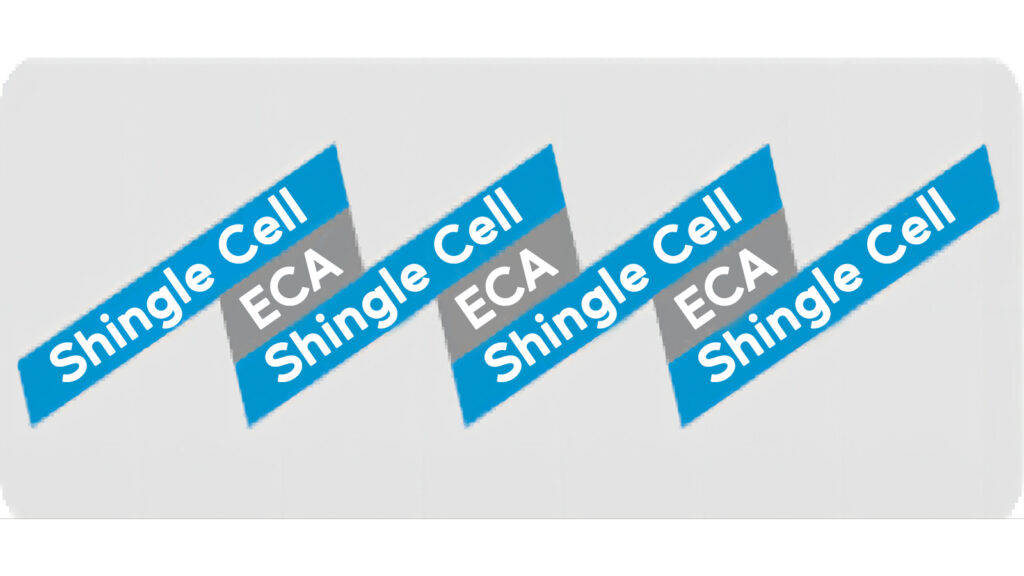
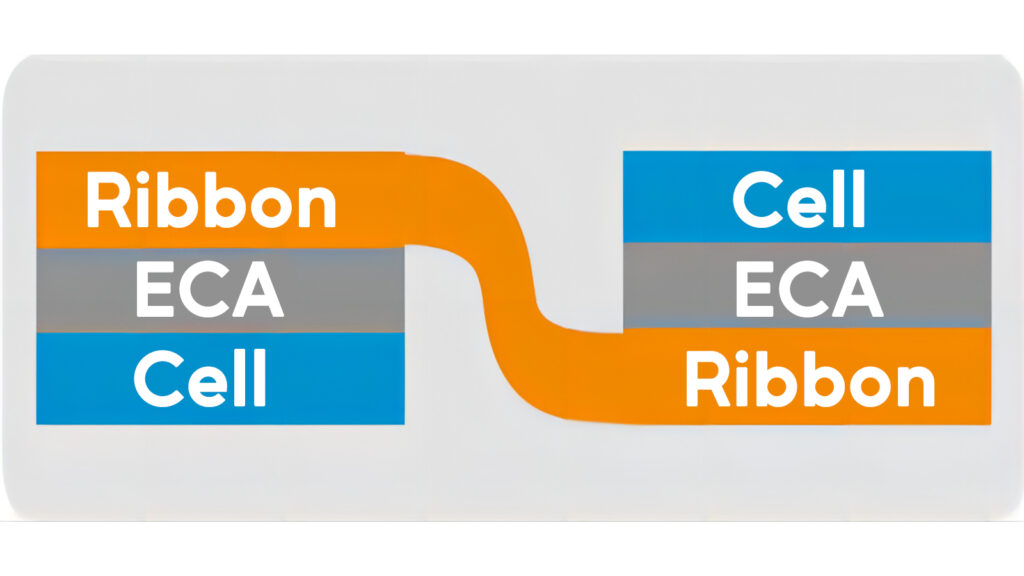
1. For shingled cell modules:New solar panels have been created using various cell formats and interconnection technologies. These formats and technologies differ from the typical square solar cell ribbon.
Electrically conductive adhesives (ECA) are used to put them together, which makes them more flexible and able to carry electricity. Increased component power and no need for ribbon.
2.ECA has improved reliability and solder-less technology for cell connections or bus bar replacement.
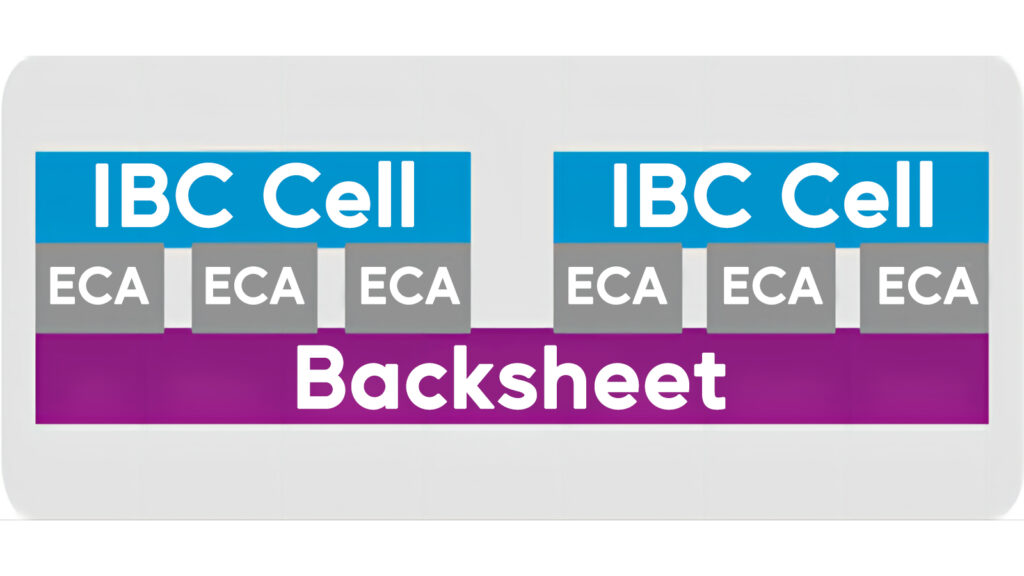
3.For rear contact solar cells: no shadows from the exterior, realise the efficient module concept.
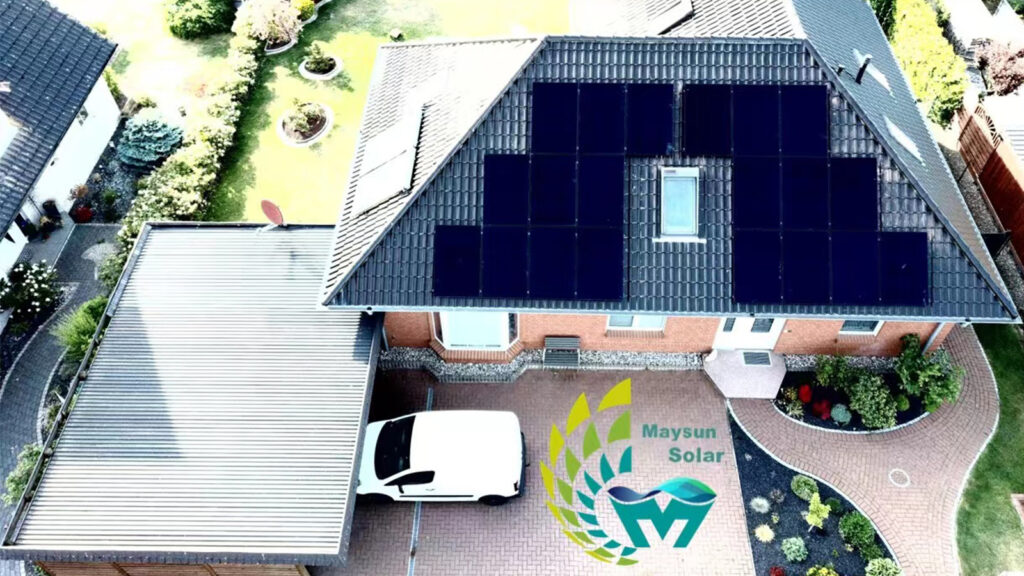
Maysun’s solar panels make extensive use of ECA. Maysun has created functional shingled solar panels using electrically conductive adhesives (ECA). And received a lot of positive feedback!
Since 2008, Maysun Solar has been producing high-quality solar panels. We have a large variety of products. Along with shingles, we provide all-black, double-glass, and other varieties of solar panels that employ technologies such as half-cut, MBB, and IBC. These solar panels offer exceptional performance and an attractive appearance, allowing them to blend in with any architecture. Maysun Solar has been able to establish offices and warehouses in a variety of nations, as well as long-term relationships with excellent installers. If you want the most recent module prices or have any other queries concerning PV, please contact us.

August European Solar Industry News
In August 2026, Europe’s solar market combined record PV generation with volatile power prices driven by heat, gas costs and low wind output. Policy support also expanded, including 800 W plug-in solar in Great Britain and greater EU flexibility for PV and storage investments, while module prices largely stabilized amid renewed oversupply.
Industrial Roofs with Limited Load Capacity: Lightweight or High-Efficiency Solar Panels?
On an existing industrial roof, “lighter is better” is not a reliable module-selection rule. The first question is how much additional load the roof can safely accept. Only then does it make sense to compare module weight, power density, mounting method and the

How to Verify Solar Panels Before Buying: Datasheets, Certifications, Warranties and Delivery Inspection
A datasheet, an IEC certificate and a 25- or 30-year warranty can make a solar module look fully validated on paper. For a reliable purchasing decision, however, those documents are only the starting point. The electrical ratings, mechanical design, certificates, connectors, warranty terms

How to Choose Solar Panels for Low-Load-Bearing Industrial Roofs: A Guide to Weight, Power Density and Mounting Systems
Choosing solar panels for a low-load-bearing industrial roof requires more than checking the weight of an individual module. A more reliable process starts by determining the roof’s remaining load-bearing capacity. The complete load from the modules, rails, fasteners and ballast must then be

Why Do Solar Panels Lose Power in Hot Weather? How Temperature Coefficient and Roof Ventilation Affect Summer Energy Yield
Summer brings stronger sunlight and longer daylight hours, so it is normally one of the most productive seasons for a solar system. However, some system owners notice that solar panel output does not continue to rise during the hottest part of the day.

How to Design a Low-Maintenance Rooftop Solar System
Introduction A low-maintenance rooftop solar system is not created after installation. It is designed before installation. Over a 20–30 year operating life, rising O&M costs are rarely caused by dirty glass alone. They are more often caused by design decisions made at the