How important is temperature coefficient when choosing a solar panel? This article answers that question directly and explains which projects should include it in early screening and which do not need to treat it as a top priority.
European EPCs are re-evaluating large-format solar panels. Panel size directly affects installation risk, system compatibility, and solar project ROI stability.
A practical guide to selecting solar panels for salt mist and high-humidity environments, outlining the limits of IEC 61701 testing and the structural advantages of double-glass designs.
An analysis of how 500W solar panels fit into today’s projects and where their selection boundaries lie, helping identify lower-risk module power ranges.
An analysis of why perovskite PV efficiency has advanced so rapidly in laboratory conditions, and the engineering and commercial barriers that prevent its deployment in real photovoltaic systems.
This article examines solar panel selection from a return perspective, exploring whether a “best solar panel” truly exists and analysing the applicability limits of different technologies under real operating conditions.
Why do some photovoltaic modules remain stable in the early years but develop quality or performance issues over time? This article explains, from a structural and long-term stress perspective, why these risks are often not apparent at the project’s early stage.
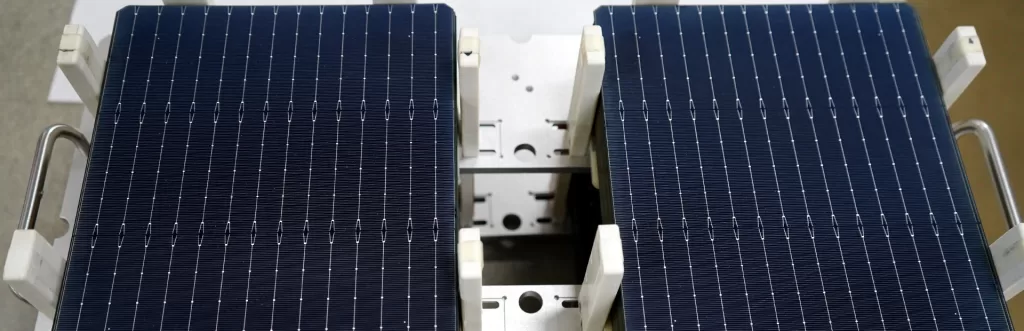
What components make up a solar panel? This article explains the six key structural components—from front glass and solar cells to encapsulation materials, backsheet, frame and junction box—and how module design affects long-term performance and selection decisions.
Noise from photovoltaic power plants is not determined by the modules themselves, but is mainly related to system design and equipment layout. With proper planning and engineering controls, noise levels can usually be kept within compliant limits.