Table of Contents
Intro
The adoption of solar power systems is on the rise, especially among urban apartment residents seeking eco-friendly and cost-effective energy solutions. As balcony solar power systems gain popularity, we embark on a journey to discover the remarkable advantages of integrating independent 1-in-1 microinverters into these systems.
What is 1-in-1 micro Inverter?
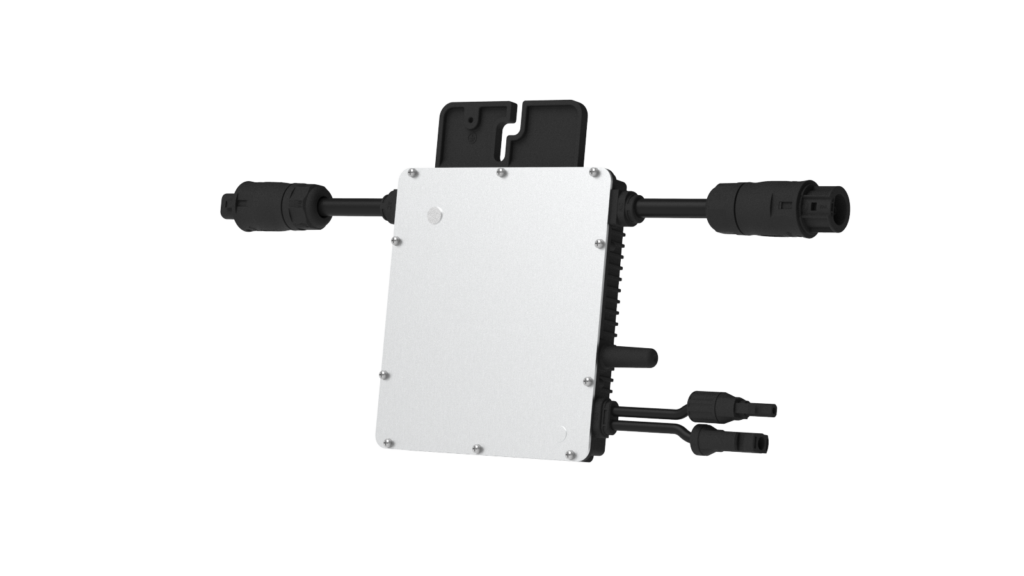
A One-in-One Microinverter (1-in-1 Microinverter) is a type of inverter used in solar power systems. The term “1-in-1” in its name indicates that each microinverter independently manages a single solar panel. This sets it apart from traditional central inverters (string inverters), which are typically responsible for the energy conversion of multiple solar panels.
The operation of a One-in-One Microinverter involves converting the direct current (DC) electricity generated by a solar panel into alternating current (AC) electricity. Each microinverter is dedicated to a specific solar panel, resulting in a decentralized and personalized approach to energy management. This means that even if one solar panel experiences reduced efficiency due to shading or other issues, the remaining panels can continue to operate efficiently. This design enhances the reliability and stability of the system, as each panel has its independent energy conversion unit.
Comparison with Multi-in-One Microinverters and String Inverters
Each One-in-One Microinverter is independently connected to and serves a single solar panel. They operate independently, so the performance of one panel does not affect the efficiency of other panels, providing maximum efficiency and flexibility. In contrast, Multi-in-One Microinverters are connected to multiple solar panels but in fewer quantities than string inverters. They offer better flexibility and efficiency compared to string inverters but are not as flexible as One-in-One Microinverters and are suitable for medium-sized solar systems. String inverters connect multiple solar panels in series to a single inverter, and the performance of the entire system is influenced by the lowest-performing solar panel. Shading or other issues can lead to a decrease in overall system efficiency. String inverters are typically cost-effective and suitable for large-scale installations with uniform sunlight.
In summary, One-in-One Microinverters offer the primary advantage of optimizing the performance of each individual solar panel to the maximum extent and mitigating the impact of external factors on the overall system performance. This makes them particularly suitable for small-scale applications or scenarios with space limitations, such as balcony solar systems.
What are the benefits of 1-in-1 Micro Inverters?
Streamlined Installation: In the installation of balcony solar power systems, where space constraints are often a critical factor, the compact design of 1-in-1 microinverters facilitates direct mounting adjacent to each solar panel. This not only saves space but also simplifies the entire installation process, a crucial advantage in confined spaces like balconies.
Enhanced Efficiency: Each 1-in-1 microinverter is dedicated to managing a single solar panel, optimizing its performance to the maximum. Even if one panel experiences reduced efficiency due to shading or dirt, the others can continue operating at their peak capacity. This individualized management ensures that the overall system performance remains unaffected by a decline in the output of a single panel.
Simple Maintenance: Employing two independent 1-in-1 microinverters ensures that a failure in one unit does not disrupt the normal operation of the other. This allows the system to operate partially and maintain a certain energy production level during maintenance. Moreover, the maintenance and replacement of 1-in-1 microinverters are typically straightforward.
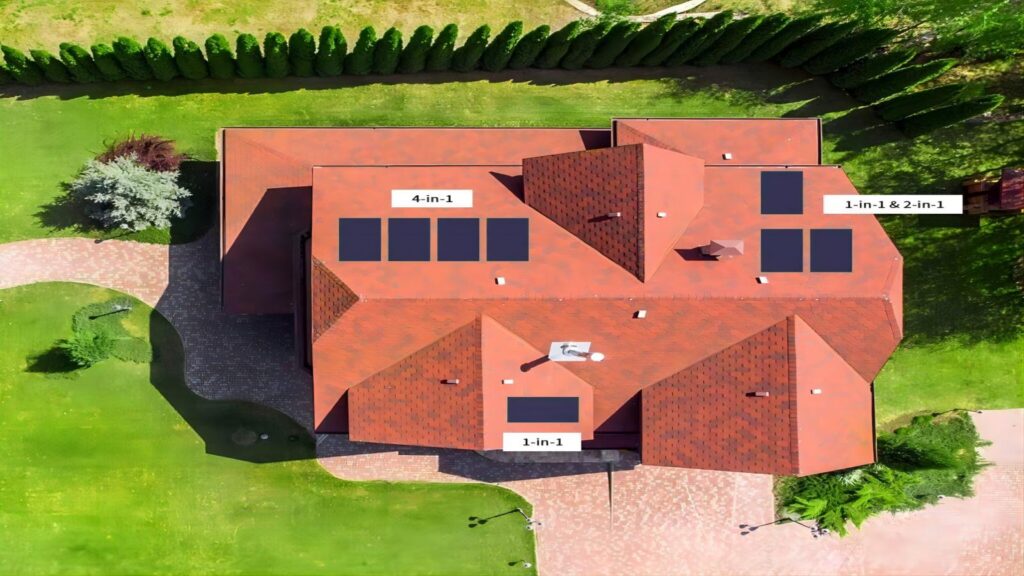
Adaptability to Complex Roof Structures: For buildings with intricate roof layouts, such as irregular shapes or numerous raised vents and chimneys, the use of 1-in-1 or 2-in-1 microinverters may be more suitable. Their flexible mounting positions enable easier adaptation to irregular roof layouts, reducing installation challenges and enhancing overall system efficiency.
Cost Savings: Although the initial acquisition cost of two 1-in-1 microinverters may be higher than that of a single 2-in-1 microinverter, the long-term cost-effectiveness of 1-in-1 microinverters is notable. This is due to their high efficiency and lower maintenance costs. This cost advantage is particularly significant in small-scale applications like balcony solar power systemss, where Maysun collaborates with Hoymiles to ensure effective cost control through a robust supply chain. Consequently, the cost of two 1-in-1 microinverters is approximately equivalent to that of a multi-in-1 microinverter.
Easy Scalability: Utilizing two independent 1-in-1 microinverters provides increased flexibility for future expansions. If the decision is made to add more solar panels, the straightforward and economical process of adding more 1-in-1 microinverters without replacing the existing system becomes feasible.
Application in Balcony Solar Power System
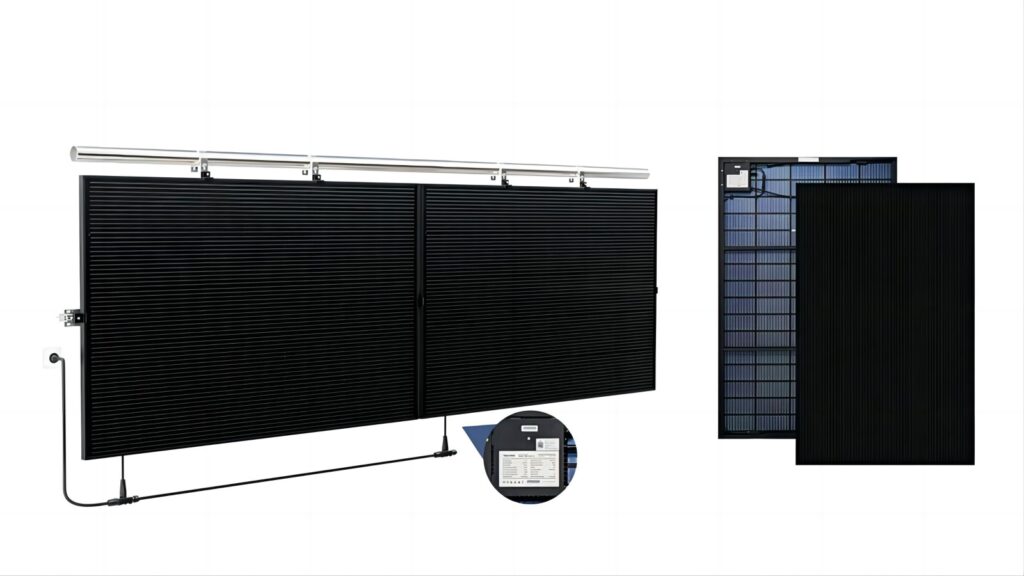
Maysun Solar has ingeniously developed and launched a cutting-edge balcony solar power system, outfitted with two highly efficient 1-in-1 microinverters. This innovative system harnesses the flexibility and scalability of the 1-in-1 microinverters, making it an exemplary solution for power generation in small-scale, spatially constrained residential balcony environments. It elegantly addresses the unique challenges of limited space while delivering reliable and sustainable energy solutions.
- 2 X Maysun 410W Venusun S / Venusun Solar Modules (Integrated with MOS bypass switch )
- 2 X Hoymiles HMS-400-1A Micro Inverters
- 1 Set of Solar Alternating Current (AC) Cable Accessories (5m cable, sealing, plug, T-type connectors)
- 2 Sets of Installation Accessories
- Data Transmission Unit (optional)
Why Do Solar Panels Lose Power in Hot Weather? How Temperature Coefficient and Roof Ventilation Affect Summer Energy Yield
Summer brings stronger sunlight and longer daylight hours, so it is normally one of the most productive seasons for a solar system. However, some system owners notice that solar panel output does not continue to rise during the hottest part of the day.

How to Design a Low-Maintenance Rooftop Solar System
Introduction A low-maintenance rooftop solar system is not created after installation. It is designed before installation. Over a 20–30 year operating life, rising O&M costs are rarely caused by dirty glass alone. They are more often caused by design decisions made at the

European Heatwaves and PV Self-Consumption: Why HJT Solar Modules Perform Better in Hot Summers
Across Europe, summer heatwaves are no longer just a climate or comfort issue. They are becoming an energy-use issue. During hot summer days, air conditioning, ventilation, refrigeration, office equipment and industrial cooling loads can rise exactly when rooftop solar modules are exposed to

Partial Shading on Solar Panels: Why a Small Shadow Can Cause Major Power Losses
Introduction: Shading Is Not Just a Surface Area Problem In a photovoltaic system, a small shadow can be amplified by the electrical structure of the module. In a typical module with three electrical sections, a shaded area covering only a small part of

From Half-Cell to Multi-Cut: Why PV Modules Are Paying More Attention to More Segmented Circuit Design?
Table of Contents In recent years, half-cell modules have become a mainstream design in the photovoltaic market. Compared with traditional full-cell modules, half-cell technology reduces the operating current of each cell unit, lowers internal resistive losses, and improves thermal management and partial shading

Does Summer Heat Reduce Solar Panel Efficiency? What Really Happens to PV Output
Table of Contents Many PV users notice an unusual phenomenon in summer: although sunlight is strongest at noon, the power curve shown in the monitoring app does not reach the expected peak. In contrast, on a sunny spring day, or just after a