As photovoltaic technology matures and becomes more cost-effective, the photovoltaic industry is entering a strategic period of rapid development. Below is a compilation of common questions and answers about photovoltaic power stations, aimed at increasing understanding of solar energy, promoting the healthy development of the photovoltaic industry, and facilitating the large-scale application of solar power generation.
What is Photovoltaics?
In 1887, Heinrich Hertz first discovered the photoelectric effect, where certain materials generate voltage when exposed to sunlight. This phenomenon is known as the “photovoltaic effect,” as the voltage is measured in volts.
What is Photovoltaic Power Generation?
These special materials are used to create photovoltaic modules. When exposed to sunlight, the modules cause the movement of electrons within the material, generating direct current (DC). This current is then guided and converted into alternating current (AC) by an inverter, which is supplied to users or the grid. This process of converting light energy into electrical energy is commonly referred to as “photovoltaic power generation.”
Why is Photovoltaic Power Considered a Green, Low-Carbon Energy?
As an efficient green energy source, photovoltaic power generation offers significant benefits in terms of energy, environmental protection, and economics. A 1-kilowatt photovoltaic system can generate approximately 1,200 kWh of electricity per year, reducing coal consumption by 400 kg and cutting CO2 emissions by 1 ton. According to research from the World Wide Fund for Nature (WWF), a 1-square-meter photovoltaic system has the same environmental benefits as planting 100 square meters of trees. Developing photovoltaic power and other renewable energy sources is one of the most effective ways to address environmental issues such as smog and acid rain.
Common Types of Photovoltaic Power Stations and Modules
Centralized Photovoltaic Power Stations
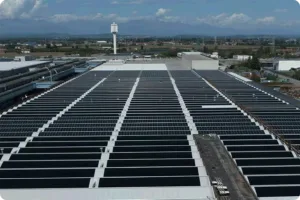
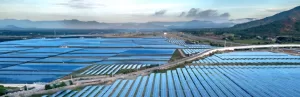
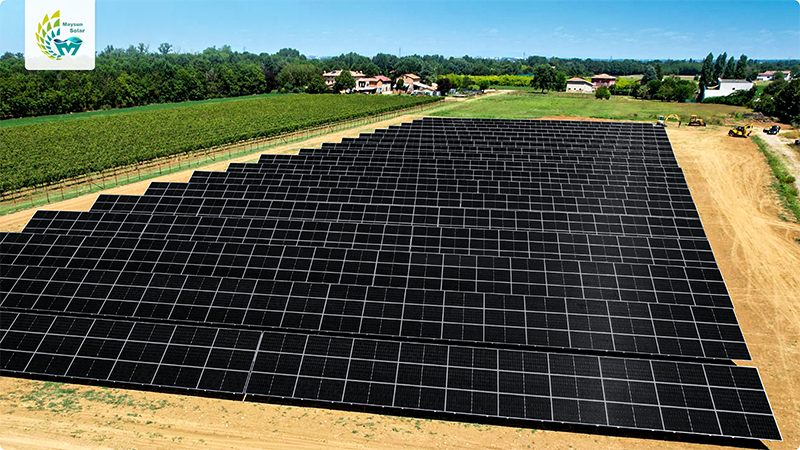
Centralized photovoltaic power stations require larger investments, longer construction periods, and more land. Photovoltaic modules are typically arranged in clusters, and the power station has a large capacity. These stations are generally located in expansive areas such as deserts or industrial lands.
Distributed Photovoltaic Power Stations
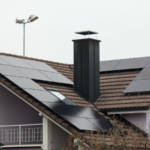
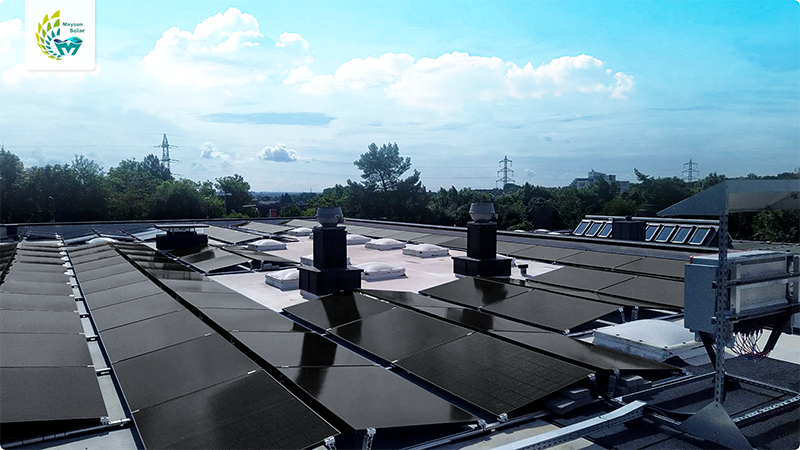
Distributed photovoltaic power stations require smaller investments, shorter construction periods, and less land. These stations are often located near users and are commonly installed on rooftops of urban buildings and other surfaces.
What is Distributed Photovoltaic Power Generation?
Distributed photovoltaic power generation refers to photovoltaic systems installed near user sites. These systems operate by enabling users to generate and consume electricity locally, with excess power being fed into the grid, while balancing adjustments are made in the distribution system. This generation method is a new and promising energy utilization model, promoting the principles of local power generation, grid connection, conversion, and usage. Distributed photovoltaics not only improve the power generation efficiency of photovoltaic plants of the same size but also effectively reduce energy losses during voltage boosting and long-distance transmission.
Currently, the most widely used form of distributed photovoltaic generation is rooftop photovoltaic projects on urban buildings. These projects are connected to the public grid and work alongside it to supply power to nearby users. Distributed photovoltaic power generation follows the principles of being site-specific, clean, efficient, decentralized, and locally utilized, making full use of local solar resources while reducing dependence on fossil fuels.
Common Photovoltaic Modules
The minimum effective generating unit in a photovoltaic system is the photovoltaic module, which comes in various types.
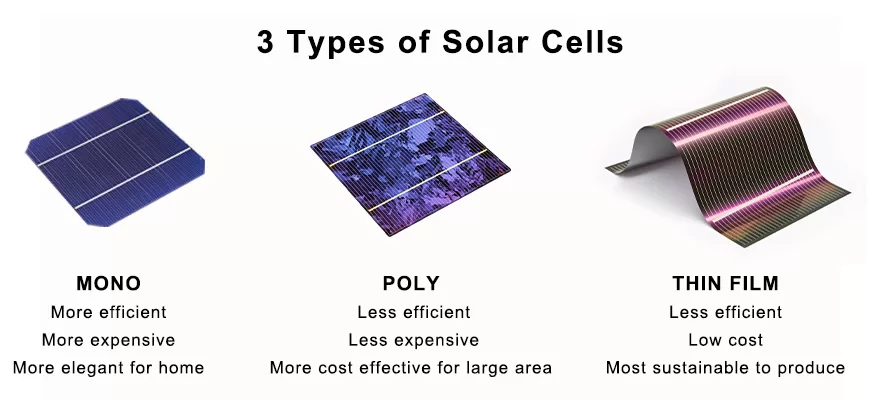
- Crystalline Silicon Modules
Commonly made from monocrystalline or polycrystalline silicon materials. Polycrystalline modules are square-shaped with surface patterns resembling frost, while monocrystalline modules have rounded corners and smooth surfaces. In addition to higher efficiency, monocrystalline modules also meet modern aesthetic preferences. - Amorphous Silicon Modules
These are typically made from materials such as copper indium gallium selenide (CIGS) or cadmium telluride (CdTe). As a newcomer in the industry, these modules are thinner, reaching 1/500th the thickness of crystalline silicon modules, though they are not yet mass-produced in the market.
What does “Self-consumption with surplus feed-in” mean?
“Self-consumption with surplus feed-in” is a model where the electricity generated by a distributed PV system is primarily used by the user. Any excess electricity is fed into the grid and compensated at a specified feed-in tariff.
This model allows users to reduce their energy bills by consuming solar energy directly, while also earning revenue from selling the surplus electricity to the grid.
Two meters are usually required: one to measure the energy generated by the PV system and another to measure the energy drawn from or fed into the grid.
What does the “Full feed-in model” mean?
The full feed-in model refers to a situation where all the electricity generated by the PV system is sold to the grid, and none is consumed by the user. The grid operator purchases the electricity at a regulated feed-in tariff, such as those defined under government renewable energy policies.
Only one meter is needed to measure the electricity generated by the PV system.
Can the PV system generate electricity during a power outage?
No. Grid-connected PV systems have anti-islanding protection. If there is a power outage, the system automatically stops generating electricity to ensure the safety of grid technicians. The system will resume operation only when the grid is stable again.
Can electricity from a PV system be stored for use at night?
If the electricity generated by a PV system cannot be consumed immediately, it is typically fed into the grid and distributed elsewhere.
To store excess electricity for later use, such as at night, a PCS (Power Conversion System) and storage batteries are required. The excess electricity is stored in the batteries and can be released when needed to power the load.
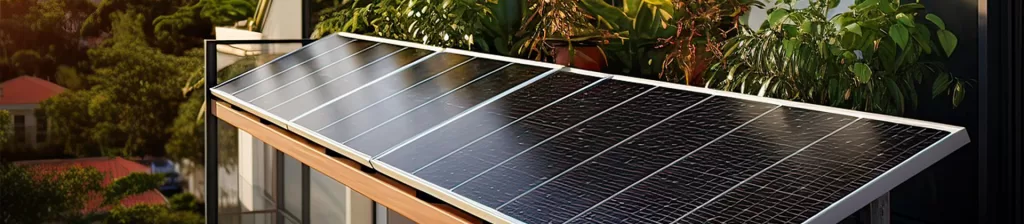
Since 2008, Maysun Solar has been dedicated to producing high-quality photovoltaic modules that contribute to combating climate change. Our advanced technology in IBC, HJT, TOPCon panels, and balcony solar stations ensures exceptional performance and reliability, capable of withstanding harsh weather conditions for long-term operation. We have established offices and warehouses in multiple countries and built lasting partnerships with top installers to provide comprehensive support. For the latest quotes or any inquiries related to photovoltaics, feel free to reach out to us—we’re here to help!

Why Do Solar Panels Lose Power in Hot Weather? How Temperature Coefficient and Roof Ventilation Affect Summer Energy Yield
Summer brings stronger sunlight and longer daylight hours, so it is normally one of the most productive seasons for a solar system. However, some system owners notice that solar panel output does not continue to rise during the hottest part of the day.

How to Design a Low-Maintenance Rooftop Solar System
Introduction A low-maintenance rooftop solar system is not created after installation. It is designed before installation. Over a 20–30 year operating life, rising O&M costs are rarely caused by dirty glass alone. They are more often caused by design decisions made at the

European Heatwaves and PV Self-Consumption: Why HJT Solar Modules Perform Better in Hot Summers
Across Europe, summer heatwaves are no longer just a climate or comfort issue. They are becoming an energy-use issue. During hot summer days, air conditioning, ventilation, refrigeration, office equipment and industrial cooling loads can rise exactly when rooftop solar modules are exposed to

Partial Shading on Solar Panels: Why a Small Shadow Can Cause Major Power Losses
Introduction: Shading Is Not Just a Surface Area Problem In a photovoltaic system, a small shadow can be amplified by the electrical structure of the module. In a typical module with three electrical sections, a shaded area covering only a small part of

From Half-Cell to Multi-Cut: Why PV Modules Are Paying More Attention to More Segmented Circuit Design?
Table of Contents In recent years, half-cell modules have become a mainstream design in the photovoltaic market. Compared with traditional full-cell modules, half-cell technology reduces the operating current of each cell unit, lowers internal resistive losses, and improves thermal management and partial shading

Does Summer Heat Reduce Solar Panel Efficiency? What Really Happens to PV Output
Table of Contents Many PV users notice an unusual phenomenon in summer: although sunlight is strongest at noon, the power curve shown in the monitoring app does not reach the expected peak. In contrast, on a sunny spring day, or just after a