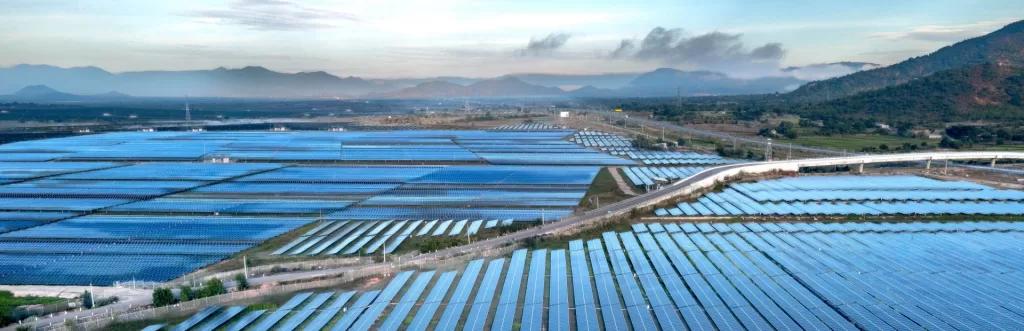
The European solar market entered August 2026 with record photovoltaic generation, persistent heatwaves and a power market that remained highly volatile. Solar output reached new August daily records in several major European markets, yet electricity prices stayed elevated as gas prices, cooling demand, low wind output and reduced conventional generation continued to shape wholesale markets.
At the same time, policy and business models are evolving. Great Britain has formally opened its residential market to 800 W plug-in solar, the European Commission has created additional fiscal flexibility for energy-security investments including photovoltaics and batteries, and European PPA and storage contracting remains active. On the equipment side, the sharp rise in module prices seen earlier in 2026 has largely paused, with oversupply again putting pressure on some segments.
Table of Contents
Solar generation sets new August records across Europe
Solar generation set new August daily records in five major European markets at the beginning of the month. According to AleaSoft data reported by pv magazine, Spain generated 259 GWh of solar electricity on August 1, France 172 GWh, Italy 161 GWh and Portugal 28 GWh. Germany followed on August 2 with 450 GWh, its own August daily record.
The records underline how rapidly solar is becoming a core part of Europe’s summer electricity supply. During the same period, however, weekly average power prices still exceeded €100/MWh in most major markets. Italy averaged €177.16/MWh and Great Britain €145.07/MWh in the first week of August. Later in the month, average prices again moved above €110/MWh across the main European markets as TTF gas futures reached their highest level since January 2023.
This combination — record solar output and still-high electricity prices — shows that more PV capacity does not automatically translate into uniformly low wholesale prices. Solar production is concentrated in daylight hours, while evening demand, low wind periods, gas prices, grid constraints and reduced thermal or nuclear output can still push market prices upward.
· Record solar generation is increasingly covering a larger share of daytime electricity demand.
· Higher cooling demand during heatwaves can raise electricity consumption at the same time solar output is strong.
· Price formation increasingly depends on the timing of generation, not only the annual volume of renewable electricity.
· Storage, demand response and flexible loads are becoming more valuable as solar penetration rises.
For project owners, the key question is therefore shifting from “How much electricity will the system generate?” to “When can that electricity be consumed, stored or sold most effectively?”
Great Britain legalizes 800 W plug-in solar
A major change for the English-speaking European market took effect on August 27: plug-in solar systems are now legal across Great Britain. The new rules allow consumers in England, Wales and Scotland to buy and self-install plug-in solar kits with a capacity of up to 800 W. Northern Ireland is not covered by the change.
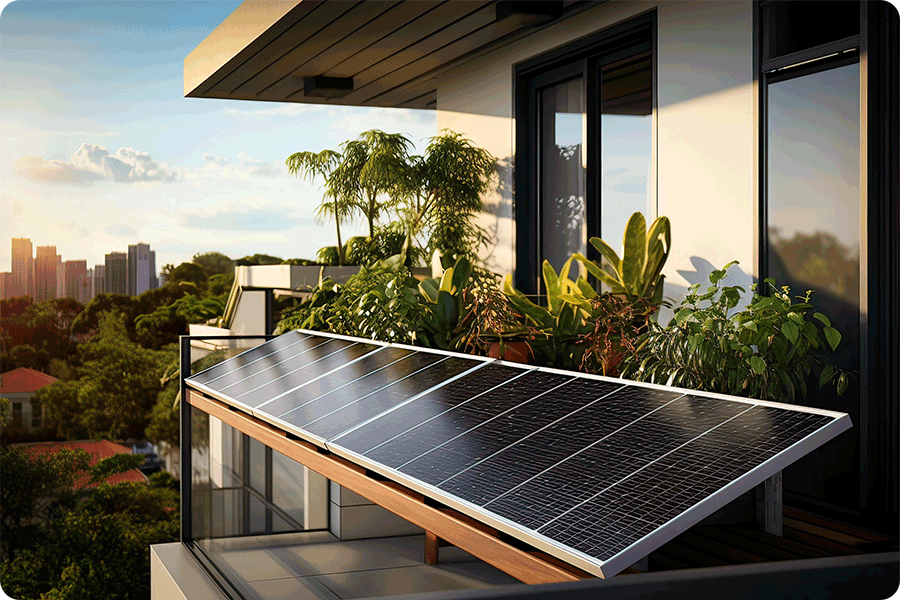
The UK government estimates that an 800 W system can provide up to 20% of an average home’s electricity use and may save households up to £110 per year, depending on consumption and system performance. The regulatory change also removes the previous barrier created by UK plug-and-socket and electricity-safety rules. Plug-in battery systems are not yet included and remain under review.
The development is important because it opens a lower-cost entry point for households that may not be able to install a conventional rooftop system, including some renters and occupants of properties with limited roof access. Major retailers have already indicated plans to sell compliant products.
· Maximum plug-in solar capacity: 800 W per household under the new framework.
· Self-installation is permitted for compliant products; a certified installer is not mandatory for the plug-in kit itself.
· Plug-in battery storage is currently excluded.
· Product safety, approved equipment and registration requirements remain important.
For suppliers and distributors, the new segment creates an opportunity, but it also raises the importance of clear product certification, electrical safety documentation and consumer guidance. Plug-in solar should be treated as a new distributed-PV category rather than a direct substitute for full rooftop systems.
EU opens fiscal flexibility for solar, batteries and energy-security investment
On August 21, the European Commission published guidance allowing EU member states to use part of the fiscal flexibility available under the national escape clause for energy-security measures during 2026–2028. Potentially eligible investments include renewable energy projects, batteries and other energy-storage technologies, heat pumps, EV charging infrastructure and building renovation.
The guidance does not create a single new EU-wide solar subsidy. Instead, it gives national governments additional room to finance qualifying energy-security measures within defined fiscal limits. The dedicated ceiling for energy-security measures is set at 0.3% of GDP per year and 0.6% of GDP cumulatively, within the overall national escape-clause ceiling.
Eligibility remains subject to European Commission assessment, and governments must identify the measures they want to support together with their estimated budgetary cost. Only fiscal measures decided after February 28, 2026 can qualify under the framework.
· Solar and battery projects are explicitly included among potentially eligible energy-security investments.
· Member states must design and request their own measures; there is no automatic EU-wide payment to PV projects.
· The framework may support national investment programs between 2026 and 2028.
· Budget flexibility is linked to additionality, effectiveness and public-finance sustainability.
The policy signal is clear: solar, storage and electrification are increasingly being treated not only as climate investments but also as energy-security infrastructure. For developers, the practical impact will depend on how individual member states translate the EU guidance into national programs.
Module prices stabilize while PPA and BESS contracting remains active
European module prices were broadly stable in August after the increases seen earlier in 2026. pvXchange reported that oversupply continues to put downward pressure on parts of the market even while many installers still have solid order books. The index methodology was also adjusted this month: the efficiency threshold separating “Mainstream” and “High Efficiency” modules increased from 23% to 23.5% as module efficiencies continue to improve.
Because of this reclassification, the apparent increase in the high-efficiency category should not be interpreted as a straightforward month-on-month market rise. pvXchange noted that without the methodology change, high-efficiency module prices would have remained at the previous month’s level, while lower-efficiency products would have shown a slight decline.
At the same time, Europe’s long-term electricity contracting market remained active. Pexapark’s Euro Composite PPA index rose 2.3% in July to €45/MWh. Great Britain recorded the strongest monthly increase at 5.8%, followed by Italy at 4.3%, while the Nordics, Spain and Portugal moved lower.
Twenty-four PPAs representing around 1.1 GW were publicly announced across Europe during July. Solar remained the largest individual technology category. Storage contracting also accelerated: nine BESS agreements represented about 865 MW and 3.1 GWh, using structures such as tolling agreements, revenue swaps and merchant revenue-sharing.
· Module price inflation has paused, but prices are not returning uniformly to the lows seen in 2024–2025.
· Higher module efficiency is changing how market price categories are defined.
· PPA pricing is diverging by country as forward power prices and renewable penetration differ.
· BESS contracts are becoming more varied as developers seek predictable revenues while retaining market upside.
For procurement and project planning, hardware price alone is becoming a smaller part of the decision. Capture prices, PPA structure, storage strategy, grid connection and the timing of procurement can have as much influence on project economics as a small change in module €/Wp.
Maysun Solar supplies the European market with solar modules based on IBC, TOPCon and HJT technologies for residential, commercial and industrial applications. As European markets become more differentiated, module selection should consider not only rated power and purchase price, but also power density, dimensions, temperature behaviour, mechanical requirements, electrical compatibility and the operating model of the project.
FAQ
What are the main trends in the European solar market in August 2026?
Solar output reached new August records in several major markets, while power prices remained volatile because of gas prices, cooling demand and changing renewable output. Policy is also moving toward easier distributed solar access, more support for energy-security investment and stronger integration of batteries and flexible electricity use.
Why can electricity prices remain high when solar generation is breaking records?
Solar generation is concentrated during daylight hours. Wholesale prices can still rise when wind output is low, gas prices increase, thermal or nuclear plants are constrained, or evening demand remains high after solar production falls. This is why storage and flexible consumption become more valuable as PV penetration increases.
What changes with Great Britain’s new plug-in solar rules?
From August 27, compliant plug-in solar kits up to 800 W can be legally bought and self-installed in England, Wales and Scotland. The change lowers the entry barrier for small-scale self-generation, although plug-in batteries are not yet included and consumers must still follow product-safety and registration guidance.
Are European solar module prices falling again?
August data suggests prices are broadly stable rather than entering a new sharp decline. Oversupply is putting pressure on some product segments, but the pvXchange index also changed its efficiency categories this month. Buyers should therefore compare actual product specifications and available quotations instead of relying only on headline index movements.
Recent Posts
- How to Size a Commercial Rooftop Solar System: A Practical Guide for EPCs
- 5400 Pa Snow Load: How to Choose PV Modules with 30 mm or 35 mm Frames
- Carbon Footprint and LCA in European C&I Solar: Why EPCs Should Check Before Module Procurement
- HEMS and Dynamic Electricity Pricing: From Solar Generation to Smart Energy Management
- Maysun Solar’s First 3.5 MW Solar EPC Project in Italy Enters Its Final Stage