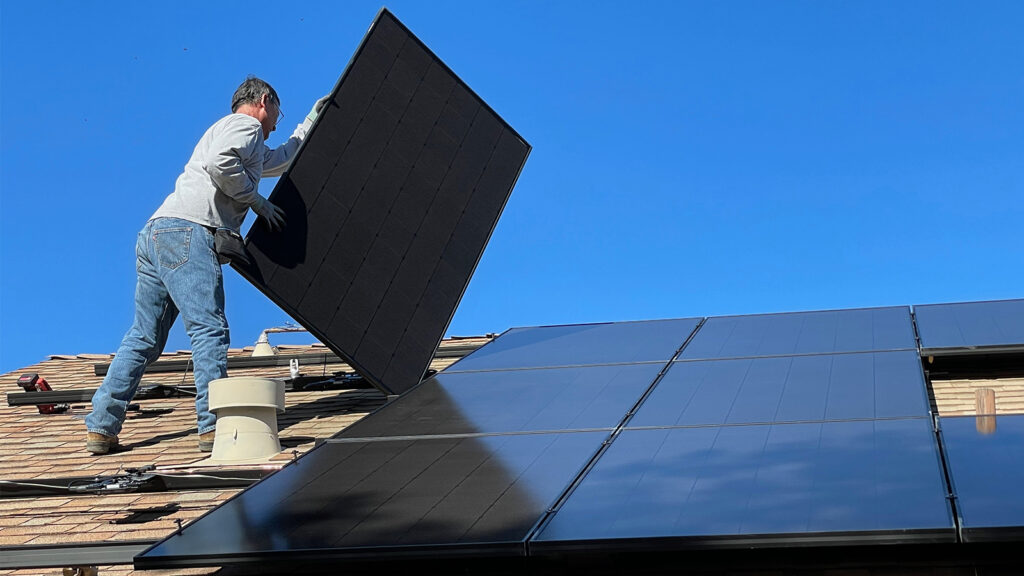
2025 Complete Guide to Glass-Glass Solar Panels: The Top Choice for Challenging Environments

double glass solar panels

Table of Contents

double Glass solar panel

What Are Glass-Glass PV Modules?

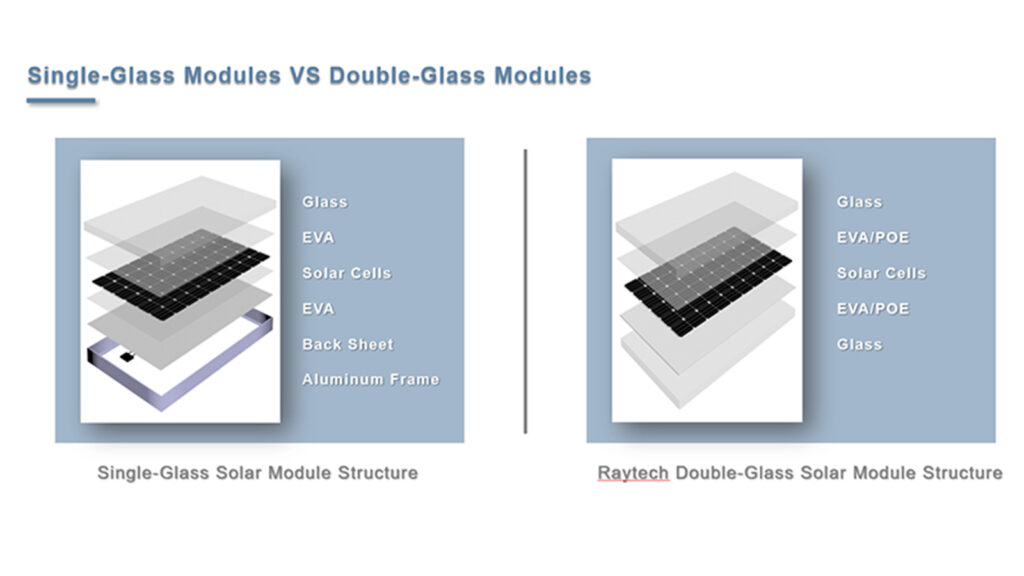
Glass-glass PV modules, also known as double glass solar panels, are photovoltaic modules encapsulated with tempered glass on both the front and back sides. Compared to traditional glass-backsheet modules, they offer greater durability and environmental resistance. The dual-glass structure provides enhanced protection for solar cells against moisture, corrosion, and mechanical stress, while also significantly improving the module’s fire resistance.

As photovoltaic technology advances, glass-glass PV modules have been widely adopted in commercial rooftops, industrial facilities, floating solar systems, and agrivoltaic applications. By combining a robust structure with high energy yield, these modules deliver lower power degradation, longer service life, and support bifacial power generation—resulting in greater long-term returns for users.

technical structure of a double glass solar panel?

What Is the Technical Structure of Glass-Glass PV Modules?

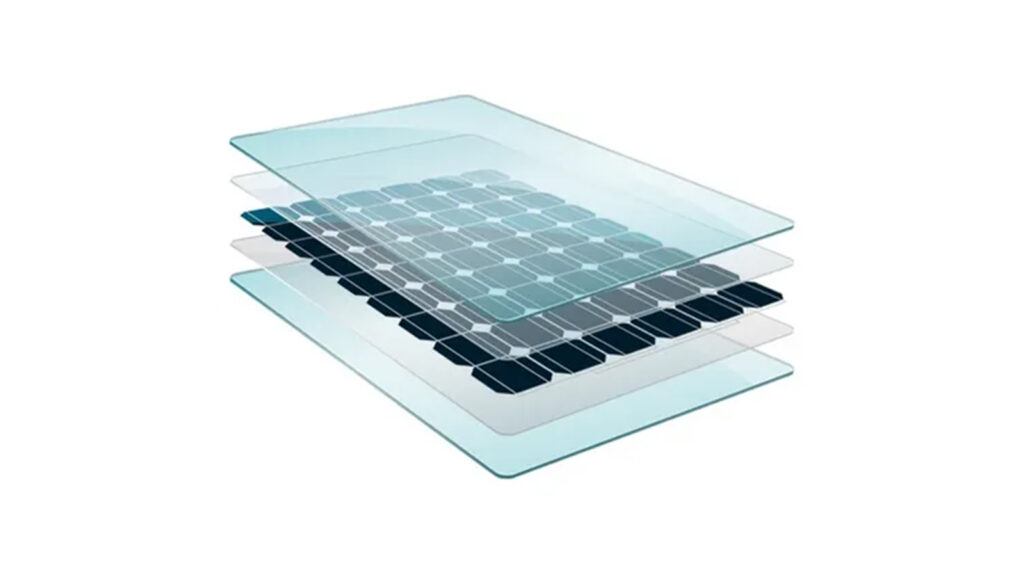
The technical structure of glass-glass PV modules consists of several layered components arranged in sequence:

  • Front Glass: Made of high-transmittance tempered glass, offering excellent mechanical strength, fire resistance, and weatherability. It serves as the primary protective layer.

  • Encapsulant Material: Uses high-performance POE or EPE instead of conventional EVA. POE and EPE provide superior moisture resistance and lower water vapor permeability, effectively preventing light-induced degradation (LID) and potential-induced degradation (PID), enhancing the module’s long-term stability.

  • Solar Cells: Incorporates high-efficiency N-type TOPCon, HJT, or IBC cells with bifacial capability. The front side absorbs direct sunlight, while the rear side captures reflected light, boosting overall energy output.

  • Encapsulant Material: A second layer of POE or EPE, identical to the first, protects the solar cells from humidity, UV exposure, and corrosive substances throughout long-term operation.

  • Back Glass: Identical to the front glass, it provides equivalent mechanical protection, fire resistance, and durability while supporting bifacial generation. It is typically made of tempered glass, completing the full encapsulation.

The full structure of a glass-glass module forms a laminated sandwich of “glass – POE/EPE – solar cells – POE/EPE – glass.” Compared to traditional glass-backsheet modules, the dual-tempered-glass design offers superior protection for the cells and significantly improves resistance to moisture, high temperatures, UV radiation, mechanical stress, and long-term aging. This structure enhances durability and environmental resilience, extends service life, and ensures stable energy output throughout the module’s lifecycle.

How Do Glass-Glass PV Modules Work?

Glass-glass modules harness sunlight and convert it into usable electricity through the following process:

1. Sunlight Absorption: The front and rear tempered glass layers of a glass-glass module allow direct, diffuse, and ground-reflected light to pass through and reach the solar cells. The front side mainly absorbs direct sunlight, while the rear side captures reflected and scattered light from the environment—enabling bifacial power generation and improving total energy yield.

How Do Glass-Glass PV Modules Work

2. Photon-Driven Electron Excitation: When photons strike the solar cells, electrons in the semiconductor material absorb energy, become excited, and break free from their atomic bonds, creating free electrons.

3. Current Generation: These free electrons move directionally within the cell, generating direct current (DC) electricity. Metal conductive grid lines and busbars within the module collect and guide the flow of electrons, forming a stable electric current.

4. Power Output: The DC power generated by each cell is collected through interconnections within the module. Multiple cells are connected in series and parallel to achieve the desired voltage and current for external output.

5. DC to AC Conversion: The generated DC electricity is sent to an inverter, where it is converted into alternating current (AC) to power electrical equipment or feed into the public grid.

6. Power Distribution and Utilization: The resulting AC electricity can be used for self-consumption or, depending on local net metering policies or feed-in tariff systems, exported to the grid for financial compensation.

In summary, glass-glass PV modules efficiently convert sunlight into electricity via the photovoltaic effect. Thanks to their bifacial design, superior durability, and lower degradation rates, they maintain reliable, long-term energy output even under complex environmental conditions—making them a robust and sustainable solution for renewable energy systems.

How do the costs of Double Glass solar panels compare to those of glass-foil solar panels?

Cost Advantage and Return Analysis of Glass-Glass Modules

Compared to traditional glass-backsheet modules, glass-glass modules initially had a higher material cost due to the use of tempered glass on both sides. However, with the scaling of solar glass production and the widespread adoption of lightweight 1.6+1.6 mm dual-glass designs, the cost gap between glass-glass and conventional modules has significantly narrowed.

More importantly, glass-glass modules demonstrate superior economic performance over their entire lifecycle. Thanks to their excellent moisture resistance, corrosion protection, and aging durability, they achieve a lower annual degradation rate (around 0.4%) and support extended warranties of 30 to 35 years. This not only prolongs service life but also reduces the levelized cost of electricity (LCOE) over time.

In addition, glass-glass modules are better aligned with the latest European standards for carbon footprint certification and green building compliance, making projects more eligible for policy incentives and market premiums. Their long-term yield advantage is particularly evident in floating PV, agrivoltaics, and industrial rooftops exposed to high humidity or salt corrosion.

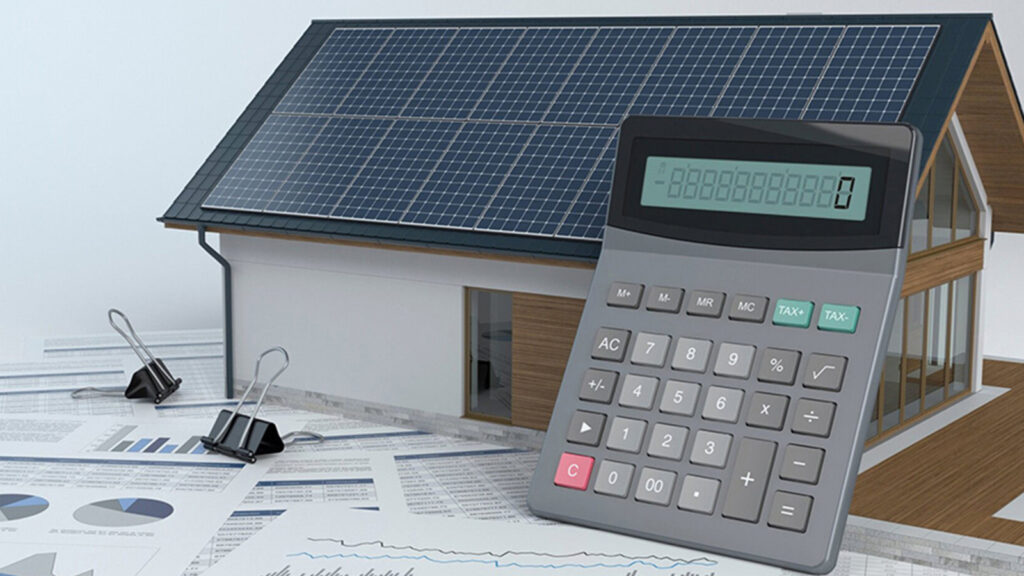
In summary, while the upfront investment for glass-glass modules may be slightly higher, their enhanced power output, extended service life, and reduced operation and maintenance risks result in significantly more competitive economic returns over the full project lifespan. As glass prices decline and manufacturing processes improve, the initial cost gap between glass-glass and conventional modules continues to diminish.

Table
Comparison Parameters Glass + Backsheet Module Glass-Glass Module
Initial Cost Slightly lower Slightly higher
Annual Degradation Rate 0.55% 0.4%
Warranty Duration 25 years 30–35 years
Fire Resistance Standard Higher (Class A)
Advantages in Carbon Footprint Certification Weak Strong
Levelized Cost of Energy (LCOE) Higher Lower
Advantages of Double Glass solar panels

Advantages of Glass-Glass PV Modules

Thanks to their outstanding structural design and material composition, glass-glass PV modules offer several core advantages that make them widely adopted in commercial, industrial, and utility-scale solar projects:

  1. Enhanced Durability and Safety
    With tempered glass on both sides, these modules deliver superior resistance to moisture, corrosion, UV radiation, and fire—meeting the EN 13501-1 Class A non-combustibility standard. Compared to backsheet modules, they distribute external mechanical stress more evenly, reducing the risk of microcracks and hidden fractures. They withstand strong winds, hail, and heavy snow loads, maintaining structural stability and fire safety in harsh environments with high humidity, salt spray, pollution, or extreme temperature variations.

  2. Higher Bifacial Power Generation
    Equipped with high-efficiency N-type TOPCon solar cells with up to 25% cell conversion efficiency, assembled glass-glass modules can achieve over 23% module efficiency under standard testing conditions. The bifacial design enables the front side to absorb direct sunlight while the rear side captures ground-reflected and ambient light. Compared to conventional monofacial PERC or TOPCon modules, bifacial glass-glass panels can generate an additional 10–20% energy gain under typical ground albedo (20–30%), and up to 30–35% gain in high-reflectivity environments such as snowy areas, white rooftops, water surfaces, or agrivoltaic installations.

  3. Lower Degradation, Longer Service Life
    Taking N-type TOPCon cells as an example, these modules undergo rigorous reliability testing including IEC 61215 thermal cycling (–40°C to +85°C, 200 cycles) and damp heat testing (85°C/85% RH, 1,000 hours), showing:

  • First-year power degradation ≤ 1.5% (vs. ~2.0% for PERC)

  • Annual degradation from second year ≤ 0.40%/year (vs. ~0.45% for PERC)

  • Standard module efficiency up to 22.28% (vs. ~21.20% for PERC)

  • Temperature coefficient of –0.32%/°C (vs. –0.35%/°C for PERC)

  1. Economic Returns and Sustainability Combined
    With declining solar glass costs and improved production processes, the initial price gap between glass-glass and conventional modules has narrowed considerably. Lower annual degradation, longer warranty periods, and bifacial energy gains give glass-glass modules a distinct advantage in LCOE. Additionally, their all-glass structure offers a recyclability rate exceeding 95%, aligning well with Europe’s carbon footprint and sustainability criteria.

  2. Broad Compatibility with Diverse Applications
    Thanks to their superior moisture resistance, corrosion protection, fire safety, and bifacial capability, glass-glass modules are ideal for coastal areas, polluted industrial zones, humid tropical climates, floating PV systems, and agrivoltaic installations. Whether deployed on industrial rooftops, commercial buildings, or integrated into BIPV projects, they provide a reliable, long-term energy solution for demanding scenarios.

Solar Module

Solar Module

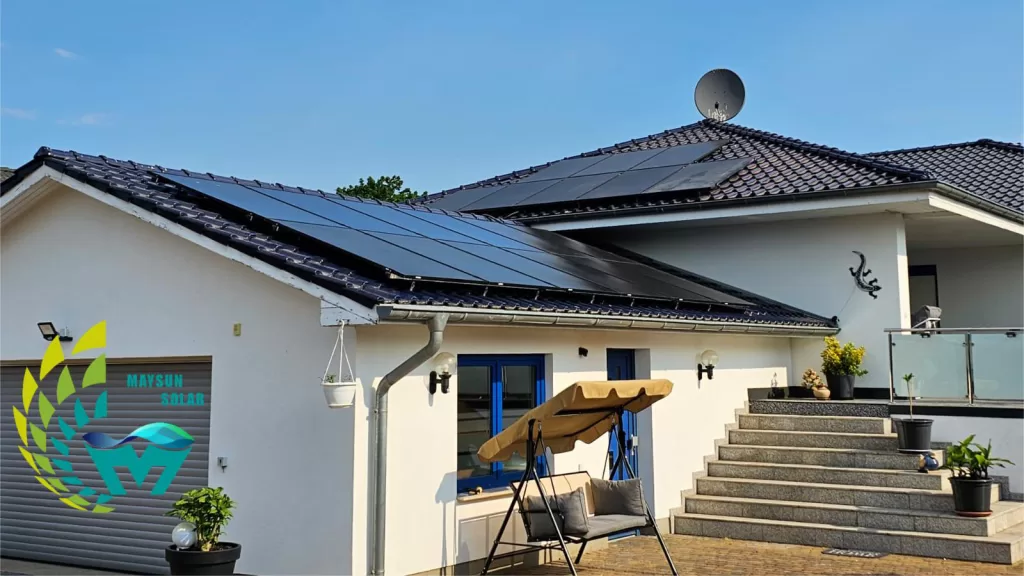
TopCon (Twisun Pro) – A masterpiece of black elegance.

  • 430W-460W
  • 30-year product and performance warranty
  • 1/3-cut technology: Higher output
  • Low current (10A): Safer operation
  • Lightweight dual-glass structure: Less rooftop load

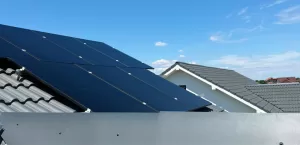
The all-black solar panels match perfectly with dark rooftops in Europe.

Learn More

The top choice for bifacial solar modules

  • 410W-700W
  • Up to 95% bifaciality
  • Efficiency up to 22.87%
  • Glass-glass structure with 30-year product and performance warranty
  • Low degradation (no LID or PID)

Heterojunction Technology (HJT) combines crystalline silicon and thin-film technology to enhance light absorption and passivation.

Learn More

A model of advanced cell technology

  • 405W-600W
  • Efficiency up to 23.2%
  • Low risk of hotspots
  • Excellent low-light performance
  • Cutting-edge technology at competitive prices

Rear-contact without front-side busbars minimizes shadow loss and boosts efficiency.

Learn More

Innovative technology for efficient energy

  • 420-445W, 500-525W, 570-595W
  • Stable performance with low degradation
  • Excellent low-light performance
  • Elegant full-black design
  • 30/20/15-year product warranty; 30/25-year performance warranty

TOPCon solar modules combine advanced technology with elegant appearance — the ideal choice for those who value both efficiency and aesthetics.

Learn More
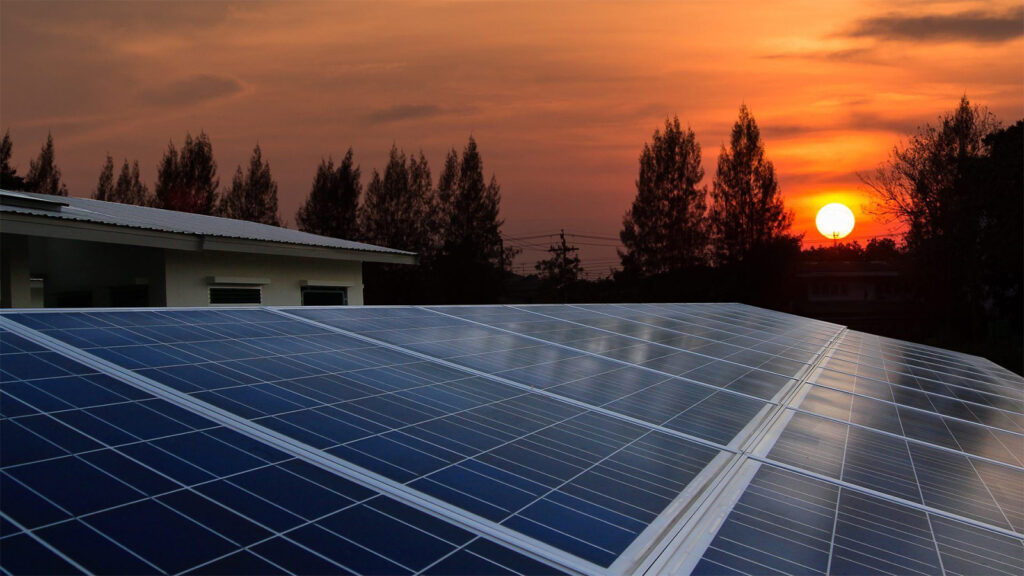
Disadvantages of Double Glass solar panels:

Disadvantages of Glass-Glass PV Modules

While glass-glass PV modules offer excellent performance and long-term return potential, there are several practical considerations that may pose challenges in real-world applications:

  • Heavier Weight: Compared to composite backsheet modules, glass-glass panels are heavier overall, which may place greater structural load demands on rooftops. However, the adoption of 1.6+1.6 mm lightweight glass has significantly improved weight concerns compared to earlier versions.

  • Higher Installation Requirements: These modules require greater precision and structural integrity in mounting systems, including frame alignment and surface flatness. This is especially relevant for large-span rooftops, irregular structures, or complex site conditions, where installation demands higher engineering standards and attention to detail.

  • Slightly Higher Upfront Cost: Although manufacturing costs continue to decline, the use of dual tempered glass and bifacial design still leads to slightly higher initial purchase prices than traditional monofacial modules. That said, the longer warranty periods, lower degradation rates, and bifacial energy gains help deliver better long-term value and return on investment.

  • Higher Manufacturing Standards, Risk of Delamination: Glass-glass modules demand stricter control over encapsulation processes and material reliability. If manufacturing quality is not properly managed, risks such as delamination or bubbling may occur. Choosing a brand with proven production expertise and robust quality control is essential to avoid such issues.

Applications of Glass-Glass PV Modules

Thanks to their structural advantages, glass-glass PV modules offer practical value across a wide range of demanding environments. Key application scenarios include:

  1. Rooftop Solar Systems
    Glass-glass modules offer high fire resistance and strong adaptability, making them suitable for various structural and load-bearing conditions in rooftop installations.

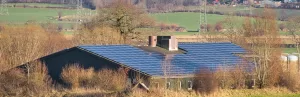
  • Residential Rooftops: These modules deliver excellent fire resistance, moisture protection, and UV resistance, making them ideal for long-term, high-efficiency solar systems on private homes.

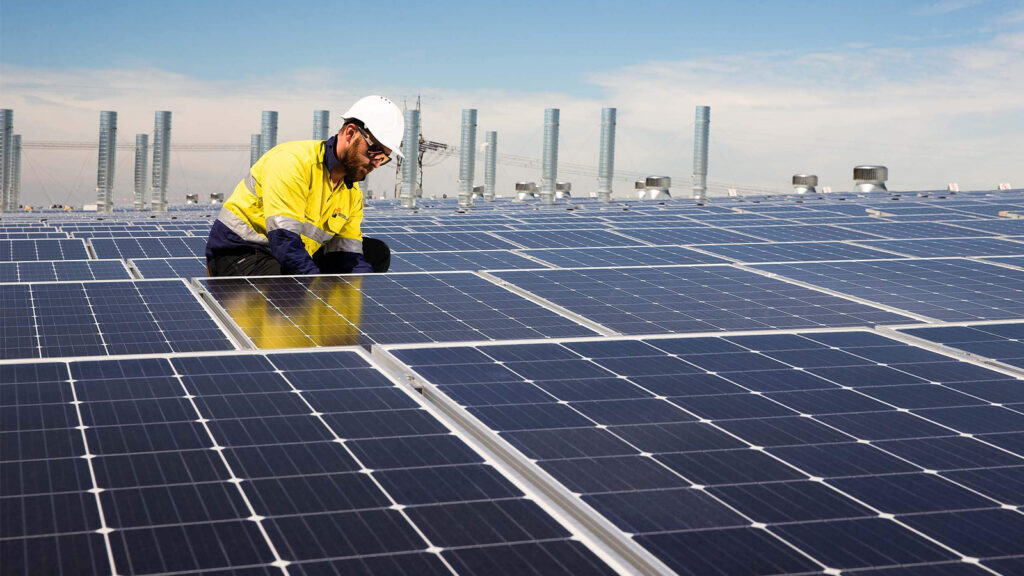
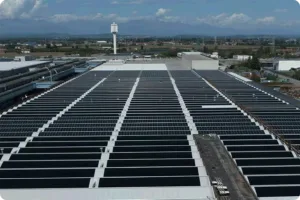
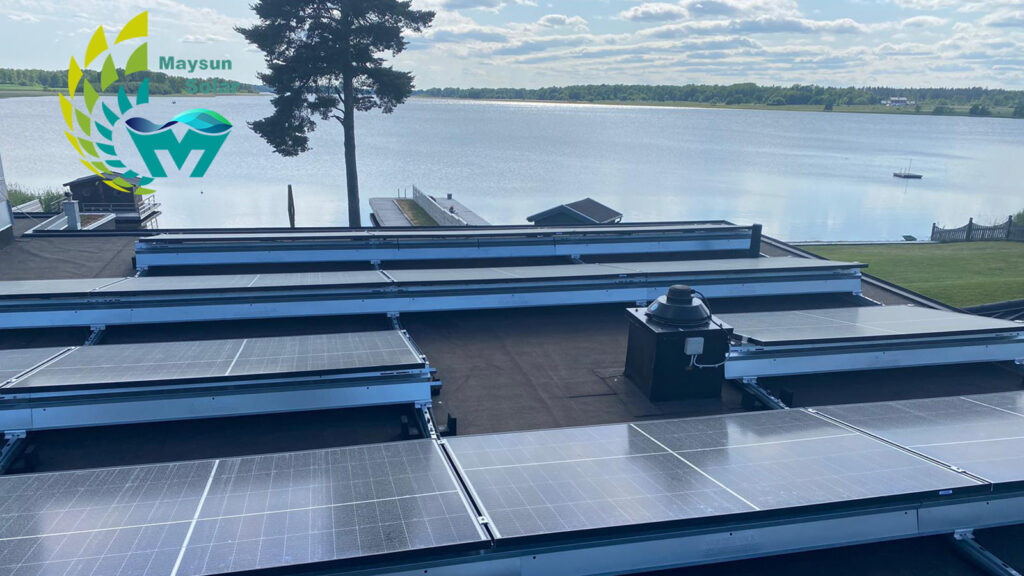
  • Commercial and Industrial Rooftops: On large factories, logistics parks, or commercial buildings, glass-glass modules meet the high structural load requirements and increase overall energy output through bifacial generation, helping reduce energy costs.

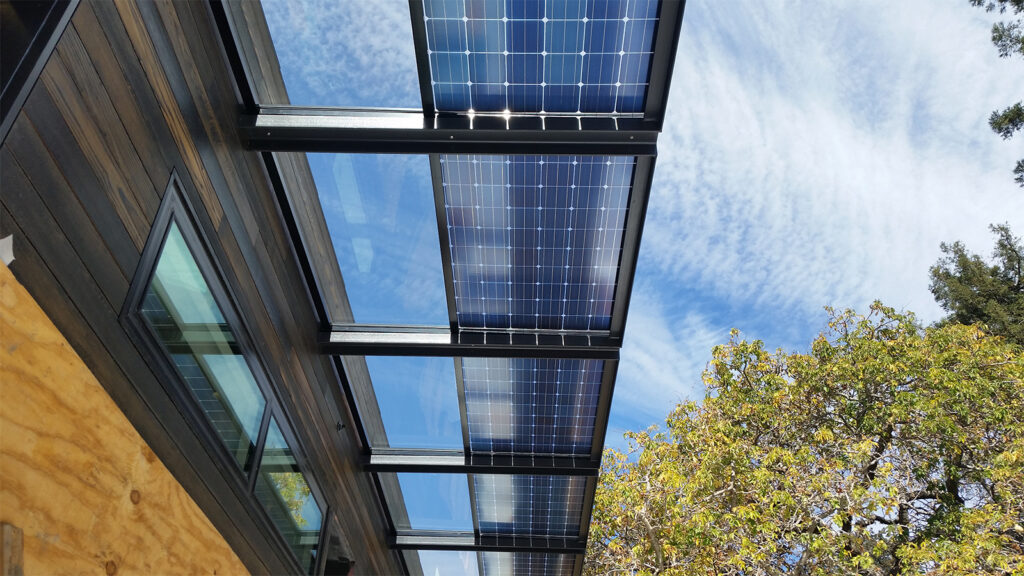
  • Solar Canopies and Shading Structures: Glass-glass modules can also be integrated into functional architectural elements like carports, outdoor leisure areas, or public spaces, providing both shading and electricity generation capabilities.

Commercial and Industrial Projects Double Glass solar panels
  1. Ground-Mounted and Utility-Scale Projects
    In environments that demand high weather resistance, structural strength, and bifacial generation efficiency, glass-glass modules offer superior cost-performance advantages.

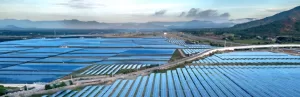
  • Utility-Scale Solar Farms: Widely used in large-scale ground-mounted PV plants, glass-glass modules provide lower degradation rates and enhanced durability, increasing total energy yield over the system’s lifecycle.

  • Agri-Photovoltaics (Agri-PV): Glass-glass modules can be mounted above vegetable greenhouses, orchards, or nurseries to simultaneously deliver shading, rain protection, and solar power generation, improving agricultural land use efficiency.

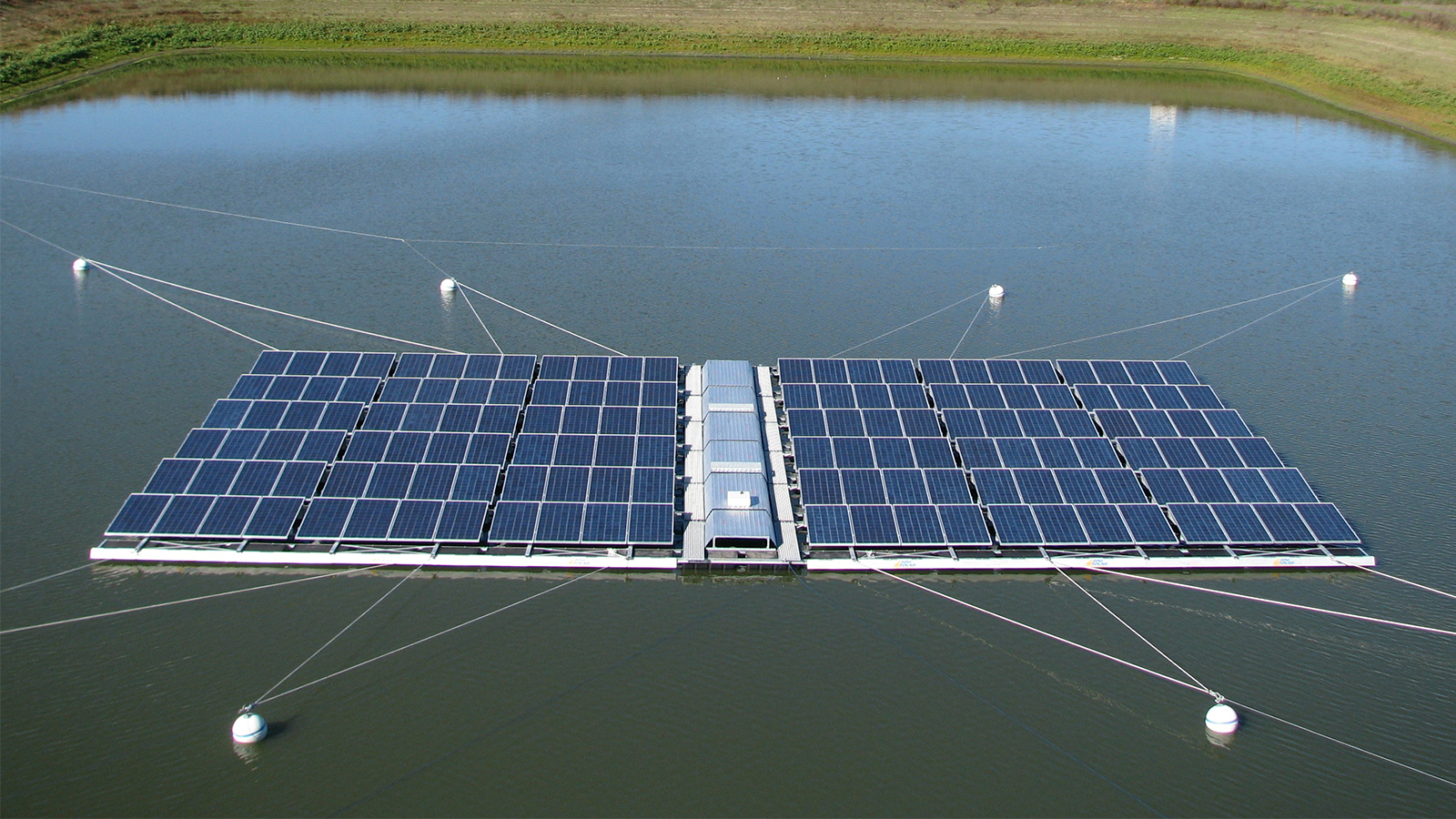
  • Floating PV Systems: Their excellent moisture and corrosion resistance makes glass-glass modules a safe and durable choice for water-based installations such as reservoirs and aquaculture-PV hybrid projects.

Building-Integrated Photovoltaics (BIPV) Double Glass solar panels
  1. Building-Integrated and Green Design Applications
    Glass-glass modules offer excellent light transmittance and architectural compatibility, making them suitable as part of structural elements in buildings and aligning with sustainable design principles.

  • Building-Integrated Photovoltaics (BIPV): These modules can be seamlessly integrated into building structures such as curtain walls, skylights, and sunrooms, combining energy generation with aesthetic value while enhancing overall building energy efficiency.

  • Green Public Spaces: Ideal for exhibition centers, schools, or urban renewal projects, glass-glass modules can serve as visually integrated components of renewable energy installations within the built environment.

Floating Solar Installations Double glass modules
  1. Special Scenarios and Off-Grid Power Systems
    In extreme climates, remote areas, or specialized systems, the stability and reliability of glass-glass modules offer a safer and more dependable source of solar power.

  • Off-Grid Systems: In regions like mountains or islands where grid access is limited, glass-glass modules serve as the core energy source thanks to their high stability, ensuring long-term independent power supply.

  • High-Corrosion and High-Pollution Environments: Ideal for heavy industrial zones, coastal areas, or saline-alkali lands, where they effectively resist corrosive gases and salt mist.

  • Low-Maintenance Installations: In locations such as transportation hubs or remote monitoring stations, glass-glass modules help minimize the need for frequent manual maintenance, reducing total lifecycle costs.

From residential rooftops to large-scale solar farms and innovative architectural designs, dual-glass solar panels offer durability, high efficiency, and versatile design compatibility—making them a valuable choice for a wide range of solar energy applications.

Market Outlook for Glass-Glass PV Modules in 2025

As module costs continue to decline, encapsulation technologies mature, and Europe tightens requirements for carbon footprint, recyclability, and building integration, glass-glass PV modules are shifting from niche applications to becoming a mainstream choice for medium- and large-scale projects.

Driven by the need for LCOE optimization, carbon compliance, and BIPV integration, the market share of glass-glass modules in new installations is expected to exceed 30% in 2025. Looking ahead, their presence will continue to expand in high-demand scenarios such as industrial rooftops, floating solar plants, green buildings, and agrivoltaic systems.

Maysun Solar specializes in delivering high-performance, zero-investment solar solutions for businesses across Europe. We support a variety of collaboration models—including rooftop leasing, self-consumption, and owner-invested systems—to help companies flexibly deploy clean energy and reduce long-term energy costs.

We offer a wide range of advanced solar modules tailored to diverse project needs. For example, our lightweight, high-efficiency triple-cut TOPCon modules and aesthetic, weather-resistant full black glass-glass HJT modules (420W–430W) perform exceptionally well on industrial rooftops, commercial buildings, and in challenging climate conditions.

At Maysun Solar, every project receives customized support—from module selection to structural design—empowering businesses to achieve long-term energy savings and sustainability goals.

solar

对欧洲安装商、经销商和企业采购方来说,光伏组件采购不只是找到一个低价货源。真正影响后续销售和交付的,往往是供应商能否持续提供稳定型号、清晰文件、明确质保和可控交期。 对于日常补货、客户备货、工商业屋顶或多站点项目来说,一次性低价可以作为参考,但如果后续同系列组件断货、文件版本不一致或售后责任不清,前期节省的成本很容易被后续沟通和替换成本抵消 Table of Contents 1. 为什么组件采购不能只看最低报价? 光伏组件采购表面上是在比较每瓦价格,但对安装商、经销商和企业采购方来说,真正影响后续业务稳定性的,往往不是第一次下单的价格,而是后续能不能持续供货。 如果供应商只提供一次性低价,却无法保证型号连续、文件完整和交付节奏,采购方可能很快遇到这些问题: 第一批组件价格合适,但后续补货时同型号已经断货; 临时更换组件后,尺寸、功率或电流参数需要重新确认; datasheet、认证文件、质保资料不完整,影响客户交付或资料归档; 售后责任不清,出现破损、参数核对或质保问题时沟通成本增加; 经销商或安装商无法稳定向客户推荐同一系列产品。 对于普通一次性订单来说,这些问题可能只是增加沟通成本;但对于长期销售、批量备货或工商业客户来说,型号和供应不连续会直接影响客户信任和后续合作。 因此,低价可以作为采购参考,但不能成为唯一标准。更稳妥的采购判断,是同时比较价格、交期、文件、质保和补货能力。 2. 哪些采购场景更需要稳定供应? 并不是所有采购都需要长期锁定同一供应体系。小批量临时补货、标准化订单或一次性零售需求,本地经销渠道通常更灵活。 但在以下几类场景中,稳定供应比一次性低价更重要: 安装商常备型号:如果某一系列组件长期用于客户订单,型号稳定性会影响报价、设计和交付效率。 经销商批量备货:经销商不仅要考虑当前库存,还要考虑后续是否能继续补货,避免客户二次采购时型号变化过大。 企业客户采购:企业客户通常更关注交期、质保和文件完整性,而不只是单次采购价格。 工商业屋顶或农业建筑场景:这类应用往往需要提前确认组件尺寸、重量、电气参数和安装方式,临时更换型号会增加沟通成本。 多站点或分批采购客户:如果客户分阶段采购,持续供应同一系列组件可以减少后续匹配和替换压力。 对这些场景来说,供应商能不能稳定提供同一系列产品,往往比短期低价更重要。因为客户真正需要的不是一次“便宜采购”,而是一套可以持续配合销售和交付的供货方案。 3. 如何选择更适合的组件供应渠道? 不同采购场景适合不同供应方式。对安装商、经销商和企业采购方来说,不一定要在“本地经销商”和“制造商直采”之间二选一,而是要根据采购目的判断哪种方式更合适。 3.1 临时补货:更看重本地响应速度 如果只是少量补货、客户临时追加订单,或需要快速解决短期缺口,本地经销渠道通常更灵活。它的优势在于沟通快、数量灵活、交付距离短。 但这类采购更适合作为补充,不适合作为长期主力供应来源。因为临时库存往往存在型号不连续、批次不稳定或后续补货不确定的问题。 常见问题 1. 哪些企业项目更适合直接向组件制造商采购?如果项目规模较大、交付时间明确,或对组件型号、技术文件、质保资料和长期供货稳定性有要求,直接与组件制造商建立采购关系通常更有价值。 2. 光伏组件采购为什么不能只看最低价格?因为最低价格只反映第一次采购成本。对安装商、经销商和企业采购方来说,后续补货、型号连续、文件完整和售后责任同样会影响长期成本。 3. 只做临时补货,还需要关注稳定供应吗?需要,但关注重点不同。临时补货可以优先看交付速度和本地库存;如果后续还要继续销售同一系列组件,就应提前确认型号是否会持续供应、文件和质保资料是否完整。 4. 低价组件一定不能买吗? 不一定。低价本身不是问题,关键要看供货来源、文件支持、质保责任和型号连续性是否清晰。如果这些条件明确,价格优势可以作为参考;但如果低价伴随交期不确定、资料不完整或售后责任模糊,就不适合作为企业项目的主要判断依据。 5.

Read More »

2 Comments

  1. Marco S

    The explanation of glass-glass PV modules’ enhanced durability really stood out—especially their resistance to moisture and harsh weather, which is crucial for installations in more extreme climates. I’d be curious to know how their long-term performance compares in high-humidity versus arid environments—are there notable differences in degradation rates?

    • Brian

      That’s an excellent question. In high-humidity environments, glass-glass modules typically exhibit lower degradation rates compared to glass-backsheet designs, thanks to their superior resistance to potential-induced degradation and moisture ingress. In arid regions, they also maintain strong performance, with enhanced resistance to UV exposure and thermal cycling stress. Overall, the dual-glass structure contributes to long-term output stability across diverse climate conditions.

Comments are closed