Are Bifacial Solar Panels More Worthwhile than Monofacial Panels?

Are Bifacial Solar Panels More Worthwhile than Monofacial Panels?

Bifacial solar panels can indeed generate higher electricity yields than monofacial panels in some photovoltaic projects, but this advantage is highly dependent on the installation environment. For example, in systems with high reflectivity or sufficient installation height, bifacial panels can typically provide additional energy generation; however, in many common rooftop solar projects, their advantage may be very limited.

Therefore, when evaluating whether bifacial panels are more worthwhile, it is essential to consider system installation conditions, project types, and the actual energy generation environment.

Table of Contents

What Are the Main Differences Between Bifacial and Monofacial Panels?

The primary difference between bifacial and monofacial solar panels lies in their power generation method and structural design. This difference affects both the panel’s electricity output and the design and application of the photovoltaic system.

1.1 Power Generation Differences

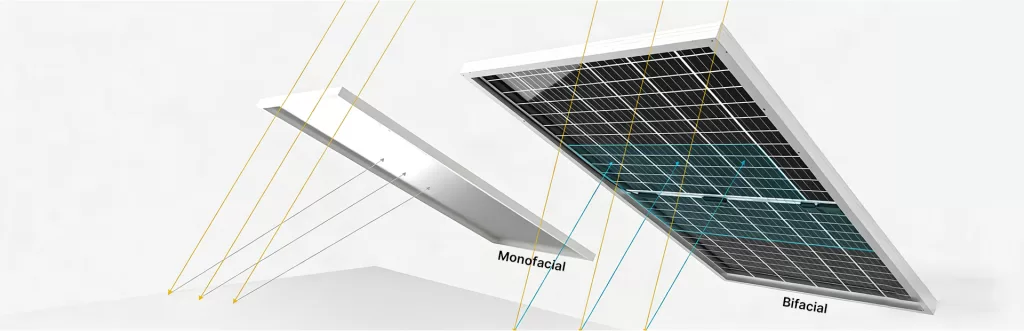
  • Monofacial panels generate power solely from the sunlight absorbed on the front side, so system output depends mainly on the front-facing light conditions.

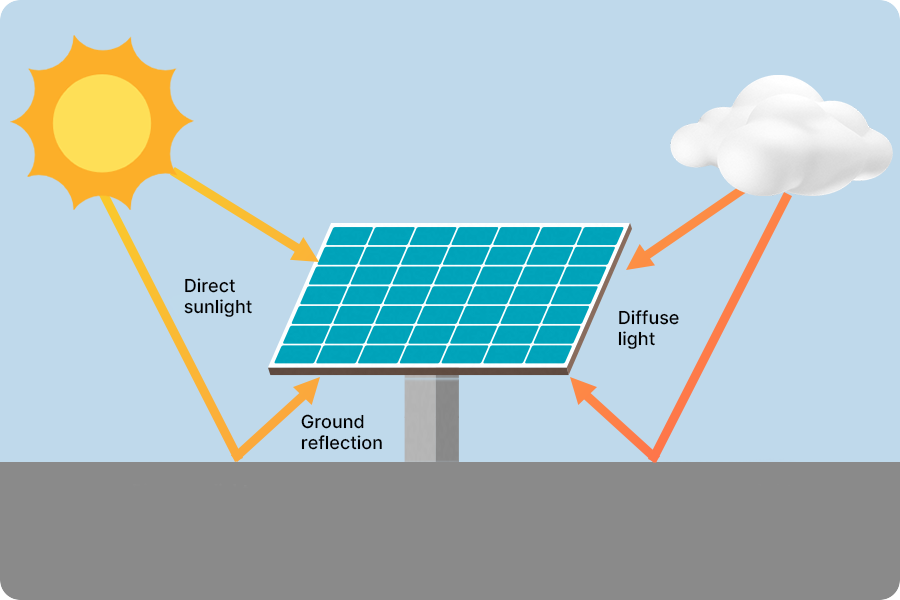
  • Bifacial panels, in addition to front-side generation, can also capture reflected light from the ground or surroundings to generate additional power from the rear.

1.2 Structural Differences

  • Monofacial panels typically feature a backsheet structure, where the back of the solar cells is protected by an opaque backsheet. This design is mature, lightweight, and has relatively low requirements for system installation conditions.

  • Bifacial panels, to capture rear-side light, usually use dual-glass or transparent backsheet designs, allowing light to enter the back of the panel. This structure enables bifacial panels to harness reflected light, offering extra power generation potential under certain system conditions.

When Are Bifacial Panels More Advantageous?

Bifacial panels do not always generate significantly higher electricity output in every solar project. Their advantage is more noticeable when the installation environment allows for effective use of rear-side reflected light.

2.1 High Reflectivity Environments

The power gain from bifacial panels is closely tied to the environment’s reflectivity (Albedo). The higher the reflectivity, the more light the rear side of the panel can capture.

In high reflectivity environments, bifacial panels can achieve a power gain of 10%–20%, such as in:

  • Snowy regions or high-latitude environments

  • Sandy or light-colored soil areas

  • Light-colored concrete or high-reflectivity ground materials

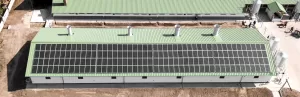
In contrast, many commercial rooftops use dark waterproofing or asphalt materials, which have lower reflectivity, limiting the rear-side light available for generation.

2.2 Sufficient Panel Height from the Ground

Bifacial panels typically require sufficient height from the ground or roof to allow reflected light to reach the rear side. If the installation height is low, the rear light is often blocked, reducing the power gain.

In systems with sufficient height, bifacial panels can achieve an additional 5%–15% power gain. This is common in:

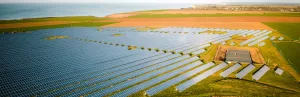
  • Ground-mounted solar plants

  • Agrivoltaic systems

  • Open-frame structures

On many rooftops, to reduce wind load or installation costs, panels are often installed at lower heights, restricting the rear-side light access.

2.3 Minimal Rear-Side Obstruction in System Layout

The layout of the system also affects bifacial panels’ power output. If the rear side is obstructed, reflected light cannot reach the panel, reducing the gain.

In systems with minimal rear-side obstruction, bifacial panels can achieve an additional 5%–10% power gain, such as in:

  • Open areas with no rear-side obstruction

  • Systems with lower equipment density

  • Frame structures that allow more light to reach the rear side

However, in equipment-dense commercial rooftop projects, such as those with HVAC units, pipes, or high-density frame structures, rear-side obstruction is often unavoidable.

Overall, bifacial panels are more advantageous in environments with good reflectivity, sufficient installation height, and minimal rear-side obstruction. In systems where rear-side reflected light is difficult to utilize effectively, the actual power gain is typically much lower.

Diagram illustrating the power generation principle of bifacial solar panels, where direct sunlight and ground-reflected light combine, enhancing power output when rear-side reflection conditions are favourable.

Why Are Monofacial Panels More Common in Rooftop Projects?

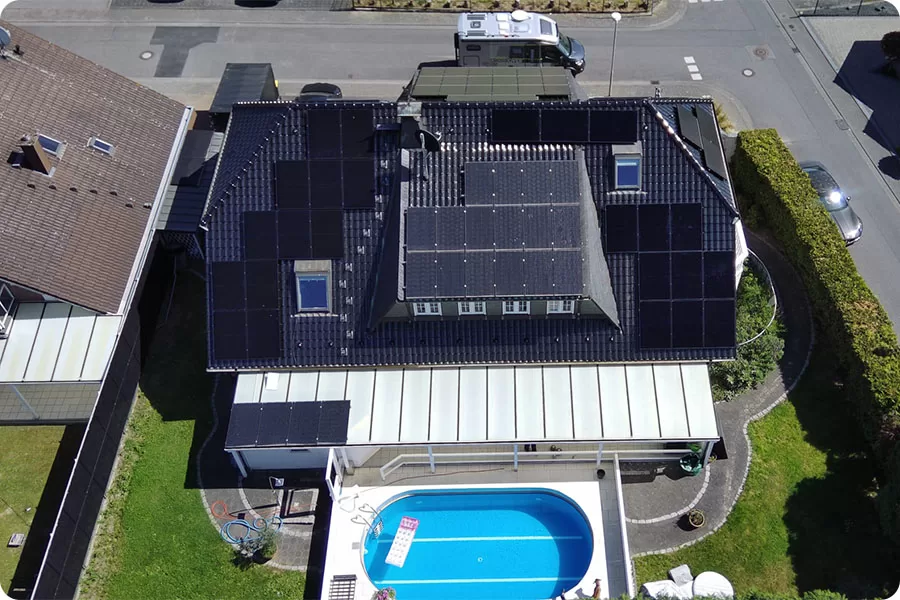
Monofacial panels are still widely used in rooftop solar projects in Europe. This is not due to the immaturity of bifacial technology, but because many rooftop systems focus more on cost, structural conditions, and ease of installation.

3.1 Cost vs. Actual Power Gain

In many European rooftop solar projects, the additional energy generation from bifacial panels is often limited. For example, in pitched roof residential systems or commercial rooftops installed close to the roof, the rear side of the panel often receives little reflected light, so the actual gain from bifacial panels is typically only 2–5%, and in some cases, even lower.

Additionally, in some facade-mounted or small rooftop systems, the focus is more on space utilization and system cost rather than maximizing bifacial power generation potential. Therefore, when the additional energy yield from bifacial panels is limited, installers and owners tend to choose monofacial panels, which offer more stable returns at a lower cost.

3.2 Roof Structure and Load Limitations

In many European countries, many residential and commercial buildings were constructed in earlier periods, and their roof structures often have limited load-bearing capacity. For example, older industrial buildings or residential pitched roofs may not have been designed to handle the additional load of a photovoltaic system.

In these projects, the weight of the panels and the structure of the mounting system directly impact the system design. Some dual-glass bifacial panels are relatively heavy, whereas some monofacial panels have simpler structures and are lighter, making them easier to install on roofs with more sensitive load-bearing capacities.

3.3 Installation and Maintenance Convenience

In the European residential solar market, an increasing number of homeowners are opting for small rooftop systems or DIY solar solutions. In such projects, ease of installation is often more important than the technology used for the panels.

For example, in small pitched roof systems, balcony solar, or wall-mounted projects, the installation space is often limited, and the system structure is relatively simple. In these cases, monofacial panels are usually easier to install and do not require extra space for the rear side.

Therefore, in many rooftop projects where ease of installation and cost control are primary objectives, monofacial panels remain a common choice.

How Do Different Solar Panel Technologies Affect the Choice Between Bifacial and Monofacial Panels?

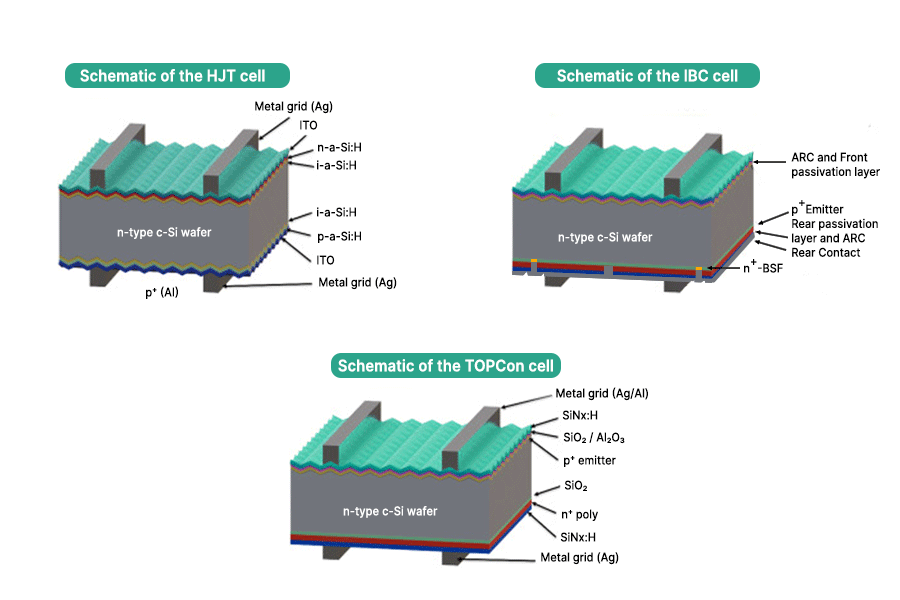
In actual solar projects, the choice between bifacial or monofacial panels depends not only on the installation environment but also on the technology used. The main high-efficiency cell technologies on the market, such as TOPCon, HJT, and IBC, differ in structural design and application scenarios, which impacts whether bifacial panels are suitable.

4.1 TOPCon Panels: Structure Suitable for Bifacial Application

TOPCon (Tunnel Oxide Passivated Contact) technology is an evolution of traditional PERC. It features an ultra-thin tunnel oxide layer (SiOx) and a doped polycrystalline silicon layer (poly-Si) on the back of the silicon wafer, reducing carrier recombination and improving cell efficiency.

Since TOPCon cells collect current from both sides, this technology typically offers good bifacial power generation capabilities. TOPCon panels on the market often use dual-glass bifacial packaging, making them suitable for ground-mounted plants, agrivoltaic systems, or environments with good reflectivity.

Thus, for projects requiring a balance between system efficiency and return on investment, TOPCon bifacial panels are often considered a cost-effective option.

4.2 HJT Panels: High Bifaciality Structure

HJT (Heterojunction) technology uses a crystalline silicon and amorphous silicon thin-film stack structure, with thin-film layers deposited on both sides of an N-type silicon wafer to form a heterojunction. This structure effectively reduces carrier recombination while maintaining high bifacial power generation ability.

Due to the inherent symmetry of the cell structure, HJT panels typically have a high bifaciality rate, with some products achieving over 90%. Therefore, in high-reflectivity environments or large-scale ground-mounted plants, HJT panels often provide significant bifacial power gains.

However, due to relatively high manufacturing costs, HJT panels are more commonly used in projects where high efficiency is required.

4.3 IBC Panels: Monofacial Efficiency-Oriented Design

IBC (Interdigitated Back Contact) technology places all electrode structures on the back of the cell, leaving the front free of metal busbars. This design reduces shading on the front, improves light absorption efficiency, and provides a more uniform appearance.

Since IBC cells have electrodes entirely on the back, their design focuses on enhancing front-side power generation efficiency. As a result, many IBC panels use a monofacial design and are widely applied in residential rooftops or building-integrated photovoltaics (BIPV) systems.

In these applications, the focus is often on panel appearance, installation method, and roof compatibility, rather than maximizing bifacial power generation.

Overall, differences in cell technology structure give each a distinct advantage in either bifacial or monofacial applications. Therefore, when selecting panels, it is important to consider not only the installation environment but also the specific technology used.

Summary: Bifacial solar panels are not necessarily superior in all solar projects. While they can utilize reflected light for increased power generation, this advantage depends on system installation factors such as ground reflectivity, panel height, and layout. Bifacial panels are more likely to provide extra energy yield in ground-mounted plants or systems with good reflection conditions. However, in many rooftop projects, where installation height, roof structure, and system layout limit rear-side light access, the actual gain from bifacial panels is often limited. As such, monofacial panels remain a common choice.

In the panel selection process, rather than simply comparing bifacial and monofacial structures, it is more crucial to consider the project environment, system design, and panel technology to choose the most suitable solution for the specific application.

FAQ

1. Are Bifacial Solar Panels Worth Investing in European Rooftop Projects?

Bifacial panels offer a power gain of around 2%–5% in most European rooftop projects. If the roof has low reflectivity or limited installation space, the overall system cost typically becomes the key factor in investment returns, rather than the use of bifacial technology.

2. Is the Power Gain from Bifacial Panels Predictable?

The gain from bifacial panels is heavily influenced by installation conditions and varies significantly across projects. In contrast, monofacial panels offer more stable and predictable power generation, making them better suited for return calculations in commercial projects.

3. Which Technology is Best for European Rooftop Projects: TOPCon, HJT, or IBC?

TOPCon and HJT are ideal for projects with bifacial power generation conditions, such as ground-mounted plants, while IBC is better suited for rooftop systems, especially when appearance and stability are important. The choice should depend on the project environment.

4. When Are Bifacial Solar Panels More Commercially Valuable?

Bifacial panels are more valuable in projects with good light reflection, particularly in ground-mounted plants, where the bifacial gain can significantly increase power generation and investment returns.

5. Do Bifacial Panels Have a Shorter Payback Period Than Monofacial Panels?

Bifacial panels do not always have a shorter payback period. The payback period depends on whether the project consistently gains bifacial benefits. In many European rooftop projects, the bifacial gain is small, and the payback period is similar to that of monofacial panels.

As a solar panel manufacturer, Maysun Solar supplies stable components to European wholesalers and installers, offering IBC technologyTOPCon technology, and HJT technology with power ranges from 410–800W, including both bifacial and monofacial panels. We focus on optimizing performance in high temperatures, long-term degradation, and complex rooftop environments, ensuring more predictable long-term energy generation for residential and commercial solar systems.

Recommend reading

March European Solar Industry News

March European Solar Industry News

This article outlines recent developments in the European solar market, including the EU cross-border solar auction scheme, structural shifts in Germany, updated GSE regulation in Italy, and the recent recovery in solar panel prices.

Read More »

Comments

No comments yet. Why don’t you start the discussion?

Leave a Reply

Your email address will not be published. Required fields are marked *