Solar panel installation is a long-term investment. A one-time purchase can provide consumers with a permanent source of electricity. The average lifespan of currently available crystalline silicon solar panels is 25-30 years. So, what factors affect the service life of solar panels? For example, the efficiency of photovoltaic cells will decrease over time; in addition to this, there is another factor that cannot be ignored: the PID effect.
What is the PID effect of solar panels?
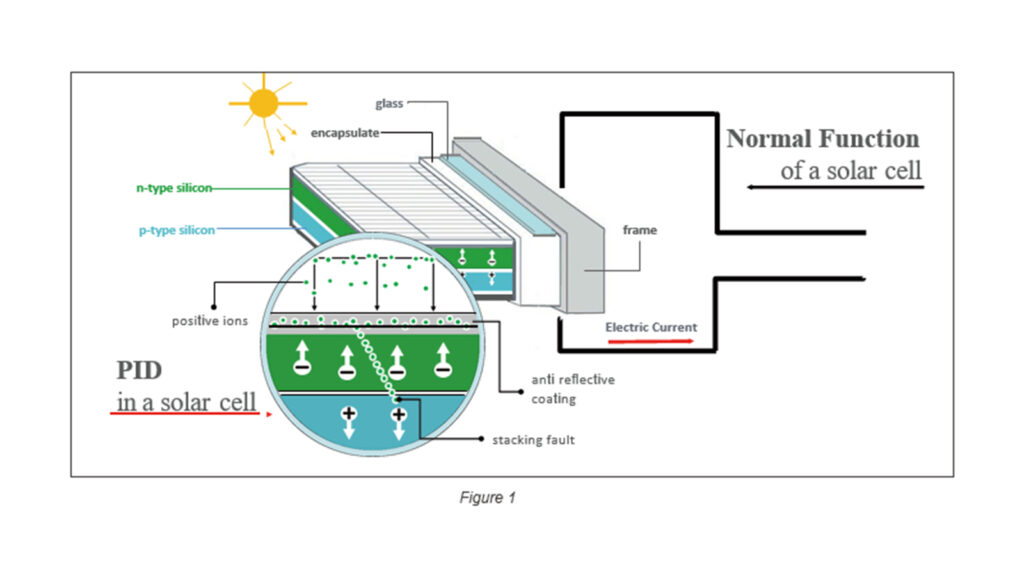
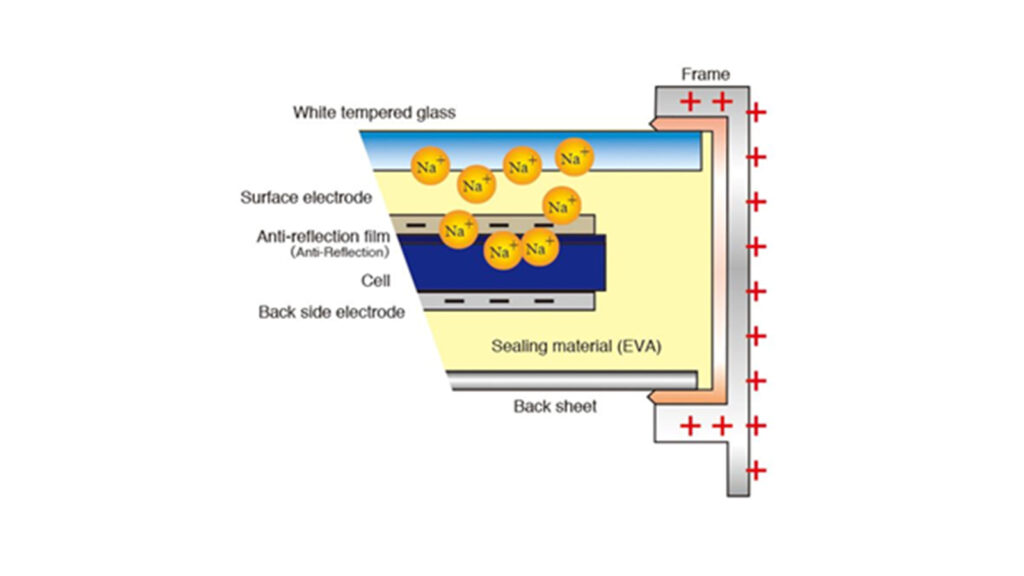
The PID effect, also known as Potential Induced Degradation, occurs when components operate at high voltage for an extended period. This can cause a leakage current between the cover glass, solar panel encapsulation material, and frame. The difference in electrical charge makes positive ions move from the glass, frame, and installation structure to the solar photovoltaic cell. When a lot of charge builds up on the surface of the cell, it can harm the PN junction of the cell. The passivation effect on the cell’s surface gets worse, causing a decrease in the fill factor, short-circuit current, and open-circuit voltage. This makes the component’s performance lower than what was intended, resulting in a decline in its overall performance.
What causes the PID effect in solar panels?
The quality of raw materials used for solar panels: such as glass, sealants, and solar panel encapsulation materials, has a significant impact on whether the solar panel will experience the PID effect. For instance, if glass with a high amount of sodium is chosen or if the solar panel encapsulation material used cannot prevent water vapor from entering, it can cause the PID effect in the solar panel.
Where to install solar panels: The main environmental factors that cause the PID effect are high temperature and humidity. Where a solar power project is installed determines its impact on the solar panels. Due to humidity, moisture will penetrate into the solar panel module and cause an increase in leakage current, a process that is accelerated at high temperatures and affects the yield of solar panels.
System voltage and scale of solar panels: Generally speaking, the more panels connected in series, the higher the system voltage, and the greater the stray current or leakage current generated when there is a potential difference between solar photovoltaic cells and the ground, resulting in The probability of PID phenomenon is higher. In general, 1500 V systems are at greater risk than 1000 V systems.
How to test the anti-PID performance of solar panels before leaving the factory?
1. At a specific temperature and humidity, cover the surface of the module glass with aluminum foil, copper foil or a damp cloth, and apply a voltage between the output terminal of the module and the surface covering for a certain period of time.
2. Apply -1000V DC to the output terminal of the module and the aluminum frame for 96 hours in an environment with 85% humidity of 85°C or 60°C or 85°C.
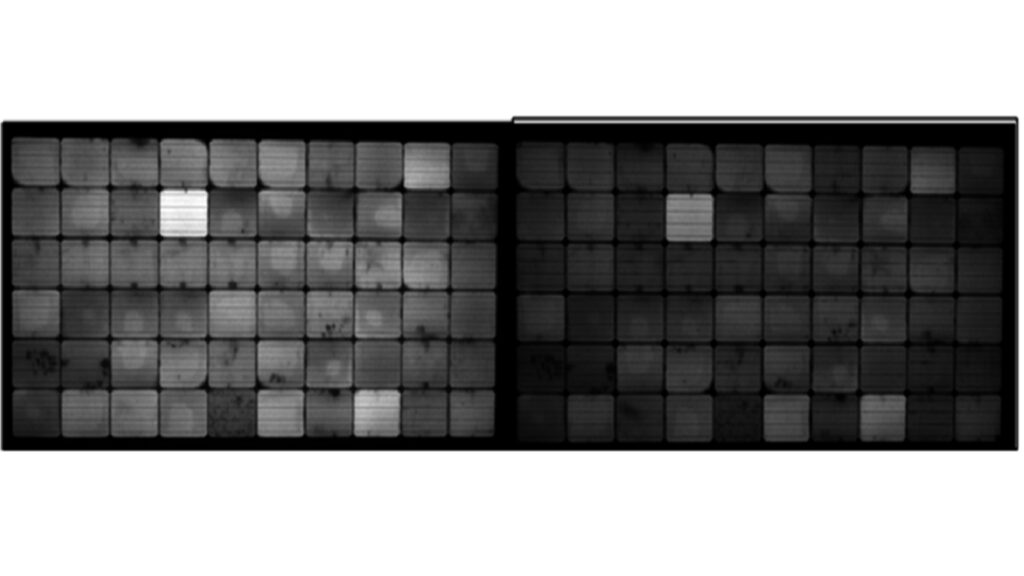
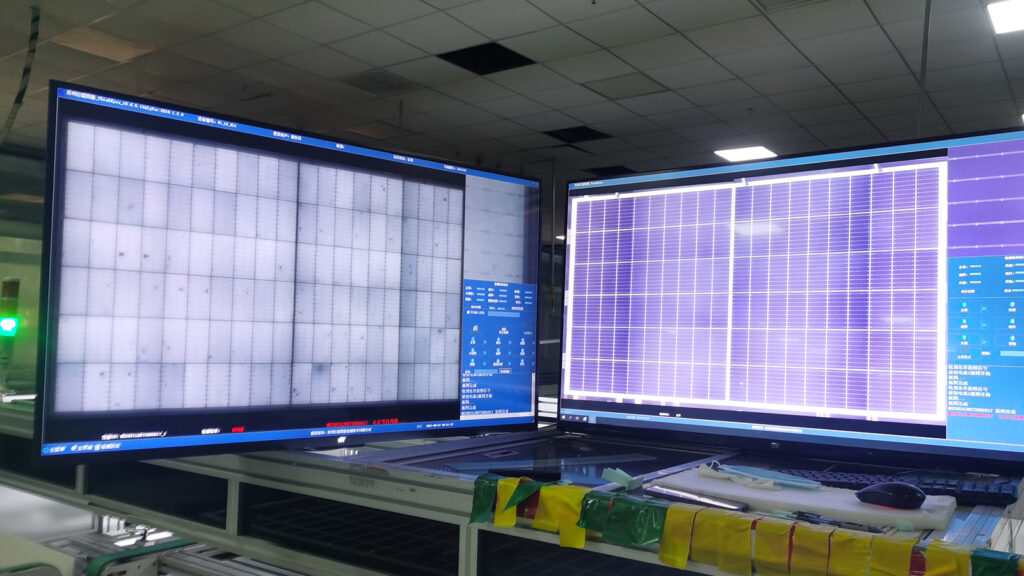
Before the two methods of testing, the components are tested for power, wet leakage and EL imaging. After the end, power, wet leakage test and EL imaging are performed again. Compare the results before and after the test to get the occurrence of PID under the set conditions. When the PID phenomenon occurs, it can be seen from the EL imaging that some cells are blackened.
The first method is mostly used in experimental institutions, while the latter method is mostly used by solar panel factories. In fact, the ultimate goal of the above two test methods is to obtain the certification of PID resistance of the solar panel test module – IEC 62804.
Maysun Solar’s solar panels are certified by Solar Panel Test Module PID Resistance – IEC 62804, ensuring excellent quality.
How can solar panels avoid the PID effect in use?
The PID effect can be reversible or irreversible, depending on what caused it. Unfortunately, PID (potential-induced degradation) is something that cannot be avoided when it is caused by internal electrochemical reactions. This can result in thin film delamination or galvanic corrosion in photovoltaic panels. If the PID effect is caused by external factors, there are ways to avoid and solve it.
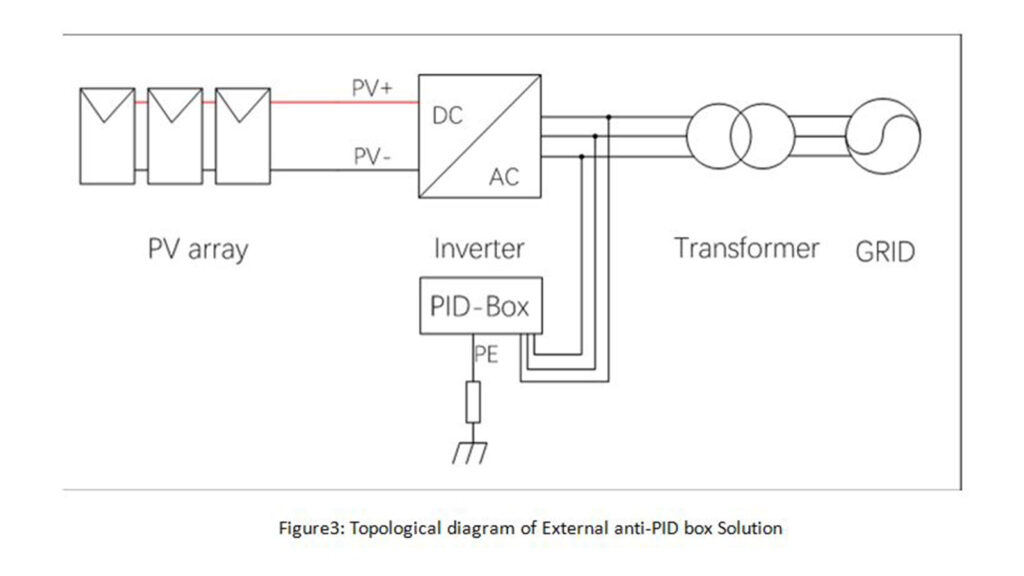
1. Use a device that prevents PID. The anti-PID box is a device that changes the direction of the electrical current from the inverter. This helps to counteract the negative effects on the PV modules caused by the voltage. The purpose of these boxes is to prevent each string from staying on the same polarization for too long. This helps reduce the chance of PID (potential induced degradation) and allows each module to recover from any negative potential it may have experienced.
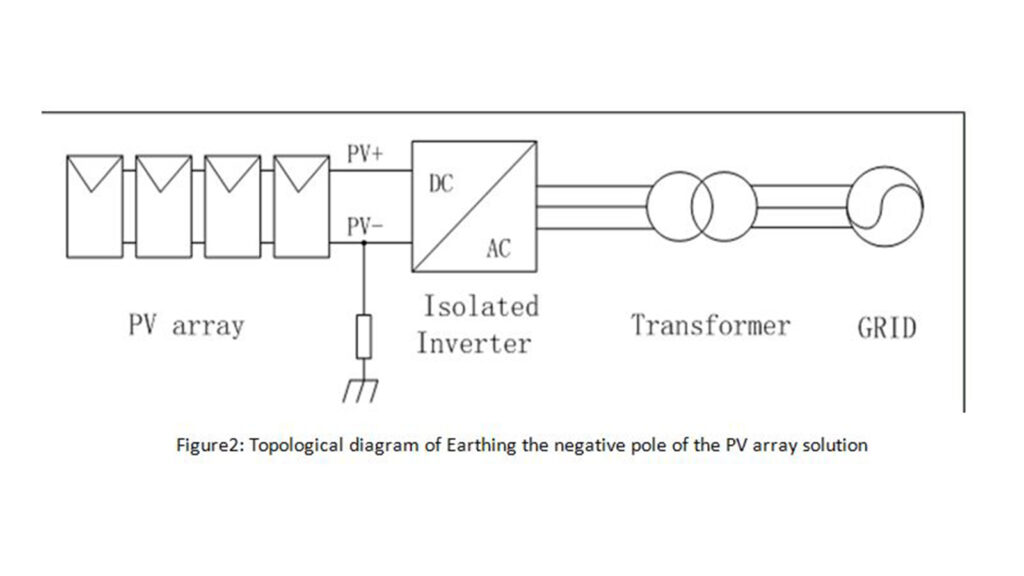
2. Designing an installation system that is practical and logical. High temperature weather can have a negative impact on photovoltaic power plants. However, this issue can be addressed by implementing a well-designed system installation. Ensure that components, inverters, and distribution boxes have proper ventilation and heat dissipation capabilities. Furthermore, if the inverter permits, you can alleviate the issue by grounding the DC negative terminal of the inverter.
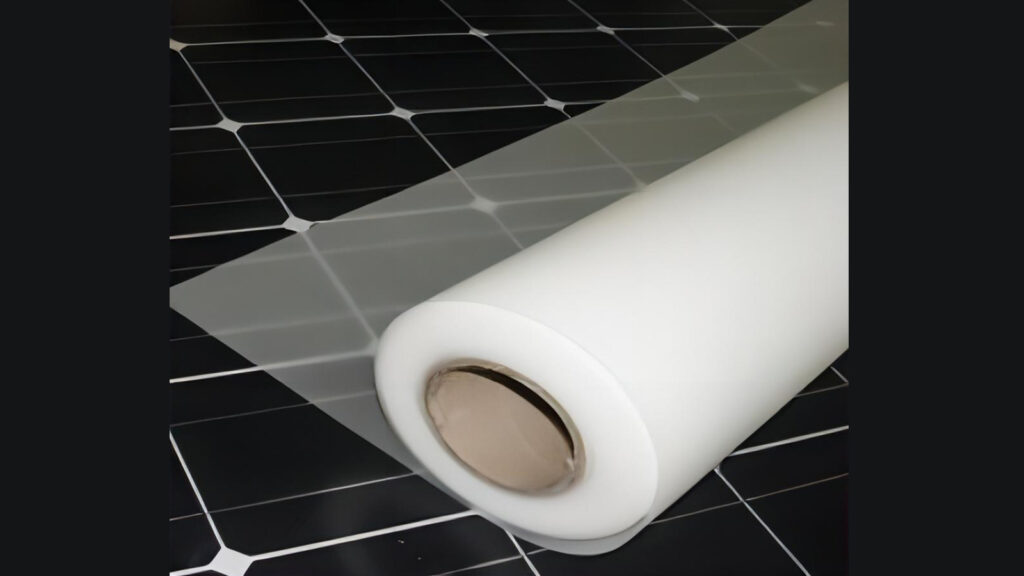
3. Selecting an effective solar panel encapsulation method. Humidity is a factor that can cause the PID effect. By using proper solar panel encapsulation, you can prevent water vapor from entering and causing a reaction that generates acetic acid in the EVA film. This acid then reacts with alkali on the glass surface, creating sodium ions that can move freely. This helps to effectively prevent the occurrence of the PID effect.
Solar panel manufacturers have their own testing systems to make sure they consistently produce high-quality solar panels. Maysun Solar is a company that has been manufacturing solar panels for 15 years. They have a lot of experience in this field. They offer high-quality solar panels that are certified to resist PID (Potential Induced Degradation). This means that they meet the needs of users who want to use clean energy.

How to Choose Solar Panels for Low-Load-Bearing Industrial Roofs: A Guide to Weight, Power Density and Mounting Systems
Choosing solar panels for a low-load-bearing industrial roof requires more than checking the weight of an individual module. A more reliable process starts by determining the roof’s remaining load-bearing capacity. The complete load from the modules, rails, fasteners and ballast must then be

Why Do Solar Panels Lose Power in Hot Weather? How Temperature Coefficient and Roof Ventilation Affect Summer Energy Yield
Summer brings stronger sunlight and longer daylight hours, so it is normally one of the most productive seasons for a solar system. However, some system owners notice that solar panel output does not continue to rise during the hottest part of the day.

How to Design a Low-Maintenance Rooftop Solar System
Introduction A low-maintenance rooftop solar system is not created after installation. It is designed before installation. Over a 20–30 year operating life, rising O&M costs are rarely caused by dirty glass alone. They are more often caused by design decisions made at the

European Heatwaves and PV Self-Consumption: Why HJT Solar Modules Perform Better in Hot Summers
Across Europe, summer heatwaves are no longer just a climate or comfort issue. They are becoming an energy-use issue. During hot summer days, air conditioning, ventilation, refrigeration, office equipment and industrial cooling loads can rise exactly when rooftop solar modules are exposed to

Partial Shading on Solar Panels: Why a Small Shadow Can Cause Major Power Losses
Introduction: Shading Is Not Just a Surface Area Problem In a photovoltaic system, a small shadow can be amplified by the electrical structure of the module. In a typical module with three electrical sections, a shaded area covering only a small part of

From Half-Cell to Multi-Cut: Why PV Modules Are Paying More Attention to More Segmented Circuit Design?
Table of Contents In recent years, half-cell modules have become a mainstream design in the photovoltaic market. Compared with traditional full-cell modules, half-cell technology reduces the operating current of each cell unit, lowers internal resistive losses, and improves thermal management and partial shading