Table of Contents
Introduction
Busbars are like the skeleton of a photovoltaic (PV) cell, supporting the entire cell to generate electricity. Within a crystalline silicon cell, the current generated is primarily extracted through metal electrodes, which can be divided into main busbars and auxiliary busbars (also known as fine busbars). The main busbars are primarily used for current collection and series connection of the auxiliary busbars, while the auxiliary busbars are used to collect photogenerated carriers.
Reviewing the entire development process, it is evident that the technology for PV busbars has evolved rapidly, with iteration cycles generally maintaining a pace of 2-3 years. The major stages include the transition from 4BB and 5BB to MBB (Multi-Busbar, with 9-15 busbars), followed by SMBB (Super Multi-Busbar, with 16 or more busbars), and finally to 0BB (Zero Busbar, with no main busbars).
What is Multi-Busbar (MBB) Technology?
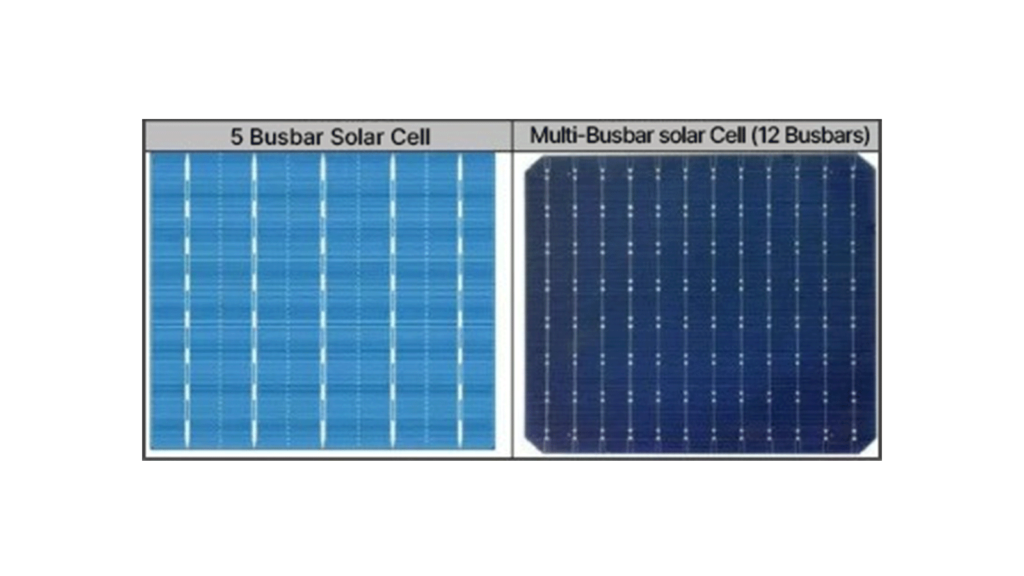
In the photovoltaic (PV) field, Multi-Busbar (MBB) technology is an important method for improving the efficiency of solar cells. By increasing the number of busbars on the cell surface, MBB technology significantly enhances the performance and reliability of the cells. Traditional PV cells typically use 2 to 5 busbars, while MBB technology employs 9 or more busbars.
Characteristics and Main Advantages of MBB (Multi-Busbar) Technology
1.Increased Number of Busbars
MBB technology features more busbars evenly distributed across the cell surface, typically 9 or more. These busbars are used to collect and conduct the photogenerated current. By dispersing the current, the current density on each busbar is reduced, which lowers ohmic losses (resistive losses) and improves the fill factor and overall efficiency of the cell.
2.Enhanced Mechanical Strength
The presence of more busbars enhances the mechanical strength of the cell to some extent, reducing the risk of damage caused by stress during manufacturing, transportation, and installation.
3.Improved Hot-Spot Effect
The MBB structure helps to distribute the current more evenly, reducing the hot-spot effect, thereby enhancing the long-term reliability and performance of the modules.
4.Thin Busbar Design
The increase in the number of busbars allows for a reduction in the width of individual busbars. The thin busbar design minimizes the shading area on the surface of the photovoltaic cell, allowing more light to reach the silicon surface and increasing the photoelectric conversion efficiency.
5.Manufacturing Process
The application of MBB technology requires precise screen printing processes and advanced electroplating techniques to ensure the high accuracy and consistency of multiple thin busbars. This often necessitates corresponding process improvements and equipment upgrades during cell manufacturing.
Currently, multi-busbar technology is widely used in the field of crystalline silicon solar cells and has become an important means to improve cell performance and reduce costs.
SMBB: Following the Mass Production of TOPCon Cells
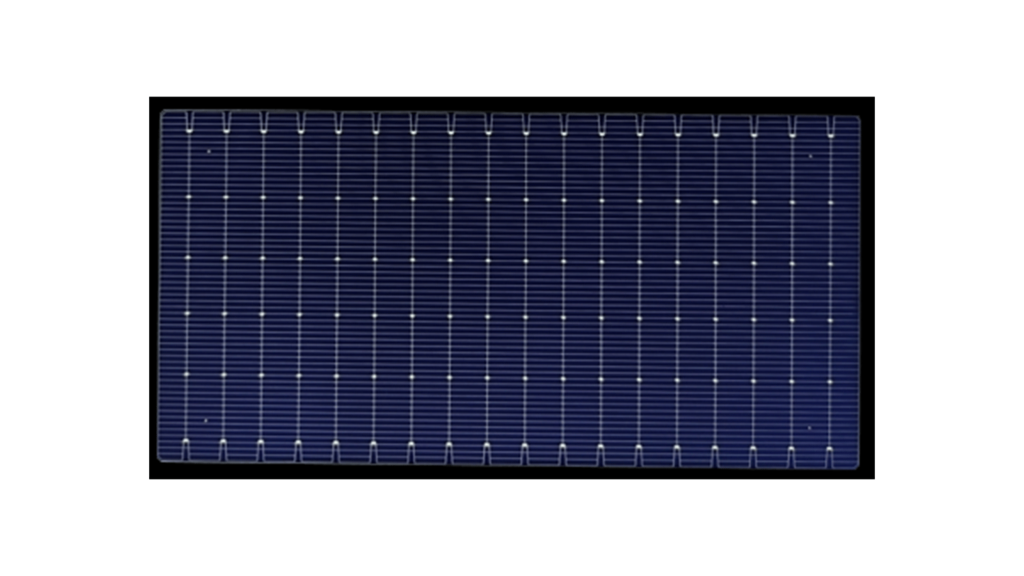
With the emergence of new cell technologies such as TOPCon and HJT, the soldering machine process has also upgraded from MBB to SMBB (Super Multi-Busbar). SMBB can be considered an enhanced version of MBB technology. By using finer busbars, SMBB reduces the amount of silver paste required, achieves less shading, and shortens the current transmission distance. This effectively lowers the series resistance and further increases the cell’s tolerance to micro-cracks, broken busbars, and fractures, thereby improving reliability.
SMBB technology typically features 15-25 busbars, meaning each cell has 15-25 busbars printed on it. Currently, TOPCon cells often adopt the SMBB scheme, and some leading heterojunction (HJT) companies have also achieved mass production with 18+ busbars.
What is Zero Busbar (0BB) Technology?
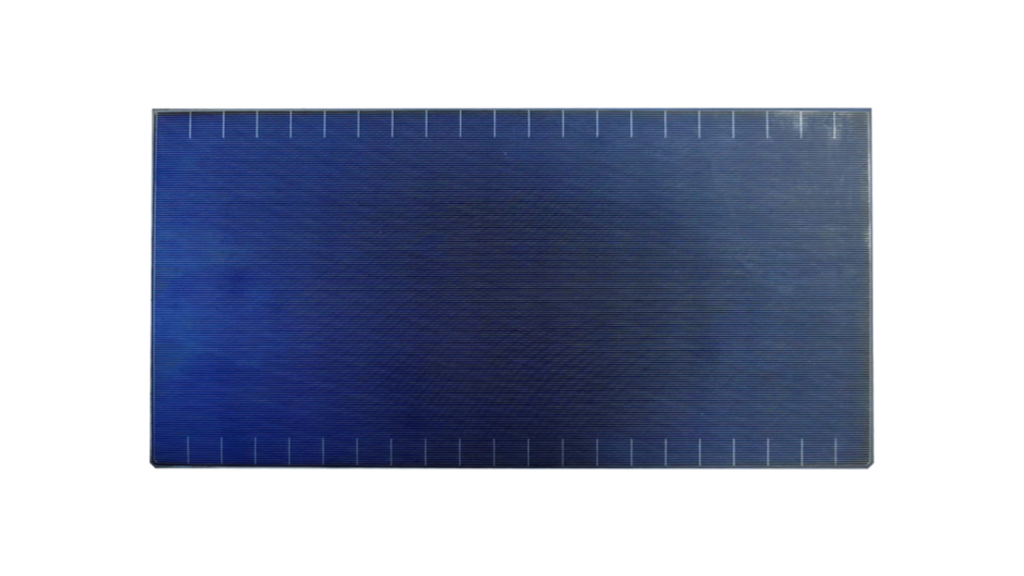
Zero Busbar (Busbarless) Technology is an emerging photovoltaic (PV) cell manufacturing technique that enhances solar cell efficiency and reduces costs. In crystalline silicon solar cells, busbars are metal lines used to collect current, typically involving multiple main busbars. Zero Busbar technology eliminates these main busbars and instead uses finer metal lines or conductive materials to collect current.
In the 0BB process, main busbars are removed during the metal electrode screen printing stage, and the width and spacing of the auxiliary busbars are optimized. The advantages of 0BB include cost reduction, decreased silver usage, and increased efficiency.
Advantages of 0BB Technology
1.Reduced Shading: 0BB technology minimizes shading caused by busbars, thereby improving the efficiency of the PV cells.
2.Increased Current Collection: The use of finer metal lines or conductive materials increases the current collection area, further enhancing cell efficiency.
3.Cost Reduction: 0BB technology reduces the number and complexity of busbars, lowering the production costs of the cells.
4.Improved Reliability: By eliminating the risk of busbar breakage or other related issues, 0BB technology enhances the reliability of the cells.
Key Benefits in the 0BB Production Process
1.Cost Savings: Compared to SMBB, 0BB can save about 30% of silver paste, encapsulant, and 10% of soldering ribbon in the cell manufacturing stage.
2.Higher Module Power: The use of low-temperature soldering processes and ultra-fine, ultra-flexible soldering ribbons helps to improve the welding yield rate of modules. These ultra-fine, ultra-flexible ribbons can collect more current and shorten current transmission distances, resulting in higher module power output.
Zero Busbar technology represents a significant advancement in solar cell manufacturing, offering a promising path toward more efficient and cost-effective solar energy solutions.
According to the “2024-2029 China 0BB (Zero Busbar) Industry Market In-depth Research and Development Prospect Forecast Report” released by New Sijie Industry Research Center, 0BB technology, as an upgrade to SMBB technology, is currently in the early stages of industrialization in China. However, due to its potential for cost reduction, efficiency improvement, and reduced silver usage, it is expected to replace SMBB technology in the future and be widely applied in the photovoltaic (PV) field.
Since 2023, several Chinese companies have invested in the research of 0BB technology, cells, soldering ribbons, modules, or equipment. These companies include Risen Energy, Akcome Technology, Tongwei Solar, Autowell, Jinergy Photovoltaic, Suzhou Wattway, Shenzhen Lightway, Lead Intelligent, and Debont Technology.
0BB technology has already achieved mass production application. In April 2023, Risen Energy successfully launched the first batch of heterojunction 0BB cells, marking the first application of 0BB technology on a gigawatt-scale production line. As the technology matures and more companies enter the market, the mass production process of 0BB will accelerate in 2024, increasing its market penetration. It is estimated that by 2025, the market size for 0BB equipment will reach 10 billion yuan, and the market size for 0BB soldering ribbons will reach 31 billion yuan.
Industry analysts from New Sijie indicate that among heterojunction (HJT), TOPCon, and PERC cells, the need for cost and silver reduction is most urgent for HJT cells. In 2022, China’s HJT cell production capacity exceeded 10GW, reaching around 55GW in 2023, and is expected to reach 150GW by 2025. With the rapid expansion of HJT cell production, the application scale of 0BB technology will further increase.
Conclusion
In the rapid development of photovoltaic technology, MBB, SMBB, and 0BB solar cell technologies are continuously evolving, bringing higher efficiency, lower costs, and more reliable performance.
MBB technology enhances the performance and mechanical strength of solar cells by increasing the number of busbars, reducing the hot-spot effect. SMBB technology further refines the busbar design, reduces silver paste usage, and improves the reliability and efficiency of the cells. 0BB technology eliminates the main busbars, optimizes the width and spacing of the auxiliary busbars, and achieves cost reduction and efficiency improvement.
The advancements in each of these technologies are driving the growth of the photovoltaic industry. In the future, as these technologies continue to mature and become more widespread, the efficiency and performance of solar cells will keep improving, making a greater contribution to the development of global renewable energy. The evolution of MBB, SMBB, and 0BB technologies is set to propel the photovoltaic industry to new heights.
Since 2008, Maysun Solar has been dedicated to producing high-quality photovoltaic modules that contribute to combating climate change. Our advanced technology in IBC, HJT, TOPCon, and balcony solar panels ensures exceptional performance and reliability, capable of withstanding harsh weather conditions for long-term operation. We have established offices and warehouses in multiple countries and built lasting partnerships with top installers to provide comprehensive support. For the latest quotes or any inquiries related to photovoltaics, feel free to reach out to us—we’re here to help!
Reference:
Comparison of Photovoltaic Cell MBB and 0BB Technology. (n.d.). Weixin Official Accounts Platform. Retrieved from [https://mp.weixin.qq.com/s/LEcWX7Xn__KIfaSRrKQNxA]
Jingge Photovoltaic. (n.d.). About MBB, SMBB, 0BB. Weixin Official Accounts Platform. Retrieved from [https://mp.weixin.qq.com/s/YaffevXIxhRpWoC52HeC3w]
Photovoltaic String Welding Machine: From Presence to Absence of Busbars, Process Upgrades Bring New Opportunities. (n.d.). Retrieved from [https://m.yicai.com/news/101833259.html]
Dialogue with JA Technology CTO Ouyang Zi: 0BB Modules Expected to Start Mass Production in Q3 This Year. (n.d.). Sohu.com. Retrieved from [https://www.sohu.com/a/786521047_121255906]
Recommended Reading:
solar
对欧洲安装商、经销商和企业采购方来说,光伏组件采购不只是找到一个低价货源。真正影响后续销售和交付的,往往是供应商能否持续提供稳定型号、清晰文件、明确质保和可控交期。 对于日常补货、客户备货、工商业屋顶或多站点项目来说,一次性低价可以作为参考,但如果后续同系列组件断货、文件版本不一致或售后责任不清,前期节省的成本很容易被后续沟通和替换成本抵消 Table of Contents 1. 为什么组件采购不能只看最低报价? 光伏组件采购表面上是在比较每瓦价格,但对安装商、经销商和企业采购方来说,真正影响后续业务稳定性的,往往不是第一次下单的价格,而是后续能不能持续供货。 如果供应商只提供一次性低价,却无法保证型号连续、文件完整和交付节奏,采购方可能很快遇到这些问题: 第一批组件价格合适,但后续补货时同型号已经断货; 临时更换组件后,尺寸、功率或电流参数需要重新确认; datasheet、认证文件、质保资料不完整,影响客户交付或资料归档; 售后责任不清,出现破损、参数核对或质保问题时沟通成本增加; 经销商或安装商无法稳定向客户推荐同一系列产品。 对于普通一次性订单来说,这些问题可能只是增加沟通成本;但对于长期销售、批量备货或工商业客户来说,型号和供应不连续会直接影响客户信任和后续合作。 因此,低价可以作为采购参考,但不能成为唯一标准。更稳妥的采购判断,是同时比较价格、交期、文件、质保和补货能力。 2. 哪些采购场景更需要稳定供应? 并不是所有采购都需要长期锁定同一供应体系。小批量临时补货、标准化订单或一次性零售需求,本地经销渠道通常更灵活。 但在以下几类场景中,稳定供应比一次性低价更重要: 安装商常备型号:如果某一系列组件长期用于客户订单,型号稳定性会影响报价、设计和交付效率。 经销商批量备货:经销商不仅要考虑当前库存,还要考虑后续是否能继续补货,避免客户二次采购时型号变化过大。 企业客户采购:企业客户通常更关注交期、质保和文件完整性,而不只是单次采购价格。 工商业屋顶或农业建筑场景:这类应用往往需要提前确认组件尺寸、重量、电气参数和安装方式,临时更换型号会增加沟通成本。 多站点或分批采购客户:如果客户分阶段采购,持续供应同一系列组件可以减少后续匹配和替换压力。 对这些场景来说,供应商能不能稳定提供同一系列产品,往往比短期低价更重要。因为客户真正需要的不是一次“便宜采购”,而是一套可以持续配合销售和交付的供货方案。 3. 如何选择更适合的组件供应渠道? 不同采购场景适合不同供应方式。对安装商、经销商和企业采购方来说,不一定要在“本地经销商”和“制造商直采”之间二选一,而是要根据采购目的判断哪种方式更合适。 3.1 临时补货:更看重本地响应速度 如果只是少量补货、客户临时追加订单,或需要快速解决短期缺口,本地经销渠道通常更灵活。它的优势在于沟通快、数量灵活、交付距离短。 但这类采购更适合作为补充,不适合作为长期主力供应来源。因为临时库存往往存在型号不连续、批次不稳定或后续补货不确定的问题。 常见问题 1. 哪些企业项目更适合直接向组件制造商采购?如果项目规模较大、交付时间明确,或对组件型号、技术文件、质保资料和长期供货稳定性有要求,直接与组件制造商建立采购关系通常更有价值。 2. 光伏组件采购为什么不能只看最低价格?因为最低价格只反映第一次采购成本。对安装商、经销商和企业采购方来说,后续补货、型号连续、文件完整和售后责任同样会影响长期成本。 3. 只做临时补货,还需要关注稳定供应吗?需要,但关注重点不同。临时补货可以优先看交付速度和本地库存;如果后续还要继续销售同一系列组件,就应提前确认型号是否会持续供应、文件和质保资料是否完整。 4. 低价组件一定不能买吗? 不一定。低价本身不是问题,关键要看供货来源、文件支持、质保责任和型号连续性是否清晰。如果这些条件明确,价格优势可以作为参考;但如果低价伴随交期不确定、资料不完整或售后责任模糊,就不适合作为企业项目的主要判断依据。 5.

Solar Panel Procurement in Europe: Why Stable Supply Matters More Than a One-Off Low Price
When European installers, distributors and corporate buyers choose solar panels, a one-off low price should not be the only factor. Stable supply, model continuity, technical documents and replenishment capacity often matter more for long-term cooperation and project delivery.

How Important Is the Temperature Coefficient When Choosing a Solar Panel?
How important is temperature coefficient when choosing a solar panel? This article answers that question directly and explains which projects should include it in early screening and which do not need to treat it as a top priority.

When does HJT bifacial gain pay off on European rooftops, and when is IBC the better option?
When do HJT bifacial solar panels generate stronger returns on European rooftop projects, and when should IBC solar panels take priority?

Which homes are suitable for garden solar?
Which homes are suitable for garden solar? Assess space, shading, orientation and electricity-use goals to quickly judge whether garden solar is a suitable option.

Are Differences Between Solar Panels More Noticeable in High-Temperature Conditions?
High temperatures reduce solar panel efficiency, but the gap in summer power generation is not determined by temperature alone. This article compares the high-temperature performance of HJT, TOPCon and IBC, and explains how businesses should choose.