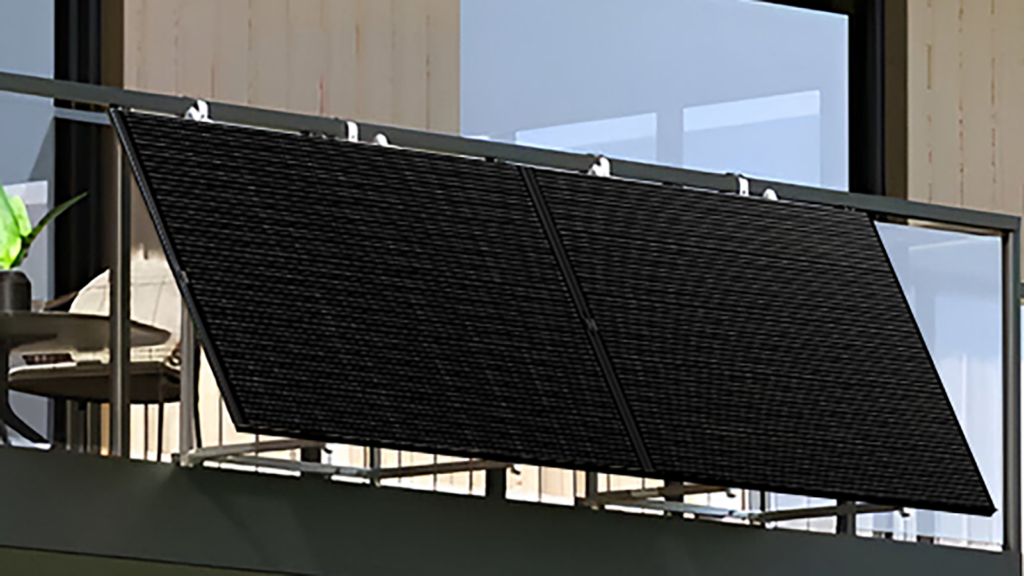
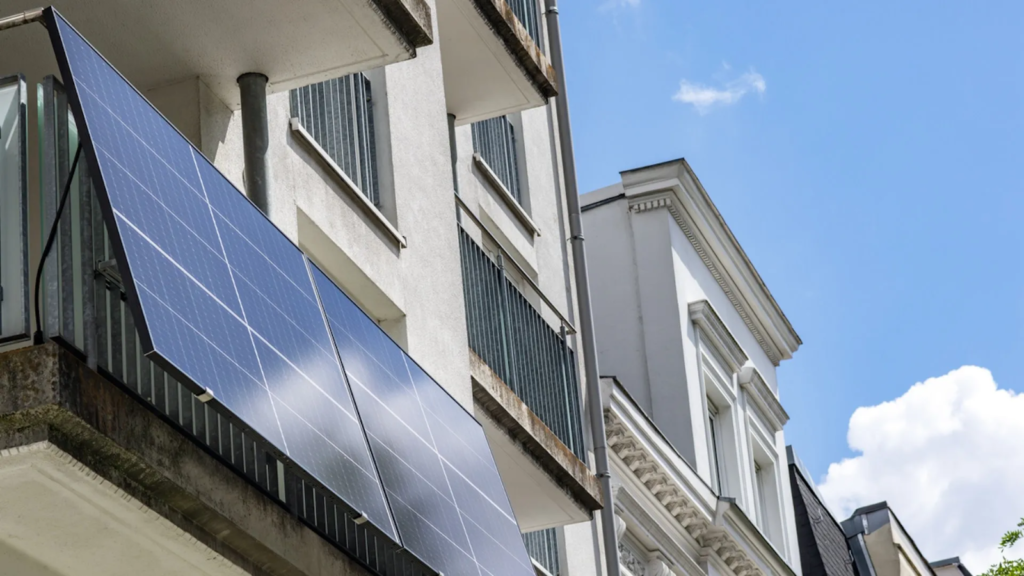
As the demand for renewable energy solutions continues to rise, especially in urban areas, balcony solar systems have emerged as an innovative and practical option for generating electricity in limited spaces. These compact photovoltaic (PV) systems are designed to be easily installed on apartment balconies, offering a sustainable way for city dwellers to reduce their energy bills and carbon footprint. In this article, we will explore how a balcony solar system works, from the basic components to the benefits and considerations of using such a system.
Understanding the Components of a Balcony Solar System
A balcony solar system include:
- Solar Panels: Small, lightweight panels that capture sunlight and convert it into direct current (DC) electricity.
- Inverter: Converts DC electricity into alternating current (AC) for use in your home.
- Mounting System: Secures the panels to your balcony, optimizing their angle for sunlight exposure.
- Battery Storage (Optional): Stores excess energy for use during non-sunny hours.
- Monitoring System: Tracks energy production and consumption in real-time.
How a Balcony Solar Power Station Works?
Balcony solar systems harness sunlight to generate electricity through a series of straightforward steps:
Solar Panel Absorption: Solar panels on the balcony capture sunlight using silicon-based photovoltaic cells. When sunlight hits these cells, it initiates the photovoltaic effect.
Photovoltaic Effect: The solar panels contain semiconductor materials (typically silicon) that generate direct current (DC) electricity when sunlight causes electrons to move.
DC Electricity Generation: The panels produce DC electricity as long as they are exposed to sunlight. The amount of electricity depends on factors like panel size, angle, and sunlight intensity.
Inverter Conversion: An inverter converts the DC electricity into alternating current (AC), which is compatible with household appliances and electrical systems.
Integration with Home System: The AC electricity is then integrated into your home’s electrical system, powering lights, appliances, and other devices.
Handling Excess Energy: If the system generates more electricity than needed, excess energy can either be:
- Net Meters: Sent back to the grid, earning credits or compensation.
- Battery Storage:Stored in batteries for later use, ensuring a steady power supply even when the sun isn’t shining.
Germany’s New Balcony Solar System Regulations
As of mid-May 2024, Germany has updated regulations for balcony solar systems. The new standard allows a maximum of 800 watts to be fed into the grid, up from 600 watts. The total installed capacity is limited to 2000 watts, with inverters reducing output if it exceeds 800 watts. This change aims to enhance solar power use from balconies and simplify installations.
Systems can save up to 180 euros annually based on current electricity rates, with costs for an 800-watt system ranging from 300 to 700 euros. Financial incentives between 50 and 500 euros are available in various German states, and VAT on mini-solar systems has been removed since 2023. However, feed-in tariffs apply only to larger systems.
Conclusion
A balcony solar system offers a practical and eco-friendly solution for generating electricity in urban environments where space is at a premium. It provides a way to reduce energy costs, lower your carbon footprint, and gain a degree of energy independence. However, it’s important to consider the specific conditions of your living situation, including the amount of sunlight your balcony receives, the available space for installation, and any legal or regulatory restrictions.
Maysun’s balcony solar power stations excel with their plug-and-play design and high-end microinverters for each panel, unlike the common one-to-two inverter systems. This setup improves reliability by isolating inverter failures and maintains optimal efficiency. The lightweight design also enhances installation flexibility, offering a more efficient and dependable solution for urban spaces.For more information or to discuss how our solutions can fit your needs, please contact us for a consultation.
Reference:
Gieße, A. (2024, August 28). Jetzt bis 800 Watt Leistung erlaubt: 2024 ein Balkonkraftwerk kaufen? https://www.adac.de/rund-ums-haus/energie/versorgung/balkonkraftwerk/
How does a balcony solar system work? – RAJA. (2023b, November 14). https://www.rajaev.com/news/how-does-a-balcony-solar-system-work.html
You may also like:

August European Solar Industry News
In August 2026, Europe’s solar market combined record PV generation with volatile power prices driven by heat, gas costs and low wind output. Policy support also expanded, including 800 W plug-in solar in Great Britain and greater EU flexibility for PV and storage investments, while module prices largely stabilized amid renewed oversupply.
Industrial Roofs with Limited Load Capacity: Lightweight or High-Efficiency Solar Panels?
On an existing industrial roof, “lighter is better” is not a reliable module-selection rule. The first question is how much additional load the roof can safely accept. Only then does it make sense to compare module weight, power density, mounting method and the

How to Verify Solar Panels Before Buying: Datasheets, Certifications, Warranties and Delivery Inspection
A datasheet, an IEC certificate and a 25- or 30-year warranty can make a solar module look fully validated on paper. For a reliable purchasing decision, however, those documents are only the starting point. The electrical ratings, mechanical design, certificates, connectors, warranty terms

How to Choose Solar Panels for Low-Load-Bearing Industrial Roofs: A Guide to Weight, Power Density and Mounting Systems
Choosing solar panels for a low-load-bearing industrial roof requires more than checking the weight of an individual module. A more reliable process starts by determining the roof’s remaining load-bearing capacity. The complete load from the modules, rails, fasteners and ballast must then be

Why Do Solar Panels Lose Power in Hot Weather? How Temperature Coefficient and Roof Ventilation Affect Summer Energy Yield
Summer brings stronger sunlight and longer daylight hours, so it is normally one of the most productive seasons for a solar system. However, some system owners notice that solar panel output does not continue to rise during the hottest part of the day.

How to Design a Low-Maintenance Rooftop Solar System
Introduction A low-maintenance rooftop solar system is not created after installation. It is designed before installation. Over a 20–30 year operating life, rising O&M costs are rarely caused by dirty glass alone. They are more often caused by design decisions made at the