The concept of balcony solar systems gained attention in Europe around 2013, with Germany leading the promotion. Since then, this idea has rapidly expanded across the continent, particularly gaining popularity in countries such as Austria, Switzerland, and the Netherlands. In the first half of 2024 alone, Germany installed approximately 220,000 new systems, totaling a capacity of 200 MW.
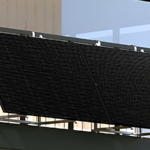
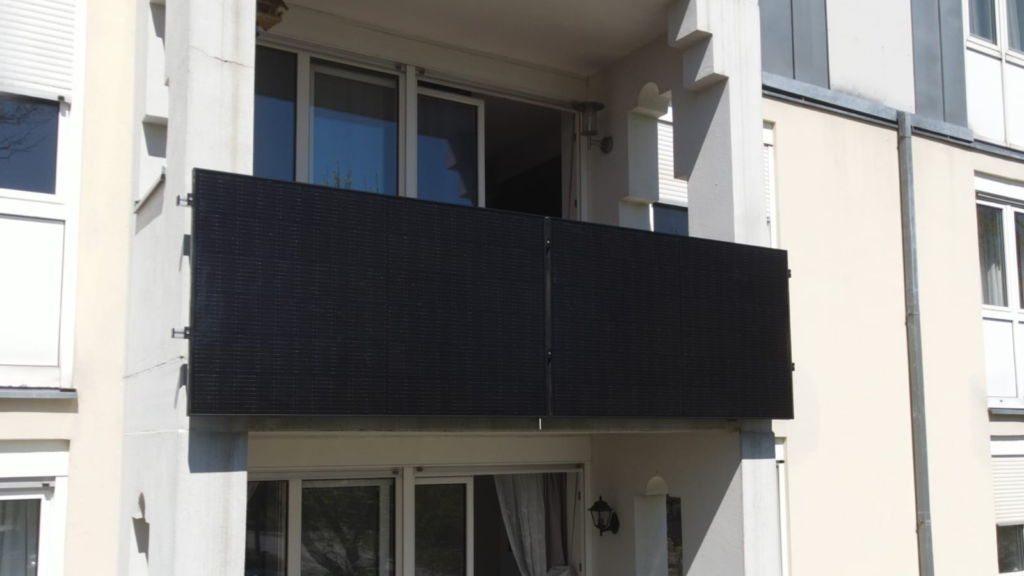
Balcony solar power stations are ideal for urban residents with limited space, such as apartment dwellers and tenants, and can be easily installed on balconies, terraces, or flat roofs. Our systems are designed to be plug-and-play, making installation straightforward. Unlike the commonly used one-to-two inverter solutions on the market, Maysun’s balcony solar power stations feature a high-end configuration with a multifunctional microinverter for each panel. This design not only enhances technical performance but also incorporates a lightweight design philosophy. Firstly, this configuration minimizes the impact of a single inverter failure on the overall system, thereby improving system reliability. Additionally, it simplifies the repair and replacement process after a failure, ensuring each panel remains at its optimal maximum power point tracking (MPPT) state for the best power generation efficiency. Furthermore, the lightweight design of the microinverters helps reduce the overall system weight and improves installation flexibility.
In contrast, the one-to-two microinverter configuration has certain limitations. In this setup, any failure of a microinverter can affect the power generation capability of two panels, as the MPPT function of the microinverter is based on the average power point of two panels. This means that even a single microinverter failure could lead to reduced efficiency for both panels. Moreover, the one-to-two design does not fully leverage the advantages of lightweight design.
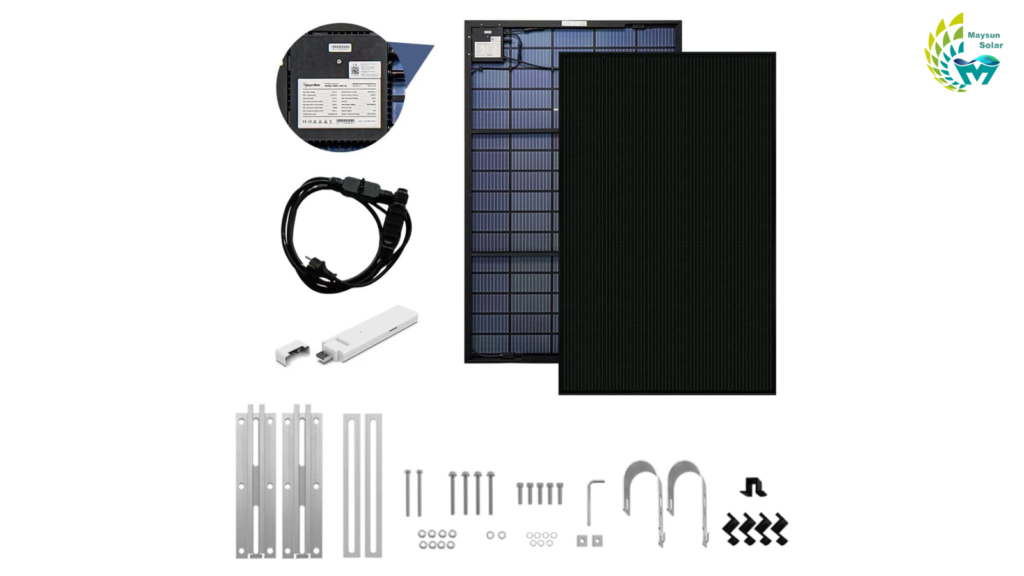
The Maysun Balcony Solar Power Station 2.0 kit includes all the components needed for a complete installation:
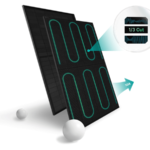
- 2 X Maysun 410W Venusun S / Venusun Solar Modules (Integrated with MOS bypass switch )
- 2 X Hoymiles HMS-400-1A Micro Inverters
- 1 Set of Solar Alternating Current (AC) Cable Accessories (5m cable, sealing, plug, T-type connectors)
- 2 Sets of Installation Accessories
- Data Transmission Unit (optional)
These comprehensive components ensure users can efficiently and simply complete the installation, providing a smooth user experience.
Balcony solar power stations offer tenants and homeowners an affordable and easy way to reduce electricity bills while supporting the transition to renewable energy. The market for balcony solar power stations is expected to expand significantly in the coming years. Advances in solar technology and decreasing costs make these systems more accessible and attractive to a broader audience.
Since 2008, Maysun Solar has been dedicated to producing high-quality photovoltaic modules. Maysun Solar offers a variety of TOPCon, IBC, HJT solar panels, as well as balcony solar power stations. These solar panels boast excellent performance and stylish design, seamlessly integrating with any building. Maysun Solar has successfully established offices and warehouses in many European countries and has long-term partnerships with excellent installers! Please feel free to contact us for the latest module quotes or any photovoltaic inquiries. We are happy to assist you.

Why Do Solar Panels Lose Power in Hot Weather? How Temperature Coefficient and Roof Ventilation Affect Summer Energy Yield
Summer brings stronger sunlight and longer daylight hours, so it is normally one of the most productive seasons for a solar system. However, some system owners notice that solar panel output does not continue to rise during the hottest part of the day.

How to Design a Low-Maintenance Rooftop Solar System
Introduction A low-maintenance rooftop solar system is not created after installation. It is designed before installation. Over a 20–30 year operating life, rising O&M costs are rarely caused by dirty glass alone. They are more often caused by design decisions made at the

European Heatwaves and PV Self-Consumption: Why HJT Solar Modules Perform Better in Hot Summers
Across Europe, summer heatwaves are no longer just a climate or comfort issue. They are becoming an energy-use issue. During hot summer days, air conditioning, ventilation, refrigeration, office equipment and industrial cooling loads can rise exactly when rooftop solar modules are exposed to

Partial Shading on Solar Panels: Why a Small Shadow Can Cause Major Power Losses
Introduction: Shading Is Not Just a Surface Area Problem In a photovoltaic system, a small shadow can be amplified by the electrical structure of the module. In a typical module with three electrical sections, a shaded area covering only a small part of

From Half-Cell to Multi-Cut: Why PV Modules Are Paying More Attention to More Segmented Circuit Design?
Table of Contents In recent years, half-cell modules have become a mainstream design in the photovoltaic market. Compared with traditional full-cell modules, half-cell technology reduces the operating current of each cell unit, lowers internal resistive losses, and improves thermal management and partial shading

Does Summer Heat Reduce Solar Panel Efficiency? What Really Happens to PV Output
Table of Contents Many PV users notice an unusual phenomenon in summer: although sunlight is strongest at noon, the power curve shown in the monitoring app does not reach the expected peak. In contrast, on a sunny spring day, or just after a