
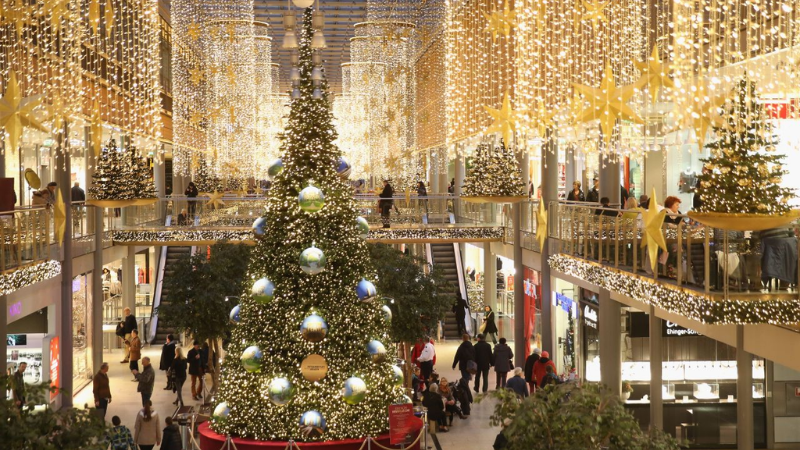
Christmas is a time of joy, but it also marks a peak in energy consumption. The dazzling Christmas lights, the warm indoor environments, and various holiday activities all rely heavily on energy. So, where does the main energy consumption during Christmas mainly come from? Let’s explore this question and find more energy-efficient and environmentally friendly ways to celebrate the holiday season.
How Much Power Do Your Christmas Lights Use?
While the twinkling lights of Christmas add to the festive cheer, they are actually one of the biggest energy guzzlers in our homes. A significant portion of our holiday energy consumption can be attributed to Christmas lights.
Types of Christmas Lights and Their Energy Consumption
Christmas Tree Lights
A typical strand of 100 mini lights uses around 45 watts. While that may not seem like much compared to other appliances, most Christmas trees require at least 10 strands. With 1,000 lights, that’s about 450 watts — similar to running a 55-inch flat-screen TV.
Outdoor String Lights
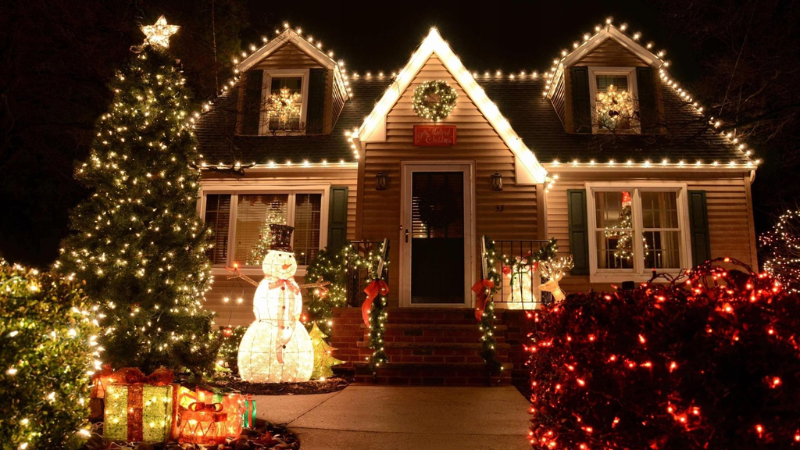
Large, colorful bulbs that adorn roofs and windows are a staple of holiday decor. However, they come with a high energy cost. A 100-bulb strand uses about 500 watts, and to decorate a typical two-story house, you’ll need about 20 strands, consuming a total of 10,000 watts. That’s equivalent to the energy required to heat a 1,500 square foot home with an electric furnace.
Outdoor Tree Lights
For larger outdoor trees, such as 20-footers, expect to use around 20,000 lights. With C9 multicolored lights consuming approximately 175 watts per strand, you would need around 80 strands to cover your trees — totaling around 14,000 watts per tree. This is comparable to running multiple household appliances like your oven, dryer, microwave, and coffee maker all at once.
Electric Holiday Decorations
Light-up decorations, such as reindeer, Santas, and snowmen, generally use about 120 watts. For example, two light-up holiday animals would consume roughly 240 watts, the same as running your computer monitor.
Icicle Lights
Icicle lights, with an average of 95 bulbs per strand, can use about 6,056 watts of energy. If you cover your gutters with three strands, that would add up to approximately 18,168 watts — about the same as doing 50 loads of laundry.
Overall Costs of Holiday Lighting
Using the average electricity rate of 12 cents per kilowatt-hour (kWh), the cost of keeping your home lit during the holiday season can be surprising, especially if you decorate from the beginning of Advent to New Year’s (45 days). Here’s a breakdown of potential energy costs:
- Christmas Tree: 450 watts x 7 hours/day x 45 days x $0.12/kWh = $17.01
- Outdoor String Lights: 10,000 watts x 7 hours/day x 45 days x $0.12/kWh = $378.00
- Outdoor Tree Lights: 14,000 watts x 2 trees x 7 hours/day x 45 days x $0.12/kWh = $529.20
- Holiday Decorations: 240 watts x 7 hours/day x 45 days x $0.12/kWh = $9.07
- Icicle Lights: 18,168 watts x 7 hours/day x 45 days x $0.12/kWh = $686.75
If you go all out with your holiday lighting, your energy bill could skyrocket to $1,620.03 for the 45-day holiday season, adding around $36.00 per day to your electricity costs.
Tips for Reducing Electricity Use with Christmas Lights
- Switch to LED Lights: LED lights use up to 90% less energy than traditional incandescent bulbs and last much longer.
- Use Timers: Set timers to automatically turn lights on and off, so they are only illuminated when needed.
- Consider Solar-Powered Lights: Solar lights charge during the day and light up at night without using household electricity.
- Optimize Light Placement: Focus on decorating key areas instead of covering the entire house, reducing the number of lights needed.
- Minimize Display Duration: Reduce the hours your lights are on each day. For instance, turn them on at dusk and off before you go to bed.
Reflective Decorations: Use tinsel and other reflective ornaments to enhance the brightness and effect of fewer lights.
Fireplace Efficiency: Cozy Comfort or Costly?
There’s nothing quite like the warmth of a crackling fireplace during the holidays, but how energy-efficient are they?
Wood-Burning Fireplaces
While aesthetically pleasing, wood-burning fireplaces are surprisingly inefficient at heating a home. They can lose up to 90% of the heat they generate through the chimney, which draws in cold air from outside to replace the warmth.
- Electric Impact: If your home is also relying on electric heating, such as a heat pump, it may have to work harder to maintain a comfortable temperature, especially in rooms farther from the fireplace.
Gas and Electric Fireplaces
- Gas Fireplaces: These are generally more efficient, with efficiency ratings ranging from 70% to 90%. They don’t rely on electricity (unless equipped with an electric blower), making them a good choice during colder months.
- Electric Fireplaces: Essentially space heaters with a cozy look, these fireplaces consume about 1,500 watts per hour, or 1.5 kWh. At an average rate of $0.12/kWh, running one for 4 hours a day over a month would add about $21.60 to your bill, totaling around 180 kWh.
Energy-Saving Tip: If you’re using a wood-burning fireplace, consider installing glass doors or a fireplace insert to improve heat retention. For electric fireplaces, use them to heat a specific room rather than your entire home for maximum efficiency.
Christmas is a season of joy and togetherness, but it also brings a significant increase in energy consumption from festive lighting, heating systems, holiday appliances, and transportation. These activities, while central to the holiday spirit, contribute to a larger carbon footprint and place a strain on natural resources and the environment. As we celebrate the holidays, let’s remember that balancing festivity with sustainability is not about giving up traditions but enhancing them in a way that is both joyful and responsible. Together, we can make Christmas a time of both celebration and care—for our loved ones and the environment.
This Christmas, as you enjoy the festive lights and decorations, consider making an eco-friendly change with Maysun Solar. Since 2008, Maysun Solar has been providing high-quality photovoltaic panels, including IBC, HJT, TOPCon, to help you reduce energy consumption all year long. By switching to solar, you can save on electricity bills and make your holiday season more sustainable. With our advanced technology and excellent performance, Maysun Solar is here to help you save money and celebrate responsibly. Wishing you a Merry Christmas and a greener, more energy-efficient year ahead!
Reference:
Ralston, J., Ralston, J., & Ralston, J. (2024, December 5). How Much Electricity is Used During Christmas? Unwrapping Holiday Energy Use. The Wire – the Official 4Change Energy Blog Site – 4Change Energy Blog Site. https://wire.4changeenergy.com/electricity-101/energy-conservation/christmas-electricity-usage/
Zagame, K. (2024, November 25). How much electricity do Christmas lights use? EnergySage. https://www.energysage.com/electricity/house-watts/how-much-electricity-do-christmas-lights-use/#electricity-usage-by-type-of-christmas-light
ElectricChoice.com. (2015, December 21). Electricity cost and consumption: Christmas lights and decorations in America. https://www.electricchoice.com/blog/electricity-cost-and-consumption-christmas-lights-and-decorations-in-america/
Does Summer Heat Reduce Solar Panel Efficiency? What Really Happens to PV Output
Table of Contents Many PV users notice an unusual phenomenon in summer: although sunlight is strongest at noon, the power curve shown in the monitoring app does not reach the expected peak. In contrast, on a sunny spring day, or just after a

Low-Carbon PV Procurement in France: Why ECS, PEP Ecopassport and Solar Carports Matter
Table of Contents France is becoming one of Europe’s most documentation-driven solar markets. For EPC companies, developers and commercial project owners, module selection is no longer based only on price-per-watt, efficiency or linear power warranties. Carbon documentation, supply-chain traceability and project-specific compliance files

PV Module Installation Beyond Rooftops: Multi-Scenario Applications for Bifacial N-Type Modules in Europe
PV module installation is not limited to rooftops. For residential users, small commercial users and distributed PV projects in Europe, spaces such as balconies, gardens, fences, carports, terraces, façades and pergolas can also provide additional installation areas when conditions allow. As solar use

Europe’s Grid Cap Era: Why High-Efficiency Solar Panels Matter More in 2026
Introduction In 2026, the economics of distributed solar in Europe are changing. Grid congestion, export limits, negative electricity prices and zero-export requirements mean that a solar project can no longer be judged only by how much electricity it generates. The more important question

How Do Solar Panel Delivery Delays Affect Installer Costs?
Solar panel delivery delays can affect installation schedules, project acceptance and payment collection.

The Forgotten “Invisible Assets”: Why Repowering Is the Strategic Key for European Solar in 2026
As grid congestion delays new solar projects across Europe, existing PV assets are becoming a strategic source of growth. This article explains why PV repowering can help EPCs and C&I asset owners unlock hidden value from already-connected solar plants, improve LCOE, and extend long-term asset performance with high-efficiency TOPCon, IBC and HJT modules.