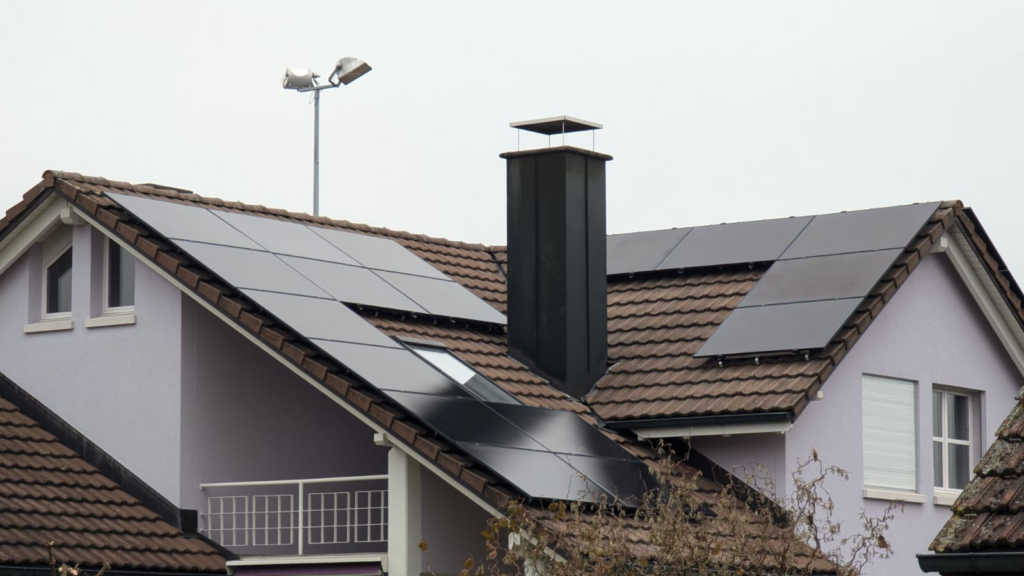
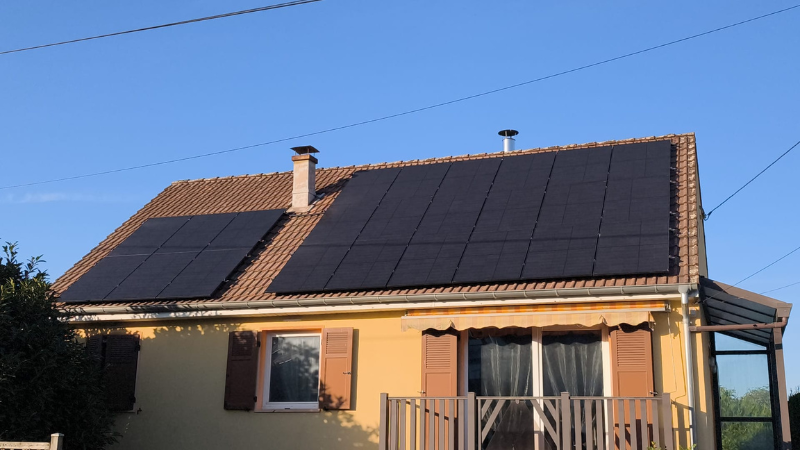
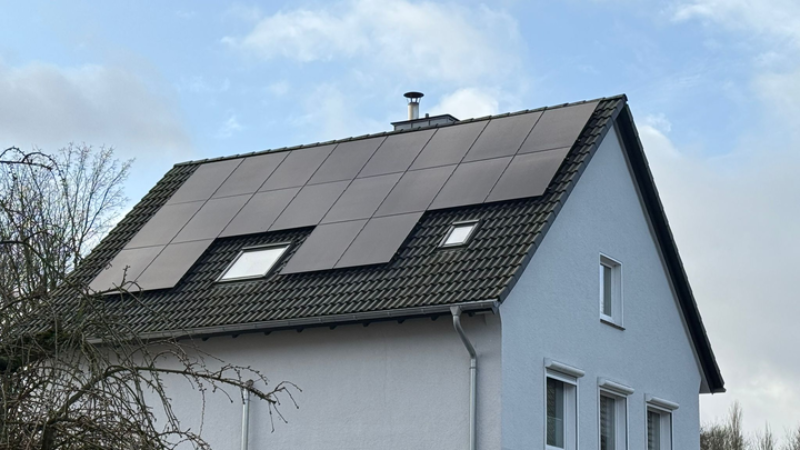
With home energy costs continuously rising, consumers are increasingly seeking effective ways to cut expenses. Installing solar panels (photovoltaic systems) has become a popular solution that not only reduces electricity bills but also minimizes environmental impact. In this article, we explore five practical tips to help you maximize the benefits of solar panels, significantly lower your energy costs, and contribute to a greener future.
1. Choose High-Efficiency Solar Panels
Selecting the right solar system is critical for optimizing energy output and saving costs. Factors to consider include the energy consumption of the household or business, available rooftop space, and budget. Users adopting high-efficiency solar technologies such as HJT (Heterojunction) and TOPCon can generate 5% to 10% more energy compared to traditional PERC panels. For example, a French company using Maysun Solar’s 500W TOPCon modules generates an additional 1,500 kWh annually, saving approximately €240 (calculated at €0.16 per kWh).
Recommendations:
- Choose solar panels with a conversion efficiency ≥21%, such as HJT, IBC, or TOPCon technologies.
- For homes with limited roof space, prioritize high-power bifacial or N-type monocrystalline panels to optimize energy generation.
- Ensure the product has quality certifications such as TUV and CE for long-term stable performance.
2. Adopt Dynamic Pricing Strategies
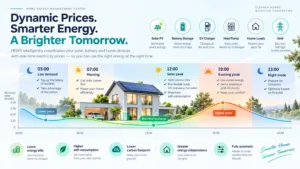
Many European countries implement time-of-use electricity pricing, allowing households to store energy during off-peak hours and use solar power during peak times, effectively reducing electricity bills. A household using peak-valley pricing combined with an energy storage battery can charge during low electricity prices (€0.12/kWh) at night and use stored energy during peak periods (€0.40/kWh). This can reduce grid electricity consumption by about 2,000 kWh annually, saving around €560 per year.
Recommendations:
- Choose dynamic pricing contracts (such as EnBW or E.ON’s dynamic pricing plans) and optimize electricity usage with solar power.
- Combine with smart appliances (e.g., programmable water heaters, dishwashers) to operate during low electricity price periods, further enhancing savings.
3. Sell Excess Electricity
If your solar system generates more electricity than your household needs, you can sell the surplus electricity to the grid. This not only provides additional income but also further reduces electricity expenses. Many countries have introduced favorable feed-in tariffs or subsidy programs to encourage households to feed excess power into the grid. For example, in Germany, solar households can sell excess electricity through the “Feed-in Tariff” program, with prices varying by system size and contract duration. According to data from 2023, households in Germany can receive €0.08 to €0.10 per kWh. A household with a 10 kW system can earn over €1,000 annually from surplus electricity.
By understanding local power policies and incentives, you can better utilize the economic benefits of excess electricity, achieving greater financial returns and sustainability from your solar system.
4.Maintain and Clean the Solar System
The effective operation of a solar system depends not only on high-quality equipment and proper installation but also on regular maintenance and cleaning to ensure optimal energy production. Cleaning the panels twice a year can improve system efficiency by 5% to 10%, especially in dry and dusty environments.
Recommendations:
- Inspect solar panels every 3 to 6 months to remove dust and debris.
- Replace aging or damaged components in a timely manner, as inverters typically last 10-15 years, and batteries around 5-10 years.
- Integrate remote monitoring systems to detect anomalies and improve operational efficiency.
5.Utilize Government Incentives
In Europe, many countries offer various government incentives and subsidies to promote the use of renewable energy, particularly solar power. These incentives include tax deductions, feed-in tariffs, green loans, and reward programs. According to the European Renewable Energy Council (EREC), solar subsidies across Europe helped households save an average of 25% on installation costs and achieve about 15% return on investment within the first 5 years of system operation.
For example, Germany’s “Feed-in Tariff” program offers a subsidy of €0.08 to €0.10 per kWh for solar users. A household with a 10 kW system generating 10,000 kWh per year can earn €800 to €1,000 annually from surplus electricity. This not only offsets electricity costs but also generates additional income.
By fully utilizing these government incentives, users can reduce upfront installation costs, increase system economic benefits, and accelerate the return on investment for solar projects, making solar energy investments more feasible and attractive.
Conclusion
By implementing these five tips, you can maximize the potential of your solar panels, significantly reduce electricity expenses, and contribute to a sustainable future. Solar energy is not only a clean, renewable source of power but also a long-term economic benefit for households. Start optimizing your solar system today and enjoy the savings on your electricity bills!
Since 2008, Maysun Solar has focused on producing high-quality photovoltaic modules. Our range of solar panels, including IBC, HJT, TOPCon, and balcony solar panels, all incorporate advanced technology, excellent performance, and guaranteed quality. Maysun Solar has successfully established offices and warehouses in numerous countries and built long-term partnerships with excellent installers! For the latest quotes on solar panels or any photovoltaic-related inquiries, please contact us. We are dedicated to providing you with safe and reliable products.
Does Summer Heat Reduce Solar Panel Efficiency? What Really Happens to PV Output
Table of Contents Many PV users notice an unusual phenomenon in summer: although sunlight is strongest at noon, the power curve shown in the monitoring app does not reach the expected peak. In contrast, on a sunny spring day, or just after a

Low-Carbon PV Procurement in France: Why ECS, PEP Ecopassport and Solar Carports Matter
Table of Contents France is becoming one of Europe’s most documentation-driven solar markets. For EPC companies, developers and commercial project owners, module selection is no longer based only on price-per-watt, efficiency or linear power warranties. Carbon documentation, supply-chain traceability and project-specific compliance files

PV Module Installation Beyond Rooftops: Multi-Scenario Applications for Bifacial N-Type Modules in Europe
PV module installation is not limited to rooftops. For residential users, small commercial users and distributed PV projects in Europe, spaces such as balconies, gardens, fences, carports, terraces, façades and pergolas can also provide additional installation areas when conditions allow. As solar use

Europe’s Grid Cap Era: Why High-Efficiency Solar Panels Matter More in 2026
Introduction In 2026, the economics of distributed solar in Europe are changing. Grid congestion, export limits, negative electricity prices and zero-export requirements mean that a solar project can no longer be judged only by how much electricity it generates. The more important question

How Do Solar Panel Delivery Delays Affect Installer Costs?
Solar panel delivery delays can affect installation schedules, project acceptance and payment collection.

The Forgotten “Invisible Assets”: Why Repowering Is the Strategic Key for European Solar in 2026
As grid congestion delays new solar projects across Europe, existing PV assets are becoming a strategic source of growth. This article explains why PV repowering can help EPCs and C&I asset owners unlock hidden value from already-connected solar plants, improve LCOE, and extend long-term asset performance with high-efficiency TOPCon, IBC and HJT modules.