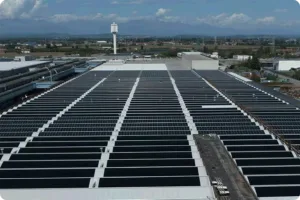
With rising energy costs, solar power has become a crucial tool for businesses looking to cut expenses and enhance efficiency. However, solar investments go beyond equipment purchases—they also involve long-term returns and operational efficiency. As a result, accurately calculating the return on investment (ROI) for a solar system and optimizing long-term benefits has become a primary concern for investors.
Why Is ROI Crucial for Solar Investments?
ROI is a key metric in evaluating the profitability and payback period of a solar project, directly influencing financial decisions. Accurate ROI calculations help investors:
- Assess the long-term benefits of a solar system and reduce electricity expenses.
- Maximize returns by leveraging policy incentives.
- Compare different solutions to select the optimal configuration.
Key Factors Affecting Solar ROI
ROI is not a fixed value; it is influenced by several variables:
- System Cost– Includes solar modules, inverters, installation, and maintenance expenses.
- Power Generation– Affected by sunlight availability, module efficiency, and installation angles.
- Electricity Price Trends– Expected increases in electricity prices enhance long-term returns.
- Self-Consumption Rate– Determines how much electricity savings a business can achieve.
- Maintenance Costs– Smart O&M can lower the levelized cost of energy (LCOE).
- Policy Incentives – Support measures like PPAs, grid subsidies, and tax benefits.
Basic ROI Calculation Method
ROI=Initial InvestmentAnnual Revenue−Annual Operating Costs×100%
Where:
- Annual Revenue= Annual Power Generation × Electricity Price × Self-Consumption Rate + Excess Energy Sold to Grid
- Annual Operating Costs= Maintenance Costs + Inverter Replacement Costs + Other Operating Expenses
- Initial Investment= Solar Modules + Inverters + Installation + Related Equipment
This formula provides a basic assessment of investment returns but does not account for critical variables that impact long-term profitability.
Key Variables Affecting ROI
- Electricity Price Trends– Future increases in electricity prices will lead to higher savings, improving ROI. Historical data shows that industrial and commercial electricity prices tend to rise, making future price forecasts essential.
- Maintenance Costs– Implementing smart maintenance systems can lower long-term operational costs and enhance efficiency, optimizing ROI. For example, remote monitoring and predictive maintenance can prevent unexpected failures and additional expenses.
- Policy Incentives– Government incentives such as tax exemptions, subsidies, and power purchase agreements (PPAs) can significantly shorten the payback period and enhance overall ROI. As policies vary by region, investors should analyze the specific market conditions.
While traditional ROI calculations offer a straightforward approach, they do not fully capture the actual long-term profitability of a solar system. Investors should integrate these key variables and adopt a more comprehensive calculation method to make economically sound investment decisions.
Case Study: How Real-World Data Impacts Solar ROI
In solar investments, system size, energy storage configuration, and self-consumption rate significantly affect ROI (Return on Investment). By analyzing real data, we can better understand the profitability of different solar solutions. Below is a comparison of two solar projects of different scales:
Parameters |
100 kWp Commercial Rooftop Solar |
500 kWp Industrial Rooftop Solar |
Total Investment Cost |
€80,000 | €350,000 |
Annual Power Generation |
110,000 kWh | 550,000 kWh |
Self-Consumption Rate |
70% | 85% |
Grid Electricity Price |
€0.18/kWh | €0.16/kWh |
Excess Energy Feed-in Tariff |
€0.08/kWh | €0.07/kWh |
Annual O&M Cost |
€1,500 | €6,000 |
Annual Revenue |
€14,220 | €85,525 |
ROI (Excluding Policy Support) |
15.9% | 22.7% |
Payback Period |
6.3 years | 4.8 years |
Key Takeaways from the Comparison
- Larger Solar Systems Have Higher ROI– The 500 kWp industrial rooftop system achieves a higher ROI (22.7%) compared to the 100 kWp commercial rooftop system (15.9%). This is mainly due to economies of scale, where unit costs are lower, and a higher self-consumption rate boosts returns.
- Increasing Self-Consumption Maximizes Profitability– Businesses that maximize self-consumption and minimize the amount of electricity fed into the grid at lower rates can significantly improve their ROI.
Strategies to Maximize Solar ROI
To optimize ROI, businesses should focus on enhancing power generation efficiency, reducing operational costs, and leveraging policy incentives.
1. Invest in High-Efficiency Modules and Smart O&M
High-Efficiency Solar Modules (such as TOPCon and HJT) improve power output, shortening the payback period.
Smart O&M Systems (AI monitoring + remote diagnostics) reduce failure rates, extend equipment lifespan, and lower the Levelized Cost of Energy (LCOE).
2. Integrate Energy Storage to Boost Self-Consumption
Battery Storage Reduces Grid Dependence – Enhancing energy autonomy for businesses.
Peak Shaving & Load Shifting – Charging batteries when electricity rates are low and discharging during peak hours maximizes electricity cost savings.
3. Utilize Government Incentives and PPA Models
Government Incentives – Tax exemptions, investment subsidies, and net metering policies can significantly shorten the payback period.
Power Purchase Agreements (PPA) – A zero upfront investment model, ideal for businesses with limited capital but looking to cut electricity costs.
Conclusion
Maximizing solar investment returns requires balancing short-term ROI with long-term profitability. By using high-efficiency modules, implementing smart O&M, increasing self-consumption, and leveraging policy incentives, businesses can lower costs and enhance returns. The ultimate goal is to achieve the optimal investment strategy:
Short-Term ROI + Long-Term Cash Flow + Additional Benefits = Maximum Investment Value.
Since 2008, Maysun Solar has been dedicated to producing high-quality photovoltaic modules. Our range of solar panels, including IBC, HJT and TOPCon panels, and balcony solar stations, are manufactured using advanced technology and offer excellent performance and guaranteed quality. Maysun Solar has successfully established offices and warehouses in many countries and built long-term partnerships with top installers! For the latest quotes on solar panels or any photovoltaic-related inquiries, please contact us. We are committed to serving you, and our products provide reliable assurance.
Recommend Reading:

Carbon Footprint and LCA in European C&I Solar: Why EPCs Should Check Before Module Procurement
Solar power is widely regarded as a low-carbon energy source. However, generating electricity from solar energy and manufacturing a low-carbon solar module are not quite the same thing. Before a photovoltaic module leaves the factory, it passes through multiple manufacturing stages, including silicon
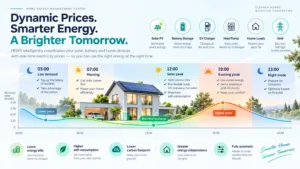
HEMS and Dynamic Electricity Pricing: From Solar Generation to Smart Energy Management
For years, home solar systems have focused on one main question: How much electricity can my rooftop solar system generate? But as home batteries, smart meters, electric vehicles and flexible electricity tariffs become more common, residential energy management is entering a new phase.

Maysun Solar’s First 3.5 MW Solar EPC Project in Italy Enters Its Final Stage
A large-scale commercial and industrial rooftop solar project with a total capacity of approximately 3.5 MWp is now entering its final stage in the Turin area of Piedmont, Italy. Around 8,000 solar modules planned for the project have now been fully installed.

August European Solar Industry News
In August 2026, Europe’s solar market combined record PV generation with volatile power prices driven by heat, gas costs and low wind output. Policy support also expanded, including 800 W plug-in solar in Great Britain and greater EU flexibility for PV and storage investments, while module prices largely stabilized amid renewed oversupply.

Industrial Roofs with Limited Load Capacity: Lightweight or High-Efficiency Solar Panels?
On an existing industrial roof, “lighter is better” is not a reliable module-selection rule. The first question is how much additional load the roof can safely accept. Only then does it make sense to compare module weight, power density, mounting method and the
How to Verify Solar Panels Before Buying: Datasheets, Certifications, Warranties and Delivery Inspection
A datasheet, an IEC certificate and a 25- or 30-year warranty can make a solar module look fully validated on paper. For a reliable purchasing decision, however, those documents are only the starting point. The electrical ratings, mechanical design, certificates, connectors, warranty terms