1. Regional Blackout Events as a Warning to Enterprise Energy Structures
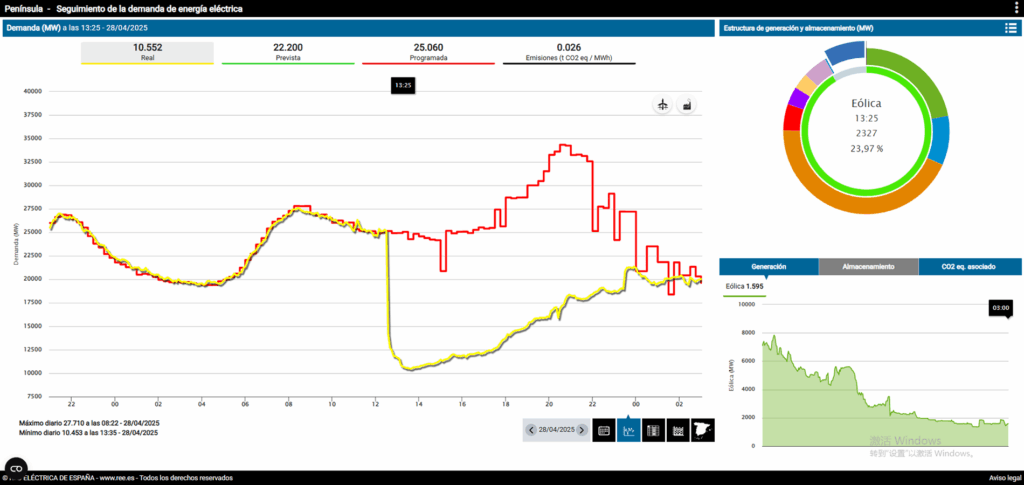
At noon on April 28, 2025, the Iberian Peninsula experienced a massive power outage, with most areas of Spain and Portugal losing electricity within seconds. According to data from Red Eléctrica de España, the national grid load plummeted by over 15 GW within just five seconds at the time of the incident, affecting over 50 million people and causing widespread disruption, including halted high-speed rail, industrial shutdowns, and traffic chaos.
The cause of the blackout is still under investigation. The European Network of Transmission System Operators for Electricity (ENTSO-E) has initiated a review and is expected to release an official report within six months. Grid operators in Spain and Portugal indicated that the high share of solar and wind power at the time lacked sufficient balancing resources, which may have triggered grid instability. To protect its own grid from cascading impacts, France automatically severed cross-border transmission connections with Spain, further amplifying the scale of the disruption.
While no final conclusion has been published and there is no evidence pointing to sabotage or cyberattacks, the incident has reignited discussions across Europe on the stability of power grids with high renewable penetration. Topics such as energy system resilience and the emergency response capacity of commercial and industrial photovoltaic systems have entered the spotlight. For businesses in manufacturing, logistics, and data services—sectors that rely heavily on continuous power—the implications of this sudden event extend far beyond a temporary blackout, exposing deeper vulnerabilities.
Should enterprises now begin to consider developing their own backup energy systems in response to these potential risks? What were once niche concerns for energy specialists are now becoming critical topics in business strategy discussions.
Chart Source: Red Eléctrica de España (REE), Real-time electricity demand monitoring, April 28, 2025. https://demanda.ree.es
2. Vulnerabilities and Risk Exposure in Enterprise Energy Systems
To this day, most commercial and industrial enterprises remain highly dependent on the public power grid. Under normal conditions, the process from grid connection to electricity billing ensures orderly energy use. However, once the grid experiences disruptions, a variety of latent risks within the enterprise’s energy system are exposed.
Power Outage Risk
For industries such as manufacturing, warehousing, logistics, and data services, sudden power outages often lead to halted automation systems, delayed orders, and even loss of raw materials or data assets. Even a few minutes of downtime can result in batch spoilage of materials or system restart failures. According to estimates from the International Energy Agency (IEA), each hour of outage can cause a loss of €12–25 per kilowatt of load for manufacturing enterprises, with failed restarts potentially triggering secondary process defects.
Electricity Price Volatility Risk
Electricity prices are highly susceptible to weather conditions, policy shifts, and changes in the energy mix, making power costs unstable and rendering budgeting unpredictable. Without controllable energy sources, enterprises struggle to buffer or pass on the cost pressure from volatile electricity prices.
According to tracking data from Statkraft and Fraunhofer ISE, the average price gap between the highest and lowest commercial electricity quotes in Germany in 2024 ranged from €0.06 to €0.09/kWh within a single month, with a fluctuation margin of ±25–35%. For medium-load enterprises, this level of uncertainty can lead to annual budget deviations of tens of thousands of euros, further disrupting procurement and cost control strategies.
Lack of System Flexibility and Backup Capacity
Most enterprises have yet to establish any kind of energy backup mechanism. Critical loads—such as cold chain systems, cleanroom equipment, and data centers—often lack even basic fault tolerance. When the grid becomes unbalanced, there is no buffer in place, making quick recovery virtually impossible.
Energy supply, long regarded as a “public resource” or “infrastructure matter,” has typically remained a peripheral issue in business operations. Yet with growing digitalization and rising demands for uninterrupted operations, energy independence and flexibility are becoming essential components of enterprise energy resilience.
3. Key Pathways to Building Enterprise-Level Energy Resilience
Deploying photovoltaic (PV) equipment is no longer the core challenge—what enterprises truly lack is system coordination and strategic design.
Amid frequent electricity price fluctuations and sudden outages, business energy needs have evolved from simply “stable access” to “controllable, adjustable, and predictable.” Yet many enterprises still treat energy investments as mere equipment purchases: installing a PV station, adding a few storage batteries, and connecting to a platform to display energy data. Such seemingly complete PV systems often struggle to cope with complex energy usage scenarios.
The importance of PV systems is unquestionable—but they are not the solution itself
The most direct benefit of deploying enterprise PV is daytime self-consumption and reduced reliance on grid electricity. For companies with high daytime load, this can provide over 60% self-sufficiency—especially vital in today’s high-price electricity markets. However, PV has inherent limitations: generation depends on sunlight, cannot be adjusted, and cannot respond in emergencies. When generation and load are not aligned—such as at night or during cloudy weather—the value of the system is greatly diminished.
This means that PV alone cannot serve as the core energy safeguard for enterprises.
The value of storage lies not in “how much it stores,” but in “how it is dispatched”
Many enterprises are beginning to recognize the importance of storage, but still view it as a simple backup. A strategically valuable energy storage system must be planned based on the enterprise’s load profile, peak-valley differences, and blackout tolerance: discharge timing, target loads, power priority—all must be addressed through dispatch strategies, not just capacity buildup.
Without strategy, storage is merely a static asset.
The Energy Management System (EMS) is the key to turning “solar + storage” into system capability
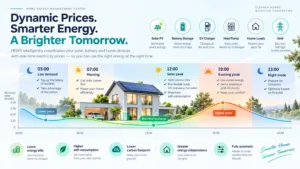
EMS is not just an energy monitoring tool—it is the command center of the entire energy system. It continuously monitors PV output, load variation, and storage status, and dynamically executes energy allocation to enable automated load prioritization, peak shaving, and emergency response.
A solar-plus-storage system without EMS may have generation and storage capabilities but lacks judgment, decision-making, and dispatch mechanisms—and remains a passive system.
A truly resilient energy system is designed from the outset around coordination, not equipment patchwork. “PV + Storage + EMS” is about capability integration, not functional stacking. Enterprises seeking long-term energy stability must evolve from “energy users” to “energy orchestrators.” Only by owning a system that actively manages risks and optimizes structure in line with business rhythm can companies maintain stable operations and autonomous energy control in a changing energy landscape.
4. From Solution Design to System Integration Implementation
Building an enterprise-level energy resilience system requires systematic planning of energy usage structure, dispatch capability, and scalability. Photovoltaics, energy storage, and Energy Management Systems (EMS) can only form a truly controllable, adjustable, and optimizable enterprise energy system through coordinated design and strategy-driven integration.
1. Tailor Systems to Enterprise Needs and Define Configuration Logic
Enterprises differ fundamentally in load characteristics, spatial resources, electricity price structures, and business scalability. System design should be based on these key variables rather than applying generic templates.
Enterprises should carefully assess:
Load curves and sensitivity of critical equipment (e.g., whether there are nighttime or continuous loads, and tolerance for short outages)
Available space and construction conditions (e.g., whether the roof can bear PV installation, presence of shading or property restrictions)
Peak-valley electricity price gaps and annual power consumption (e.g., whether peak shaving is possible, whether storage is economically justified)
Future business expectations (e.g., whether to reserve flexibility for capacity expansion or load changes)
These variables together determine the priority path and depth of system configuration. Shifting from “equipment fit” to “system fit” is the critical dividing line between success and failure in deployment.
2. Adopt a Phased Approach to Improve Deployment Feasibility
Deploying a complete system in one go often faces financial and technical barriers. A phased deployment strategy is recommended:
Phase 1: Deploy a commercial and industrial PV system to primarily address daytime load and reduce grid electricity costs
Phase 2: Integrate an energy storage system to enable peak shifting and emergency backup, improving system stability
Phase 3: Introduce an EMS to enable load identification, solar-storage coordination, and intelligent dispatch, enhancing overall energy efficiency
This phased pathway aligns with technological development pace while reducing initial investment risks. Step-by-step construction allows enterprises to gradually transition from “cost optimization” to “dispatch capability enhancement.”
3. Choose Partners with Integration and Long-Term Support Capabilities
The actual performance of the system depends on the quality of integration and ongoing operation and maintenance.
When selecting partners, enterprises should prioritize those that:
Provide energy strategy services based on real data
Possess the ability to integrate and commission PV, storage, and EMS systems in coordination
Offer long-term system operation, maintenance, and optimization support
Priority should be given to partners with project delivery experience, system diagnostic capabilities, and response mechanisms, ensuring that the deployed system truly supports energy flexibility and business continuity.
As energy systems evolve into strategic assets for enterprises, the deployment model, system design logic, and partner selection are becoming core variables in determining energy capability. Building a resilient energy system is not only a response to sudden risks, but also a long-term foundation for stable business operations.
5. Energy Security Will Become the Strategic Foundation of Enterprise Operations
For a long time, energy within enterprises has been viewed merely as infrastructure or a cost variable—so long as electricity was available and prices were manageable, there was little need for deeper consideration. However, recent events—especially the large-scale blackout in Spain and Portugal in April 2025—have once again highlighted that traditional perceptions of energy are no longer sufficient to address emerging risk structures.
Grid instability, unpredictable electricity prices, and systemic fluctuations brought about by increasing renewable energy penetration are transforming energy from a “readily available resource” into a “core capability that must be controlled” by enterprises. A solar-storage-EMS system with autonomous adjustment capacity is no longer just a tool to manage electricity use—it is a critical lever for reducing long-term costs, ensuring business continuity, and meeting ESG compliance requirements.
Now is a pivotal window for enterprises to reshape their energy system capabilities. Policy support remains strong, component prices are within a favorable range, and system integration technologies have matured. If enterprises can seize this moment to redefine themselves as “energy orchestrators,” it will serve not only as a proactive response to risk but also as a structural investment in the long-term stability of operations.
Since 2008, Maysun Solar has been both an investor and manufacturer in the photovoltaic industry, providing zero-investment commercial and industrial rooftop solar solutions. With 17 years in the European market and 1.1 GW of installed capacity, we offer fully financed solar projects, allowing businesses to monetize rooftops and reduce energy costs with no upfront investment. Our advanced IBC, HJT and TOPCon panels, and balcony solar stations, ensure high efficiency, durability, and long-term reliability. Maysun Solar handles all approvals, installation, and maintenance, ensuring a seamless, risk-free transition to solar energy while delivering stable returns.
Reference
Red Eléctrica de España (2025). Real-time electricity demand monitoring: 28 April 2025.
https://demanda.ree.es/visiona/peninsula/demandaau/total/2025-04-28
Statkraft and Fraunhofer ISE (2024). Commercial Electricity Price Volatility in Germany: 2024 Market Overview. https://www.energy-charts.info
International Energy Agency (2021). The Value of Electricity Security.
https://www.iea.org/reports/the-value-of-electricity-security
Financial Times (2025). Portugal halts Spanish imports as power prices surge, 29 April.
https://www.ft.com/content/3875c630-215b-490b-a0a8-c6bcf3cfedc6
Reuters (2025). Spain’s power generation nearly back to normal after blackout, 29 April.
https://www.reuters.com/world/europe/spains-power-generation-nearly-back-normal-after-monday-blackout-says-grid-2025-04-29
Recommend reading

Low-Carbon PV Procurement in France: Why ECS, PEP Ecopassport and Solar Carports Matter
Table of Contents France is becoming one of Europe’s most documentation-driven solar markets. For EPC companies, developers and commercial project owners, module selection is no longer based only on price-per-watt, efficiency or linear power warranties. Carbon documentation, supply-chain traceability and project-specific compliance files

PV Module Installation Beyond Rooftops: Multi-Scenario Applications for Bifacial N-Type Modules in Europe
PV module installation is not limited to rooftops. For residential users, small commercial users and distributed PV projects in Europe, spaces such as balconies, gardens, fences, carports, terraces, façades and pergolas can also provide additional installation areas when conditions allow. As solar use

Europe’s Grid Cap Era: Why High-Efficiency Solar Panels Matter More in 2026
Introduction In 2026, the economics of distributed solar in Europe are changing. Grid congestion, export limits, negative electricity prices and zero-export requirements mean that a solar project can no longer be judged only by how much electricity it generates. The more important question

How Do Solar Panel Delivery Delays Affect Installer Costs?
Solar panel delivery delays can affect installation schedules, project acceptance and payment collection.

The Forgotten “Invisible Assets”: Why Repowering Is the Strategic Key for European Solar in 2026
As grid congestion delays new solar projects across Europe, existing PV assets are becoming a strategic source of growth. This article explains why PV repowering can help EPCs and C&I asset owners unlock hidden value from already-connected solar plants, improve LCOE, and extend long-term asset performance with high-efficiency TOPCon, IBC and HJT modules.

Solar Panel Procurement in Europe: Why Stable Supply Matters More Than a One-Off Low Price
When European installers, distributors and corporate buyers choose solar panels, a one-off low price should not be the only factor. Stable supply, model continuity, technical documents and replenishment capacity often matter more for long-term cooperation and project delivery.