
For commercial and industrial (C&I) rooftop solar projects, the maximum number of panels a roof can accommodate does not necessarily determine the most suitable system size.
A factory may have sufficient roof space for a large PV installation, but its electricity consumption, grid connection conditions and investment objectives may support a different capacity.
An oversized system can produce more electricity than the facility can use or export, while an undersized system may miss opportunities to reduce electricity costs.
For EPC contractors, effective solar system sizing means finding a capacity that balances technical feasibility, electricity demand and long-term project economics.
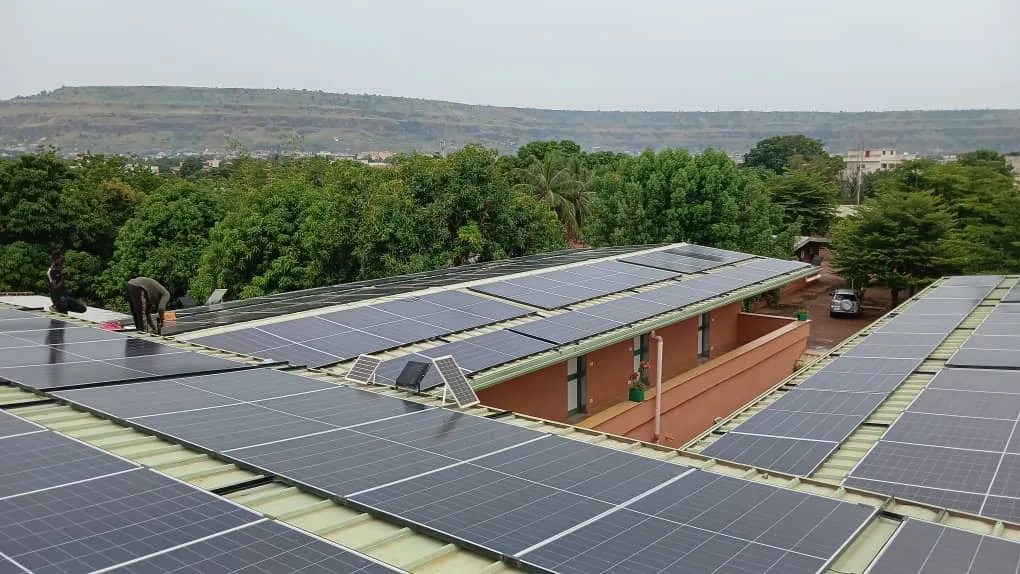
At a Glance: How Should EPCs Determine the Right PV Capacity?
A practical commercial rooftop solar sizing process follows five steps:
Collect the facility’s electricity consumption, grid connection and roof data.
Establish the technically feasible PV capacity range.
Compare different system sizes using solar generation and load profiles.
Evaluate project economics and the value of additional capacity.
Recommend a design aligned with the owner’s budget and operational needs.
The objective is not simply to maximize installed kWp, but to identify a system that delivers reliable electricity savings and reasonable long-term returns.
Table of Contents
Step 1: Collect the Right Project Data
Step 2: Establish the Feasible PV Capacity Range
Step 3: Compare Different System Sizes
Step 4: Evaluate the Financial Value of Additional Capacity
Step 5: Recommend the Most Suitable PV System Size
Frequently Asked Questions
Step 1: Collect the Right Project Data
Before proposing a commercial rooftop PV capacity, EPC contractors need to understand how the facility consumes electricity and what technical constraints apply.
Three groups of data should be collected during the initial assessment.
| Required Data | What to Collect | Why It Matters |
|---|---|---|
| Electricity consumption | Preferably 12 months of load data, with 15-minute or similarly detailed intervals | Determines how well solar generation matches demand |
| Grid connection conditions | Approved export capacity, connection agreement, control requirements and possible upgrade costs | Identifies grid-related operating constraints |
| Roof information | Roof plans, usable area, structural documentation, rooftop equipment and project location | Establishes the technically installable capacity |
Why is the electricity load profile important?
Two industrial facilities can have similar annual electricity consumption but very different daily demand patterns.
A factory operating mainly during daylight hours may consume a large share of its solar generation directly. Another facility with primarily nighttime operations may export more electricity or require generation curtailment.
EPCs should therefore review weekday and weekend demand, seasonal production changes and potential future increases in electricity consumption.
The first decision is whether sufficient project data is available to support reliable system sizing.
Annual electricity bills and roof dimensions can support an initial estimate, but they are not enough to establish accurate self-consumption rates or financial returns.
Step 2: Establish the Feasible PV Capacity Range
Once the necessary information is available, EPCs should evaluate roof conditions and grid connection requirements separately.
Determine the available rooftop capacity
The total roof area is not the same as the usable area for solar modules.
Industrial buildings may have skylights, smoke vents, HVAC equipment, maintenance access requirements and structural limitations that affect panel placement.
Module dimensions, weight, approved mounting configurations and mechanical load specifications also influence the final layout.
Higher-wattage modules are not necessarily more space-efficient. Their physical dimensions and suitability for the available roof sections must also be considered.
A preliminary layout and structural feasibility assessment should establish the realistic maximum installation capacity.
Check grid export limitations
Three capacity figures need to be distinguished:
DC installed capacity (kWp): The combined rated capacity of the PV modules.
Inverter AC capacity (kW): The rated output capability of the inverters.
Permitted grid export capacity (kW): The maximum power the installation is allowed to export under its connection conditions.
These values are not interchangeable.
In some projects, the installed DC capacity may exceed the permitted export capacity, provided the system complies with the grid operator’s connection, protection and power-control requirements.
However, when PV generation exceeds both the facility’s immediate demand and its permitted export capacity, some potential generation may need to be curtailed.
EPCs should therefore verify the actual connection agreement rather than assuming that the existing transformer rating determines the allowable PV system size.
For a broader discussion of this issue, see Grid Caps and Solar ROI in Europe: Why High-Efficiency Panels Matter.
The outcome of this step should be a technically feasible capacity range, not a final system size.
Step 3: Compare Different System Sizes
After establishing the feasible capacity range, EPCs can evaluate two or three system configurations.
Rather than selecting arbitrary capacities, each option should reflect actual project constraints and a clear design objective.
Match solar generation with electricity demand
The European Commission’s Photovoltaic Geographical Information System (PVGIS) can estimate PV generation for a specific location and provide hourly production data.
EPCs can combine this information with the facility’s electricity load profile to evaluate how much generated electricity can be used on-site.
For a system without battery storage, the analysis follows three basic conditions:
When PV output is below the facility’s electricity demand, available solar power can be consumed on-site.
When PV output exceeds demand, the surplus may be exported according to the grid connection conditions.
When the surplus exceeds the permitted export limit, additional generation may need to be curtailed.
Generation and load data must be aligned to the same time intervals. Where short-term export peaks are important, finer-resolution modelling may be required.
The comparison should focus on the following indicators:
| Evaluation Metric | Key Question |
|---|---|
| Usable annual PV generation | How much solar electricity can actually be used or exported? |
| On-site solar consumption | How much electricity can the facility consume directly? |
| Grid export | How much surplus electricity can be exported? |
| Potential curtailment | How much potential generation may be lost due to operating restrictions? |
| Value of additional capacity | How much useful electricity does each capacity increase deliver? |
It is also important to distinguish between the self-consumption ratio and the self-sufficiency ratio.
According to the IEA PVPS methodology for PV self-consumption, self-consumption describes how much PV electricity is used locally, while self-sufficiency describes how much of the facility’s electricity demand is covered by PV generation.
A higher self-consumption ratio does not automatically mean a more profitable PV system.
A relatively small system may achieve high self-consumption, while a moderately larger installation could still generate additional electricity with meaningful economic value.
The comparison should therefore consider usable electricity and financial performance together.
Step 4: Evaluate the Financial Value of Additional Capacity
Once energy simulations are completed, EPCs need to determine whether the additional electricity produced by a larger installation justifies its cost.
Electricity consumed directly by the facility generally creates value by reducing grid purchases. Exported electricity is valued according to the applicable tariff, contract or settlement arrangement.
Additional PV capacity may become less attractive when a growing proportion of its output is exported at a lower value or curtailed.
The financial assessment should consider:
Initial investment costs, including modules, mounting structures, inverters and installation;
Electricity bill savings from on-site solar consumption;
Revenue from electricity exported to the grid;
Operation, maintenance and equipment replacement costs;
Net present value (NPV), internal rate of return (IRR) and the incremental value of additional capacity;
Sensitivity to electricity prices, future load growth and financing assumptions.
The key question is:
Will the additional electricity savings and export revenue justify the extra investment over the project’s operating life?
For projects with uncertain export prices or changing electricity demand, EPCs should compare several financial scenarios rather than rely on a single payback estimate.
Where adding more PV modules provides limited incremental value, load management or battery storage may also be worth evaluating. However, these alternatives require their own technical and financial assessments.
Step 5: Recommend the Most Suitable PV System Size
The final EPC proposal should explain not only the recommended capacity but also why it is more suitable than the alternatives.
A useful approach is to present different configurations according to the project owner’s priorities.
| Design Option | Main Objective | Suitable Project Priorities |
|---|---|---|
| Lower-investment option | Limit upfront costs and prioritize stable on-site consumption | Budget control and shorter payback |
| Balanced option | Optimize electricity savings, export value and investment | Long-term economic performance |
| Expansion-ready option | Consider future electricity demand and potential system expansion | Production growth, electrification or future storage |
The final recommendation should be supported by the project-specific simulation results and the owner’s investment objectives.
It should also clearly identify the proposed modules, actual module count, inverter configuration, estimated energy performance and required export-control measures.
How does module selection influence the final design?
Module selection remains an important part of commercial rooftop solar sizing.
For industrial roofs, EPCs should compare module efficiency, dimensions, weight, mechanical load specifications and approved mounting methods.
These factors affect the amount of capacity that can be installed within the available roof area and the practicality of the installation.
Maysun Solar provides technical specifications for commercial and industrial PV modules, allowing EPCs to assess module compatibility with the proposed rooftop layout and project requirements.
Module specifications should support the overall system design, rather than determine the final installed capacity on their own.
Frequently Asked Questions
Should industrial rooftop solar systems always maximize installed capacity?
No. Maximum rooftop capacity represents what may be technically installable, not necessarily what offers the best financial return. Electricity demand, export conditions and investment costs should also be evaluated.
Can high-efficiency solar panels overcome grid export limits?
Not directly. High-efficiency modules can increase installed capacity per unit of roof area, but they do not change the export limit approved by the grid operator. The complete system must still meet applicable connection and control requirements.
Can EPCs size a commercial solar system without detailed electricity consumption data?
A preliminary estimate is possible, but reliable self-consumption, curtailment and financial assessments require more detailed load information. Actual operating data should be used before finalizing the system design.
Conclusion
Commercial rooftop solar sizing requires more than determining how many panels can fit on a building.
For EPC contractors, an effective process begins with electricity consumption data and grid connection requirements, followed by roof feasibility assessments, energy simulations and financial comparisons.
Module efficiency, physical dimensions and mounting conditions also contribute to the final design, but the recommended capacity should ultimately be supported by project-specific operating and economic data.
The most suitable PV system is not necessarily the largest installation a roof can accommodate. It is the system that best aligns solar generation with the facility’s electricity demand, grid conditions and long-term investment goals.
Sources and References
1. European Commission Joint Research Centre — Photovoltaic Geographical Information System (PVGIS)
Official tool for evaluating solar radiation, PV system performance and location-specific generation potential.
https://joint-research-centre.ec.europa.eu/photovoltaic-geographical-information-system-pvgis_en
2. European Commission JRC — PVGIS Hourly Radiation and PV Power Data
Technical documentation on hourly solar radiation and photovoltaic power output calculations.
https://joint-research-centre.ec.europa.eu/photovoltaic-geographical-information-system-pvgis/using-pvgis-5/pvgis-5-tools/hourly-radiation_en
3. IEA PVPS — A Methodology for the Analysis of PV Self-Consumption Policies
Definitions and methods for evaluating PV self-consumption and self-sufficiency.
https://iea-pvps.org/key-topics/iea-pvps-a-methodology-for-the-analysis-of-pv-self-consumption-policies-2016/
4. European Commission — European Grids
Official information on European grid infrastructure, integration and development challenges.
https://energy.ec.europa.eu/topics/infrastructure/european-grids_en
5. System Advisor Model (SAM) — Financial Models
Technical guidance on project cash-flow analysis and financial indicators, including NPV and IRR.
https://sam.nlr.gov/financial-models.html