Photovoltaic module installation: horizontal vs. vertical

Photovoltaic Module Installation: Is Horizontal or Vertical Better?

Table of Contents

In residential and commercial photovoltaic projects, the orientation of PV modules is far more than a simple installation choice — it affects system efficiency, drainage performance, aesthetics, and maintenance requirements.

As photovoltaic systems become more diverse and decentralised, rooftops, façades, balconies and even garden fences are increasingly used as potential generation surfaces. Selecting the right layout for each building condition has therefore become a key design-stage decision.

Horizontal installation is traditionally preferred on rooftops due to simpler cabling and lower wind load, while vertical installation performs better in drainage and architectural integration. Understanding these differences helps ensure a more reliable and suitable layout for each scenario, and reflects long-term planning in system operation, maintenance and space utilisation within both AC and DC solar PV systems.

What Is Horizontal or Vertical Module Layout?

The layout of photovoltaic modules generally falls into two categories:

  • Horizontal installation: the long side of the module runs parallel to the roof ridge, with the short side positioned vertically. This configuration is more common on traditional rooftops and carports.

  • Vertical installation: the long side runs vertically, with the short side horizontal, making it more suitable for façades, balconies, fences and other space-constrained settings.

Both layouts influence wind exposure, drainage behaviour, cable routing and overall appearance, so the choice must be adapted to the specific installation environment.

1. Features of Horizontal Installation

Horizontal installation is currently the most widely used approach. It offers reduced wind load, more centralised cabling, high installation efficiency and ample maintenance space, making it suitable for most residential and commercial rooftops.

However, its drainage performance is comparatively weaker. In regions with heavy rain or snowfall, the lower edge of the module may accumulate more dirt or standing water. On façades or balconies, a horizontal layout can maintain a longer visual line, though whether it complements the building’s appearance depends on the architectural style.

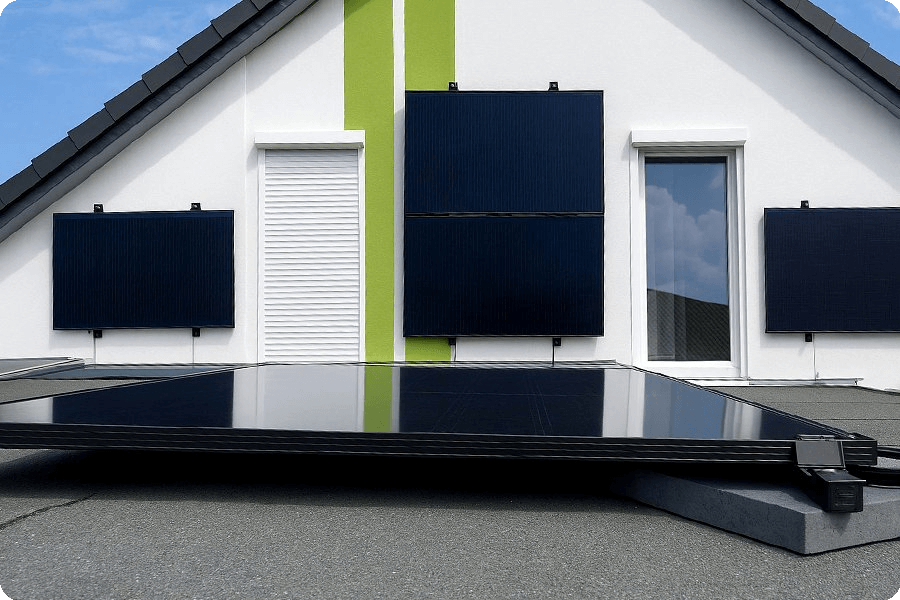
Horizontally mounted full-black PV modules on a building façade, showing clean lines and a balanced appearance while maintaining efficiency and architectural harmony.

2. Features of Vertical Installation

A vertical arrangement allows rainwater to run quickly along the long edge, improving drainage, reducing dust build-up and delivering better performance in rainy or leaf-fall-heavy environments. This helps maintain more stable energy output and lowers maintenance needs. In addition, the vertical direction naturally aligns with walls, railings and fence posts, making it visually suitable for façades, balconies and enclosures.

On the other hand, vertical layouts often result in more dispersed cable exits along the vertical direction, making wiring slightly more complex. On steep or wind-exposed rooftops, the wind-facing area increases, requiring stronger structural support.

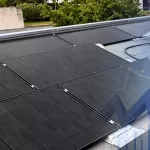
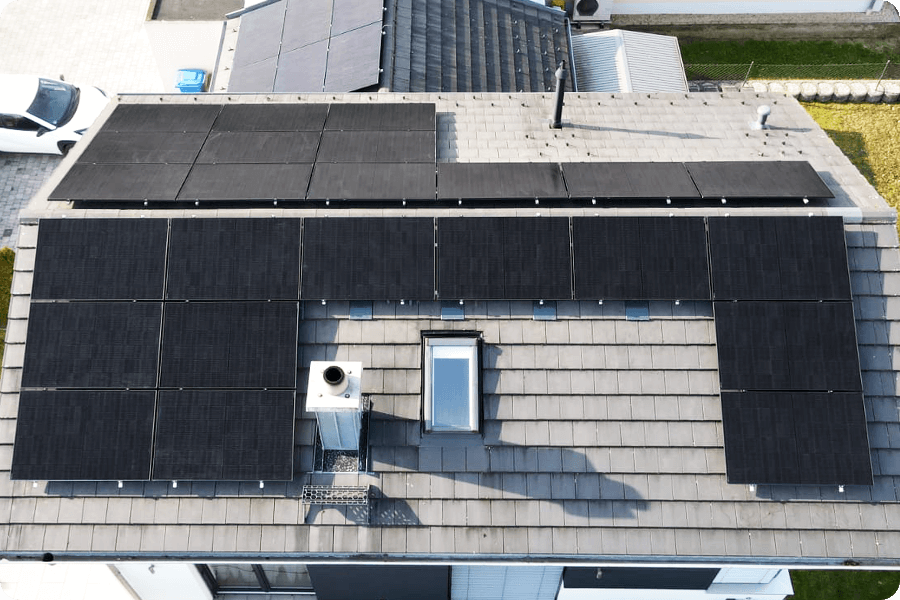
Vertically installed PV modules on a pitched roof, demonstrating effective drainage and alignment with roof lines for architectural integration.

How to Choose the Right Layout for Different Scenarios

1. Rooftop Installations

Recommendation: Horizontal as the primary choice, vertical as a supplementary option.

Most rooftops are fixed structures, and a horizontal layout offers lower wind exposure and simpler cabling, making it the most common and reliable approach for residential roofs and carports. On low-pitch roofs or in areas with heavy leaf fall, a vertical layout can improve drainage performance.

Suitable module types:

TOPCon 1/3-cut PV modules are recommended, as they are lighter on roof load and provide more balanced current distribution under partial shading from chimneys, skylights or nearby trees. Where visual uniformity is a priority, full-black IBC single-glass modules are ideal — lightweight, visually consistent and well suited to long-term exposure and high-temperature rooftop environments in Europe.

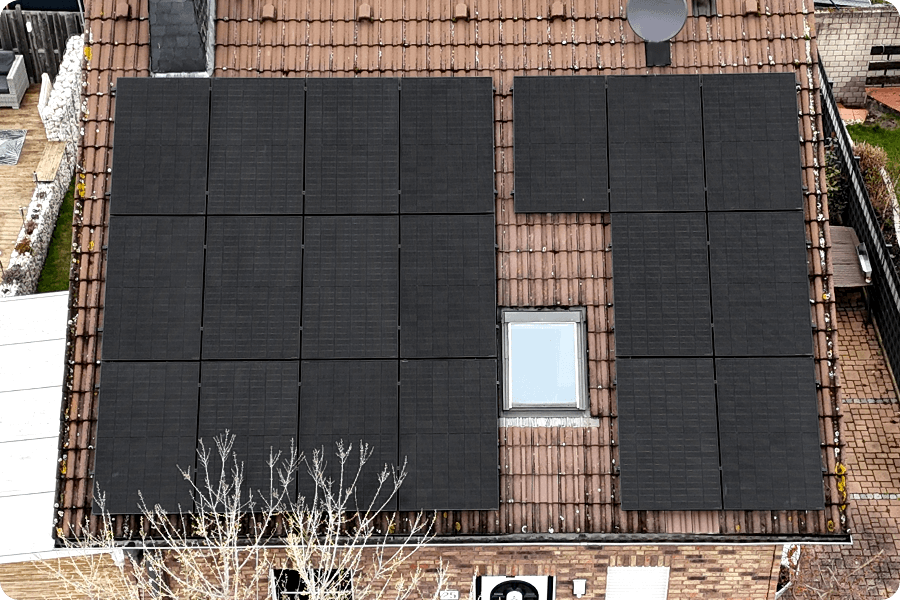
Horizontal installation on a European residential rooftop, suitable for low-pitch roofs with high-efficiency PV layout.

2. Balcony Installations

Recommendation: Choose based on railing dimensions; horizontal is most common in European apartments.

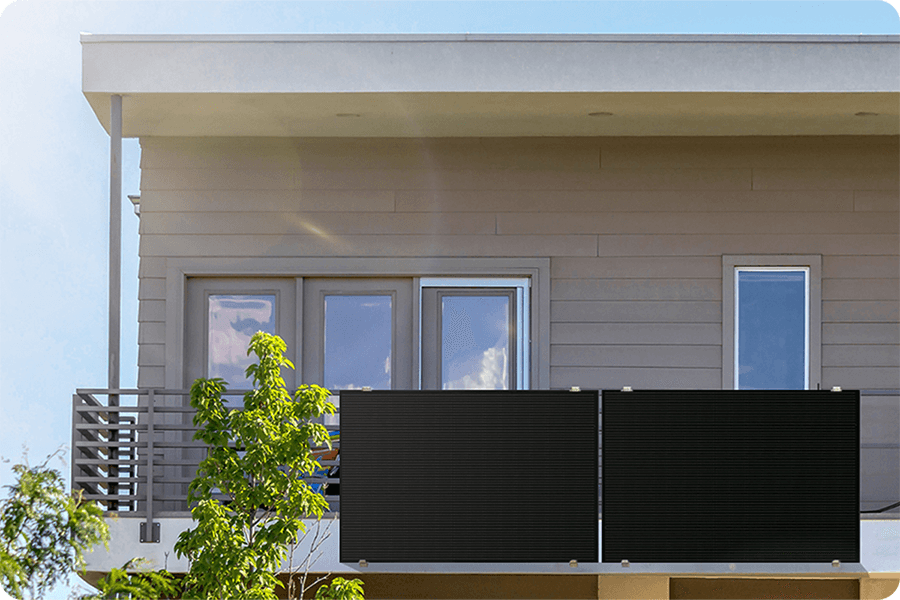
Most balcony railings are not tall enough to accommodate vertically mounted modules, making horizontal layouts more suitable as they preserve daylight and integrate better with railing lines. Where railings are higher or small-format modules are used, a vertical layout can save space and improve drainage.

Suitable module types:

Lightweight single-glass or transparent-backsheet N-type TOPCon bifacial modules are ideal, as they reduce load on the railing and the transparent backsheet can generate additional rear-side gain when reflective light is available.

3. Sun-Facing Façades or External Walls

Recommendation: Vertical is more natural; horizontal depends on the architectural style.

Vertical alignment matches the lines of most façades, creating a cleaner visual effect. Horizontal layouts extend the façade horizontally and may or may not harmonise depending on the building design.

Suitable module types:

Full-black TOPCon 1/3-cut PV modules or full-black IBC modules are preferred. These photovoltaic systems perform better in low-light and angled-light conditions and offer higher shading tolerance. The uniform black appearance blends easily with architectural surfaces.

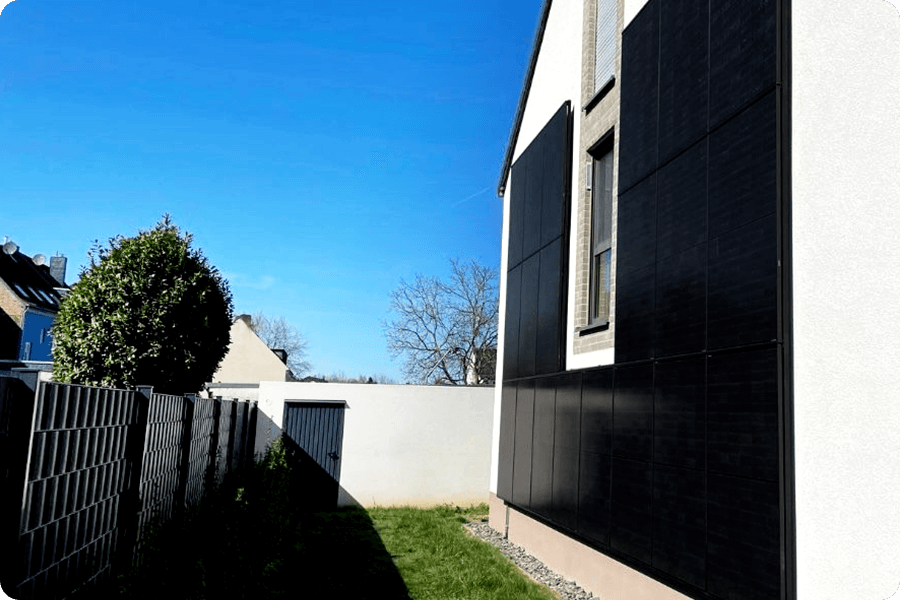
Full-black PV modules vertically installed on a residential façade, demonstrating architectural integration and low-light suitability.

4. Solar Carports

Recommendation: Horizontal layout is typically preferred.

Carport beams usually run horizontally, so modules mounted horizontally distribute loads more evenly — the most stable and common configuration. Vertical installation can be used where enhanced drainage is needed.

Suitable module types:

Large-format, high-power TOPCon bifacial modules are ideal due to their strength and wind resistance. The rear side can also take advantage of ground reflection to boost output. For higher budgets, HJT bifacial modules with lower temperature coefficients offer an upgrade.

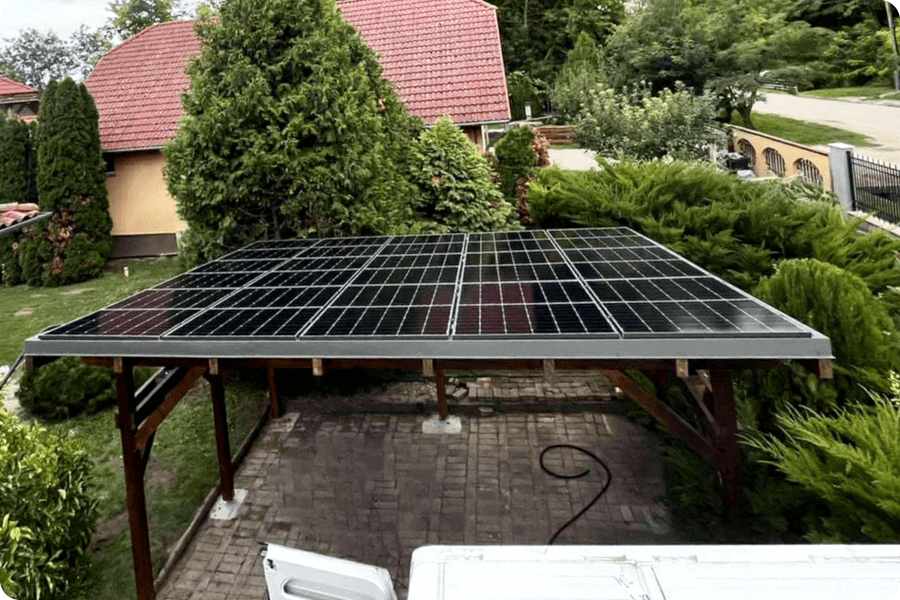
Bifacial PV modules installed on a garden carport roof, utilising ground reflection to enhance energy yield.

5. Greenhouse Roofs

Recommendation: Vertical layout for smoother drainage.

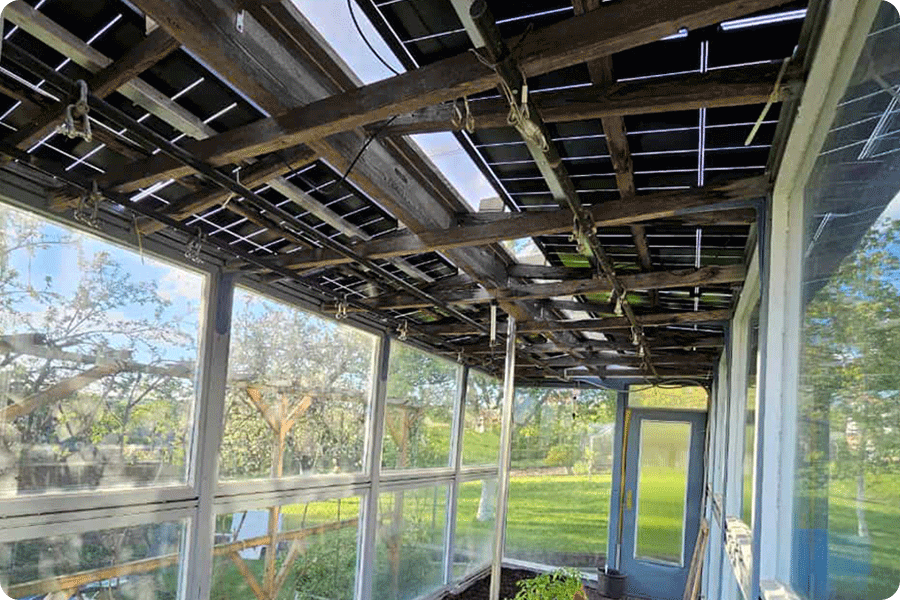
A vertical arrangement helps rainwater slide off more easily, reducing dust build-up and allowing more even light distribution within the greenhouse. If the roof spans are wide, horizontal installation can achieve a more uniform visual structure.

Suitable module types:

Lightweight TOPCon 1/3-cut bifacial PV modules are recommended for their lower structural load, more even thermal behaviour and reduced heat accumulation — all important for greenhouses where light transmission and temperature control are key.

6. Fences and Small Garden Systems

Recommendation: Choose the direction based on available space.

Garden fences and boundary structures are usually vertical, so vertical layouts align better with posts, save usable space and allow continuous installation. For wider areas or low-height racks, horizontal layouts can increase row width.

Suitable module types:

Lightweight bifacial or transparent-backsheet modules are recommended, as they suit continuous runs, reduce load on the fence, and can capture rear-side reflection to enhance performance. For low-height racks and wider spaces, large high-power modules can reduce the number of required rows.

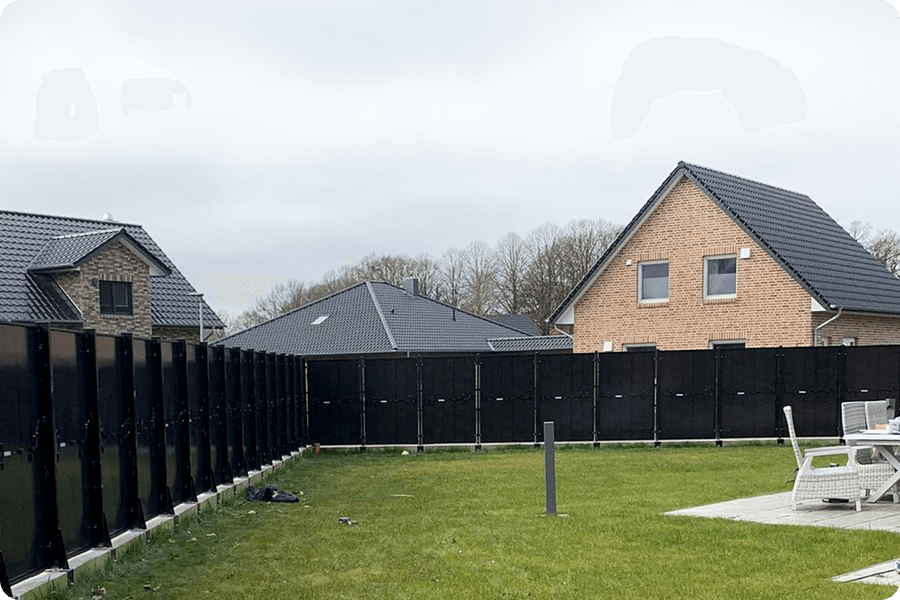
Lightweight bifacial or transparent-backsheet modules installed on a garden fence, enhancing rear-side generation through reflected light.

How Does Shading Affect Horizontal and Vertical Layouts?

The shading performance of different layouts mainly depends on the direction of the cell strings and the behaviour of the bypass diodes.

1. Output Differences Under Bottom Shading

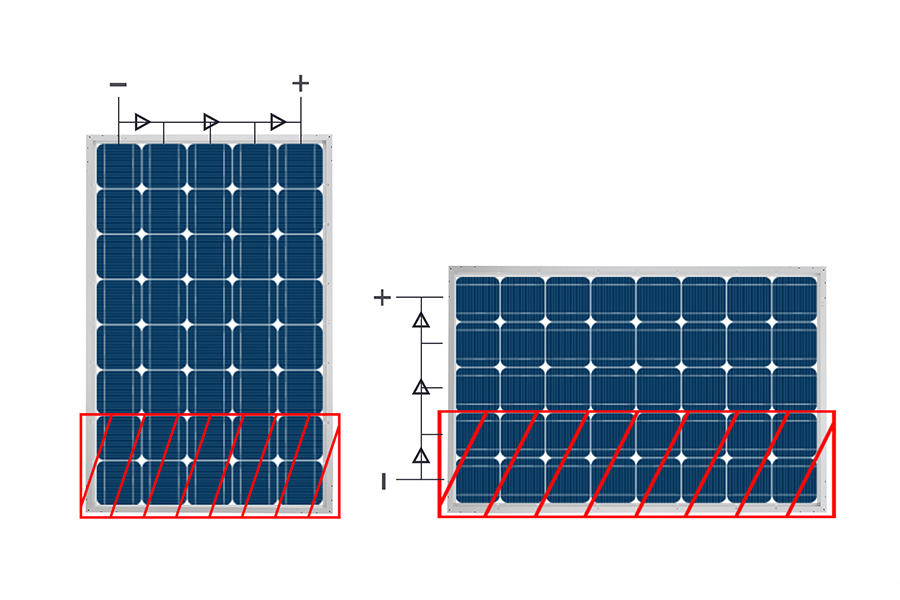
Most shading occurs along the bottom edge of the module (caused by ground reflection, vegetation, snow build-up or steps). When two bottom cell rows are shaded:

  • Horizontal layout: only one cell string is affected. Its bypass diode activates, allowing the remaining two strings to continue generating power, resulting in a smaller drop in output.

  • Vertical layout: shading simultaneously cuts across all three strings, causing a significant reduction in the module’s total output.

This type of shading is more common during sunrise and sunset, when the sun is at a low angle, further highlighting the superior shading tolerance of horizontal layouts.

Diagram comparing how bottom-edge shading cuts cell strings differently in horizontal vs vertical PV layouts.

2. Ground-Mounted and Sloped PV Plants

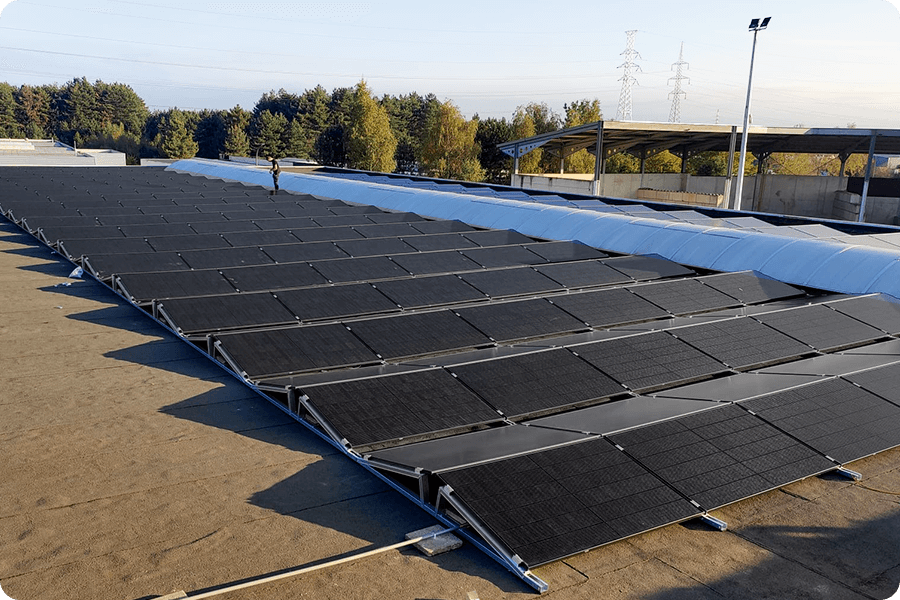
In ground-mounted or hillside PV systems, front-row/back-row shading during sunrise and sunset is almost unavoidable. Typical calculations show:

  • Horizontal layouts can reduce shading time by around 10 minutes compared with vertical layouts.

  • Output during low-irradiance periods is about 15% of rated power.

  • With an annual yield of around 1,500 hours, horizontal layouts can achieve approximately 1.2% higher yearly generation.

Regardless of whether the site is flat, south-facing, north-facing, east-facing or west-facing, shading typically occurs along the long edge of the module, meaning horizontal layouts are less affected.

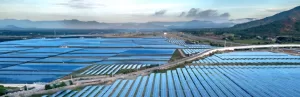
Ground-mounted PV system using horizontal layout to reduce shading losses from low-angle morning and evening sunlight.

3. Distributed Rooftop Systems

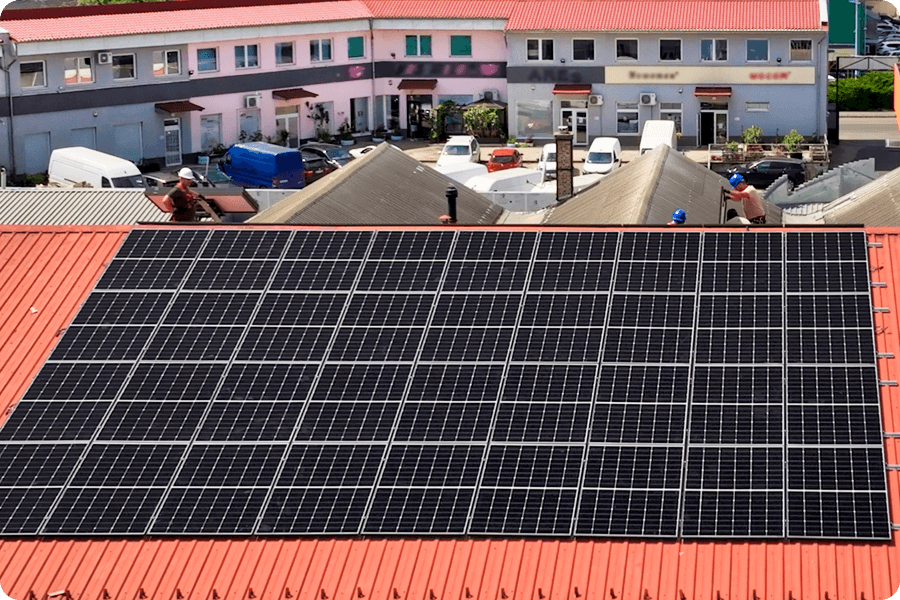
For rooftops, the layout can be chosen based on the direction of shading. If the roof is free from shading or the surrounding area is open, a horizontal layout is generally the safer option.

When shading comes from vertical structures (such as utility poles, antenna masts or exhaust vents) and cannot be avoided, the shadow forms a “vertical line” across the module:

  • Horizontal layout: the shadow may cut across multiple strings at once.

  • Vertical layout: the shadow is more likely to affect a single string path.

Therefore, in environments where vertical shading is significant, a vertical layout may be the better choice.

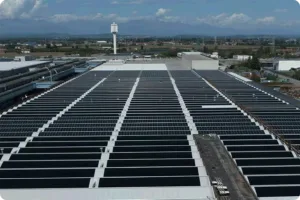
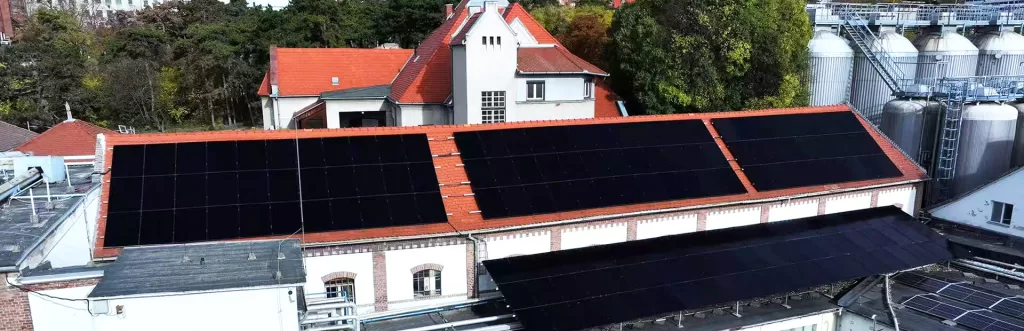
Large-scale horizontal rooftop installation, illustrating a common layout for distributed PV systems.

Maysun Solar has a strong presence in the European market, focusing on high-efficiency photovoltaic components and system-level solutions. We supply IBC-module, TOPCon-module and HJT-module high-performance modules to the European market and support flexible installation options such as modular AC systems, helping users achieve higher energy yield even in limited spaces.

Recommend Reading

March European Solar Industry News

March European Solar Industry News

This article outlines recent developments in the European solar market, including the EU cross-border solar auction scheme, structural shifts in Germany, updated GSE regulation in Italy, and the recent recovery in solar panel prices.

Read More »

2 Comments

  1. Morton

    Interesting read. The way you compared horizontal and vertical mounting makes the differences much easier to understand. The points about shading and airflow are spot-on — helpful for anyone planning a rooftop system.

  2. Steve

    The part about bottom shading and bypass diodes explains well why horizontal mounting behaves differently in real rooftop conditions.
    Simple explanation, but very close to what installers actually see on site.

Comments are closed