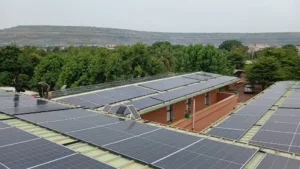
April News from the European Solar Industry

April News from the European Solar Industry

The European solar market continued to show recovery signals in April. The value of solar within the wider system has been reaffirmed, project pricing is stabilising, implementation rules are becoming clearer, and revenue models are also starting to improve.

Table of Contents

European Solar Continues to Reduce Energy Import Costs

The European solar market did not weaken further in April, because solar’s role in reducing energy import costs remains firmly intact.

SolarPower Europe states that, during the first 17 days of March this year, solar generation in Europe displaced around 19.9 TWh of electricity that might otherwise have been supplied by gas-fired power, avoiding about €1.9 billion in fossil fuel import spending, with a daily average of more than €110 million. Solar is still directly lowering Europe’s external energy costs, and this real value remains an important foundation for the recovery of the European solar market.

European solar continues to replace high-cost energy imports, and the basis for market recovery remains in place.

The focus of the European solar market is also shifting. SolarPower Europe identifies storage deployment, grid flexibility and system absorption capacity as key conditions for the next stage of development. What now matters more is not just new installed capacity itself, but whether the system can absorb more low-cost electricity:

  • Whether additional power generation can be absorbed steadily
  • Whether storage and grid infrastructure can be deployed in parallel
  • Whether market improvement can shift from capacity expansion to stronger system quality

At the European level, April’s signals point more to marginal recovery. The system value of solar remains clear, and the market has not continued to decline. How far this improvement can go will still depend on whether storage, grid capacity and system absorption can keep pace together.

German Rooftop Solar Tenders Remain Undersubscribed, but Prices Hold Steady

Demand for distributed rooftop solar projects in Germany remains weak, but the price floor has not moved lower.

In this round, BNetzA tendered 283 MW of rooftop solar capacity, with only around 155 MW ultimately awarded, showing clear undersubscription. The weighted average awarded price edged down slightly from 9.66 euro cents/kWh in the previous round to 9.56 euro cents/kWh, but overall remained close to the earlier level.

German distributed rooftop solar projects are still under pressure, with both development pace and revenue expectations remaining cautious, and market expansion far from easy. At the same time, the tender results sent a relatively clear pricing signal:

  • Undersubscription shows project activity remains weak
  • Tariffs fell only slightly, with no sign of continued deterioration on the project side
  • Revenue expectations remain conservative, but a bottom range is starting to emerge

For project development, investment assessment and solar panel supply planning, the German rooftop market is still in an adjustment phase, but expectations of a further rapid price decline have clearly weakened.

Italy Is Clarifying the Implementation Rules for Solar Projects

The implementation rules for solar projects in Italy are becoming clearer at a faster pace.

GSE has issued operational rules for agrivoltaico, energy communities and collective self-consumption groups, translating earlier policy arrangements into practical execution. The funding involved is around €1.1 billion for agrivoltaico and about €795.5 million for energy communities, with the relevant agreements required to be signed by 30 June.

The implementation rules for solar projects in Italy are becoming clearer, and market attention is shifting towards delivery conditions.

The boundaries for project execution are also becoming more specific:

  • The deadline for signing agreements has been clearly defined
  • Agrivoltaico projects must enter operation within 24 months of agreement notification
  • Energy community and collective self-consumption projects must be commissioned by 31 December 2027

The Italian solar market is shifting from policy expectation to project execution. As rule boundaries and key deadlines become clearer, project assessment will start earlier, while the importance of documentation, technical parameters and delivery timing will rise accordingly.

Revenue Certainty Improves for Collective Self-Consumption Projects in France

The revenue framework for collective self-consumption projects in France is becoming clearer.

France’s Council of State has overturned the previous tax interpretation that denied excise duty exemption for ACC projects below 1 MW, confirming that the relevant projects can qualify for a €0 excise rate. For project developers, the immediate impact is not a nominal increase in revenue, but a more stable basis for financial modelling.

The tax treatment for collective self-consumption in France is becoming more stable, and project revenue models are starting to improve.

The earlier dispute arose because the tax authority had at one stage treated the physical connection between production and consumption as a condition for eligibility, creating uncertainty in tax enforcement. That interpretation was overturned by the Council of State in its ruling of 30 March 2026.

The impact on projects is more direct:

  • The boundaries for revenue modelling are clearer
  • Financing and project advancement can be assessed earlier
  • The bankability of local and shared electricity use projects has improved

This latest adjustment in the French market goes straight to project economics. As the tax treatment becomes clearer, project assessment is more likely to return earlier to the revenue model itself.

Common Questions About the European Solar Market in April

1. What signals did the European solar market release in April?

The European solar market released more concrete recovery signals in April. System value has been reaffirmed, project prices have not continued to weaken materially, implementation rules are becoming clearer, and revenue models for some projects are also starting to improve.

2. Why is Germany’s undersubscribed rooftop solar tender still worth watching?

Because the more important point is not that the tender was undersubscribed, but that prices still remained close to the previous round despite weak demand. This suggests that distributed projects are still under pressure, but the price side has not continued to deteriorate.

3. What is the most critical next step for the European solar market?

It is not simply about continuing to expand installed capacity. What matters more is whether storage deployment, grid flexibility and system absorption capacity can keep pace, as this will determine whether additional power can be converted into real system value.

4. Why do Italy’s rule updates in April matter?

Because market attention is shifting from policy expectations to project execution. The clearer the deadlines, agreement requirements and commissioning timelines become, the more predictable project delivery will be.

5. Why does the €0 excise rate for French collective self-consumption projects below 1 MW matter?

Its significance lies not only in the tax relief itself, but in the renewed stability of the revenue framework. Project modelling, financing decisions and delivery planning can all become clearer as a result.

Maysun Solar supplies the European market with solar panels based on key technologies including IBC technologyTOPCon technologyand HJT technology, suitable for a wide range of system applications. We support partners in selecting optimal module power and configurations in line with evolving European price trends, policies and project requirements.

Recommend reading

1 Comment

  1. Andreas Neumann

    Recovery is still not strong, but the market becomes a bit more predictable again. For many projects this matters more now than another small drop in prices.

Comments are closed