Many people have put PVs on their roofs as a result of the PV industry’s promotion, but why can’t the installation of rooftop PV power stations be estimated by area? How well-versed are you in the various PV power generation modalities? Why can’t rooftop PV power station installation costs be determined based on area?
The installed capacity of PV power plants, rather than their surface area, is determined by watts. But the area is also connected to the installed capacity.
On the market, there are three varieties of PV power generation: – Amorphous silicon photovoltaic panels PV modules made of polycrystalline silicon – PV modules made of monocrystalline silicon These are also the main elements in the creation of PV power.
Silicon Amorphous PV Module
PV modules made on amorphous silicon have a maximum power density per square meter of 78W and a minimum power density of around 50W.
Features include a huge footprint, a high degree of fragility, poor conversion efficiency, risky transportation, and rapid attenuation, albeit low light is preferable.
Module for Polysilicon PV
Currently, the more popular polysilicon PV modules on the market include power densities of 260W, 265W, 270W, and 275W per square meter.
Long service life and modest attenuation are features. The pricing has advantages over monocrystalline silicon PV modules, and it is also one of the more well-liked models on the market.
PV made of silicon monocrystals
Monocrystalline silicon PV modules typically have an area of 1.63 square meters and a power of 280W, 285W, 290W, or 295W.
Features: When compared to polycrystalline PV modules of the same area, the conversion efficiency is marginally greater. The cost is, of course, more as well, but the service life is essentially the same.
Everyone should be able to comprehend the sizes of different PV modules after some analysis. But the roof area has a significant impact on the installed capacity. You must first know what kind of roof you have in order to assess how much system may be installed on it.
For the installation of PV power generation, there are typically three types of roofs: flat concrete roofs, brick and tile structures, and color steel roofs. The roof is made differently. The PV power station’s installation process is also different. The power station’s installation site differs as well.
colored steel roof tiles
When installing a PV power station on a steel building with a color steel tile roof, PV modules are typically only installed on the south-facing side and are laid out at a ratio of 1 kilowatt per 10 square meters, or 1 megawatt (1 megawatt is equal to 1000 kilowatts) Number. The project will require 10,000 square meters of space.
Brick roofing
In order to establish a PV power station on a brick-and-tile roof, it is typically decided to cover the exposed roof area with PV modules from 08:00 to 16:00. While the manner of installation differs from that of the color steel roof, the laying ratio is the same and it also covers a 1 kilowatt area. 10 square meters or so.
Flat roofing
In order to install a PV power station on a flat roof, it is necessary to design an ideal horizontal inclination angle. As a result, a specific distance is needed between each row of modules to ensure that they are not obscured by the shadow of the front row of modules. As a result, the project’s total roof area will be larger than that of tileable villa roofs and color steel tiles.
WM is megawatts.
1000000 watts is one megawatt. 100,000 kilowatts is equal to 100 megawatts (MW), or 100000000W. A 100,000 kilowatt unit is equal to one megawatt. Wp is the fundamental unit of power produced by batteries or power plants. W is the unit of power. The letter W, which stands for “power,” stands for “power generation.”
According to the information above, MWp stands for megawatt and KWp for kilowatt.
PV energy production When referring to the installed capacity of PV power plants, W, MW, and GW are frequently used. The following describes their conversion relationship:
1GW=1000MW
1MW=1000KW
1KW=1000W
Everyone is used to expressing power use in “degrees” in daily life. Actually, it goes by the more exotic moniker of “kilowatt per hour (kWh)”.
One of them is “W,” which is pronounced “W” and is named after the British inventor James Watt.
James Watt invented the first usable steam engine in 1776, ushering in a new era of energy usage and the “steam age” for humanity. Later generations changed the name of the power unit to “watt” (abbreviated as “watt,” sign W) in honor of this brilliant innovator.
Use daily life as an illustration.
One kilowatt-hour of electricity is equal to one kilowatt-hour, which is what happens when a device with a 1 kilowatt rating is used at maximum capacity for one hour.
The equation is as follows: degree (kilowatts per hour) = power (kilowatts) x time (hours).
For instance, if a 500-watt electrical device, such a washing machine, is run continuously for 1 hour, the temperature will be 500/10001=0.5 degrees.
The rated electric power of typical home appliances is as follows:
PV energy production saving energy while earning money
A 1kW PV system produces an average of 3.2kWh per day under normal conditions, which can be utilized to power the following typical electrical appliances:
The home PV power station uses a “spontaneous self-use and surplus electricity connected to the grid” mode of operation. You can earn money with electricity after establishing a residential PV power station since you can both consume the electricity it produces and sell any that isn’t used to the State Grid.
Maysun Solar, a manufacturer of photovoltaic modules with 15 years of industry experience, can give you solar panels of the highest caliber. To get in touch with us and request a product quote, use the button below.
You may be interested in:

How to Size a Commercial Rooftop Solar System: A Practical Guide for EPCs
For commercial and industrial (C&I) rooftop solar projects, the maximum number of panels a roof can accommodate does not necessarily determine the most suitable system size. A factory may have sufficient roof space for a large PV installation, but its electricity consumption, grid
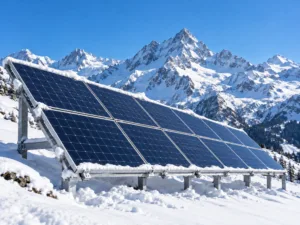
5400 Pa Snow Load: How to Choose PV Modules with 30 mm or 35 mm Frames
For PV projects in Alpine and other high-snow-load regions in Europe, selecting a module based only on a “5400 Pa” rating or a 30 mm vs 35 mm frame height is not enough. A more reliable approach is to first determine the project-specific snow load
Carbon Footprint and LCA in European C&I Solar: Why EPCs Should Check Before Module Procurement
Solar power is widely regarded as a low-carbon energy source. However, generating electricity from solar energy and manufacturing a low-carbon solar module are not quite the same thing. Before a photovoltaic module leaves the factory, it passes through multiple manufacturing stages, including silicon
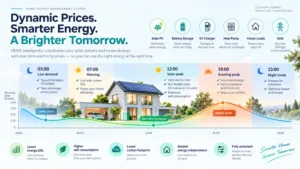
HEMS and Dynamic Electricity Pricing: From Solar Generation to Smart Energy Management
For years, home solar systems have focused on one main question: How much electricity can my rooftop solar system generate? But as home batteries, smart meters, electric vehicles and flexible electricity tariffs become more common, residential energy management is entering a new phase.

Maysun Solar’s First 3.5 MW Solar EPC Project in Italy Enters Its Final Stage
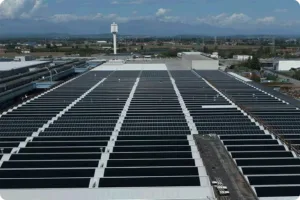
A large-scale commercial and industrial rooftop solar project with a total capacity of approximately 3.5 MWp is now entering its final stage in the Turin area of Piedmont, Italy. Around 8,000 solar modules planned for the project have now been fully installed.

August European Solar Industry News
In August 2026, Europe’s solar market combined record PV generation with volatile power prices driven by heat, gas costs and low wind output. Policy support also expanded, including 800 W plug-in solar in Great Britain and greater EU flexibility for PV and storage investments, while module prices largely stabilized amid renewed oversupply.