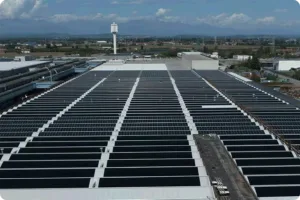
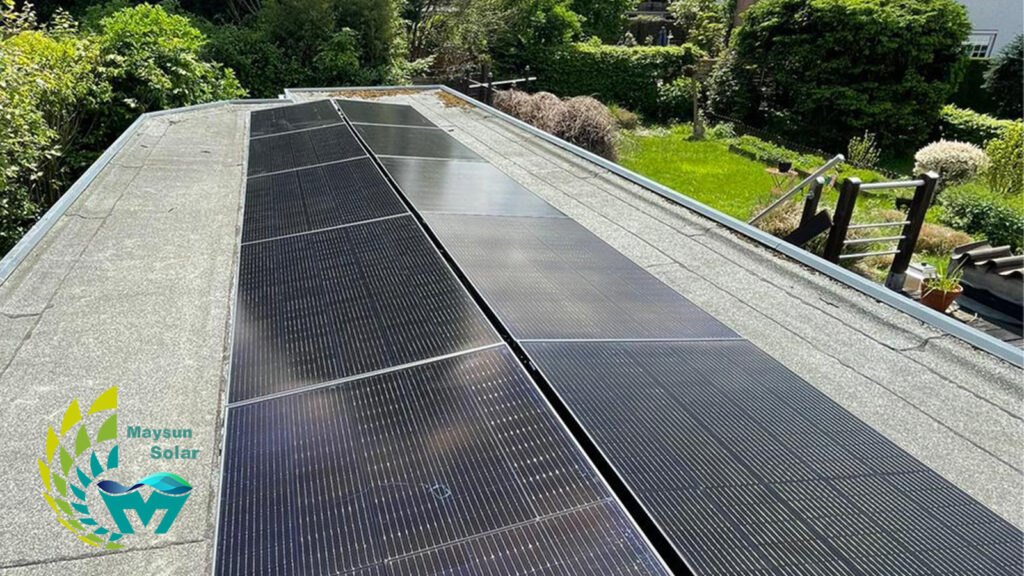
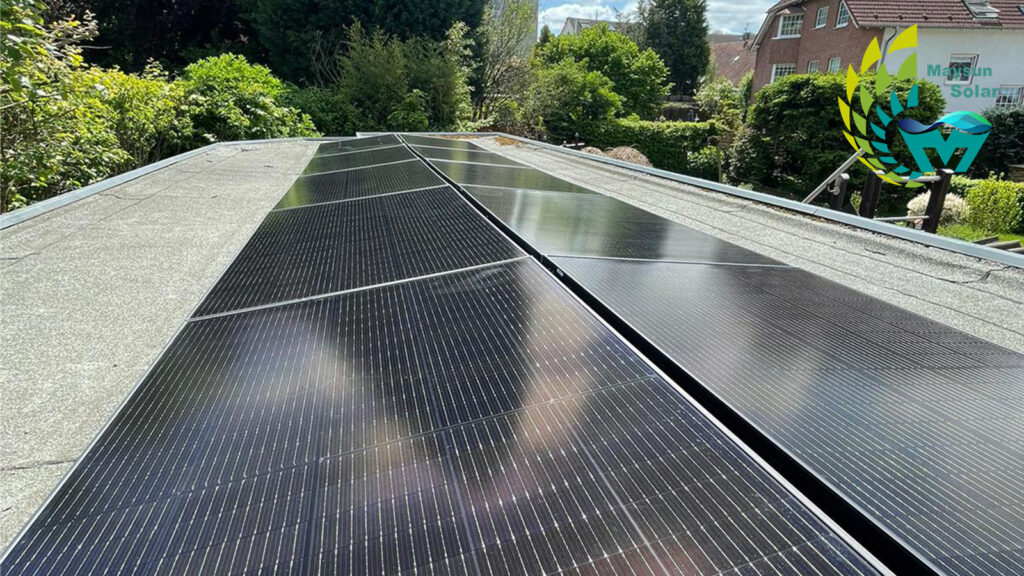
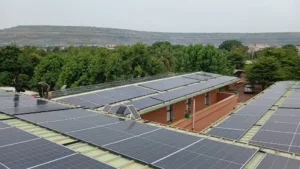
We are pleased to share here a success story that exemplifies our commitment to sustainability and innovation. Please join us as we delve into the incredible collaboration between leading PV module manufacturer Legg Mason Solar and our esteemed customer, specialist PV module installer Michael Lakenberg. Together we have embarked on a transformative journey to convert a flat roofed car park into a sustainable energy centre powered by the sun’s abundant energy.
Unleashing the power of solar energy
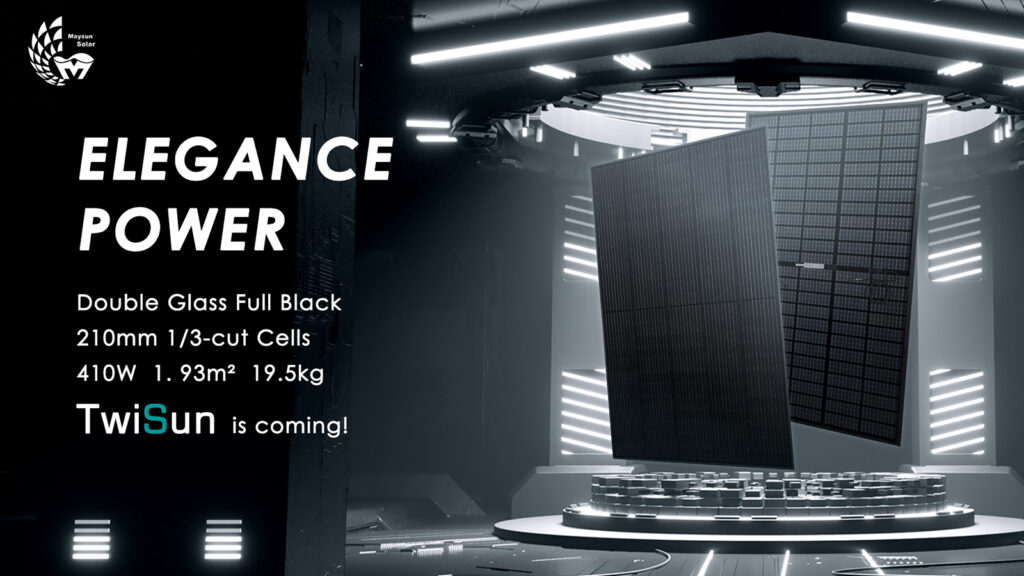
We played a key role in harnessing the power of the sun to generate clean, renewable energy with Mason Solar’s 14 all-black, double-glazed 410W panels. These state-of-the-art panels have been carefully designed and manufactured to maximise energy efficiency and performance. They offer these advantageous properties:
The glass is water, abrasion, corrosion and fire resistant, so glass-to-glass PV modules can function for up to 30 years in many harsh environments.
Using 1.6mm ultra-thin double glass and a 28mm ultra-thin T6 frame, our modules weigh only 19.5kg. This is tailored for easier installation for distributed PV in Europe.
Our modules feature advanced 210mm wafer and 1/3 cut cell technology and a low current design. And they are suitable for most inverters on the market.
With this eco-friendly approach we aim to play an important role in reducing carbon emissions and creating a sustainable future.
More than just power generation
Our installation customer, Michael Lakenberg, thinks innovatively and goes beyond what has been done before by equipping his car park with a large battery for energy storage. This forward-thinking solution enables electric vehicles to be easily recharged, bringing significant benefits to the community and promoting sustainable mobility. The integration of energy storage technology ensures that solar energy is used efficiently, even during periods of low sunlight or high demand.
Stability and reliability under challenging conditions
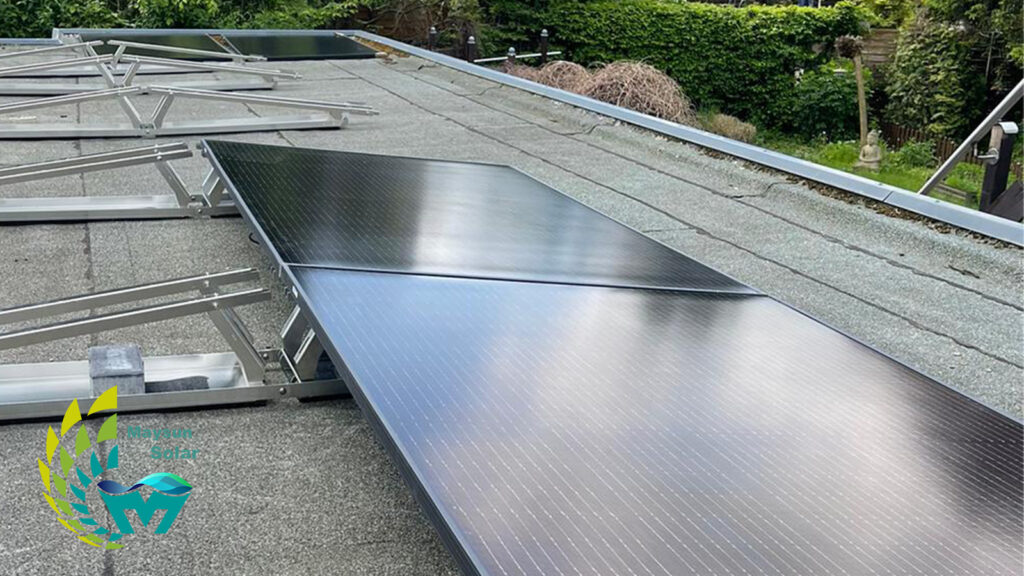
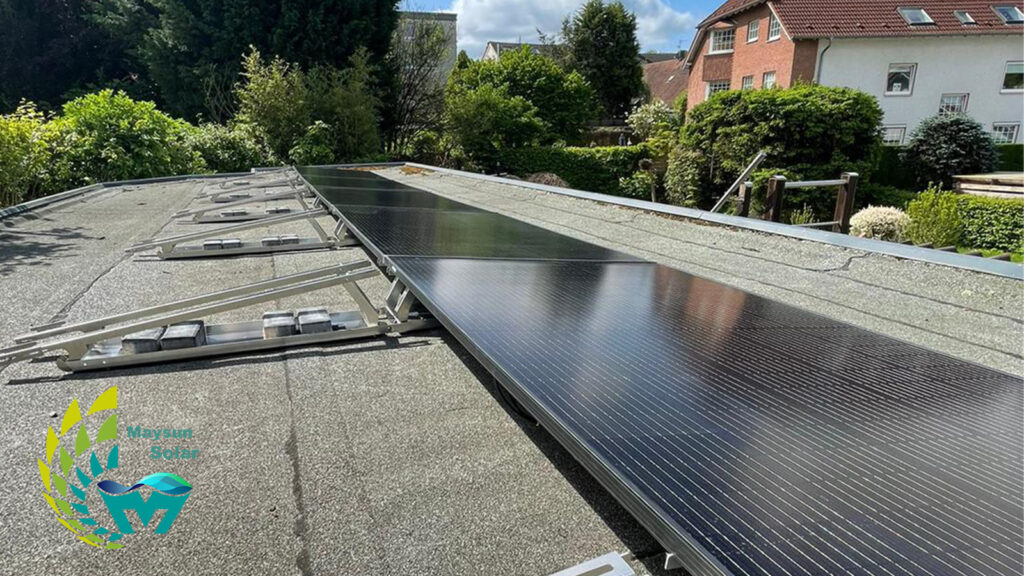
The customer has cleverly used robust aluminium mounting brackets on the flat roof to ensure the stability and durability of the solar panels. Even in adverse weather conditions, these sturdy mounting brackets, combined with the superior quality of Mason solar panels, provide peace of mind for both the installer and the end user. Having endured strong winds and other challenging weather conditions, the solar panels will continue to provide reliable energy production for years to come.
Impact on the community
This project has had a positive impact not only on the homeowners but also on the surrounding community. The once empty roof was transformed into a valuable asset, enabling electric cars to be charged and the yard to be illuminated with clean, renewable electricity. By providing an eco-friendly energy solution, the project not only reduces carbon emissions, but also inspires others to adopt sustainable practices. The community can now benefit from lower energy costs, a reduced environmental impact and increased resilience to power outages. This demonstrates the potential of sustainable energy to improve lives and benefit the environment.
We would like to celebrate the fruitful collaboration between Legg Mason Solar and Michael Lakenberg, which demonstrates the transformative power of solar energy. Together we have succeeded in creating a sustainable energy hub that benefits communities and paves the way for a greener future. Join us in embracing the potential of solar energy and let’s work together to build a cleaner, more sustainable world.
Maysun solar has been focused on producing and manufacturing quality photovoltaic modules since its inception in 2008. Choose Maysun Solar because we have quality solar panels for your needs, contact us and together we can create a green future!

Why Do Solar Panels Lose Power in Hot Weather? How Temperature Coefficient and Roof Ventilation Affect Summer Energy Yield
Summer brings stronger sunlight and longer daylight hours, so it is normally one of the most productive seasons for a solar system. However, some system owners notice that solar panel output does not continue to rise during the hottest part of the day.

How to Design a Low-Maintenance Rooftop Solar System
Introduction A low-maintenance rooftop solar system is not created after installation. It is designed before installation. Over a 20–30 year operating life, rising O&M costs are rarely caused by dirty glass alone. They are more often caused by design decisions made at the

European Heatwaves and PV Self-Consumption: Why HJT Solar Modules Perform Better in Hot Summers
Across Europe, summer heatwaves are no longer just a climate or comfort issue. They are becoming an energy-use issue. During hot summer days, air conditioning, ventilation, refrigeration, office equipment and industrial cooling loads can rise exactly when rooftop solar modules are exposed to

Partial Shading on Solar Panels: Why a Small Shadow Can Cause Major Power Losses
Introduction: Shading Is Not Just a Surface Area Problem In a photovoltaic system, a small shadow can be amplified by the electrical structure of the module. In a typical module with three electrical sections, a shaded area covering only a small part of

From Half-Cell to Multi-Cut: Why PV Modules Are Paying More Attention to More Segmented Circuit Design?
Table of Contents In recent years, half-cell modules have become a mainstream design in the photovoltaic market. Compared with traditional full-cell modules, half-cell technology reduces the operating current of each cell unit, lowers internal resistive losses, and improves thermal management and partial shading

Does Summer Heat Reduce Solar Panel Efficiency? What Really Happens to PV Output
Table of Contents Many PV users notice an unusual phenomenon in summer: although sunlight is strongest at noon, the power curve shown in the monitoring app does not reach the expected peak. In contrast, on a sunny spring day, or just after a