
March European Solar Industry News

March European Solar Industry News

The European solar market is entering a new phase of adjustment. Cross-border investment mechanisms continue to expand, large-scale projects are taking a growing share of new installations, regulatory and compliance requirements are becoming stricter, and solar panel prices—after a prolonged decline—are beginning to show a gradual recovery.

Table of Contents

EU launches the third round of cross-border solar auctions

Cross-border financing is becoming an important tool for the EU to support investment in solar energy and energy storage projects. Through a coordinated model that combines funding support with project deployment across member states, the EU aims to accelerate renewable energy expansion within the European solar market.

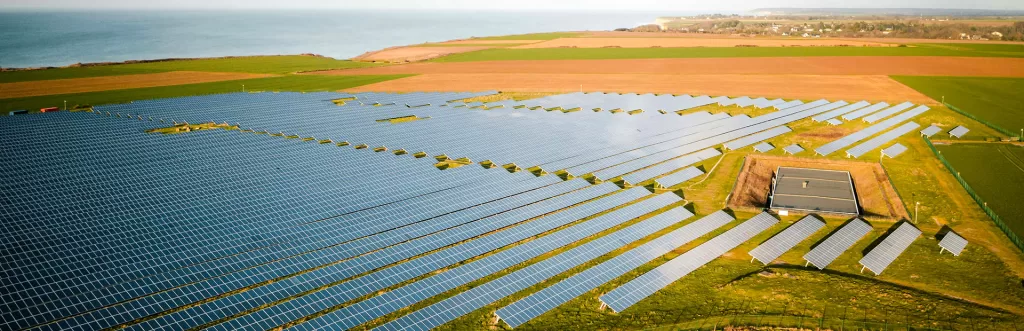
The EU is expanding investment in solar and energy storage projects through cross-border financing mechanisms.

In March 2026, the European Commission launched the third round of cross-border solar project auctions under the Renewable Energy Financing Mechanism (RENEWFM). The total budget for this round is approximately €54.9 million, funded by Luxembourg as the contributing member state. Projects will mainly be implemented in Bulgaria and Finland.

The main conditions of this auction round include:

  • Project size: 10 MW–100 MW per project

  • Finland: support for ground-mounted solar projects, with a total capacity limit of around 400 MW

  • Bulgaria: priority support for combined solar and battery energy storage (BESS) projects

  • Solar and storage systems must share the same grid connection point

  • Winning projects must enter commercial operation before March 2029

The RENEWFM framework allows member states to cooperate through a “funding country + host country” structure to advance renewable energy investment. The previous two auction rounds were implemented in Finland and Estonia, with a combined capacity exceeding 650 MW.

The continued expansion of cross-border auctions shows that the EU is strengthening regional cooperation to scale renewable energy investment while gradually promoting integrated solar and energy storage projects.

Structural changes in the German solar market and debate over the EEG reform draft

The German solar market is undergoing structural change. Large ground-mounted solar plants are becoming the main source of new capacity growth, while residential and commercial rooftop projects have slowed significantly. As a result, market momentum is shifting from a “rooftop-driven” model to a “project-driven” one within the broader European solar market.

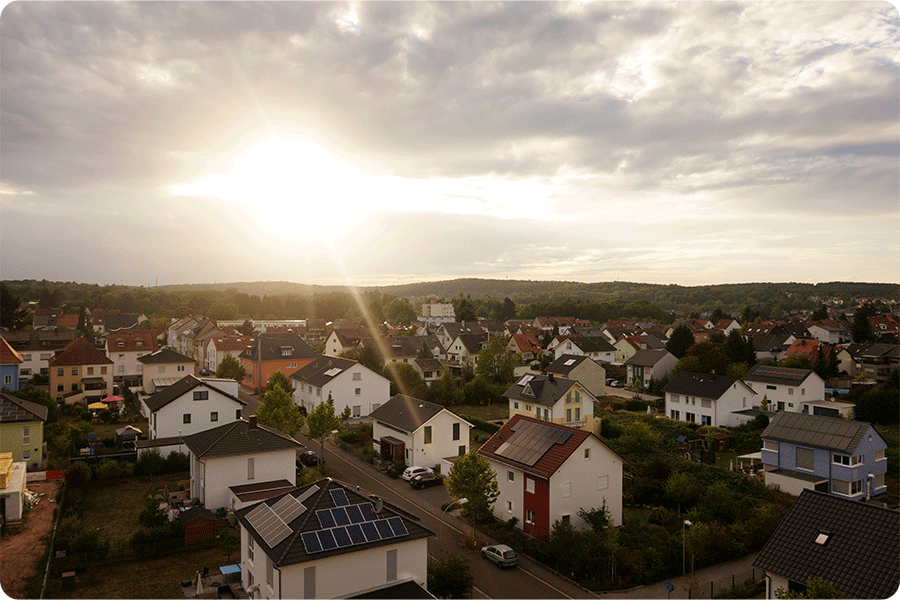
New solar capacity in Germany is gradually shifting from rooftop systems to large ground-mounted solar plants.

At the 2026 PV-Symposium, Jörg Ebel, a representative of the German Solar Industry Association (BSW-Solar), commented on the recently leaked EEG revision draft, noting that the document remains a “working version” under policy discussion and has not yet become formal legislation.

Data presented at the conference showed:

  • New residential solar installations fell by around 32% year-on-year

  • Commercial and industrial rooftop solar declined by about 44%

  • Large ground-mounted solar plants increased by roughly 123%

The leaked EEG draft also outlines several potential policy adjustments, including:

  • Systems below 25 kW may lose eligibility for fixed feed-in tariffs

  • Systems below 100 kW may be required to participate in direct electricity marketing

  • The full feed-in remuneration mechanism may be abolished

  • Projects above 25 kW may adopt a market premium scheme

The draft also proposes increasing the annual auction volume for ground-mounted solar plants from 9 GW to 14 GW, while extending the auction framework until 2032. Industry analysts note that if grid reforms progress simultaneously, grid connection costs and Redispatch risk allocation could affect project economics.

Overall, new solar installations in Germany are increasingly concentrated in large-scale projects, while the distributed market faces constraints from grid capacity and evolving market mechanisms.

Italy updates GSE regulatory rules for solar incentives

Italy is strengthening compliance oversight for solar incentive schemes, introducing clearer penalty rules to reduce uncertainty within the European solar policy framework.

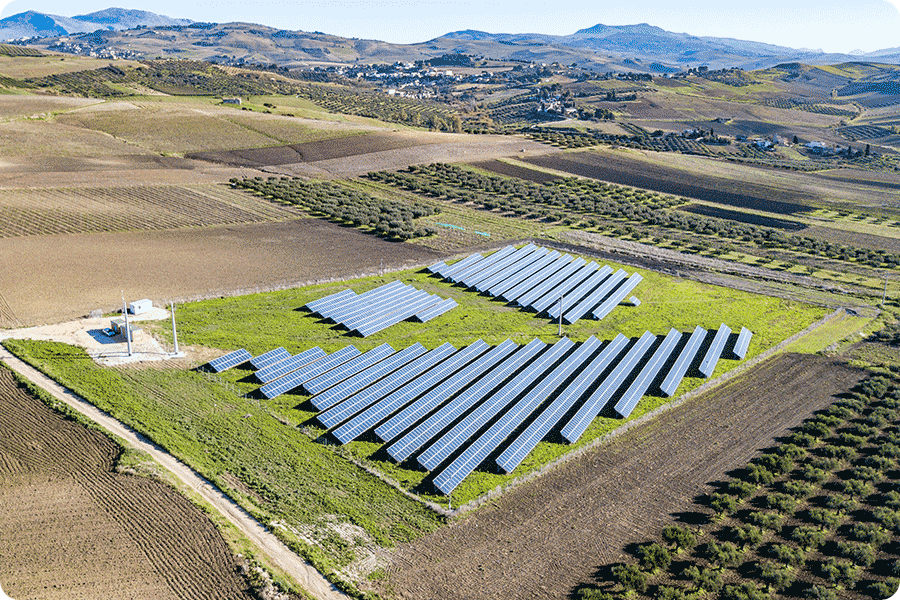
Italy is strengthening compliance supervision of solar projects through updated GSE rules.

In February 2026, the Italian Energy Services Authority (GSE) updated its regulatory framework, introducing new classifications and penalty rules for violations in solar projects.

Under the new rules, violations are graded according to severity:

  • Serious violations: may lead to the cancellation of incentive eligibility

  • Minor violations: incentive payments reduced by 10%–25%

  • Multiple violations: deductions may reach up to 50%

The regulation also introduces the “ravvedimento operoso” mechanism (voluntary correction). If project developers report issues before a regulatory inspection, the related penalty reduction may be cut by 50%.

Key areas of regulatory focus in solar projects include:

  • Inconsistencies between project permits and submitted documentation

  • Rooftop systems incorrectly classified under incentive schemes

  • Agrivoltaic projects without actual agricultural activity

  • Issues related to solar panel certification or compliance documentation

If solar panel certification does not fully meet the requirements, projects may not immediately lose incentive eligibility under certain conditions, but could face a penalty reduction of around 10% in incentive payments.

Such regulatory adjustments typically do not change overall market size but increase compliance requirements for project development and supply chains. For investors and equipment suppliers, certification, documentation compliance, and consistency in project declarations will become increasingly important.

Solar panel prices in France show a gradual rebound

After a prolonged decline, the solar panel market is beginning to show signs of recovery, with the industry entering a phase of margin stabilisation.

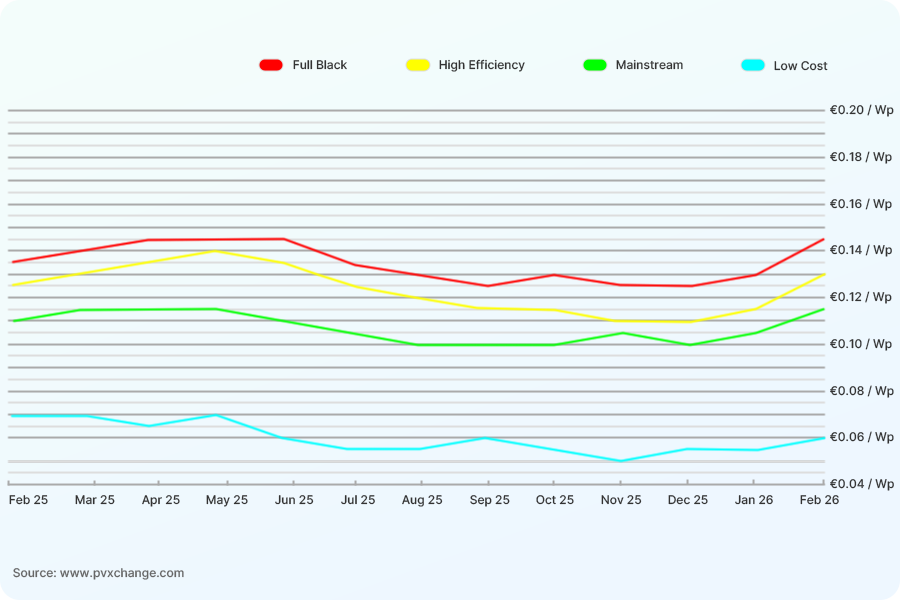
In February 2026, average solar panel prices increased by around €0.01/W, reaching approximately €0.15/W, about 15%–18% higher than the price lows recorded in December 2024. The rebound has been more visible in the rooftop solar panel segment, while price adjustments for large ground-mounted projects remain relatively cautious.

Solar panel prices in Europe are showing a gradual recovery after a prolonged decline. Source: www.pvxchange.com

This price increase is not driven by rising raw material costs. During the same period, wafer prices continued to decline and silver prices remained relatively stable. The adjustment mainly reflects manufacturers restoring margins after a prolonged period of losses.

In the large ground-mounted solar market, panel prices remain a key factor in project investment decisions, which is why suppliers tend to adopt more cautious pricing strategies in this segment.

The recent price recovery also suggests that solar panel prices are approaching the lower end of the previous cycle, indicating that the market may gradually move away from intense price competition towards a more stable supply structure.

Maysun Solar supplies the European market with solar panels based on key technologies including IBC technologyTOPCon technologyand HJT technology, suitable for a wide range of system applications. We support partners in selecting optimal module power and configurations in line with evolving European price trends, policies and project requirements.

Frequently Asked Questions

Common questions about recent changes in the European solar market

What trends may emerge in the European solar market in the coming years?

The European solar market is gradually shifting from a “rooftop-driven” model to a “large-scale project-driven” one. Ground-mounted solar plants are accounting for a growing share of new installations, while residential and commercial rooftop systems are slowing in some countries. Grid capacity, energy storage integration and project financing are becoming key factors shaping future market growth.

Why are new solar installations in Germany increasingly relying on large ground-mounted plants?

New solar capacity in Germany is increasingly concentrated in large ground-mounted projects. Compared with residential and commercial rooftop systems, large projects are more likely to secure financing and can lock in revenues through auctions or long-term power contracts. At the same time, grid connection limits and market mechanism adjustments are also affecting the pace of distributed solar development.

How will the new GSE regulatory rules in Italy affect solar projects?

The updated GSE rules introduce clearer penalty ranges for solar projects. Most violations will no longer lead directly to the loss of incentives but will instead result in reductions of 10%–50% depending on severity. In addition, if project developers report issues before inspections take place, penalties can be reduced by half. This framework increases compliance requirements while making investment risks more predictable.

What does the recent rise in solar panel prices indicate about the market?

The recent modest increase in solar panel prices mainly reflects manufacturers restoring margins after a prolonged period of losses rather than rising raw material costs. Over the past few years, the solar industry experienced intense price competition, pushing panel prices to very low levels. As some suppliers adjust pricing strategies, the market is gradually returning to a more stable price environment.

Recommend reading

March European Solar Industry News

March European Solar Industry News

This article outlines recent developments in the European solar market, including the EU cross-border solar auction scheme, structural shifts in Germany, updated GSE regulation in Italy, and the recent recovery in solar panel prices.

Read More »

Comments

No comments yet. Why don’t you start the discussion?

Leave a Reply

Your email address will not be published. Required fields are marked *