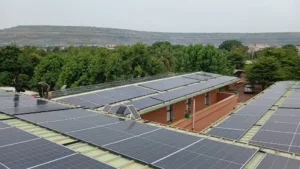
As global energy prices rise, more households are seeking alternative energy sources, with solar power emerging as a top choice. Solar energy is not only a sustainable and eco-friendly option but also significantly reduces electricity costs. However, many consumers often find themselves confused about how many solar panels are needed to meet their household energy demands. This article explores how to determine the scale and requirements of a home solar power system.
Key Factors in Determining the Number of Solar Panels
Calculating the number of solar panels required for a home is an important step that involves several considerations:
- Understanding Household Energy Consumption
First, you need to determine your monthly electricity usage (in kWh), which forms the basis for calculating the number of solar panels needed. Typically, the average household consumes between 300 and 1,000 kWh per month. If you have an electric vehicle or other high-consumption devices, your usage may be higher. - Power Rating of Solar Panels
The power rating of solar panels usually ranges from 250W to 450W, with higher-rated panels offering better efficiency. Increased efficiency means fewer panels will be required to meet energy needs. Selecting the appropriate power rating will help fulfill your household’s electricity requirements. - Solar Irradiance Conditions
The electricity generation capacity of solar panels depends on the sunlight conditions in your area. Generally, regions with ample sunshine can harness solar energy more effectively. In areas with more sunny days throughout the year, panel efficiency will be higher. Conversely, in cloudier and rainier regions, efficiency may decrease. Thus, you need to estimate the number of panels required based on the sunlight hours in your location. - Rooftop Space and Orientation
Ensure that your roof has sufficient space to install the solar panels. Typically, each standard solar panel occupies about 1.6 square meters. Therefore, installing 20 solar panels requires at least 32 square meters of rooftop area. Additionally, panels should ideally face south or be positioned at an optimal angle to maximize solar absorption. If the roof orientation is not ideal, you may need to increase the number of panels to compensate for reduced efficiency.
Calculation Method
Assuming your household consumes 900 kWh per month, with an average sunlight duration of 4 hours per day and each solar panel rated at 350W:
- Daily Energy Consumption: 900 kWh ÷ 30 days ≈ 30 kWh/day
- Hourly Power Demand: 30 kWh ÷ 4 hours ≈ 7.5 kW
- Power Output per Panel: 350W = 0.35 kW
- Required Number of Panels: 7.5 kW ÷ 0.35 kW ≈ 22 panels
Based on these calculations, your household would need approximately 22 solar panels to meet daily energy requirements.
Considering Losses and System Efficiency
The actual efficiency of a solar power system can be impacted by various factors, including losses incurred by inverters and cables. Typically, system efficiency ranges from 80% to 90%. Therefore, it is advisable to add an additional 10% to 20% to the calculated number of panels to ensure stable power supply.
Long-Term Benefits and Future Energy Needs
Solar panels generally have a lifespan of over 25 years. If you plan to add more electrical devices in the future (such as an electric vehicle charging station), it is wise to install a few extra panels initially. Any surplus electricity can also be fed back into the grid through a net metering system, providing additional revenue.
Conclusion
Determining the number of solar panels you need requires a comprehensive consideration of energy consumption, panel power rating, sunlight conditions, roof space, and future needs. Choosing the right configuration will enable you to achieve energy self-sufficiency, save on electricity bills, and potentially earn extra income in the future, making it an excellent choice for a sustainable and environmentally friendly lifestyle.
Since 2008, Maysun Solar has been dedicated to producing high-quality photovoltaic modules. Our range of solar panels, including IBC, HJT, TOPCon panels, and balcony solar stations, are manufactured using advanced technology and offer excellent performance and guaranteed quality. Maysun Solar has successfully established offices and warehouses in many countries and built long-term partnerships with top installers! For the latest quotes on solar panels or any photovoltaic-related inquiries, please contact us. We are committed to serving you, and our products provide reliable assurance.

Why Do Solar Panels Lose Power in Hot Weather? How Temperature Coefficient and Roof Ventilation Affect Summer Energy Yield
Summer brings stronger sunlight and longer daylight hours, so it is normally one of the most productive seasons for a solar system. However, some system owners notice that solar panel output does not continue to rise during the hottest part of the day.

How to Design a Low-Maintenance Rooftop Solar System
Introduction A low-maintenance rooftop solar system is not created after installation. It is designed before installation. Over a 20–30 year operating life, rising O&M costs are rarely caused by dirty glass alone. They are more often caused by design decisions made at the

European Heatwaves and PV Self-Consumption: Why HJT Solar Modules Perform Better in Hot Summers
Across Europe, summer heatwaves are no longer just a climate or comfort issue. They are becoming an energy-use issue. During hot summer days, air conditioning, ventilation, refrigeration, office equipment and industrial cooling loads can rise exactly when rooftop solar modules are exposed to

Partial Shading on Solar Panels: Why a Small Shadow Can Cause Major Power Losses
Introduction: Shading Is Not Just a Surface Area Problem In a photovoltaic system, a small shadow can be amplified by the electrical structure of the module. In a typical module with three electrical sections, a shaded area covering only a small part of

From Half-Cell to Multi-Cut: Why PV Modules Are Paying More Attention to More Segmented Circuit Design?
Table of Contents In recent years, half-cell modules have become a mainstream design in the photovoltaic market. Compared with traditional full-cell modules, half-cell technology reduces the operating current of each cell unit, lowers internal resistive losses, and improves thermal management and partial shading

Does Summer Heat Reduce Solar Panel Efficiency? What Really Happens to PV Output
Table of Contents Many PV users notice an unusual phenomenon in summer: although sunlight is strongest at noon, the power curve shown in the monitoring app does not reach the expected peak. In contrast, on a sunny spring day, or just after a