Table of Contents
Introduction
Although photovoltaic power generation is a clean, safe and environmentally friendly way of generating electricity, which has risen rapidly and been widely used in recent years, just like all electrical equipment, photovoltaic power stations also have certain fire hazards. Such potential hazards may originate from equipment failure, electrical wiring problems, bad weather or improper operation, etc. Once a fire occurs, it will not only cause equipment damage, but also may lead to life and property safety accidents, which seriously affects the stable operation of PV power generation system. Therefore, timely identification and effective response to fire hazards is the key to ensure the safe operation of PV power plants.
Alarming Incidents of Photovoltaic Fires
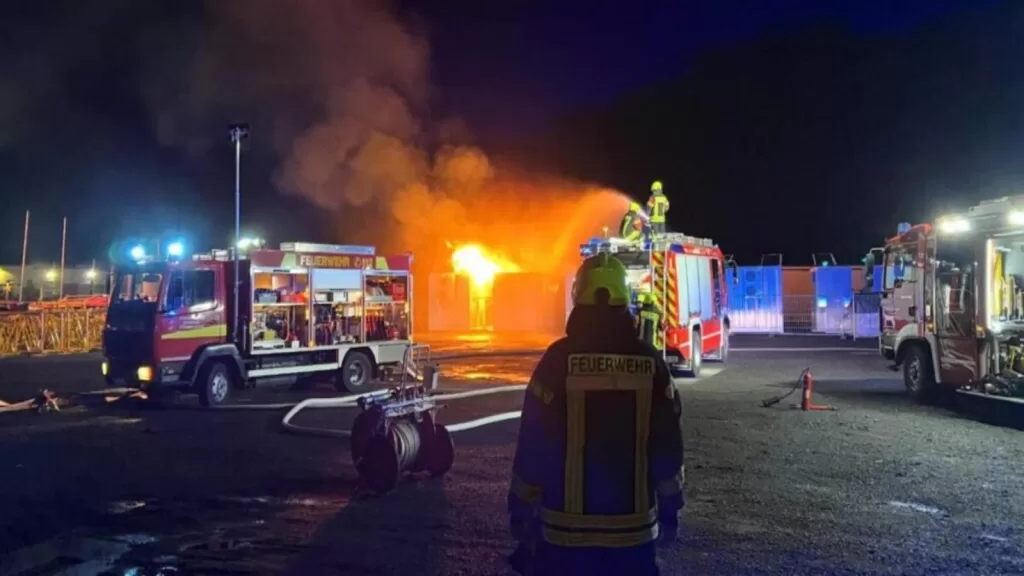
In April 2024, a fire broke out in a container storing lithium-ion batteries in Neermoor. According to the report, firefighters arrived at the scene and while only light smoke was observed, an explosion with a flash of flame occurred the moment the storage container was opened. It took the fire department and police nearly ten hours to put out the blaze. The neighboring highway was completely closed for several hours. The police initially estimated the damage at around 500,000 euros. Even though the cause of the fire has not yet been clarified, it is speculated that one of the triggers was thermal runaway, a phenomenon that can be triggered by physical and chemical reactions inside the battery that may lead to excessive production of heat and gases, which may lead to a fire or an explosion once the stabilized temperature region is exceeded.
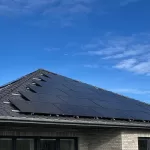
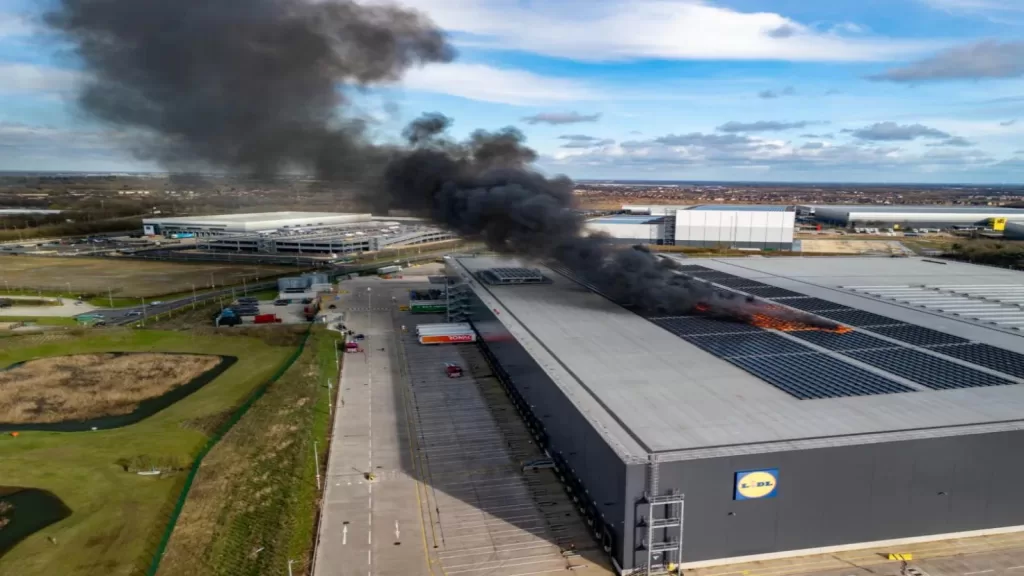
In February 2024, a £70 million commercial warehouse in Peterborough, UK, suffered a fire in its roof-mounted PV modules. The fire was caused by an electrical fault that led to the roof solar panels catching fire.
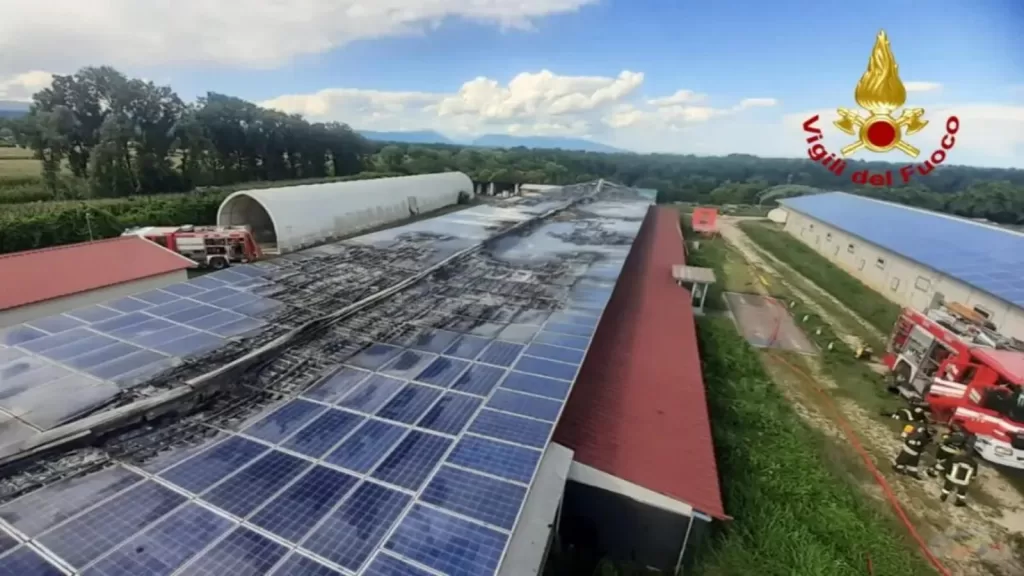
In August 2023, a fire broke out at a photovoltaic egg farm in Italy, killing more than 20,000 laying hens in the shed. As for the cause of the fire, the local fire department said, “The fire was probably caused by the photovoltaic system, which burned more than 1,500 square meters of heat shields and produced a large amount of smoke, leading to the asphyxiation of tens of thousands of laying hens in the shed.”
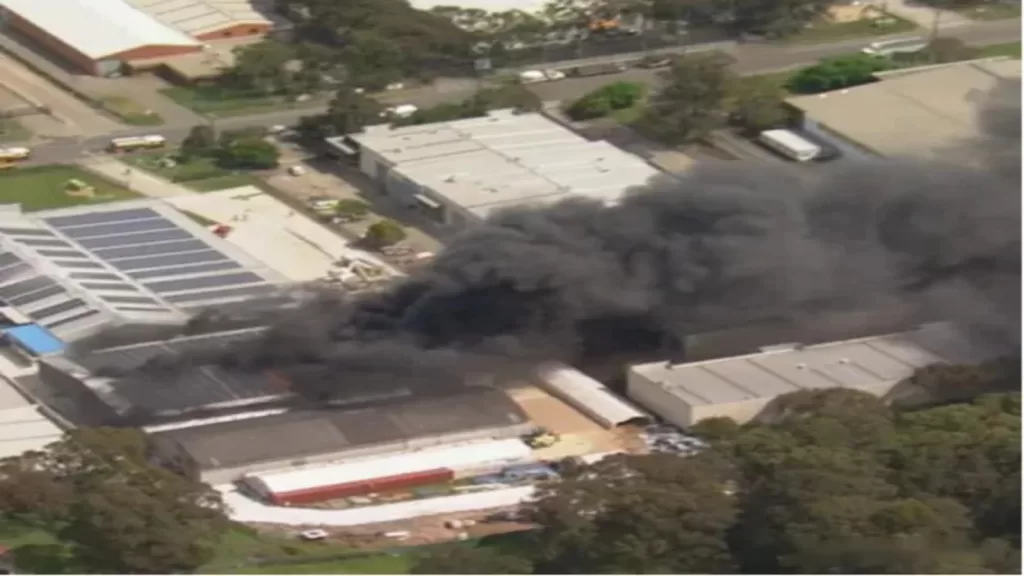
In October 2022, a pharmaceutical plant in western Sydney, Australia, suffered huge property damage when solar panels on the roof of the plant caught fire, destroying millions of dollars of equipment.
Causes of Photovoltaic Fires
Photovoltaic fires not only result in property damage but also pose risks of casualties and environmental pollution. Therefore, when it comes to photovoltaic fires, it is essential to thoroughly understand their causes.
1.Equipment Malfunctions
Core equipment in PV systems includes solar panels, inverters, and cables. However, during prolonged operation, these components may encounter various issues such as damage, aging, or loosening, which can lead to circuit shorts, arcs, and other faults, resulting in fires. Statistical data shows that over 80% of fires are caused by faults on the direct current side of PV systems. Thus, ensuring the normal operation of PV system equipment is crucial, as it not only affects the efficiency and reliability of the system but also the safety of life and property.
2.Electrical Line Loose Connection, Overload, or Short Circuit:
If the load in the PV system exceeds its capacity or if there are issues such as loose connections or short circuits in the circuit, it can lead to excessive current, causing fires. In PV systems, if components or circuits are improperly designed, such as failure to consider load variations, improper wiring, or material defects, it may lead to overcurrent during system operation, abnormal heating of components, decreased insulation strength, and potential self-ignition risks, ultimately causing fires.
3.Improper Installation
Improper installation is another significant factor contributing to photovoltaic fires. During installation, if installers lack professional knowledge or operate improperly, problems such as incorrect component connections, overstretching of wires, or poor grounding may occur, potentially leading to abnormal system operation and fires. In addition, design flaws are also potential hazards, such as improper installation locations, unstable support structures, or unreasonable distribution system designs, which may cause electrical faults during system operation, increasing the risk of fires. Therefore, professional design, construction, and installation processes are essential to minimize unnecessary safety hazards and ensure the safe operation of PV systems.
4.External Factors
Photovoltaic power stations are built outdoors and are susceptible to the effects of weather and natural disasters. Extreme weather conditions such as strong winds, heavy rain, or hail may damage the equipment of the power station. For example, strong winds may cause structural loosening, heavy rain may cause equipment dampness, and hail may cause damage to the equipment casing. These damages may not only reduce the performance of the equipment but also, in severe cases, lead to equipment failures and fires. Therefore, timely identification and response to the effects of these natural factors are crucial for the safe operation of photovoltaic power stations.
5. “Hot Spot Effect”
During the operation of photovoltaic panels, if the surface is covered by bird droppings, mud, leaves, or heavy dust, these obstructions hinder the sunlight, causing localized areas under obstruction to have higher temperatures, forming the so-called “hot spot effect.” In such cases, the temperature in the localized area is significantly higher than in other areas, causing excessive pressure on the photovoltaic panel in the localized area. This not only affects the normal power generation efficiency of the photovoltaic panel but also may pose safety hazards. In extreme cases, high temperatures in localized areas may even cause fire accidents, posing a serious threat to personnel and property safety. Therefore, regular cleaning of the surface of photovoltaic panels to maintain their cleanliness is an important measure to prevent the “hot spot effect” and reduce the risk of fires.
Prevention and Response Measures for Photovoltaic Users
1.Proper and Professional Installation of Photovoltaic Modules
Proper and professional installation of photovoltaic modules is the first step in preventing fires. During installation, specific installation plans should be determined according to the specific installation environment to maximize the use of solar energy resources while avoiding fire hazards caused by improper installation. For example, correct connection of modules with batteries, inverters, and other electrical components is also crucial. Precise electrical wiring can effectively reduce the risk of fires caused by poor contact or short circuits.
2.Regular Inspection and Maintenance of Photovoltaic Modules
Regularly inspecting the appearance and operational status of photovoltaic modules is crucial for timely identification and addressing of potential safety hazards. This includes checking for damaged components, loose connectors, or accumulated dirt and promptly replacing or cleaning them as needed. Additionally, regular inspections of the system’s grounding situation are necessary to ensure the grounding system is intact and effective. Maintaining photovoltaic modules ensures they remain in optimal working condition, minimizing the risk of fires to the maximum extent possible. Therefore, regular inspection and maintenance of photovoltaic modules are effective measures for preventing photovoltaic fires, providing essential protection for the safety and reliable operation of renewable energy sources.
3.Equipped with Complete Fire Fighting Systems
Setting up fire belts around photovoltaic systems, installing fire-fighting equipment (such as fire extinguishers, fire pumps, etc., for timely fire fighting when fires occur), setting up safety passages (setting up safety passages around photovoltaic systems for easy access and exit of fire trucks and rescue personnel) and other safety measures can also effectively reduce the probability of photovoltaic system fires. Don’t forget to regularly check the status of fire extinguishers and ensure they are in working order.
Conclusion
In response to the phenomenon of PV power plant fire, in addition to standardizing system design and installation, strict control of product quality, etc., you can also greatly reduce the probability of PV power plant fire through certain technical means and equipment. Choosing the right products can reduce the probability of PV fire.
Maysun Solar’s HJT solar panels not only provide excellent cell efficiency and stability, but also have excellent fire resistance, and have been certified by the German TUV, providing a more comprehensive guarantee for your PV project.
Efficiency: 21.2-22.3%
Dimensions (L × W × H): 1760 mm × 1098 mm × 30 mm
Weight: 22 kg
Packaging: 36 pcs/pallet, 936 pcs/40'HQ
Warranty: 30-year product and performance guarantee
Efficiency: 21.2% - 22.3%
Dimensions (L × W × H): 1760 mm × 1098 mm × 30 mm
Weight: 22 kg
Packaging: 36 pcs/pallet, 936 pcs/ 40'HQ
Warranty: 30-year product and performance warranty
Efficiency: 21.74%-22.87%
Dimensions (L × W × H): 2383mm × 1303mm × 35mm
Weight: 38.5 kg
Packaging: 31 pcs/pallet, 558 pcs/40'HQ
Warranty: 30-year product and performance warranty
Since 2008, Maysun Solar has been specializing in the production of high quality photovoltaic modules. Our wide range of solar panels such as IBC, HJT, TOPCon soalr panels and Balcony solar power station, utilizes advanced technology for superior performance and guaranteed quality. Maysun Solar has successfully established offices, warehouses and long-term relationships with excellent installers in many countries! For the latest solar panel quotes or any PV-related inquiries, please contact us. We will be happy to serve you, Our products can provide you with a secure guarantee.
Reference:
natürlichzukunft, r. (2024b, april 15). solaranlage brandgefährlich? was die feuerwehr rät. … natürlichzukunft. https://www.erdgas-suedwest.de/natuerlichzukunft/solaranlage-brandgefahrlich-was-die-feuerwehr-rat/
sfpe europe digital issue 21 – investigation of the effects of photovoltaic (pv) system component aging on fire properties for residential rooftop applications. (n.d.). higher logic, llc. https://www.sfpe.org/publications/periodicals/sfpeeuropedigital/sfpeeurope21/europeissue21feature5
enkhardt, s. (2024, may 8). ursache für großbrand von batterien in neermoor noch unklar. pv magazine deutschland. https://www.pv-magazine.de/2024/05/08/ursache-fuer-grossbrand-von-batterien-in-neermoor-noch-unklar/
brandgefahr durch solaranlagen? (2023, october 26). solaranlage ratgeber. https://www.solaranlage-ratgeber.de/photovoltaik/photovoltaik-installation/brandgefahr
You may also like:

Low-Carbon PV Procurement in France: Why ECS, PEP Ecopassport and Solar Carports Matter
Table of Contents France is becoming one of Europe’s most documentation-driven solar markets. For EPC companies, developers and commercial project owners, module selection is no longer based only on price-per-watt, efficiency or linear power warranties. Carbon documentation, supply-chain traceability and project-specific compliance files

PV Module Installation Beyond Rooftops: Multi-Scenario Applications for Bifacial N-Type Modules in Europe
PV module installation is not limited to rooftops. For residential users, small commercial users and distributed PV projects in Europe, spaces such as balconies, gardens, fences, carports, terraces, façades and pergolas can also provide additional installation areas when conditions allow. As solar use

Europe’s Grid Cap Era: Why High-Efficiency Solar Panels Matter More in 2026
Introduction In 2026, the economics of distributed solar in Europe are changing. Grid congestion, export limits, negative electricity prices and zero-export requirements mean that a solar project can no longer be judged only by how much electricity it generates. The more important question

How Do Solar Panel Delivery Delays Affect Installer Costs?
Solar panel delivery delays can affect installation schedules, project acceptance and payment collection.

The Forgotten “Invisible Assets”: Why Repowering Is the Strategic Key for European Solar in 2026
As grid congestion delays new solar projects across Europe, existing PV assets are becoming a strategic source of growth. This article explains why PV repowering can help EPCs and C&I asset owners unlock hidden value from already-connected solar plants, improve LCOE, and extend long-term asset performance with high-efficiency TOPCon, IBC and HJT modules.

Solar Panel Procurement in Europe: Why Stable Supply Matters More Than a One-Off Low Price
When European installers, distributors and corporate buyers choose solar panels, a one-off low price should not be the only factor. Stable supply, model continuity, technical documents and replenishment capacity often matter more for long-term cooperation and project delivery.


I do not even know howw I ended up here, but I thought this
post was great. I don’t know who you are but certainly you are going to a famous blogger if you are not already 😉
Cheers!
My webpage Sheena
Thank you so much for your kind words! It means a lot to know that you enjoyed the post. Your encouragement truly motivates me to keep creating valuable content. Cheers and have a great day!