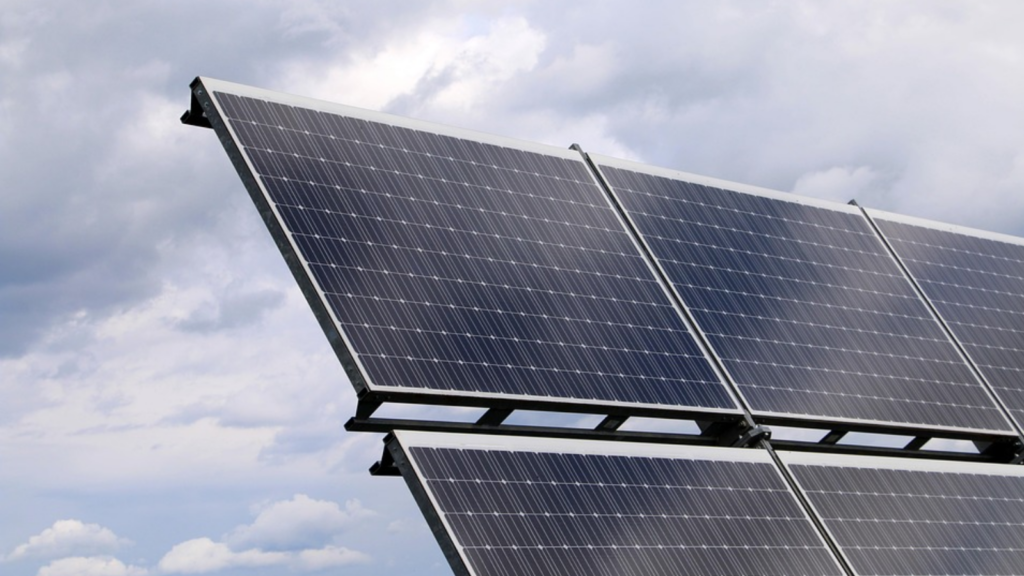
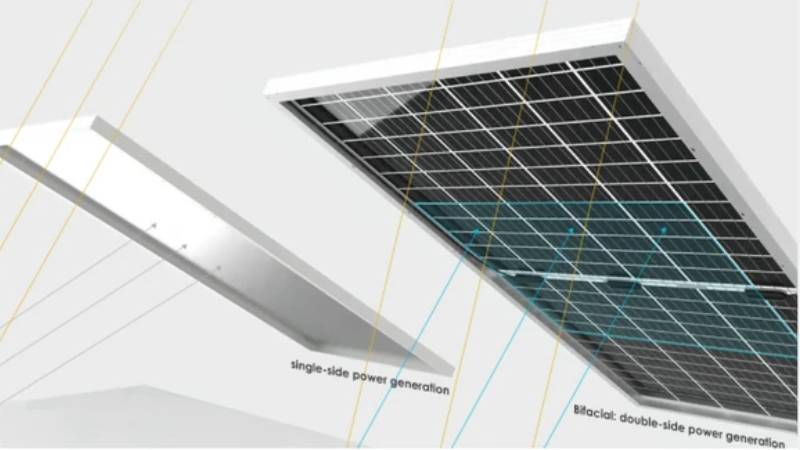
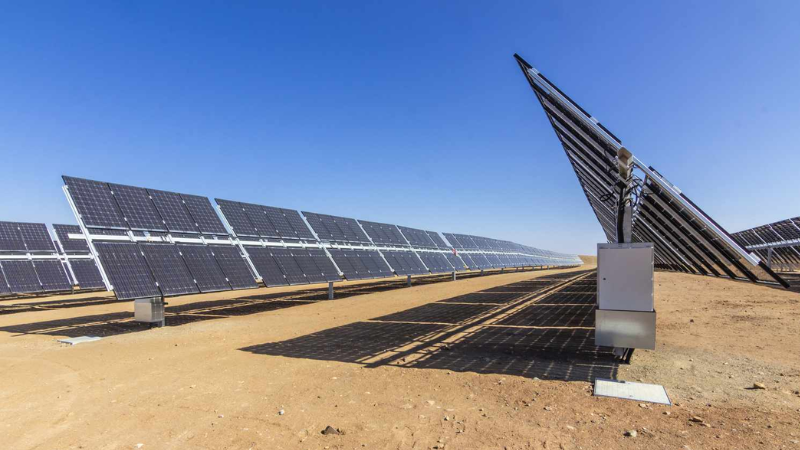
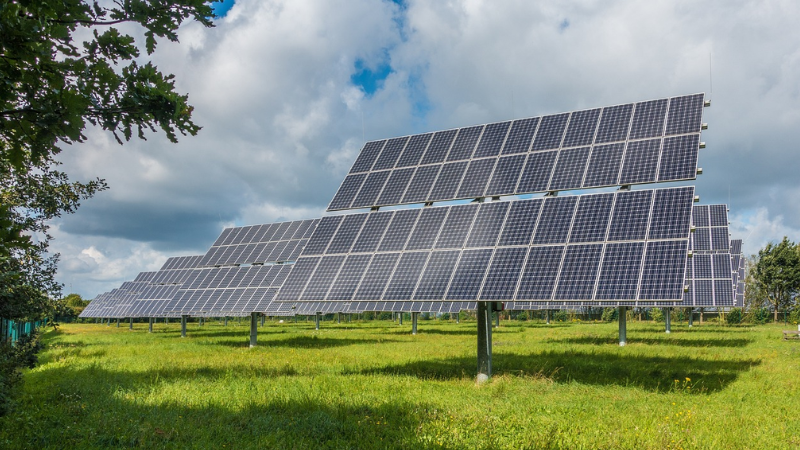
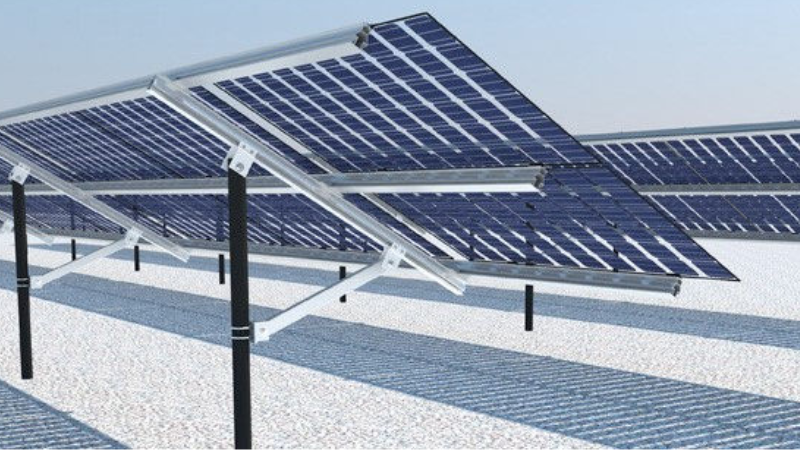
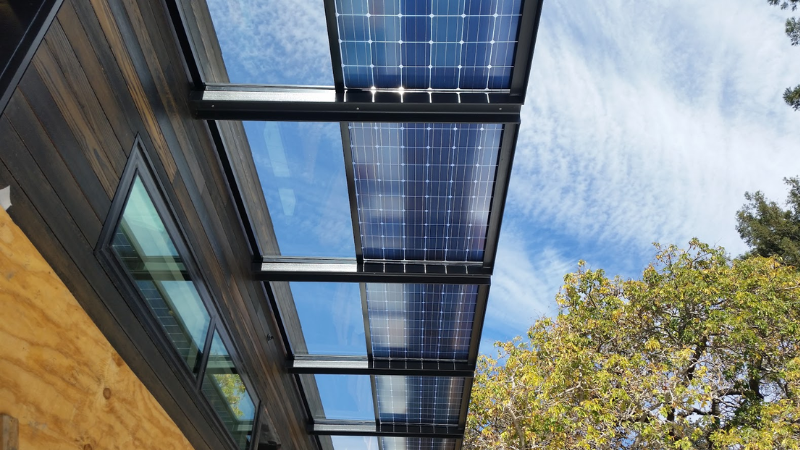
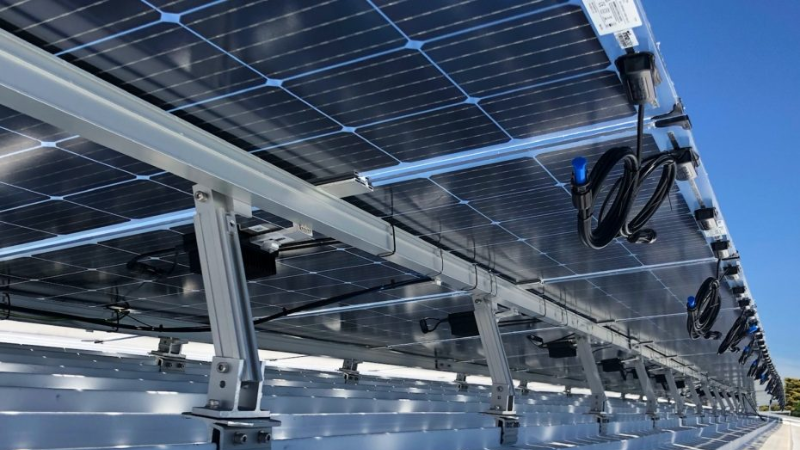

The technology behind solar panels is continuously evolving, and manufacturers are now capable of producing bifacial solar panels. As the name suggests, bifacial solar panels are devices that feature photovoltaic cells on both the front and back sides, designed to capture sunlight from both directions. Unlike traditional monofacial solar panels, bifacial panels can absorb direct sunlight from the front while also utilizing light reflected from the ground or nearby surfaces. This dual absorption capability often results in higher efficiency for bifacial solar panels compared to conventional monofacial panels, significantly enhancing energy generation.
What are the types of bifacial modules?
Bifacial solar panels primarily come in three forms, each with its own advantages and characteristics:
Glass/Glass Panels(most common on the market):
- Structurally stronger, these panels can withstand greater loads.
- Suitable for high-intensity environments, offering enhanced durability and reliability.
Glass/Transparent Backsheet Panels:
- These panels have a glass front and a transparent backsheet.
- Generally more affordable, making them ideal for budget-conscious projects.
Glass/Backsheet Panels:
- Featuring a glass front and a non-transparent backsheet.
- While they have slightly lower reflective performance, they still provide good energy generation efficiency.
Each of these types of bifacial solar panels has unique features, allowing users to choose the most suitable product based on specific needs and environmental conditions.
What Are the Best Practices to Install Bifacial Solar Panels Effectively?
1. Optimize Panel Height and Clearance
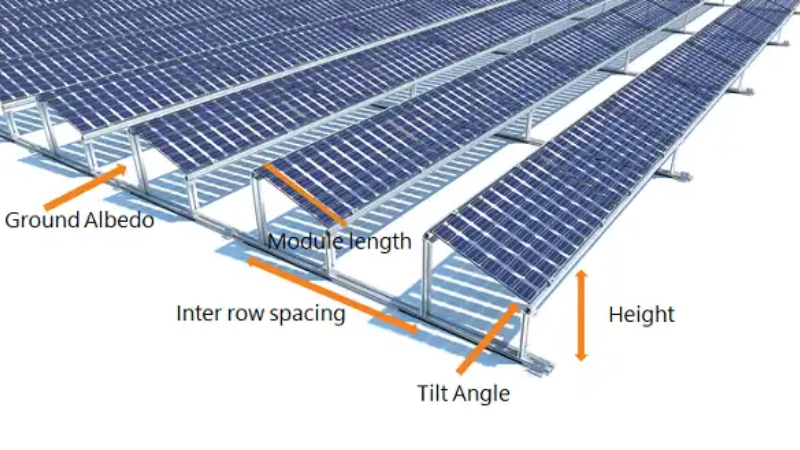
Elevate bifacial panels higher than traditional monofacial panels, ideally at least 1 meter (3.3 feet) above the ground or roof surface. This increased height allows more reflected light to reach the rear of the panels and reduces shading risks at the bottom edge. For sloped roof installations, maintain a clearance of at least 10-15 cm (4-6 inches) between the panel’s back and the roof surface to promote airflow and light reflection.
2. Implement Optimal Row Spacing
Ensure adequate spacing between panel rows to allow light to reach the ground and reflect back to the panel’s rear. Start with a row spacing of at least 2.5 meters, with wider gaps preferred to maximize rear light absorption. When designing the layout, consider seasonal changes in solar angles, typically setting the spacing for a ground coverage ratio (GCR) of 0.3 to 0.5.
3. Determine Panel Location
The area surrounding the panels should have high-albedo surfaces to reflect light onto the rear of the bifacial panels. Ideal locations include white roofs, low vegetation, asphalt, and bodies of water. Avoid shaded areas and light-absorbing surfaces, such as those obscured by tall buildings or dark soils, as these can reduce rear illumination.
4. Incorporate Diffusers
Strategically place scatter-type “enhancers” around the panels to effectively diffuse and reflect more light onto the rear. Cost-effective options include painting nearby walls or fences white or applying reflective film to barriers, along with placing white gravel around the solar mounts. Adding white or light-colored stones beneath the ground-mounted array can increase reflectivity from 0.2-0.3 to 0.5 or higher. In agricultural settings, certain crops (like specific lettuce varieties) also exhibit high reflectivity. Additionally, painting the mounting structure’s rails white can enhance light reflection beneath the panels.
5. Use Transparent or Reflective Mounting Components
Prioritize mounting materials that allow light to pass through or reflect onto the rear of the panels. Using light-colored or reflective materials for rails and supports can significantly increase rear illumination, enhancing energy production efficiency. If windbreaks are necessary, transparent or semi-transparent materials are ideal, as they ensure light penetration while reducing wind effects. Minimize the use of opaque components to avoid casting shadows on the back of the panels, which could hinder light reflection and absorption.
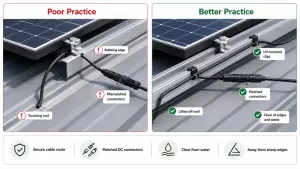
6. Plan for Cable Management
Route cables along the sides of the bifacial solar panels or mounting components to minimize shading on the rear. Use transparent or light-colored cable ties and conduits to optimize lighting conditions. Additionally, pre-planning cable paths, employing dedicated cable management solutions, and regularly checking the cable condition for wear or aging are critical measures to maintain system efficiency.
Conclusion
In the quest for cleaner and more efficient energy, bifacial solar panels have emerged as a promising solution. Not only do bifacial solar panels enhance energy generation efficiency, but they also contribute to the broader adoption of sustainable energy. Through proper design and installation, users can maximize their return on investment while supporting environmental sustainability. These panels will play a significant role in advancing the green energy transition and the future development of renewable energy.
Since 2008, Maysun Solar has focused on producing high-quality photovoltaic modules, particularly bifacial photovoltaic modules. Our HJT and TOPCon bifacial solar panels, designed with lightweight materials, offer exceptional dual-sided energy generation performance, maximizing sunlight utilization and improving efficiency. Additionally, our balcony solar power stations provide users with flexible application options. Maysun Solar has successfully established sales offices and warehouses in multiple EU countries and has developed long-term partnerships with excellent installers. For the latest solar panel quotes or any photovoltaic-related inquiries, please contact us. We are committed to assisting you in making optimal choices regarding the design, installation, and selection of photovoltaic modules.
Reference:
Heltsley, K. (2024, June 30). Best practices for installing bifacial solar panels | explained. ItekEnergy. https://www.itekenergy.com/solar-panels/best-practices-for-installing-bifacial-solar-panels/
9 Tips and Tricks for deploying bifacial solar panels. (n.d.). Waaree Energies Limited. https://shop.waaree.com/blog/9-tips-and-tricks-for-deploying-bifacial-solar-panels/?srsltid=AfmBOoqdaA1bhATCHPqFaA2YzrBgD5OQwzWb2WUQs5UVUsOQOZIEozGa
You may also like:

How to Choose Solar Panels for Low-Load-Bearing Industrial Roofs: A Guide to Weight, Power Density and Mounting Systems
Choosing solar panels for a low-load-bearing industrial roof requires more than checking the weight of an individual module. A more reliable process starts by determining the roof’s remaining load-bearing capacity. The complete load from the modules, rails, fasteners and ballast must then be
Why Do Solar Panels Lose Power in Hot Weather? How Temperature Coefficient and Roof Ventilation Affect Summer Energy Yield
Summer brings stronger sunlight and longer daylight hours, so it is normally one of the most productive seasons for a solar system. However, some system owners notice that solar panel output does not continue to rise during the hottest part of the day.
How to Design a Low-Maintenance Rooftop Solar System
Introduction A low-maintenance rooftop solar system is not created after installation. It is designed before installation. Over a 20–30 year operating life, rising O&M costs are rarely caused by dirty glass alone. They are more often caused by design decisions made at the
European Heatwaves and PV Self-Consumption: Why HJT Solar Modules Perform Better in Hot Summers
Across Europe, summer heatwaves are no longer just a climate or comfort issue. They are becoming an energy-use issue. During hot summer days, air conditioning, ventilation, refrigeration, office equipment and industrial cooling loads can rise exactly when rooftop solar modules are exposed to

Partial Shading on Solar Panels: Why a Small Shadow Can Cause Major Power Losses
Introduction: Shading Is Not Just a Surface Area Problem In a photovoltaic system, a small shadow can be amplified by the electrical structure of the module. In a typical module with three electrical sections, a shaded area covering only a small part of

From Half-Cell to Multi-Cut: Why PV Modules Are Paying More Attention to More Segmented Circuit Design?
Table of Contents In recent years, half-cell modules have become a mainstream design in the photovoltaic market. Compared with traditional full-cell modules, half-cell technology reduces the operating current of each cell unit, lowers internal resistive losses, and improves thermal management and partial shading