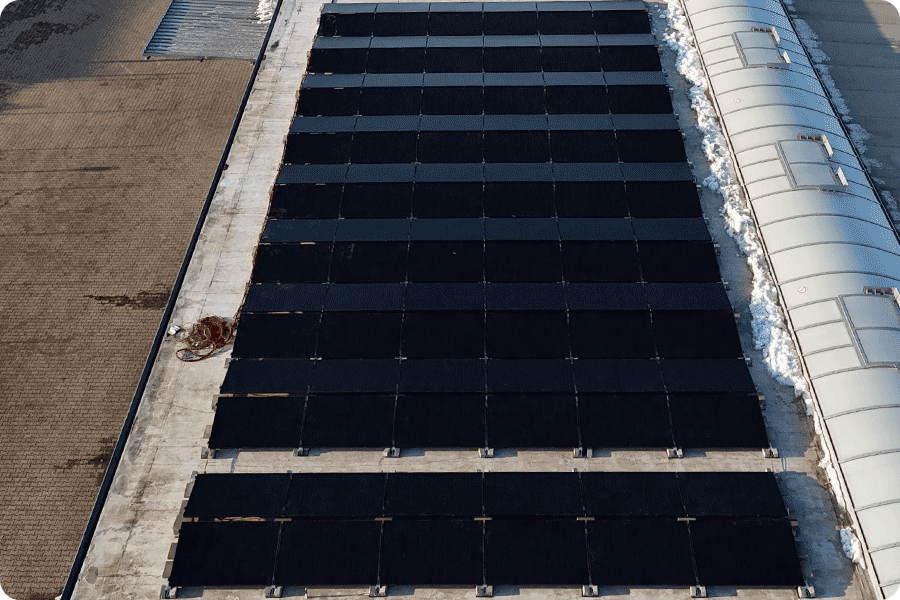
500W solar panels remain a practical option in many residential and commercial PV projects.
As panel power ratings continue to increase, system performance can no longer be judged by wattage alone. Higher power does not automatically mean better returns, nor is it suitable for every project scenario.
Table of Contents
The practical suitability of 500W solar panels in current projects
In today’s residential and commercial PV projects, solar panels of different power classes are typically deployed in parallel rather than being replaced along a single power trajectory. As a widely adopted power range, 500W solar panels continue to appear in a large number of new-build and retrofit project designs.
From an implementation perspective, the specifications associated with 500W panels have established relatively mature boundaries in terms of size, weight and system configuration.
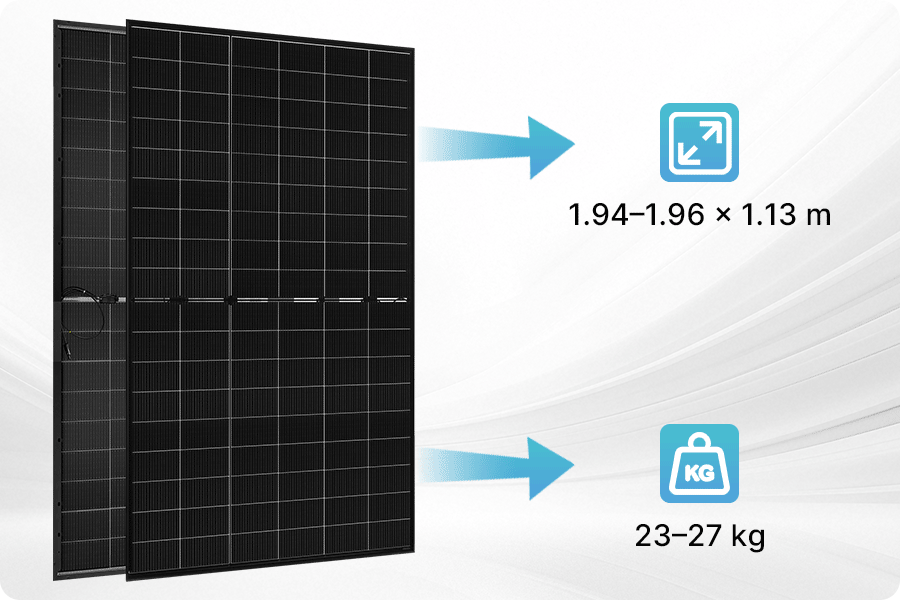
In the current market, panels in this power class are generally around 1.94–1.96 × 1.13 m in size and weigh 23–27 kg, which gives system planners a high degree of predictability during the project design phase.
During PV module selection, this predictability helps reduce uncertainty in both system design and on-site installation.
Key concerns when selecting 500W solar panels
In current discussions around PV module selection, questions about 500W solar panels usually stem from a combination of practical considerations. These concerns recur across different projects and form a common backdrop to decisions about module power ranges.
In practice, the main issues tend to focus on the following:
Power range trends: As higher-wattage panels continue to enter the market, some project stakeholders question whether 500W remains a power range that is acceptable in the long term.
Compatibility between panel specifications and system design: Changes in power rating are often accompanied by adjustments in panel size, weight and system configuration. When assessing roof conditions, installation methods and system layout, it is necessary to confirm that existing design approaches remain suitable.
The weight given to power ratings in decision-making: Because wattage is an intuitive figure, it can be given disproportionate importance in discussions, potentially overshadowing other system-level factors that are equally critical.
Overall, these questions reflect a rational concern for system stability, compatibility and long-term expectations in a market where panel power levels continue to evolve.
Typical low-risk application scenarios for 500W solar panels
Where project boundaries are clearly defined and stable long-term operation is the priority, 500W solar panels can generally be regarded as a relatively safe option in PV module selection.
In the following situations, 500W solar panels often align well with project conditions:
Projects that avoid pushing roof load and structural limits: When structural margins and installation feasibility are prioritised, the specifications of 500W panels fit more comfortably within standard design boundaries, helping maintain system stability.
Projects focused on long-term stable output rather than nominal wattage: For systems designed around long-term performance, higher rated power does not necessarily translate into proportional gains. Established power ranges tend to offer greater predictability.
Projects aiming to minimise selection risk and avoid frequent redesigns: Where decision cycles are long or involve multiple stakeholders, widely adopted power classes help reduce uncertainty caused by repeated design adjustments.
Projects where overall system coordination matters more than single-parameter optimisation: In scenarios that must balance panel layout, system matching and installation logistics, 500W panels integrate more easily into existing design frameworks without major changes.
Overall, the safety of 500W solar panels lies mainly in their ability to reduce system uncertainty. This advantage is grounded in extensive application experience and clearly defined project parameters.
Low-risk power ranges in solar panel selection
A rational approach to PV module selection involves identifying power ranges where overall system risk remains relatively controllable.
In mainstream projects, low-risk power ranges are typically characterised by extensive field experience, mature system configuration pathways, and requirements that do not push structural or installation conditions to their limits.
430–460W panels as a mainstream low-risk range: Widely used in many residential and commercial projects, panels in this class are typically around 1.76 × 1.13 m in size and weigh about 21 kg. Well-established design and installation experience allows a good balance between structural loading, system compatibility and construction logistics. This range is often well suited to projects focused on long-term stable operation and controlled risk.
500W panels as an acceptable upper range: Where project boundaries and compatibility conditions are clearly defined, 500W solar panels remain a valid option. However, compared with the mainstream low-risk range, they place more explicit demands on system configuration and project conditions.
From a selection standpoint, the value of identifying low-risk ranges lies in keeping module choices aligned with overall system controllability and predictability.
As a solar panel manufacturer, Maysun Solar has an established presence in Europe, supplying wholesale and distribution partners with stable, long-term module availability. Its range includes TOPCon 500W solar panels and HJT 500W solar panels, designed to suit different structural and application needs while supporting reliable system matching and long-term performance.
Recommend reading

430–460W or 600W+? How Should You Choose Solar Panel Power for Rooftop Projects?
Compares 430–460W solar panels and 600W solar panels in C&I rooftop projects, showing that solar panel selection should prioritise roof compatibility and system stability.

Changes in the European Solar Policy and Market in 2026
Europe’s 2026 solar policy and grid changes are reshaping solar panel selection, shifting project returns towards market-driven mechanisms and highlighting the roles of TOPCon, HJT and IBC solar panels.

Why European EPCs Are Reassessing Large-Format Solar Panels
European EPCs are re-evaluating large-format solar panels. Panel size directly affects installation risk, system compatibility, and solar project ROI stability.

Do Vertical Bifacial Modules Really Deliver Additional Yield?
Vertical bifacial PV systems are gaining increasing attention across Europe. This article explores under what conditions a vertical layout can create additional value, how bifacial gain is influenced by site conditions, and which project types are best suited to this design.

Which rooftop scenarios make 700W+ solar panels a risk?
An analysis of the practical limits of 700W+ high-power solar panels on residential and commercial rooftops, and how space, load capacity, self-consumption and maintenance affect real returns.

February News in the Photovoltaic Industry
February overview of Europe’s photovoltaic market: module price trends, a rebound in the German PPA market, progress in Italian agrivoltaics and regulatory shifts in France, highlighting key industry signals.


We’ve installed quite a few systems with 500W modules over the last year and honestly they still make sense for many roofs. Once you go higher in wattage, handling and layout start to get trickier, especially on older buildings.
For a lot of commercial jobs we prefer staying in that range because it keeps the design simple and predictable.