In salt mist and high-humidity environments, structural risks in photovoltaic modules tend to emerge with a delay. As a result, assessing structural compatibility at the selection stage is more critical than relying on later operation and maintenance. IEC 61701 serves only as a baseline reference, while double-glass photovoltaic modules generally offer more controllable long-term performance under these conditions.
Table of Contents
Why Do Salt Mist and High Humidity Create Long-Term Risks for Solar Panels?
Salt mist and persistent high humidity amplify the long-term failure risks of solar panels during medium- to long-term operation, yet these effects rarely appear in the early stages of a project.
In coastal or continuously humid regions, salt and moisture form a constant environmental background. Over time, they gradually increase the probability of failure related to insulation, corrosion and structural stability in photovoltaic modules.
During autumn and winter, relative humidity often remains high for extended periods. In parts of coastal Europe, for example, average relative humidity in northern German coastal cities can approach 85%–90%. Moisture and salt are therefore present for long durations and repeatedly interact with solar panels during operation.
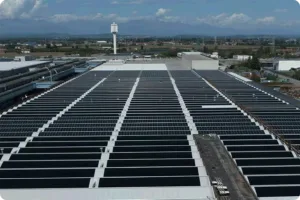
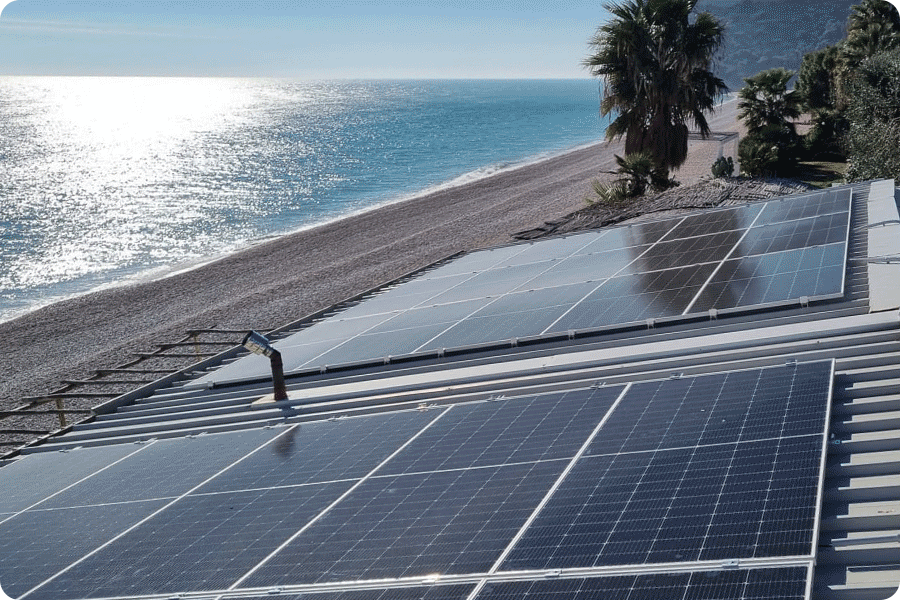
Figure: Example of a rooftop photovoltaic project in a coastal, high-humidity and salt mist environment, using 67 double-glass solar panels with a total installed capacity of approximately 36 kWp.
These effects accumulate over time. Strong performance in the first year does not prove that risks are absent; many issues only begin to surface after several years of operation.
Because of this delayed and initially hard-to-verify behaviour, salt mist and high-humidity environments are treated by the industry as a distinct category within durability testing and evaluation frameworks.
Why Do the Risks Stem from System Protection or from Module Structure?
In salt mist and high-humidity environments, when reliability issues occur in a photovoltaic project, attention is often directed first to protection measures, installation quality or operation and maintenance conditions. These factors are the most visible and the easiest to observe and adjust during system operation.
However, in coastal and persistently humid settings, the relevant impacts are strongly cumulative and delayed. Early operating performance rarely reflects the true level of risk. By the time abnormalities begin to appear, the system has often been running for years, and the scope for effective corrective decisions has narrowed considerably.
Under such environmental conditions, the starting point of risk transmission lies in the module structure itself. Once the structural design of a photovoltaic module is fixed at the selection stage, it also defines the limits of what the module can withstand under long-term high-humidity and high-salinity stress. Subsequent protection and installation measures can only delay the emergence of problems and reduce their impact; they cannot change the upper limit of structural compatibility.
Protection therefore functions more as a risk management tool. Under high environmental stress, the controllability of a project’s long-term performance is often partly determined before the system is commissioned.
Does Passing IEC 61701 Salt Mist Testing Mean a Solar Panel Is Suitable for Coastal Environments?
In coastal or high-humidity environments, IEC 61701 salt mist testing is widely regarded as an important reference standard for assessing the environmental durability of photovoltaic modules and has practical value during the selection stage.
However, passing the test does not automatically mean that a module is suitable for long-term use in all coastal or high-humidity conditions.
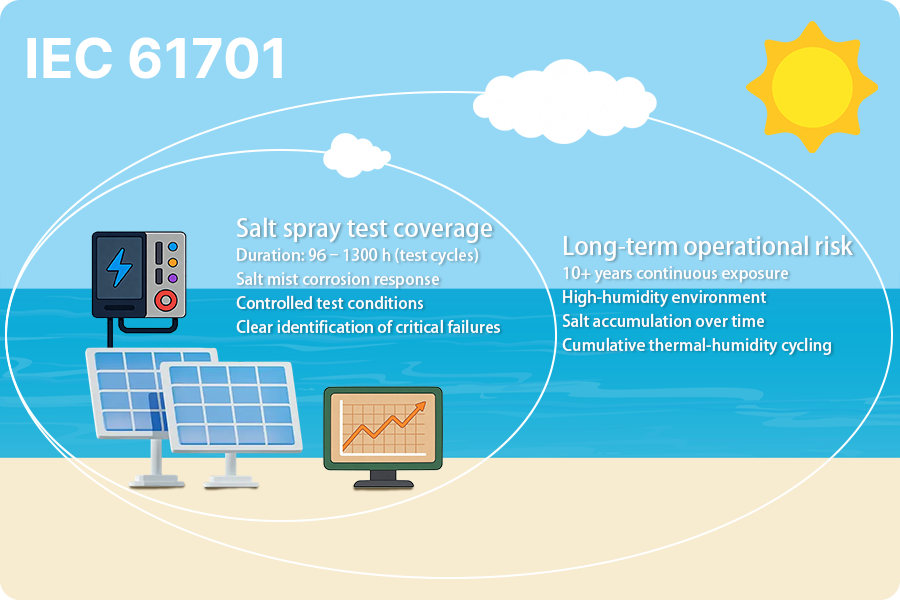
Figure: Comparison between the coverage of IEC 61701 salt mist testing and the long-term operational risks and time scales faced by photovoltaic modules in coastal, high-humidity environments.
What IEC 61701 Actually Evaluates
In real projects, IEC 61701 is typically used to confirm whether a module will perform acceptably in a salt mist environment. It functions more as a baseline screening tool than as a predictor of long-term performance.
From the perspective of standard design, IEC 61701 focuses on the module’s fundamental tolerance to salt exposure, including whether it shows:
visible corrosion
functional abnormalities
rapid failure
This makes the standard effective for excluding solutions with obvious risks in salt mist conditions, rather than for distinguishing subtle differences in long-term operation. In real coastal or persistently humid environments, long-term operating factors extend far beyond what standard test conditions can reproduce.
Passing the Test Does Not Equal Suitability
A common misconception is that once a module passes IEC 61701 salt mist testing, it is automatically “suitable for coastal environments”. This view overlooks the scale gap between laboratory testing and real operating conditions.
Standard testing is conducted in a controlled environment, with salt mist exposure typically lasting from tens to hundreds of hours, and in some procedures extending to several tens of days. The main purpose is to detect rapid and obvious abnormal reactions.
Real environments expose solar panels to continuous operation over decades, where salt, moisture and temperature-humidity fluctuations accumulate over time. Their effects are closer to slow, progressive degradation and often show clear delay.
In many real projects, passing IEC 61701 testing alone is insufficient to support a conclusion of long-term suitability for coastal use. Test results must be interpreted in the context of actual operating periods and environmental conditions, rather than being directly extrapolated into long-term guarantees.
Long-Term Risks Beyond Standard Testing
Some risks related to long-term stability are not directly identified by standard testing but gradually affect system reliability and controllability after years of operation.
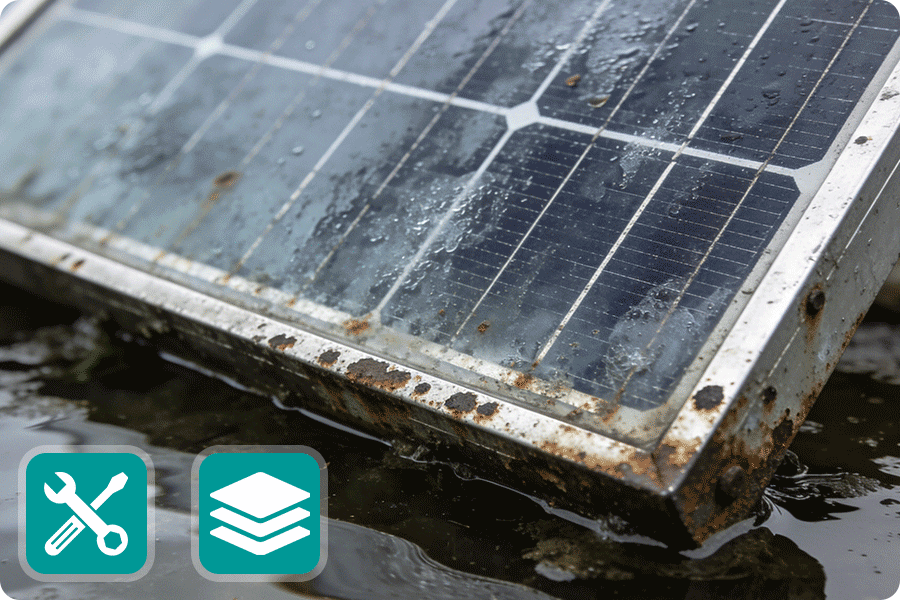
Under long-term operating conditions, the combined effects of salt, moisture, temperature-humidity cycling, potential differences and electrical loading accumulate continuously. These influences more often manifest as declining insulation performance, localised corrosion build-up or changes in structural stability, and they are typically difficult to detect during initial testing or early operation.
Industry experience shows that issues linked to salt mist and high humidity rarely concentrate in the first one or two years. Instead, they tend to emerge progressively over an operating period of roughly three to eight years.
The Fundamental Differences Between Solar Panel Structures in Salt Mist and High-Humidity Environments
In salt mist and high-humidity environments, structural differences between solar panels are systematically amplified and have a direct impact on long-term reliability.
Through the interaction of encapsulation, sealing, boundary design and electrical potential pathways, these differences are translated into stability-related risks under high humidity and salt mist exposure.
The Long-Term Stability Limits of Encapsulation and Sealing
In salt mist and high-humidity conditions, variations in long-term module stability first appear in the structural limits maintained by encapsulation and sealing systems.
Over time, moisture and salt accumulate through continuous ingress, temperature-humidity cycling and boundary ageing. As a result, encapsulation and sealing performance become critical structural variables influencing long-term behaviour.
Under these conditions, solar panels using double-glass encapsulation generally help reduce the risk of moisture penetration and the gradual decline of sealing performance, supporting more stable long-term operation.
Risk Transmission Through Frames and Electrical Pathways
In salt mist and high-humidity environments, risk is progressively amplified along specific structural pathways within a photovoltaic module.
In real operation, these pathways are shaped by several interacting structural and operational factors, including:
the module frame, which as a structural boundary is more exposed to repeated accumulation of moisture and salt
the interface between the frame and the encapsulation, which experiences higher stress during temperature-humidity cycling
electrical potential differences between the interior and exterior of the module, which can intensify local corrosion risks in salt mist and humid conditions
grounding configuration and potential continuity, which influence how environmental stress propagates through the structure
When moisture, salt and electrical potential differences accumulate along these pathways over time, their effects gradually and cumulatively alter local structural conditions.
The Environmental Limits of Efficiency and Power Ratings
In standard application scenarios, efficiency and power ratings are the most visible and commonly prioritised criteria in solar panel selection.
In salt mist and high-humidity environments, however, the relevance of these parameters becomes more limited and cannot fully describe long-term operational performance.
Efficiency and power figures reflect initial or short-term performance under standard test conditions. By contrast, challenges in persistently humid and saline environments are more closely linked to structural stability and the cumulative development of risk.
Differences in nominal parameters do not necessarily translate into meaningful long-term performance gaps. Over multi-year operating periods, structural stability, risk transmission pathways and environmental compatibility boundaries exert a more direct influence on usable performance, yet these factors are not captured by efficiency or power ratings.
Is There a “Best” Solar Panel for Salt Mist and High-Humidity Environments?
In salt mist and high-humidity environments, the long-term performance of a solar panel depends on whether its structure can withstand continuous environmental stress. Structural compatibility sets the upper limit of certainty for a project’s long-term operation.
There Is No Universally “Best” Solar Panel
In salt mist and high-humidity environments, the idea of a universally “best” solar panel cannot be separated from specific operating conditions.
Different projects are exposed to varying levels of salt concentration, humidity and temperature-humidity cycling intensity. As a result, the pathways through which long-term risks develop also differ.
A panel can only be considered “best” once the application scenario and environmental context are clearly defined.
In Salt Mist and High Humidity, Performance Is Defined by Structure, Not by Specifications
In these environments, photovoltaic modules face long-term, continuously accumulating environmental stress. Under such conditions, suitability is determined by whether the structure can withstand prolonged moisture ingress, salt corrosion and repeated temperature-humidity cycling.
Module designs with higher overall sealing integrity and more stable structural boundaries are generally better at controlling these long-term risks. For example, double-glass solar panels or glass-glass bifacial structures, due to their continuous encapsulation and structural stability, often demonstrate more controllable long-term behaviour in salt mist and high-humidity conditions.
The emphasis on structural compatibility ultimately reflects a need to reduce uncertainty over the system’s operating life.
The Selection Stage Defines the Upper Limit of Long-Term Risk
In salt mist and high-humidity environments, the upper limit of long-term project risk is effectively set during the module selection stage, not after commissioning.
Subsequent protection measures and maintenance strategies mainly influence how quickly risks emerge and how they manifest, but they rarely change the underlying risk pathway. As environmental stress accumulates over many years, structural differences between modules become increasingly visible.
Decisions about structural stability and environmental compatibility at the selection stage therefore directly determine how controllable long-term project risk will be.
As a photovoltaic module supplier active in Europe’s coastal and high-humidity markets, Maysun Solar focuses on structural compatibility under long-term salt mist and moisture exposure. In these environments, double-glass solar panels help limit sealing degradation and structural stress, improving the predictability of long-term performance.
Reference
Fraunhofer ISE. (2025). Photovoltaics Report. https://www.ise.fraunhofer.de/content/dam/ise/de/documents/publications/studies/Photovoltaics-Report.pdf
International Electrotechnical Commission (IEC). (2020). IEC 61701: Photovoltaic (PV) modules – Salt mist corrosion testing. https://webstore.iec.ch/publication/59588
Deutscher Wetterdienst (DWD). (2024). Climate Data Center (CDC) – Climate data for Germany. https://opendata.dwd.de/climate_environment/CDC/
Recommend reading

How to Choose Solar Panels for Low-Load-Bearing Industrial Roofs: A Guide to Weight, Power Density and Mounting Systems
Choosing solar panels for a low-load-bearing industrial roof requires more than checking the weight of an individual module. A more reliable process starts by determining the roof’s remaining load-bearing capacity. The complete load from the modules, rails, fasteners and ballast must then be

Why Do Solar Panels Lose Power in Hot Weather? How Temperature Coefficient and Roof Ventilation Affect Summer Energy Yield
Summer brings stronger sunlight and longer daylight hours, so it is normally one of the most productive seasons for a solar system. However, some system owners notice that solar panel output does not continue to rise during the hottest part of the day.

How to Design a Low-Maintenance Rooftop Solar System
Introduction A low-maintenance rooftop solar system is not created after installation. It is designed before installation. Over a 20–30 year operating life, rising O&M costs are rarely caused by dirty glass alone. They are more often caused by design decisions made at the

European Heatwaves and PV Self-Consumption: Why HJT Solar Modules Perform Better in Hot Summers
Across Europe, summer heatwaves are no longer just a climate or comfort issue. They are becoming an energy-use issue. During hot summer days, air conditioning, ventilation, refrigeration, office equipment and industrial cooling loads can rise exactly when rooftop solar modules are exposed to

Partial Shading on Solar Panels: Why a Small Shadow Can Cause Major Power Losses
Introduction: Shading Is Not Just a Surface Area Problem In a photovoltaic system, a small shadow can be amplified by the electrical structure of the module. In a typical module with three electrical sections, a shaded area covering only a small part of

From Half-Cell to Multi-Cut: Why PV Modules Are Paying More Attention to More Segmented Circuit Design?
Table of Contents In recent years, half-cell modules have become a mainstream design in the photovoltaic market. Compared with traditional full-cell modules, half-cell technology reduces the operating current of each cell unit, lowers internal resistive losses, and improves thermal management and partial shading