Nowadays, solar power as a clean energy source is of great interest to everyone, and many individual users and commercial and industrial users are interested in PV. PV modules are the core of the entire PV system, and today Maysun takes you through the core eight materials used to make a solar panel.
What are photovoltaic materials?
Photovoltaic materials [solar cell materials], also known as solar cell materials, are materials that can directly convert solar energy into electrical energy. Photovoltaic materials can produce electric current because of the photovoltaic effect, that is, if light shines on the solar cell and the light is absorbed at the interface layer.
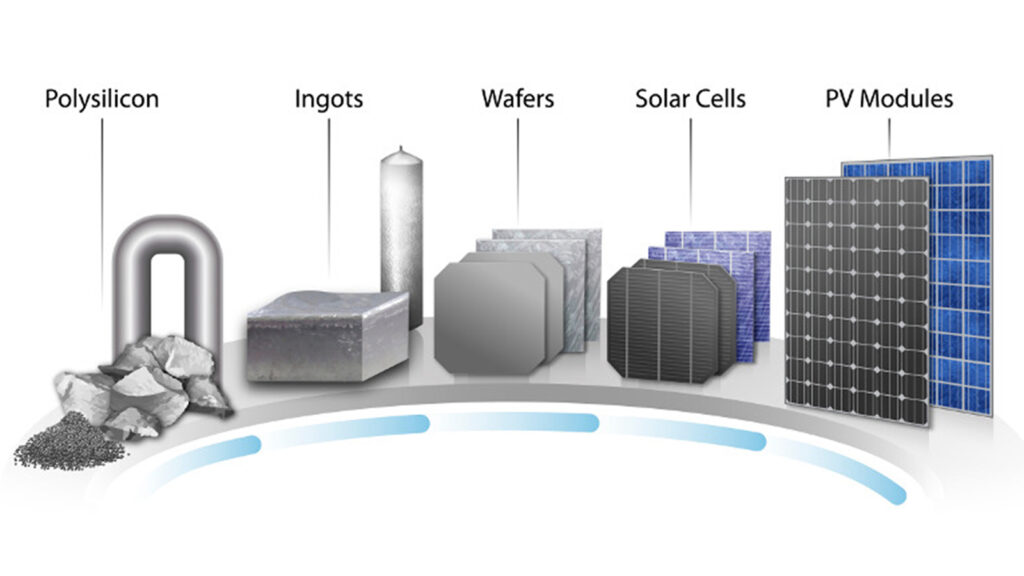
Photovoltaic materials that can be used as solar cell materials include monocrystalline silicon, polycrystalline silicon, amorphous silicon, GaAs, GaAlAs, InP, CdS, CdTe and so on. Monocrystalline silicon, GaAs and InP are used in space; monocrystalline silicon, polycrystalline silicon and amorphous silicon have been mass-produced for ground; others are still in the development stage. Currently committed to reducing material costs and improving conversion efficiency, so that solar cells can compete with other power generation prices, thus creating the conditions for wider and larger scale applications.
What are the materials used in photovoltaic modules?
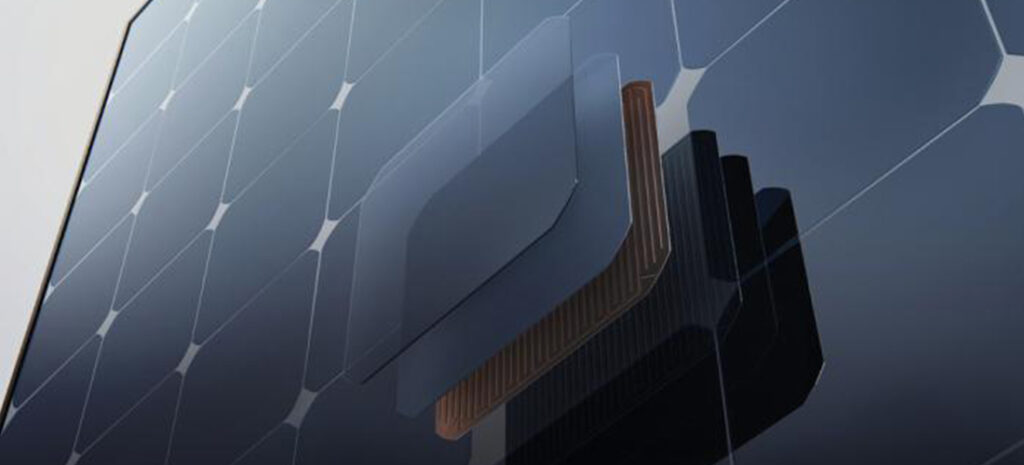
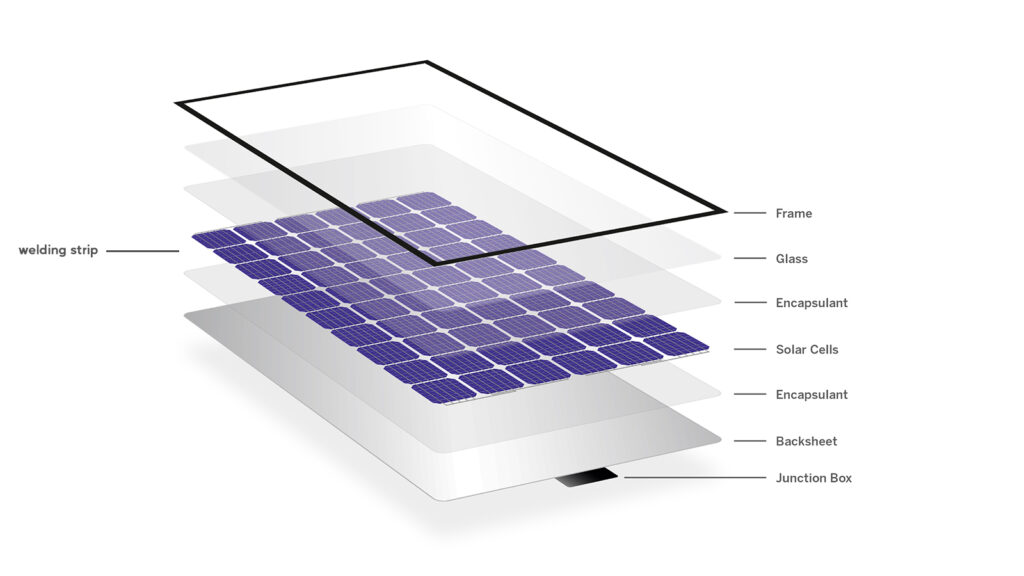
While the materials that make up a PV power system vary, all modules include several layers of material from the lightward side to the backward side. Sunlight first passes through the protective layer (usually glass) and then through the transparent contact layer to the inside of the cell. At the center of the module is the adsorption material, a layer that absorbs photons to complete the “photogenerated current”. The semiconductor materials used in the module depend on the specific PV system requirements.
1. Aluminum alloy frame
First, to protect the glass edge; second, aluminum alloy combined with silicone beating edge to strengthen the sealing performance of the components; third, greatly improve the overall mechanical strength of the components; fourth, to facilitate the installation of the components, transportation; fourth, bearing components and bracket link carrier, through the fixed can achieve the best resistance to load capacity, from the unit fixed to integrated, to enhance the mechanical capacity of the power station system.
2.Silicone
It is used to bond and seal the laminated glass PV modules, bond the junction box and backsheet, and enhance the role of UV resistance of PV modules.
3.Tempered glass
Low iron tempered glass (also known as white glass), in the wavelength range of the solar cell spectral response (320-1100nm) transmittance of more than 93%, for infrared light greater than 1200 nm has a high reflectivity. This glass can also be resistant to solar UV radiation, light transmission does not decline. The glass should be clean and free of water vapor, no bare hands touching the two surfaces of the glass, generally used to support the structure of photovoltaic modules, enhance the weight and load of photovoltaic modules, with light transmission, reflective light transmission, water, gas and corrosion resistance.
4.EVA encapsulation film
Copolymer of ethylene and vinyl acetate, is a hot melt adhesive. Used to encapsulate the cell, prevent the external environment on the electrical performance of the cell, enhance the light transmission of photovoltaic modules, the cell, tempered glass, backsheet bonding together, with a certain adhesive strength, while the electrical performance of the battery photovoltaic module output has a gain effect.
5. Photovoltaic welding tape
Also called tinned copper tape, mainly divided into interconnection strips and convergence strips. Interconnection strip is mainly used in the connection between the photovoltaic module cells, to conduct electricity and collect the role of the cell current; sink strip is mainly used in the connection between the battery string of the module, the solar cell current generated by the solar cell gathered in the junction box. You can click the button below to see the detailed explanation of PV welding tape.
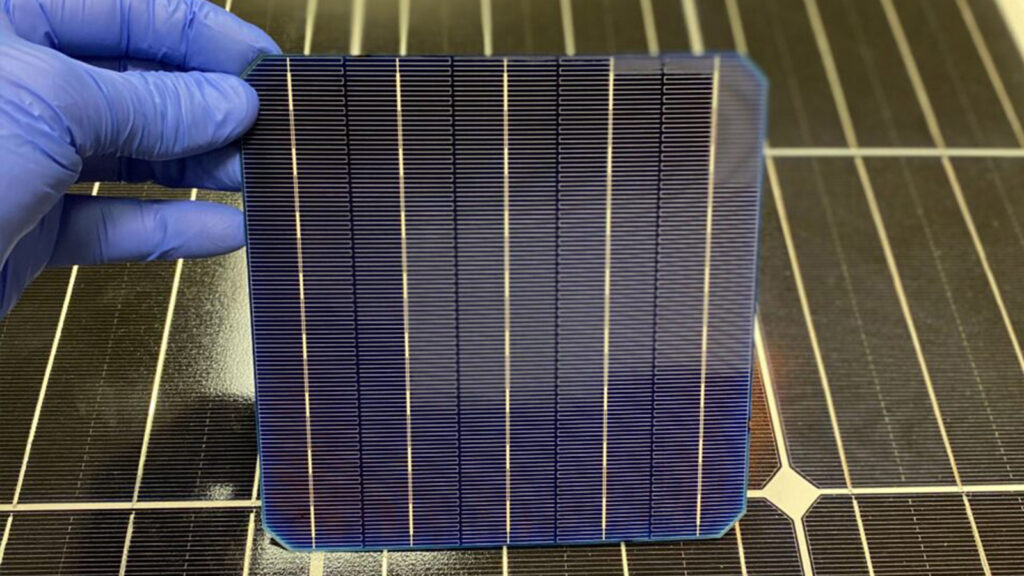
6. Cell
A solar cell is a device that converts light energy directly into electrical energy. It is made of semiconductor material. Through the irradiation of sunlight, the electron-hole pairs are excited, and the electrostatic field in the potential barrier region of the P-N junction is used to achieve the separation of electron-hole pairs, and the separated electrons and holes are collected and output to the outside of the cell through the electrodes to form an electric current.
7. Backplane
It is used as a backside protective encapsulation material, the most common ones are TPX, KPX and PET, etc. It is used to enhance the aging resistance and corrosion resistance of PV modules, which prolongs the service life of PV modules; the white backside scatters the light incident to the interior of PV modules, which improves the light absorption efficiency of PV modules and reduces the working temperature of PV modules due to its high infrared emissivity; it also improves the insulation performance of PV modules. It also improves the insulation performance of the PV module.
8. Junction box
Installed in the photovoltaic module to play a role in the transmission of current, with good electrical performance at the same time, the design and size of the junction box must meet the requirements of the use of the environment, including: electrical, mechanical, heat, corrosion and weather resistance. At the same time can not bring harm to the user and the environment.
Solar energy is widely used as a green energy source, and countries are promoting photovoltaic power generation, which is becoming more and more widely used. Choose Maysun Solar because we have high quality solar panels to meet your needs, contact us and create a green future together!
You may also like:

Solar Panel Orientation: South, East-West or North?
When installing solar panels, one common recommendation is to face them south to maximize electricity generation. But not every building has a south-facing roof. Some homes have east- and west-facing roof slopes, while others have usable roof space facing north. Even a south-facing
How to Size a Commercial Rooftop Solar System: A Practical Guide for EPCs
For commercial and industrial (C&I) rooftop solar projects, the maximum number of panels a roof can accommodate does not necessarily determine the most suitable system size. A factory may have sufficient roof space for a large PV installation, but its electricity consumption, grid
5400 Pa Snow Load: How to Choose PV Modules with 30 mm or 35 mm Frames
For PV projects in Alpine and other high-snow-load regions in Europe, selecting a module based only on a “5400 Pa” rating or a 30 mm vs 35 mm frame height is not enough. A more reliable approach is to first determine the project-specific snow load
Carbon Footprint and LCA in European C&I Solar: Why EPCs Should Check Before Module Procurement
Solar power is widely regarded as a low-carbon energy source. However, generating electricity from solar energy and manufacturing a low-carbon solar module are not quite the same thing. Before a photovoltaic module leaves the factory, it passes through multiple manufacturing stages, including silicon
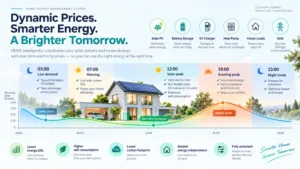
HEMS and Dynamic Electricity Pricing: From Solar Generation to Smart Energy Management
For years, home solar systems have focused on one main question: How much electricity can my rooftop solar system generate? But as home batteries, smart meters, electric vehicles and flexible electricity tariffs become more common, residential energy management is entering a new phase.

Maysun Solar’s First 3.5 MW Solar EPC Project in Italy Enters Its Final Stage
A large-scale commercial and industrial rooftop solar project with a total capacity of approximately 3.5 MWp is now entering its final stage in the Turin area of Piedmont, Italy. Around 8,000 solar modules planned for the project have now been fully installed.