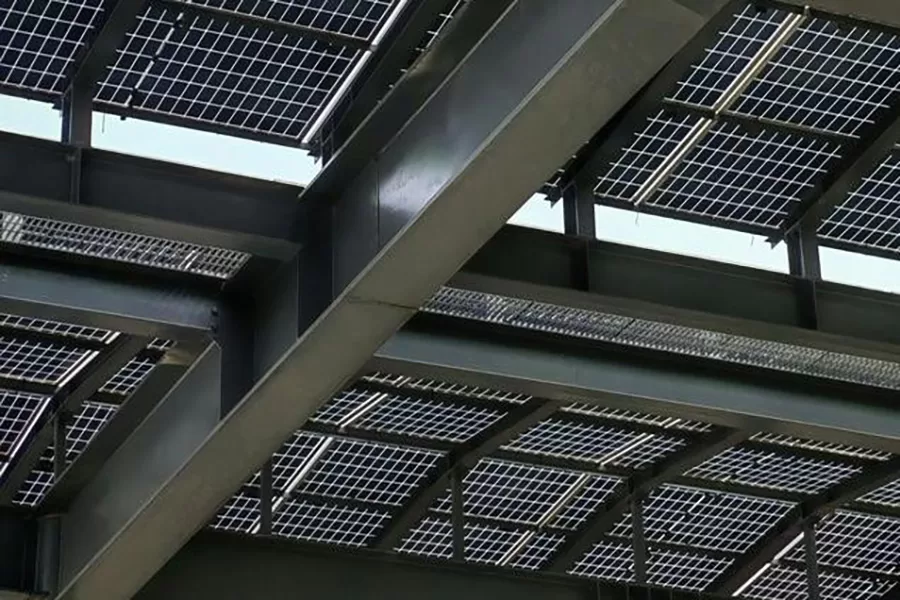
How to Choose the Most Suitable Solar Panels for Commercial and Industrial Use in 2025

How to Choose the Most Suitable Solar Panels for Commercial and Industrial Use in 2025

Table of Contents

Introduction

With the acceleration of Europe’s energy transition, commercial and industrial solar projects are experiencing rapid growth. Choosing the right solar panel has become a key factor affecting business returns and investment performance. However, faced with a wide range of technical options—such as traditional PERC, high-efficiency TOPCon and HJT, and advanced IBC technologies—many businesses struggle to decide:

  • Which type of panel is best suited for my project?

  • Will choosing the wrong panel lead to losses?

  • In 2025, which panel technologies are truly fit for long-term investment?

This article takes a practical look at the European commercial and industrial solar market, offering a structured analysis of the strengths and application scenarios of different panel types. It provides hands-on guidance to support informed decision-making and ensure stable, long-term energy yields.

Current Landscape and Challenges of Commercial and Industrial Solar Panel Selection in 2025

According to the latest data from SolarPower Europe, over 60 GW of new solar capacity was installed across Europe in 2024. Of this, commercial and industrial (C&I) projects accounted for 35%—second only to utility-scale installations—making them a driving force in Europe’s energy transition. Germany, Italy, and France have become key markets for the rapid deployment of C&I solar projects.

In these projects, panel selection is a critical part of system development. The current European C&I solar market features a diversified technology landscape: traditional PERC panels still make up around 70%, but next-generation high-efficiency panels like TOPCon, HJT, and IBC are quickly gaining ground, now approaching 20%, with rapid innovation and upgrades.

As panel types and performance specifications become increasingly complex, businesses are facing growing challenges and uncertainties in making the right selection.

1. With so many panel types, how do you choose?

With constant technological updates, today’s European market offers a wide range of new panel types that deliver higher efficiency and feature more complex designs. These vary significantly in terms of power output, temperature response, electrical parameters, dimensions, and weight—making the selection process far more demanding.

For C&I users, selecting the wrong panel can impact more than just power generation—it can trigger a chain reaction affecting racking systems, inverter compatibility, cable layout, and overall system safety. The panel is no longer just a “hardware component”; it’s a core variable that defines the system’s total performance.

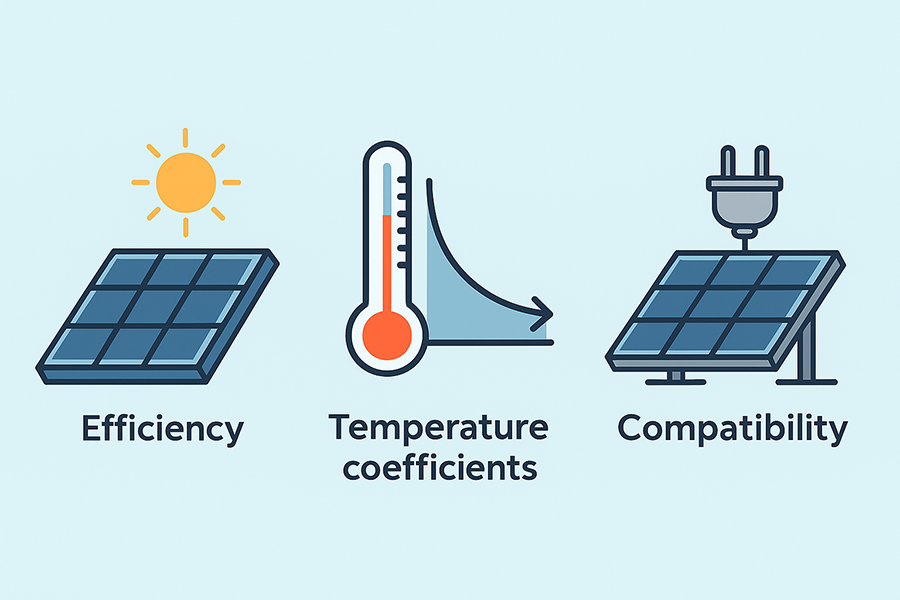
To choose the right panel, follow these three steps:

  • Check the efficiency: A 1% difference—e.g., between 22.5% and 23.5%—may seem small, but over the system’s lifetime, it can result in more than 10,000 kWh of additional generation.

  • Check the temperature coefficient: In high-temperature regions like Southern Europe, a difference between -0.30%/°C and -0.35%/°C can significantly affect output during summer months.

  • Check system compatibility: Consider factors such as size, weight, mounting structure, cable voltage drop, and inverter matching.

Choosing the right panel isn’t about going for the most expensive or the most advanced—it’s about understanding system compatibility and finding the optimal balance between performance, design, and project conditions.

today's European market offers a wide range of new panel types that deliver higher efficiency and feature more complex designs

2. Can choosing the wrong panel reduce project returns?

Over the full lifecycle of a solar system, panel performance directly impacts energy yield and financial returns. In some cases, projects that opted for lower-efficiency or faster-degrading panels to save on upfront costs ended up with underperformance, declining revenues, and rising O&M costs—ultimately distorting the system’s financial model and falling short of expected valuations.

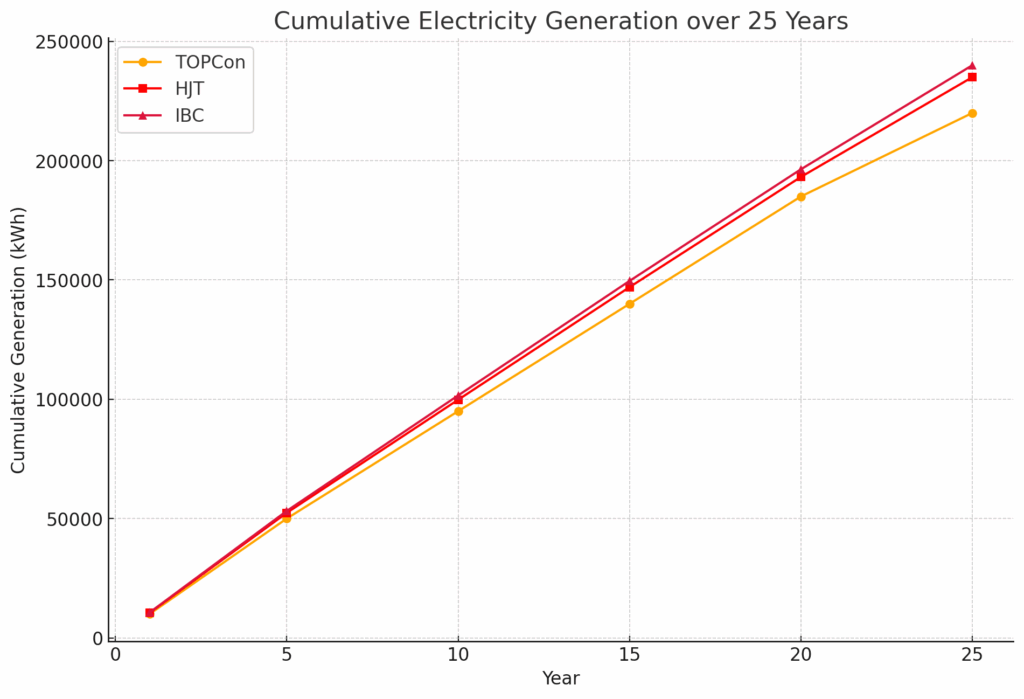
The chart below compares the cumulative energy output over 25 years for a 100 kWp rooftop system using IBCHJT and TOPCon panels. Despite similar initial investment levels, the superior degradation resistance and temperature response of HJT and IBC panels lead to significantly higher long-term output compared to TOPCon.

3. High-efficiency doesn’t always mean the best choice

Many companies are naturally inclined to choose panels with the highest conversion efficiency, assuming this will maximize power output and returns. But in reality, focusing solely on efficiency can lead to mismatches with local project conditions.

Even the most efficient panel won’t deliver expected returns if it’s incompatible with the local climate, electricity pricing mechanisms, or the business’s load profile. In projects with tight budgets or rooftop constraints, using the “right panel” is often more important than choosing the “most expensive” one.

In short, the most important factor in panel selection is not who offers the highest efficiency—but who fits your application best.

Five Key Technical Indicators for Selecting Commercial and Industrial Solar Panels

Panel selection isn’t just a technical issue—it’s the foundation for long-term project profitability. Understanding basic performance specs isn’t enough. To evaluate whether a panel is truly suitable for a project, you need to look closely at these five core technical dimensions:

1. Mass Production Efficiency: Maximizing Energy Yield per Square Meter

In C&I solar projects, panel efficiency directly affects the energy yield per square meter. Especially in rooftop projects with limited space, higher efficiency translates into higher system value.

It’s important to focus on the actual efficiency of mass-produced panels—not the lab-tested cell efficiency often quoted in marketing materials, which can differ from real-world performance.

Among current technologies, IBC panels offer a busbar-free front design that minimizes shading losses and can boost energy yield by 5–8%, making them ideal for projects prioritizing high energy output. TOPCon panels, on the other hand, strike a solid balance between efficiency and cost, offering one of the best price-performance ratios for most C&I projects. In systems of 100 kW or more, even a 1% increase in panel efficiency can lead to 5–8% higher annual output, which adds up to tens of thousands of euros over time.

2. Temperature Coefficient: Managing Summer Heat Losses

In Southern and Central Europe, high summer temperatures are common. For every 1°C increase in operating temperature, a solar panel’s output drops by a fixed percentage—this is the temperature coefficient.

In real-world applications, IBC panels—with their superior thermal design and a coefficient of -0.29%/°C—perform more stably under high temperatures than TOPCon (-0.32%/°C) and PERC (-0.35%/°C) panels. These seemingly small percentage differences accumulate daily during long hot summers, ultimately impacting annual system returns.

The temperature coefficient is often overlooked during selection but has a significant impact—especially for high-radiation sites, hot industrial facilities, or metal rooftops.

3. Degradation Rate: Extending System Profitability

Most solar panels experience “first-year degradation,” followed by a slower, linear decline in performance. This first-year drop typically ranges from 0.5% to 2%. Poor materials or manufacturing can increase degradation and reduce long-term energy output.

Among the options, IBC panels use UV-resistant PVF backsheet materials and modified encapsulants, and are tested under dual 95°C aging protocols. This helps limit first-year degradation to ≤0.5%, maintaining stable output over a 25-year warranty period. This makes them ideal for projects with long-term return expectations or for BIPV applications. In comparison, high-quality TOPCon panels show ≤1% degradation in the first year, while PERC panels often range from 1.5% to 2%.

Other factors like encapsulation method, waterproofing, and PID (Potential Induced Degradation) protection also affect long-term performance. For investors focused on generating steady long-term cash flow, degradation is not just a technical detail—it’s a key driver of the revenue curve.

Module Type First-Year Degradation Total Degradation at 25 Years Cumulative Yield Difference (€ / 25 Years) Typical Application Scenario
TOPCon ≤1% ≤15% Reference Value Cost-sensitive C&I rooftop projects with stable returns
HJT ≤0.8% ≤13% +15,000 Projects with demanding environments and limited ventilation
IBC ≤0.5% ≤12% +18,000 Architecturally sensitive rooftops, BIPV, load-constrained roofs

4. Low-Light Performance: Maximizing Output on Cloudy Days

In suboptimal lighting conditions—such as overcast weather, early morning, partial shading—panels’ low-light response becomes a critical determinant of round-the-clock energy yield. This is especially important in regions like Central France, Northern Germany, or mountainous areas of Italy, where average annual sunlight is limited.

IBC panels feature a fully back-contact design with no front-side metal grids, minimizing shading loss and enabling a broader light absorption range (300–1200 nm). This allows them to maintain stable output even in low light, making them ideal for winter production, east- or west-facing roofs, or reflective environments. This kind of all-weather performance not only boosts watt-per-panel output but also ensures stable system returns.

HJT panels also perform well under low-light thanks to their high open-circuit voltage and low carrier loss structure. They outperform traditional PERC and some TOPCon products, making them a solid choice for scenarios sensitive to early and late-day production.

Worth noting: In Europe’s increasingly dynamic electricity pricing, low-light hours often coincide with peak tariffs (e.g., 8–10 AM and 4–6 PM). That means low-light production isn’t just possible—it’s also profitable, increasing both energy volume and value per kilowatt-hour.

5. Size and Weight: Don’t Overlook Structural Compatibility

One trend in high-efficiency panels is growing size and weight: from 166mm to 182mm and 210mm formats. While individual panel power increases, this creates new challenges in system design, safety, and compatibility.

In scenarios like steel roofs or older buildings with limited load capacity, heavy panels can pose structural risks. Larger panels may also complicate logistics, racking layout, and wind resistance. Moreover, their electrical specs (voltage, current) must be precisely matched with inverters, combiner boxes, and cables—otherwise, system efficiency can suffer or safety issues may arise.

IBC panels offer a compact, lightweight format with flexible sizing, making them ideal for constrained rooftops or load-sensitive projects. They’re especially suitable for steel roofing and BIPV use cases—balancing performance, ease of installation, and structural safety.

In summary, panel size and weight shouldn’t be maximized blindly. They must be evaluated in the context of the actual project—from rooftop load limits and system compatibility to installation convenience. Only by weighing these factors carefully can a project ensure long-term, stable, and efficient operation.

How to Choose the Right Solar Panel for Three Typical Project Scenarios

Whether you’re dealing with a small rooftop installation, a large industrial site aiming to maximize returns, or a building-integrated project with high aesthetic requirements, the key to selecting the right panel lies in practicality and site-specific adaptation. This section focuses on three typical application scenarios, offering actionable guidance based on real-world challenges—helping businesses choose wisely, install efficiently, and achieve lasting performance.

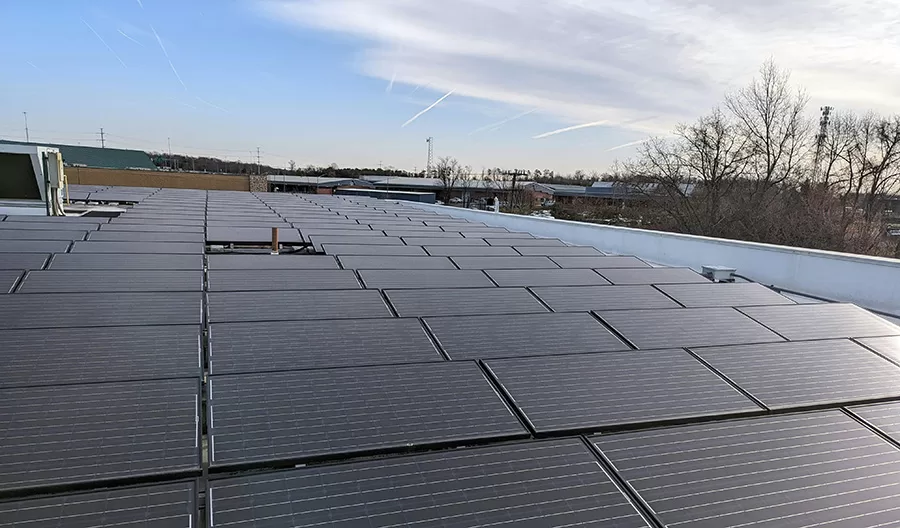
1. Panel Selection Guide for Small to Medium-Sized C&I Projects (<500 kWp)

These projects are commonly found on the rooftops of small businesses, office buildings, or retail spaces with limited area and relatively stable energy usage. In such cases, panel selection should prioritize maximizing energy yield per square meter and ensuring system compatibility:

  • Prioritize high-efficiency panels: When rooftop space is limited, opt for high-efficiency modules like TOPCon with ≥22.5% conversion efficiency to maximize energy density and system value.

  • Consider panel size and weight: Lightweight rooftops (e.g., steel roofs) benefit from lighter modules like IBC, which reduce structural load while offering strength, aesthetics, and ease of installation.

  • Keep initial costs under control: Avoid blindly choosing expensive IBC or HJT panels. Instead, focus on cost-effective N-type monocrystalline modules with strong performance-to-price ratios.

  • Recommended configurations: TOPCon or lightweight IBC modules offer a balanced approach to efficiency, compatibility, and return on investment.

Panel Selection Guide for Small to Medium-Sized C&I Projects (

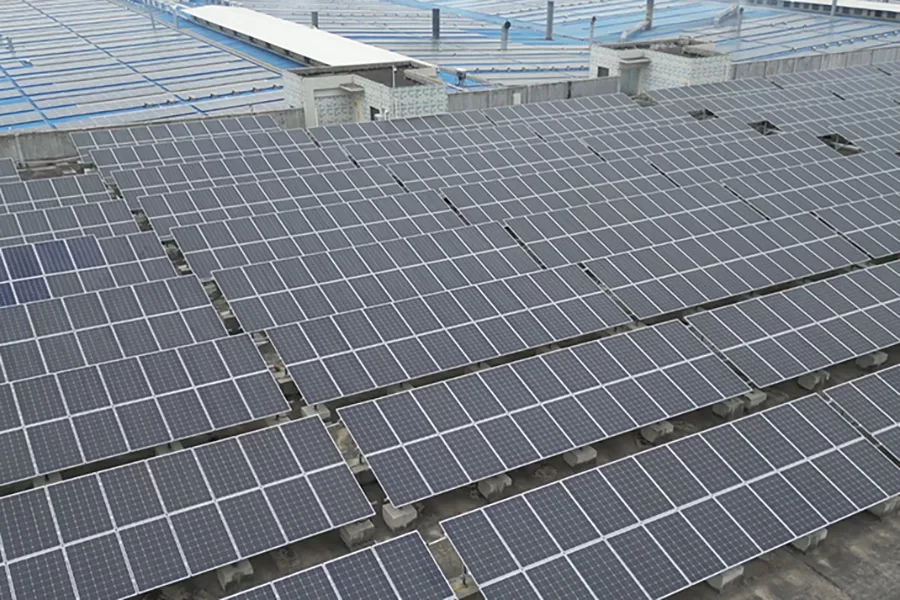
2. Panel Selection Strategy for Large-Scale C&I Projects (≥500 kWp)

Large commercial and industrial projects—such as industrial parks, logistics hubs, and warehouse complexes—typically have more rooftop space, higher daytime loads, and greater self-consumption potential. These projects demand higher overall panel performance:

  • Prioritize long-term stability and low degradation: Use premium TOPCon or HJT panels for lower performance loss over time, better temperature response, and extended financial returns.

  • Choose panels with high dimensional consistency and standardization: This simplifies system design, enables bulk procurement, and supports smart O&M practices.

  • Leverage bifacial generation: If the rooftop has high reflectivity (e.g., white paint or reflective film), choose bifacial TOPCon or HJT glass-glass modules to gain an extra 5–15% rear-side output and reduce LCOE.

  • Recommended configurations: TOPCon (182–72 cell format) or HJT bifacial modules to enhance system performance and reliability.

Panel Selection Strategy for Large-Scale C&I Projects (≥500 kWp)

3. Selection Tips for Special Applications (BIPV, Agrivoltaics, Carports, etc.)

For niche applications such as Building-Integrated Photovoltaics (BIPV), agricultural greenhouses, or carport installations, panel selection must go beyond electrical performance to include structural adaptability and visual integration:

  • For BIPV: Use aesthetically appealing, lightweight, and customizable panels—such as full-black modules, IBC panels, or frameless custom designs—to meet architectural integration needs.

  • For greenhouses/carports: Balance transparency and power output with high-transmittance HJT half-cell panels or custom strip-type modules.

  • For harsh conditions (high corrosion, strong wind, complex installation): Choose highly reliable, low-PID panels certified for salt mist and wind pressure resistance.

Future Trends in Solar Panels: How Technology Evolution Will Influence Selection

The shift from PERC to high-efficiency technologies like TOPCon, HJT, and IBC represents more than just innovation—it directly impacts the long-term financial structure of solar projects. For developers and investors in commercial and industrial PV systems, understanding these trends is key to making forward-looking panel selection decisions.

1. High-Efficiency N-Type Technologies Will Become the New Standard

While P-type PERC panels still dominate the market today, their efficiency potential is nearing its ceiling. Starting in 2025, N-type technologies such as TOPCon and HJT are expected to rapidly replace PERC as the top choice for new projects:

  • TOPCon: Continues to improve in cost-effectiveness and is suitable for most standard applications.

  • HJT: Offers high bifaciality and a low temperature coefficient, making it ideal for hot or high-reflection environments.

  • IBC: Delivers the highest efficiency with a sleek design, suited for BIPV or any project demanding both performance and aesthetics.

Within the next three years, N-type panels are expected to surpass 50% of market share. Projects that still rely on PERC risk falling behind in terms of efficiency, O&M costs, and resale value.

Solar Module

Solar Module

TopCon (Twisun Pro) – A masterpiece of black elegance.

  • 430W-460W
  • 30-year product and performance warranty
  • 1/3-cut technology: Higher output
  • Low current (10A): Safer operation
  • Lightweight dual-glass structure: Less rooftop load

The all-black solar panels match perfectly with dark rooftops in Europe.

Learn More

The top choice for bifacial solar modules

  • 410W-700W
  • Up to 95% bifaciality
  • Efficiency up to 22.87%
  • Glass-glass structure with 30-year product and performance warranty
  • Low degradation (no LID or PID)

Heterojunction Technology (HJT) combines crystalline silicon and thin-film technology to enhance light absorption and passivation.

Learn More

A model of advanced cell technology

  • 405W-600W
  • Efficiency up to 23.2%
  • Low risk of hotspots
  • Excellent low-light performance
  • Cutting-edge technology at competitive prices

Rear-contact without front-side busbars minimizes shadow loss and boosts efficiency.

Learn More

Innovative technology for efficient energy

  • 420-445W, 500-525W, 570-595W
  • Stable performance with low degradation
  • Excellent low-light performance
  • Elegant full-black design
  • 30/20/15-year product warranty; 30/25-year performance warranty

TOPCon solar modules combine advanced technology with elegant appearance — the ideal choice for those who value both efficiency and aesthetics.

Learn More
2. Panels Will Become Lighter and Smarter Through Increased Integration

  • Lightweight panels: To meet rooftop load limits and simplify logistics and installation, lightweight designs—such as glass-glass and flexible modules—will become more common.

  • Smart panels: Integration of optimizers, microinverters, and other embedded electronics will improve safety and O&M efficiency.

Especially in complex or precision-demanding applications, smart modules enable independent monitoring and fault diagnosis at the panel level—reducing power losses and simplifying maintenance.

3. ESG and Carbon Footprint Standards Will Accelerate Industry Transformation

With the EU preparing to implement new green supply chain regulations—including carbon footprint disclosure and product take-back mandates—module manufacturers will be pressured to reduce embodied carbon, design for recyclability, and improve production transparency.

For project owners, selecting modules with low-carbon certifications, clear recycling pathways, and traceable lifecycle performance will not only help meet ESG reporting requirements, but also boost financing potential and brand credibility.

Conclusion

Panel selection is not just a technical step in procurement—it is a decisive factor in whether a commercial or industrial PV system can achieve its expected return. In 2025, with the continued advancement of high-efficiency technologies like TOPCon, HJT, and IBC, commercial solar is entering a new phase of “carefully selected modules and precise system integration.”

Selection strategies can no longer rely solely on comparing technical specs. Instead, they must be built on a comprehensive understanding of project structure, load profiles, and return on investment—creating a well-reasoned match between panel type and project needs.

Only by choosing the truly suitable panel can a system deliver stable output and long-lasting financial returns. We hope this analysis helps developers navigate the complexity of the current market and identify the solar modules that are best aligned with their specific project—enabling safer, more sustainable energy investments.

Since 2008, Maysun Solar has been both an investor and manufacturer in the photovoltaic industry, providing zero-investment commercial and industrial rooftop solar solutions. With 17 years in the European market and 1.1 GW of installed capacity, we offer fully financed solar projects, allowing businesses to monetize rooftops and reduce energy costs with no upfront investment. Our advanced IBCHJT and TOPCon panels, and balcony solar stations, ensure high efficiency, durability, and long-term reliability. Maysun Solar handles all approvals, installation, and maintenance, ensuring a seamless, risk-free transition to solar energy while delivering stable returns.

References

SolarPower Europe. EU Market Outlook for Solar Power 2024–2028.

https://www.solarpowereurope.org/insights/market-outlooks/eu-market-outlook

Eurostat. Electricity prices for non-household consumers – bi-annual data (from 2007 onwards).

https://ec.europa.eu/eurostat/databrowser/view/nrg_pc_205/default/table

TÜV NORD. TOPCon vs XBC Field Performance Comparison Report – Laizhou, China 2024. https://www.tuev-nord.de

GSE – Gestore dei Servizi Energetici. Autoconsumo fotovoltaico industriale: dati e trend 2023–2024. https://www.gse.it

Recommend Reading

March European Solar Industry News

March European Solar Industry News

This article outlines recent developments in the European solar market, including the EU cross-border solar auction scheme, structural shifts in Germany, updated GSE regulation in Italy, and the recent recovery in solar panel prices.

Read More »