Is There a “Best Solar Panel” for Commercial and Industrial Rooftops?

Is There a “Best Solar Panel” for Commercial and Industrial Rooftops?

Solar panel output has increased in recent years from around 400 W to 600 W or even higher, making panel specifications an increasingly important reference point in project selection. However, in commercial and industrial rooftop solar projects, system performance depends on roof conditions and system layout, not just on panel specifications.

Table of Contents

Why It Is Difficult to Define a “Best Solar Panel” for Rooftop Projects

Installation conditions for commercial and industrial rooftop solar projects vary widely.

Power output, efficiency and technology type all matter, but they must be assessed in relation to roof conditions and system layout.

In recent years, solar panel power has increased from 400 W to 600 W and beyond, and market discussion has become increasingly focused on specifications themselves. However, higher power and higher efficiency do not necessarily mean a better solution. Roof structure, load-bearing capacity, available space and maintenance requirements all affect the suitability of a solar panel.

The same type of solar panel may perform very differently depending on the roof. In rooftop project selection, the key is not choosing the panel with the highest specifications, but whether the overall solution is genuinely suited to that particular roof.

How Roof Conditions Limit Solar Panel Selection

Compared with ground-mounted solar plants, commercial and industrial rooftop projects are usually subject to greater structural and spatial constraints. Roof structure, usable area and maintenance requirements all affect system layout and can change which panel sizes and power classes are suitable.

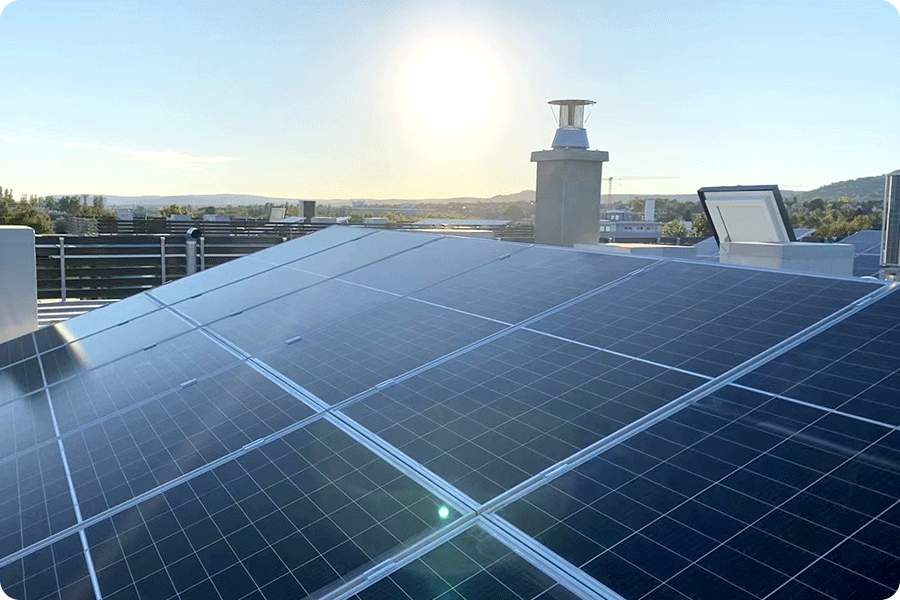
Solar panel selection for commercial and industrial rooftop projects is constrained by roof conditions.

Roof Structure and Load-Bearing Capacity

Roof structure determines the range of suitable solar panels. Load-bearing capacity varies significantly from one roof to another. Lightweight steel factory buildings, ageing industrial roofs and some retrofitted buildings are particularly sensitive to additional loads.

Solar panel weight, size and installation method all affect the overall system load.

Roof Space and Layout Conditions

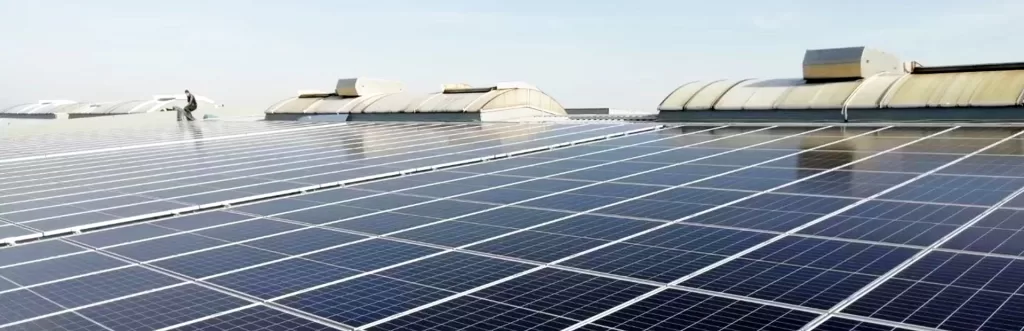
Roof space directly affects panel layout. Most commercial and industrial rooftops are not continuous flat surfaces. Skylights, ventilation equipment, pipework and maintenance walkways all take up installable area, making panel layout more complex.

In general, the larger the solar panel, the lower the layout flexibility.

Operation, Maintenance and Long-Term Use

Long-term maintenance needs also influence panel selection. Rooftop solar systems typically operate for more than 20 years, so system maintenance, panel replacement and access routes for servicing all affect how the system should be arranged.

Solar panel size and layout density can significantly change the space available for operation and maintenance.

How Panel Size and Power Affect Rooftop System Layout

In commercial and industrial rooftop projects, solar panel selection cannot be based on specifications alone. Size, power and technology type all affect layout, installation complexity and long-term maintenance. What ultimately matters is which type of solar panel is the best fit for that particular roof.

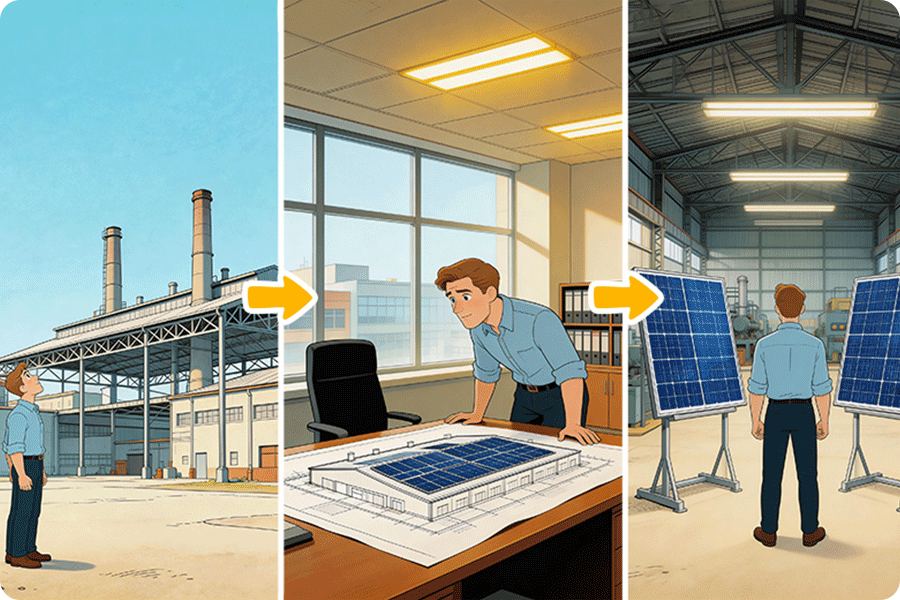
Solar panel selection should be based on whether the panel suits the roof.

Panel Size Determines Layout Efficiency

Panel size affects how a rooftop can be laid out. Large-format solar panels require more continuous installation space, while mid-sized panels are more flexible and better suited to roofs interrupted by equipment, access paths or skylights.

A practical way to assess common project scenarios:

  • Continuous, regular roofs with few obstructions: large-format solar panels are more likely to offer an advantage
  • Roofs with more equipment and fragmented layout areas: mid-sized solar panels usually make it easier to improve roof utilisation
  • Roofs with load restrictions or lifting constraints: panel size matters, but so do panel weight and handling difficulty

The more complex the roof, the more important layout efficiency becomes. A higher power rating per panel does not necessarily mean a higher final installed capacity.

Panel Power Affects System Capacity Planning

The main advantage of high-power solar panels appears on continuous and regular roofs. If the roof is divided by equipment, walkways or other obstructions, any gain from higher panel power can easily be offset by layout losses. In rooftop projects, the final installable capacity usually depends on the overall system layout.

To judge whether a power class is suitable:

  • Can this panel power class maintain a high level of layout efficiency?
  • Does reducing the number of panels genuinely simplify installation and cabling?
  • Does higher panel power introduce new limits in terms of size, weight or installation conditions?

In commercial and industrial rooftop projects, higher power is not always better. The key question is whether it creates real value at system level.

Technology Type Advantages Suitable Applications
TOPCon Technology High efficiency, moderate cost Standard commercial and industrial rooftops
HJT Technology Strong high-temperature performance, long-term stability High-temperature or high-irradiance regions
IBC Technology Strong aesthetics, high efficiency BIPV or projects with high aesthetic requirements

The priority is not the same in every project.

Common selection logic:

  • Standard commercial and industrial rooftops: focus first on efficiency, cost and suitability
  • High-temperature or high-irradiance environments: place more emphasis on temperature performance and long-term energy yield stability
  • BIPV projects or buildings with high aesthetic requirements: pay more attention to front-side structure and visual appearance
  • Complex rooftop projects: size, weight and installation flexibility are often more important than the technology type itself

Technology type only becomes meaningful when assessed against actual roof conditions, system goals and investment requirements.

Preliminary Solar Panel Selection Guide for Commercial and Industrial Rooftops

Roof Condition / Project Feature Initial Selection Preference Primary Assessment Focus
Continuous, flat roof with few obstructions Large-format, high-power solar panels Better able to maximise the benefits of higher power output
More rooftop equipment and clearly fragmented roof areas Mid-sized solar panels More flexible layout and higher roof space utilisation
Load-sensitive roof Mid-sized or lightweight solar panels Assess panel weight and installation load first
Focus on high-temperature performance or long-term stability Compare different technology types Focus on operational performance
Focus on aesthetics or BIPV performance Aesthetically optimised solar panels Focus on structural design and visual consistency

Note: This table provides an initial selection reference for commercial and industrial rooftop projects. The final solution should still be assessed in combination with roof structure, installation conditions, system design and investment objectives.

Why System Layout Is Often More Important than Panel Specifications

In rooftop solar projects, power and efficiency are often treated as the main reference points, but panel specifications alone cannot determine overall system performance. The differences created by panel power are often limited, while system layout can directly determine the scale of the project.

A well-designed system layout can maximise the value delivered by solar panels.

System Layout Determines Project Scale

In rooftop solar projects, installed capacity often depends first on system layout.

If the layout cannot make full use of the available space, part of the roof area cannot be converted into installed capacity.

Project scale usually depends on the following factors:

  • system layout suitability
  • panel layout efficiency
  • maintenance and fire access routes
  • roof area utilisation

System design has a greater impact on the final project scale than the performance of an individual solar panel.

System Design Affects Installation Feasibility

Whether a system design is practical to install has a direct impact on construction efficiency and project cost.

Rooftop installation space is limited. Transport routes, lifting conditions and roof access all affect the pace of construction. When a system design is overly complex, site organisation becomes much more difficult.

Installation feasibility is mainly reflected in several aspects:

  • whether clear installation routes are available for panels and mounting structures
  • whether rooftop transport and lifting can be carried out smoothly
  • whether the system layout supports efficient on-site installation

The simpler the construction process, the lower the implementation risk. In most cases, a system design that is easier to install offers greater practical value.

System Design Determines Long-Term Operational Stability

System design affects not only the installation stage, but also long-term operating performance.

In some projects, panels are arranged too densely in order to maximise initial installed capacity. If maintenance access is not reserved, inspection and fault handling become significantly more difficult.

Long-term system stability usually depends on several factors:

  • whether essential maintenance access routes are preserved
  • whether maintenance staff can safely reach the panel areas
  • whether individual panels can be replaced independently

Systems with clear maintenance access are usually more stable, and system design plays a major role in long-term operating performance.

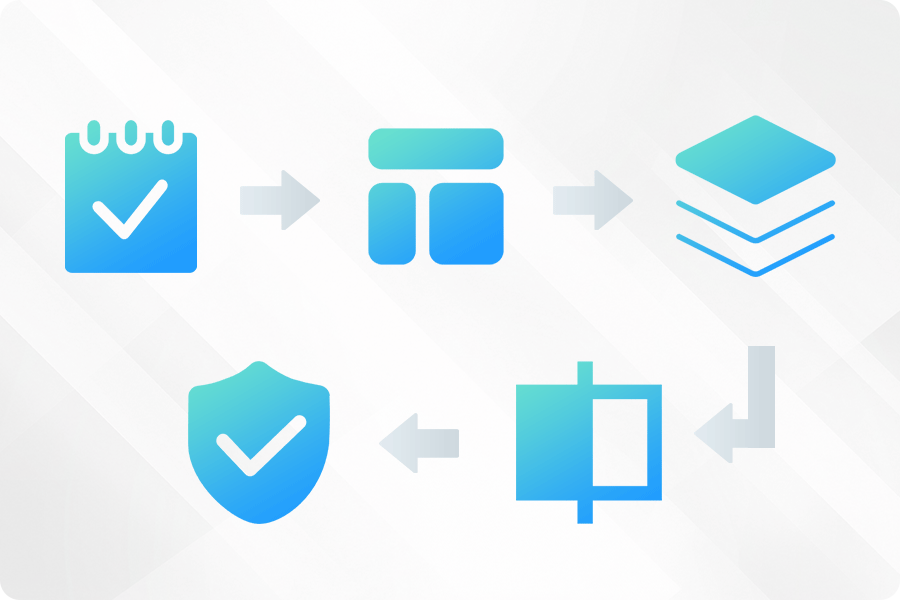
Commercial and industrial rooftop solar panel selection flowchart: roof assessment, layout planning, size and power selection, technology comparison and solution validation.

Step 1: Assess Roof Conditions

Roof structure, usable installation space and maintenance requirements will first limit the range of suitable solar panels.

Continuous, flat roofs with few obstructions are generally better suited to large-format, high-power solar panels. Roofs with obvious segmentation, restricted access routes or sensitive load limits should instead prioritise solar panels that offer greater layout flexibility and easier load control.

Step 2: Define the System Layout

Once the roof conditions are clear, the next step is to assess whether the panel solution can create a complete and workable layout. Layout integrity, reserved access routes, and ease of installation and maintenance all affect the value of the solution.

For rooftop projects, whether the layout works in practice is often more important than whether a solar panel has slightly better specifications.

Step 3: Compare Panel Specifications

Once the roof conditions and layout direction have been defined, panel size, power class and technology type can then be compared.

For roofs that support continuous layouts, the value of high-power solar panels can be assessed further. For more complex roofs, size and overall suitability should be reviewed first. For projects with specific requirements for high-temperature performance, long-term stability or appearance, the differences between technology types should then be compared.

Only when a solar panel can be installed effectively on the roof and form a complete system can its specification advantages translate into real project value.

Conclusion

In commercial and industrial rooftop solar projects, there is no single “best solar panel” that fits every case. Panel power and technology type are only part of the equation. In most cases, system performance depends far more on how well the solar panel matches the roof conditions and overall system layout.

Solar panel selection usually begins with an assessment of roof conditions, followed by system layout planning, and only then by comparing panel size, power class and technology type. Once the system design is clearly defined, differences in panel specifications can begin to translate into real system value.

Frequently Asked Questions About Solar Panel Selection for Commercial and Industrial Rooftops

1. Is there a “best solar panel” for commercial and industrial rooftop projects?

In most cases, no single solar panel is the best fit for every project.

Roof structure, load-bearing capacity, usable installation area and the distribution of rooftop obstructions all affect panel selection. In rooftop projects, what matters more is how well the solar panel matches the roof conditions and overall system layout.

2. Are 600 W or high-power solar panels suitable for all rooftops?

Not necessarily.

High-power solar panels are better suited to continuous, flat roofs with fewer obstructions. If the roof is heavily interrupted by equipment, access routes or skylights, the advantage of higher panel power may be offset by layout losses. In the end, installed capacity usually still depends on the overall system layout.

3. What type of solar panel is better suited to complex rooftops?

Complex rooftops are generally better suited to mid-sized solar panels with greater layout flexibility.

These roofs often require panels to be arranged around equipment, access routes or other obstructions. In such cases, whether the panels can be laid out efficiently is often more important than the power of a single panel.

4. In commercial and industrial rooftop projects, should panel power or technology type be prioritised?

Roof conditions and system layout should be assessed first, and only then should power and technology type be compared.

Power affects system capacity planning, while technology type affects efficiency, temperature performance and structural characteristics. These differences only become meaningful when assessed within a specific project context.

5. Do high-power solar panels always deliver a higher return on investment?

Not necessarily.

On complex rooftops, high-power solar panels may not be used efficiently, which can reduce return per unit of investment. Final project returns depend on layout optimisation and overall system efficiency, not simply on the power rating of an individual solar panel.

As a solar panel manufacturerMaysun Solar provides stable module supply to the European wholesale and distribution market, covering mainstream technologies such as IBC technologyTOPCon technology, and HJT technology. This helps EPCs and project buyers achieve higher power output per square metre and better overall system efficiency, provided the solution is well matched to project conditions.

Recommend reading

2 Comments

  1. Maximilian Braun

    Last year, we worked on a commercial rooftop project where we picked high-efficiency panels, thinking they would give us the best performance. But the roof’s layout and structure ended up being more important than we expected. The roof had obstructions that made it tough to fit the larger panels. We had to switch to smaller panels, which allowed us to use the available space better and improved overall performance. This project showed us that roof conditions should always guide the panel choice, not just the output numbers.

  2. Luca Rossi

    On a previous rooftop project, we chose high-power panels, thinking they would maximize output. But the roof was full of obstacles, and the large panels didn’t work as expected. After switching to smaller panels, we managed to use the space more effectively. It became clear that the roof’s design is key to panel selection, not just focusing on panel specs.

Comments are closed