
How to Choose the Right Solar Panels for Your Home or Business Roof?

Hoe kies je de juiste zonnepanelen voor het dak van je huis of bedrijf?

Table of Contents

Start with the Roof Before Choosing the Solar Module

Many people choosing solar modules often overlook that the roof is the true starting point of any system design, focusing too much on power and efficiency instead.

The structure, size, orientation, and shading of the roof determine how modules are arranged. According to Fraunhofer ISE, shading or poor layout can cause 3–8% energy losses in Europe. Even the most efficient modules cannot perform well if installed on an unsuitable roof, ultimately affecting long-term system returns.

In real-world projects, roof characteristics lead to different design strategies:

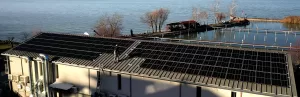
  • Residential roofs: Limited space, emphasizing uniform appearance and weight control.

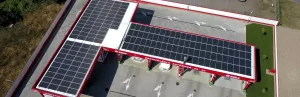
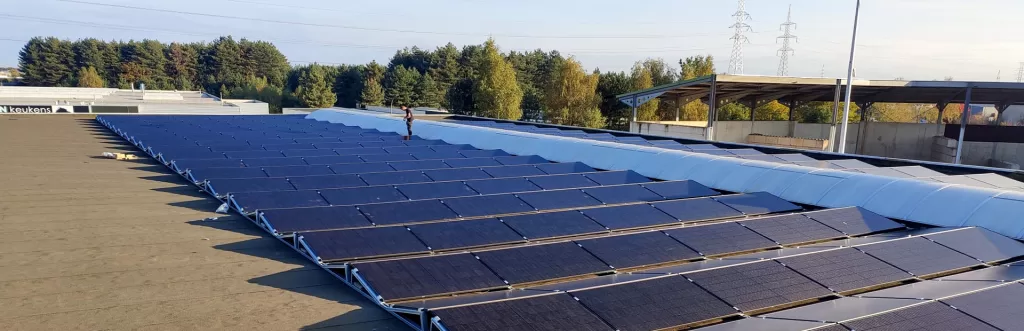
  • Commercial roofs: Usually flat or metal structures, focusing on power density and payback period.

  • Complex roofs: With shading, wind load, or structural constraints, requiring modules with higher fault tolerance.

The key to selection lies in matching the module with roof conditions.

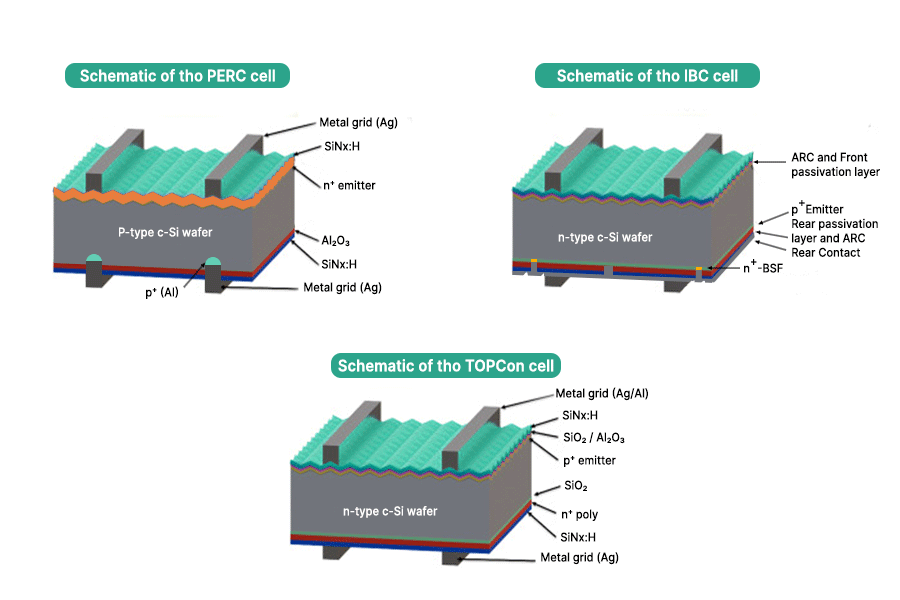
Only after understanding your roof does it make sense to decide on a technological route. In today’s market—where PERC, TOPCon, and IBC technologies coexist—understanding their performance differences and application scenarios is essential to ensure maximum yield per square meter of roof area.

PERC, TOPCon, or IBC?

Photovoltaic technology is evolving rapidly, with mainstream cell architectures transitioning from PERC to TOPCon and IBC.

At this stage, however, each technology still suits different roof types. For project owners, the key is not to pursue the highest efficiency, but to choose the technology that ensures long-term stable returns on their specific roof conditions.

PERC Technology

Mature and cost-effective, PERC (Passivated Emitter and Rear Cell) features a rear passivation layer that reduces electron recombination losses. With an efficiency of around 20–21%, it remains cost-competitive and is widely used in projects aiming for short payback periods and limited budgets.

However, its relatively high temperature coefficient means output losses are more noticeable under summer heat.
Overall, PERC technology is more suitable for budget-sensitive industrial rooftops with ample space, or for regions with mild climates and minimal temperature variations.

TOPCon Technology

Now the dominant development path, TOPCon (Tunnel Oxide Passivated Contact) builds upon PERC by adding a tunneling oxide layer that enhances electron transport efficiency, enabling stable output even at high temperatures.

Compared to PERC, TOPCon modules offer about 1% higher average efficiency and a lower temperature coefficient (~–0.32%/°C), making them more reliable in hot climates.

That said, the manufacturing process is more demanding, requiring precise material uniformity and welding accuracy.

As power ratings continue to rise, TOPCon technology has also evolved in terms of materials, cell processing, and structural design to further improve conversion efficiency and stability under complex environmental conditions. The 1/3-cut structure, optimized from TOPCon technology, refines current pathways, reduces thermal loss, and enhances overall system reliability.

As the leading N-type cell solution, TOPCon is especially suited for residential and commercial rooftops with good structural conditions, where investors seek long-term energy stability and lifecycle returns.

IBC Technology

IBC (Interdigitated Back Contact) cells move all metal gridlines to the rear, eliminating front-side shading losses.

This allows for greater light absorption and a clean, uniform appearance, providing superior aesthetics and architectural integration.

With no front-side metallization, IBC modules also perform better under partial shading, with a low reflectivity of around 1.7%, ensuring stable output even in low-light or reflective environments.

Despite being typically single-glass, IBC modules surpass PERC in efficiency, warranty lifespan, and temperature coefficient.
However, the production process is complex, demanding high precision in alignment and back-side interconnection, which increases manufacturing costs.

Combining efficiency, aesthetics, and shading tolerance, IBC modules are particularly suitable for premium residential roofs, architectural landmarks, or sites with localized shading and reflection concerns.

PERC, TOPCon and IBC Technology Performance Comparison

PERC TOPCon IBC
Power Range 370W–410W 420W–595W 425W–600W
Module Efficiency 21%–22% 21.5%–23.22% 21.8%–23.5%
Initial Degradation (Year 1) 2% 1.5% 1.5%
Annual Degradation (After Year 1) 0.45% 0.4% 0.4%
Temperature Coefficient −0.35%/°C −0.32%/°C −0.29%/°C
Cost Characteristics Low cost, proven and stable High cost-performance ratio Slightly higher cost
Suitable Rooftops Budget-conscious projects Mainstream residential and commercial rooftops Premium homes and landmark buildings

Note: Data based on mainstream production lines in the current market.

As the gap between major technologies narrows, the industry’s focus is shifting toward next-generation innovations, such as perovskite tandem structures and advanced cell architecture optimization, which are becoming new areas of attention.

Can Structure Really Influence a Module’s True Performance?

In the past, the solar industry focused primarily on improving cell efficiency, while paying insufficient attention to module structure, which ultimately determines long-term performance.

As efficiency gaps between technologies narrow, structural design has become the next frontier of innovation. It affects not only the power rating, but also the stability, heat dissipation, and durability of modules under different climates and application scenarios.

Traditional half-cut structures, which divide each cell in half to reduce operating current, once dominated the market for their simple and effective design.

However, with ongoing technological progress, the limitations of half-cut modules have become increasingly evident:

  • Current paths remain concentrated, causing localized heat buildup;

  • More busbars and interconnections lead to mechanical fatigue due to thermal expansion and contraction over time;

  • Under shading, uneven current distribution intensifies, increasing the risk of hot spots.

According to DNV’s 2024 test report, half-cut modules can exhibit surface temperature differences of 12–15°C under high-temperature conditions, with hot spot areas exceeding 85°C.

What seems like a material constraint is, in reality, a structural bottleneck.

Today, performance improvements no longer depend solely on cell efficiency, but on whether the structure can redistribute electrical and thermal pathways. The 1/3-cut structure, optimized from TOPCon technology, achieves this by further refining the cutting pattern, significantly reducing operating current and heat generation — thus improving thermal management and long-term reliability.

Why Structural Optimization Leads to Higher Efficiency and Stability?

As module power continues to rise, system stability issues have become increasingly evident.

According to joint testing by DNV and Fraunhofer, in long-term European PV installations, losses caused by temperature rise, shading, and contact stress account for 12–15% of total system losses.

This means that when efficiency approaches its theoretical limit, structural design becomes the decisive factor affecting real-world performance.

So why does optimizing from half-cut to 1/3-cut improve current and heat distribution, resulting in better thermal control and output stability?

1. Finer Current, Lower Temperature

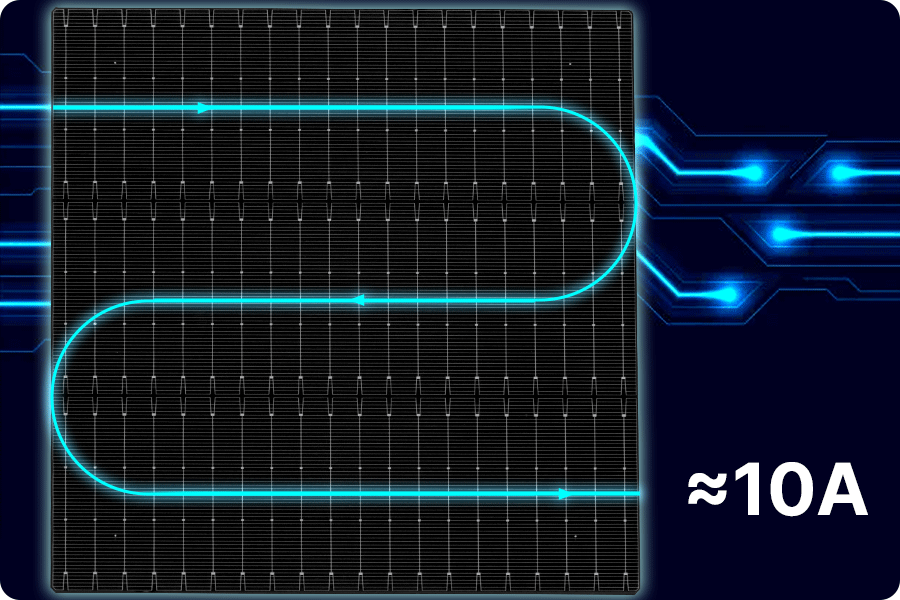
  • By dividing each cell into three parts, the 1/3-cut design reduces string current to around 10A, about 30% lower than the 13–15A typical of half-cut modules, significantly cutting resistive heat generation.

  • Under the same conditions, TOPCon-based 1/3-cut modules operate at temperatures roughly 40% lower, with surface heat rising from about 86°C down to 60°C. The temperature coefficient is around –0.29%/°C, maintaining roughly 1% higher power retention at 43°C and boosting long-term energy yield by about 7%.

  • Reduced thermal stress also minimizes microcracks and solder joint fatigue, extending the module’s lifespan.

For projects operating at sustained high output, 1/3-cut modules maintain stable generation even in summer heat, avoiding performance losses from thermal degradation.

2. Stable Generation Under Partial Shading

In real rooftop installations, shadows, dust, and angle variations are nearly unavoidable.

The 1/3-cut structure redistributes current pathways so that when a portion of the module is shaded, only local sub-sections are affected while others continue to operate normally—allowing the PV array to maintain steady performance under complex conditions.

Because 1/3-cut divides each cell into three parts, its output under shading is far less affected than half-cut modules – only the shaded area loses power while the rest keeps operating normally.

For multi-angle rooftops or partially shaded areas, the 1/3-cut configuration significantly reduces daily energy losses, ensuring higher yield from the same surface area.

3. Higher Power Density, Lighter Structure

  • Within a standard 1.998 m² area, 1/3-cut modules deliver 430–460 W, with peak efficiency reaching 23.02%.

  • In a 10 kW TOPCon system, the 1/3-cut design reduces resistive losses by about 48% compared to half-cut modules, cutting annual energy loss from 108.6 kWh to 57.2 kWh.

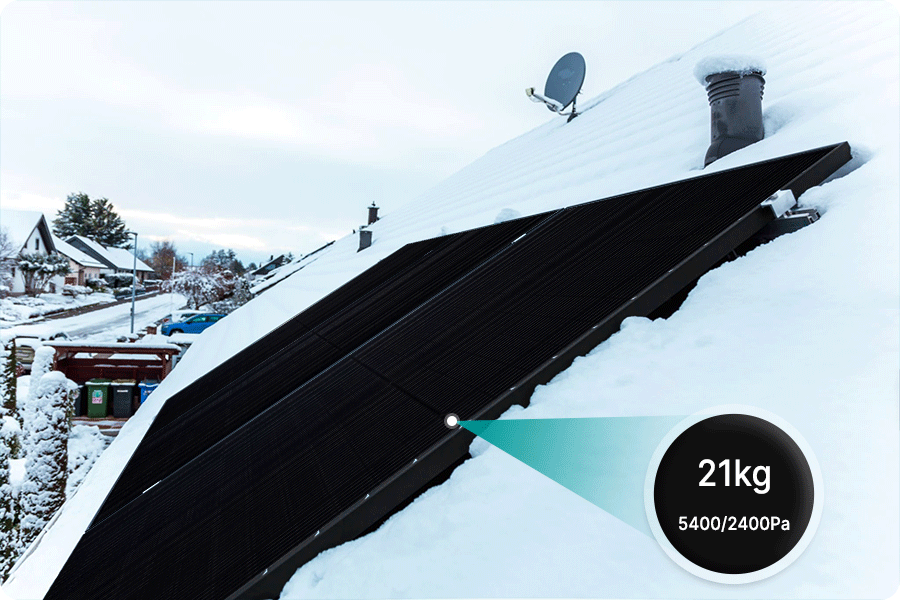
  • Each module weighs just 21 kg, with front and back load capacities of 5400 Pa and 2400 Pa, making it ideal for limited-space or weight-restricted rooftops.

The 1/3-cut Twisun Pro module weighs only 21 kg, suitable for all types of roofs – from lightweight factory structures to residential rooftops – and with 5400 Pa front and 2400 Pa rear load ratings, it performs reliably even in extreme climates.

Higher power density per square meter and lighter module weight help shorten the payback period, delivering greater returns even on limited roof space.

By optimizing electrical and thermal pathways, 1/3-cut modules enable systems to maintain consistent and reliable output—achieving sustainable, verifiable long-term performance.

From Technology to Structure: The Next Step for Solar Modules

As module efficiency reaches its physical limits, stability has become the decisive factor for long-term system performance.

For rooftop projects, the true differentiator now lies in whether the system structure can withstand the test of time and environmental stress.

The 1/3-cut structure, with its lower current and more uniform heat distribution, enables systems to maintain stable output under high power operation, effectively extending module lifespan. For businesses and investors, choosing a module is no longer just a technical decision—it is a strategic choice that determines long-term financial returns.

For this reason, the structurally optimized 1/3-cut module has become one of the preferred options for owners evaluating roof size, structure, and load capacity together.

With extensive expertise in 1/3-cut technology, Maysun Solar provides high-efficiency and high-stability PV solutions for European rooftop projects. Through refined current distribution and heat-flow control design, the 1/3-cut TOPCon solar modules maintain excellent performance under high temperatures, light loads, and long-term operation, offering a power range of 430–460 W and ensuring sustainable system reliability and returns.

Reference

International Energy Agency Photovoltaic Power Systems Programme (IEA-PVPS). (2024). Trends in Photovoltaic Applications 2024 (Report IEA-PVPS T1-43:2024). https://www.iea-pvps.org/wp-content/uploads/2024/10/IEA-PVPS-Task-1-Trends-Report-2024.pdf

Fraunhofer Institut für Solare Energiesysteme ISE / IEA PVPS Task 13. (2025). Degradation and Failure Modes in New Photovoltaic Cell and Module Technologies (Report IEA-PVPS T13-30:2025). https://www.iea-pvps.org/wp-content/uploads/2025/02/IEA-PVPS-T13-30-2025-REPORT-Degradation-and-Failure.pdf

DNV. (2024). DNV’s views on long-term degradation of PV systems. https://www.dnv.com/publications/dnv-views-on-long-term-degradation-of-pv-systems/

Recommend reading

February News in the Photovoltaic Industry

February News in the Photovoltaic Industry

February overview of Europe’s photovoltaic market: module price trends, a rebound in the German PPA market, progress in Italian agrivoltaics and regulatory shifts in France, highlighting key industry signals.
Read More »

1 Comment

  1. Marco S

    Really appreciated this guide. My roof has partial shading in the afternoon, and your explanation about how different panel types perform under shading helped me understand the trade-offs better. The examples about slope and usable roof area were also spot on for homeowners like me.

Comments are closed