In 2026, the European photovoltaic market continues to advance alongside the energy transition and industrial restructuring. Module technology upgrades and supply chain price shifts are reshaping project economics, while changes in procurement rules, land use and permitting are adjusting deployment pace across countries. In this environment, cross-regional dynamics are more indicative than short-term movements in a single market. Based on global module price trends and recent developments in Germany, Italy and France, this article reviews the main factors influencing investment decisions in European photovoltaic projects.
Table of Contents
Global Photovoltaic Module Price Volatility and Its Market Impact
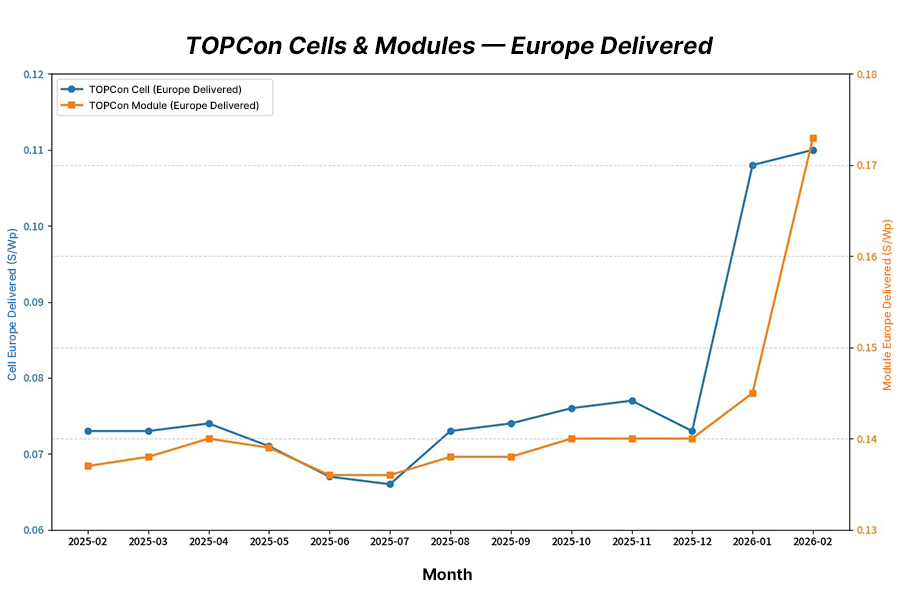
In the latest global market update, international photovoltaic module prices saw a short-term correction at the start of the year, prompting European buyers to reassess near-term market expectations. According to pv magazine Global, citing the OPIS weekly price report, TOPCon module prices declined this week after four consecutive weeks of increases. The adjustment is mainly linked to falling prices for key raw materials and reduced trading activity during holiday periods in Asian markets.
Silver, a major cost component in solar cell manufacturing, has fallen by more than 30% since reaching a short-term peak in late January. This easing of cost pressure has weakened the upward momentum in module prices and pushed the market into a consolidation phase. At the same time, lower spot market liquidity has amplified module price volatility, indicating that the global photovoltaic market remains in a phase of rapid supply–demand adjustment.
For the European market, this price fluctuation reflects not only raw material cycles but also timing differences in cross-regional supply chains. While demand for high-efficiency modules continues to grow, short-term price movements remind installers and distributors to balance procurement and inventory planning against raw material costs, export policy changes and buyer expectations for future pricing.
From a longer-term perspective, global energy storage capacity has recently exceeded 250 GW for the first time, signalling stronger renewable energy integration. This structural shift suggests that photovoltaic projects are increasingly focused on efficiency and system integration, raising the importance of module performance and supply reliability in European project evaluation.
Caption: Trend in European landed prices of TOPCon cells and modules based on the OPIS weekly price report (February 2025 – February 2026).
A New Phase of Growth in the German Photovoltaic PPA Market
In Germany’s photovoltaic sector, long-term Power Purchase Agreements (PPAs) — a key mechanism for enabling subsidy-free photovoltaic projects and corporate green electricity procurement — are regaining market momentum. Recent reports indicate that although the German PPA market had been characterised by low prices and limited transaction volume for an extended period, several notable deals have recently drawn industry attention. Energy developer Sunnic Lighthouse has signed a long-term supply contract with Thyssenkrupp Steel covering nine solar power plants, while Maxsolar has announced two additional PPA agreements for photovoltaic projects scheduled to enter operation in the first half of this year.
While these contracts are not large in scale, they signal a break from the market’s previous stagnation. For years, relatively low spot electricity prices in Germany made PPA pricing less attractive, limiting developers’ ability to secure financing through standalone solar PPAs. The latest agreements suggest that, with improving project returns and rising long-term electricity demand, corporate interest in locking in low-carbon prices and stable supply is recovering — a positive signal for developers and the module supply chain.
For German EPC contractors, module buyers and distribution channels, this trend implies:
Renewed demand from long-term buyers, including industrial firms and major energy users, for green electricity contracts
Growing recognition of PPAs as a viable financing structure for photovoltaic projects under current market conditions
A potential shift in market focus from short-term low-price trading towards long-term value capture and risk management
Overall, the recent rebound in the German PPA market reflects stable corporate demand for renewable power and may support the resumption of financing and off-take activity for large domestic photovoltaic projects in the coming months, offering new guidance for module distribution and inventory planning.
Accelerated Deployment of Agrivoltaic Projects in Italy
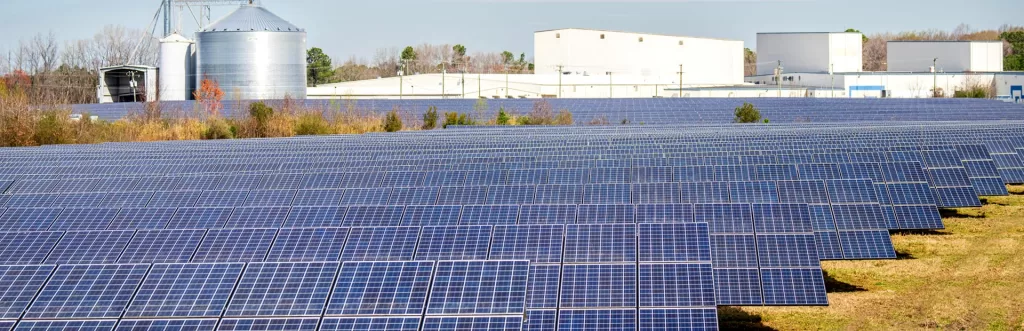
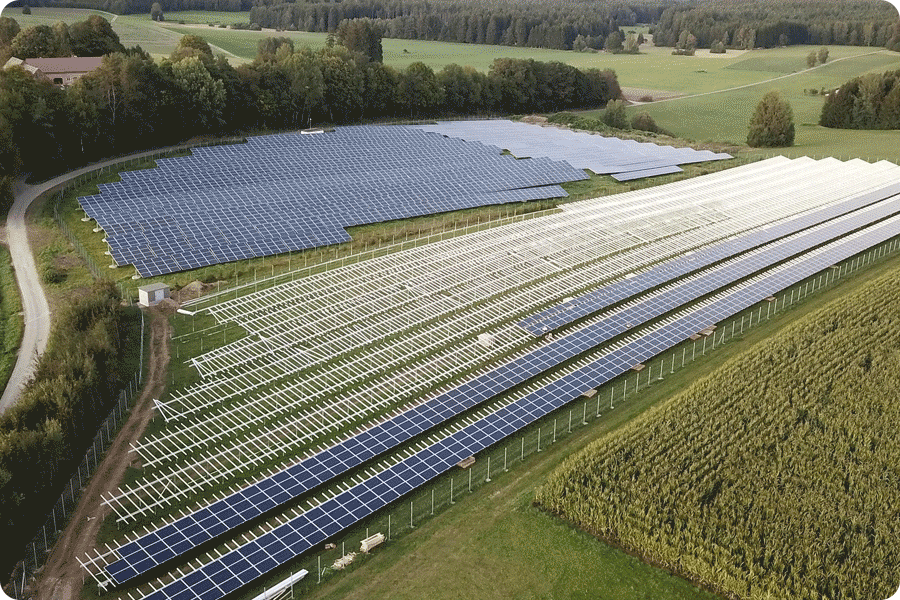
Italian developer Zelestra is advancing a 6.5 MW agrivoltaic photovoltaic project in Puglia that has entered the execution phase and is backed by a ten-year Power Purchase Agreement with BKW Energy. The project is viewed as a fresh sign that Italy’s agrivoltaic pipeline is moving from policy design to on-the-ground implementation. As one of the first European countries to promote agrivoltaics systematically, Italy is positioning this model as a key route to expanding renewable capacity while reducing land-use conflicts.
The progress of similar photovoltaic projects indicates growing developer confidence in the commercial viability of agrivoltaic systems. These installations typically involve more complex structural designs and longer development cycles, placing higher demands on module durability and long-term operational stability. Against a backdrop of tighter land approvals and agricultural protection policies, agrivoltaics provide a relatively workable pathway for new large-scale solar deployment.
At the same time, Italy’s commercial and industrial rooftop photovoltaic market continues to expand, although grid connection capacity is emerging as a limiting factor. Extended connection approval timelines in parts of southern Italy have slowed distributed projects compared with large agrivoltaic plants. This contrast suggests that, as installed capacity rises, grid infrastructure is becoming a decisive factor shaping market pace.
For the module supply chain, the parallel growth of agrivoltaic and distributed rooftop photovoltaic projects points to further segmentation of application scenarios, with rising expectations for product performance, system compatibility and delivery flexibility.
Permitting Timelines in France and Their Impact on Photovoltaic Projects
The pace of photovoltaic project development in France is increasingly shaped by permitting procedures and policy implementation. The tender system overseen by the French energy regulator CRE remains the main entry route for large ground-mounted photovoltaic projects, yet approval timelines vary significantly by region. Some developers are facing longer review periods and more complex administrative processes.
This situation is directly influencing market structure. For large-scale solar projects reliant on the CRE tender framework, uncertainty around permitting increases development timelines and capital costs, prompting investors to apply stricter project selection criteria. By contrast, commercial and industrial rooftop photovoltaic projects benefit from more flexible administrative pathways and are becoming an important risk-diversification strategy for some developers. This divergence shows that growth in the French photovoltaic market depends not only on policy targets, but also on execution efficiency and local coordination.
From a supply chain perspective, fluctuating approval cycles demand greater flexibility in project scheduling and module delivery. Developers and suppliers must adapt inventory management and logistics planning to uneven project timelines. As France continues to raise its renewable energy deployment targets, the operational efficiency of permitting and tender mechanisms is emerging as a key factor shaping market expansion.
Across Europe, competition in the photovoltaic sector is increasingly defined less by price or installed capacity alone and more by the ability to adapt to market structures, project models and regulatory environments. For developers and the module supply chain, maintaining flexible procurement and delivery strategies amid uncertainty is becoming essential to managing changing market dynamics.
Maysun Solar supplies the European market with solar panels based on key technologies including IBC technology, TOPCon technology, and HJT technology, suitable for a wide range of system applications. We support partners in selecting optimal module power and configurations in line with evolving European price trends, policies and project requirements.
Reference
pv magazine Global. TOPCon cell and module price movements reflect shifting supply dynamics. 2026. https://www.pv-magazine.com/
pv magazine Deutschland. Neuer Schwung für den Photovoltaik-PPA-Markt in Deutschland. 6 Feb 2026. https://www.pv-magazine.de/2026/02/06/neuer-schwung-fuer-den-photovoltaik-ppa-markt-in-deutschland/
pv magazine Italia. Pareri ambientali: due VIA positive per 122 MW agrivoltaici. 6 Feb 2026. https://www.pv-magazine.it/2026/02/06/pareri-ambientali-due-via-positive-per-122-mw-agrivoltaici/
pv magazine France. CRE tenders and permitting developments in the French PV market. 2026. https://www.pv-magazine.fr/
Recommend reading

Low-Carbon PV Procurement in France: Why ECS, PEP Ecopassport and Solar Carports Matter
Table of Contents France is becoming one of Europe’s most documentation-driven solar markets. For EPC companies, developers and commercial project owners, module selection is no longer based only on price-per-watt, efficiency or linear power warranties. Carbon documentation, supply-chain traceability and project-specific compliance files

PV Module Installation Beyond Rooftops: Multi-Scenario Applications for Bifacial N-Type Modules in Europe
PV module installation is not limited to rooftops. For residential users, small commercial users and distributed PV projects in Europe, spaces such as balconies, gardens, fences, carports, terraces, façades and pergolas can also provide additional installation areas when conditions allow. As solar use

Europe’s Grid Cap Era: Why High-Efficiency Solar Panels Matter More in 2026
Introduction In 2026, the economics of distributed solar in Europe are changing. Grid congestion, export limits, negative electricity prices and zero-export requirements mean that a solar project can no longer be judged only by how much electricity it generates. The more important question

How Do Solar Panel Delivery Delays Affect Installer Costs?
Solar panel delivery delays can affect installation schedules, project acceptance and payment collection.

The Forgotten “Invisible Assets”: Why Repowering Is the Strategic Key for European Solar in 2026
As grid congestion delays new solar projects across Europe, existing PV assets are becoming a strategic source of growth. This article explains why PV repowering can help EPCs and C&I asset owners unlock hidden value from already-connected solar plants, improve LCOE, and extend long-term asset performance with high-efficiency TOPCon, IBC and HJT modules.

Solar Panel Procurement in Europe: Why Stable Supply Matters More Than a One-Off Low Price
When European installers, distributors and corporate buyers choose solar panels, a one-off low price should not be the only factor. Stable supply, model continuity, technical documents and replenishment capacity often matter more for long-term cooperation and project delivery.