
In high-latitude regions like Northern Europe and Canada, winter brings short daylight hours and a low solar altitude, significantly reducing photovoltaic (PV) system output. However, as spring arrives, daylight hours increase, and the sun’s angle rises, creating a new peak period for solar generation. Maximizing the benefits of this seasonal shift is crucial for optimizing PV system performance in high-latitude areas.
This article delves into the challenges of springtime solar applications in high-latitude regions and presents innovative solutions, such as the application of reflective materials, intelligent tracking system optimizations, and advanced module designs, to help solar professionals enhance project efficiency and profitability.
Challenges of Springtime Solar Power in High Latitudes
Despite the increase in daylight hours during spring, high-latitude solar systems still face key challenges:
- Low Solar Altitude:Even with the return of sunlight, the sun remains relatively low in the sky, limiting the amount of solar radiation that PV panels can receive compared to lower-latitude regions.
- Large Temperature Variations:Early spring temperatures can be quite low, which may impact module and inverter performance but can also enhance PV module efficiency due to the temperature coefficient effect.
- Day-Night Temperature Fluctuations and Ice/Snow Effects:Sudden drops in nighttime temperatures can lead to frost formation on module surfaces, reducing light transmittance and impacting overall performance.
How to Optimize Solar Power Generation in Spring for High-Latitude Regions?
To overcome the challenges and increase solar power generation during the spring, the following optimization measures can be implemented:
1. Application of Reflective Materials: Enhancing Incident Light Utilization
Data Support: Studies show that the use of appropriate ground reflective materials can increase the total irradiation of a PV system by 10% to 30% (Source: National Renewable Energy Laboratory, NREL – www.nrel.gov).
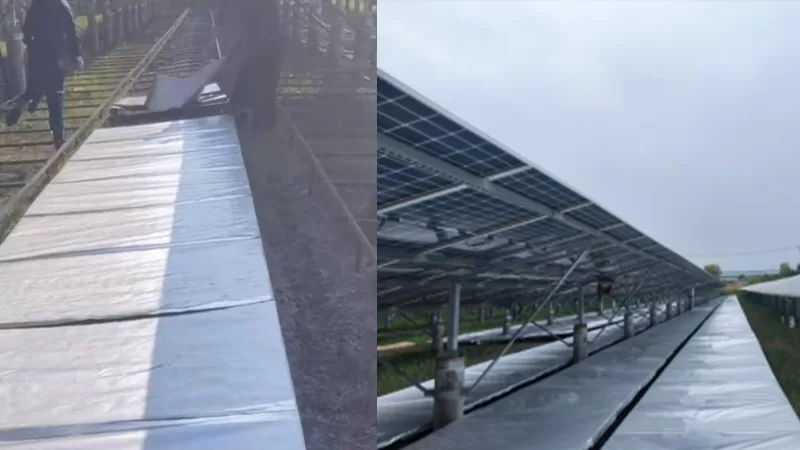
- White Reflective Films:Installing high-reflectivity materials (e.g., white reflective films or coatings) underneath the PV array can increase back-side illumination, particularly effective for bifacial modules.
- Optimized Installation Angle:Adjusting the angle of the PV modules to capture more reflected light from the ground maximizes light utilization.
- Snow Reflection: Snow in high-latitude regions is a natural high-reflection material that enhances irradiation reception, but mounting height needs to be optimized to reduce the impact of snow coverage.
Real Case: A photovoltaic farm in Jiangsu Province, China, used high-reflectivity white film beneath the modules, resulting in a 10% increase in electricity generation.
(Case Source: ENSI)
2. Smart Tracking Systems: Dynamically Adjusting Module Angles
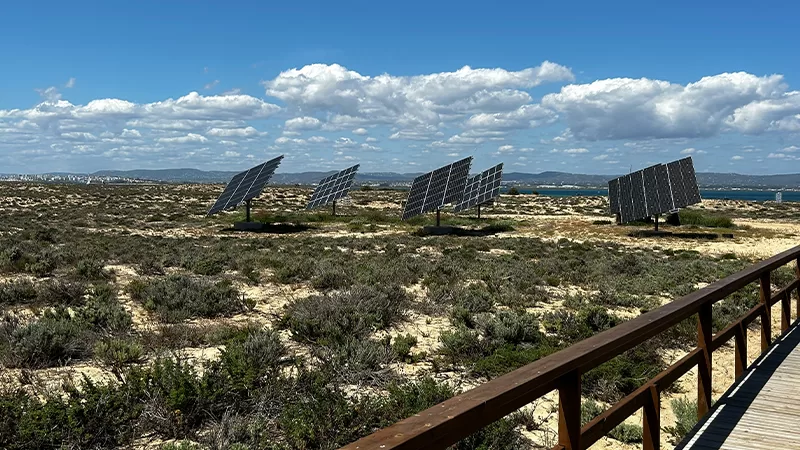
Data Support: A single-axis tracking system can improve annual energy generation by 15% to 25% in high-latitude regions, while a dual-axis tracking system can boost generation by over 30% (Source: Fraunhofer ISE, Germany – www.ise.fraunhofer.de).
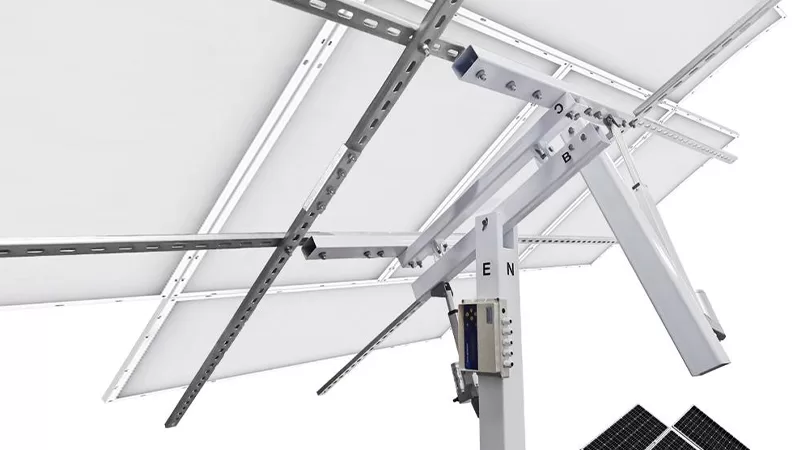
- Single-Axis Tracking System:Ideal for areas with significant seasonal variation in sunlight, adjusting the tilt angle so that the modules always face the sun, maximizing light utilization.
- Dual-Axis Tracking System:More precise, capable of adjusting to spring’s variable sun angles, thereby optimizing energy production.
- AI Optimization:Combining weather forecasts and light intensity data, AI can intelligently adjust module angles for enhanced energy yield.
Case: A photovoltaic power station in China adopted a single-axis tracking system, boosting spring power generation by 18% compared to fixed mounts.
Case Source
3. New Module Designs: Enhancing Weak Light and Scattered Light Utilization
With low sun angles and higher scattered light in the spring, the ability of modules to respond to weak light is crucial.
- TOPCon and HJT Modules:Compared to traditional PERC modules, TOPCon (Tunnel Oxide Passivated Contact) and HJT (Heterojunction) modules exhibit better weak light response, making them ideal for high-latitude regions.
- Bifacial Modules+ High-Reflection Grounds: Bifacial modules can utilize additional ground-reflected light, and combining them with white reflective films can increase generation by 10-15%.
- Nano Anti-Reflection Coatings: Reducing light loss on the module surface increases photon absorption and improves scattered light utilization efficiency.
Investment Return Analysis for Spring Solar Power in High-Latitude Regions
In summary, the following solutions can effectively improve solar power returns in high-latitude regions during the spring:
Optimization Solution | Power Generation Gain | Applicable Scenarios |
Reflective Materials (White Film, Coatings) | 10%~15% | Bifacial modules, high-reflection environments |
Single-Axis Tracking System | 15%~25% | Small and medium-sized ground-mounted power plants |
Dual-Axis Tracking System | 25%~30% | Large power plants, high-latitude regions |
HJT/TOPCon Bifacial Modules | 10%~15% | High-reflection sites, low-light environments |
AI Optimized Angle Tracking | 10%~18% | Smart power plants with weather forecasting integration |
From an investment perspective, the combination of tracking systems, reflective materials, and bifacial modules, although requiring a higher initial investment, can recoup costs within 3 to 5 years and increase energy generation by 20% to 30% over the system’s lifetime.
Conclusion
Spring is a critical period for optimizing solar systems in high-latitude regions, and the correct technological applications can significantly improve energy generation and investment returns. By integrating solutions such as reflective materials, smart tracking systems, and HJT/TOPCon bifacial modules, solar companies can maximize energy generation during spring, enhancing customer investment value.
In the increasingly competitive solar industry, adopting innovative technologies and improving system intelligence will be the core trend for the development of the high-latitude solar market. If you want to gain a competitive edge in the high-latitude market, feel free to consult with professionals for optimized solar solutions and collaborate to promote the green development of the industry.
Since 2008, Maysun Solar has been dedicated to producing high-quality photovoltaic modules. Our range of solar panels, including IBC, HJT and TOPCon panels, and balcony solar stations, are manufactured using advanced technology and offer excellent performance and guaranteed quality. Maysun Solar has successfully established offices and warehouses in many countries and built long-term partnerships with top installers! For the latest quotes on solar panels or any photovoltaic-related inquiries, please contact us. We are committed to serving you, and our products provide reliable assurance.
Recommend Reading:

430–460W or 600W+? How Should You Choose Solar Panel Power for Rooftop Projects?
Compares 430–460W solar panels and 600W solar panels in C&I rooftop projects, showing that solar panel selection should prioritise roof compatibility and system stability.
Changes in the European Solar Policy and Market in 2026
Europe’s 2026 solar policy and grid changes are reshaping solar panel selection, shifting project returns towards market-driven mechanisms and highlighting the roles of TOPCon, HJT and IBC solar panels.
Why European EPCs Are Reassessing Large-Format Solar Panels
European EPCs are re-evaluating large-format solar panels. Panel size directly affects installation risk, system compatibility, and solar project ROI stability.
Do Vertical Bifacial Modules Really Deliver Additional Yield?
Vertical bifacial PV systems are gaining increasing attention across Europe. This article explores under what conditions a vertical layout can create additional value, how bifacial gain is influenced by site conditions, and which project types are best suited to this design.

Which rooftop scenarios make 700W+ solar panels a risk?
An analysis of the practical limits of 700W+ high-power solar panels on residential and commercial rooftops, and how space, load capacity, self-consumption and maintenance affect real returns.
February News in the Photovoltaic Industry
February overview of Europe’s photovoltaic market: module price trends, a rebound in the German PPA market, progress in Italian agrivoltaics and regulatory shifts in France, highlighting key industry signals.