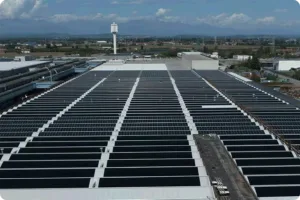
Maysun Solar’s First 3.5 MW Solar EPC Project in Italy Enters Its Final Stage
A large-scale commercial and industrial rooftop solar project with a total capacity of approximately 3.5 MWp is now entering its final stage in the Turin area of Piedmont, Italy. Around 8,000 solar modules planned for the project have now been fully installed. The system

August European Solar Industry News
In August 2026, Europe’s solar market combined record PV generation with volatile power prices driven by heat, gas costs and low wind output. Policy support also expanded, including 800 W plug-in solar in Great Britain and greater EU flexibility for PV and storage investments, while module prices largely stabilized amid renewed oversupply.
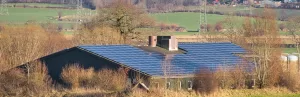
Industrial Roofs with Limited Load Capacity: Lightweight or High-Efficiency Solar Panels?
On an existing industrial roof, “lighter is better” is not a reliable module-selection rule. The first question is how much additional load the roof can safely accept. Only then does it make sense to compare module weight, power density, mounting method and the

How to Verify Solar Panels Before Buying: Datasheets, Certifications, Warranties and Delivery Inspection
A datasheet, an IEC certificate and a 25- or 30-year warranty can make a solar module look fully validated on paper. For a reliable purchasing decision, however, those documents are only the starting point. The electrical ratings, mechanical design, certificates, connectors, warranty terms
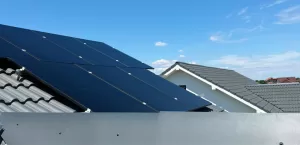
How to Choose Solar Panels for Low-Load-Bearing Industrial Roofs: A Guide to Weight, Power Density and Mounting Systems
Choosing solar panels for a low-load-bearing industrial roof requires more than checking the weight of an individual module. A more reliable process starts by determining the roof’s remaining load-bearing capacity. The complete load from the modules, rails, fasteners and ballast must then be

Why Do Solar Panels Lose Power in Hot Weather? How Temperature Coefficient and Roof Ventilation Affect Summer Energy Yield
Summer brings stronger sunlight and longer daylight hours, so it is normally one of the most productive seasons for a solar system. However, some system owners notice that solar panel output does not continue to rise during the hottest part of the day.