
Can Solar Panels Generate Power on Cloudy Days?

Can Solar Panels Generate Power on Cloudy Days?

For users planning to install a photovoltaic system—whether for industrial facilities, commercial rooftops, or residential homes—one recurring question often arises during the selection or operation phase: On cloudy or overcast days, does the system practically shut down? Can it still deliver stable power output?

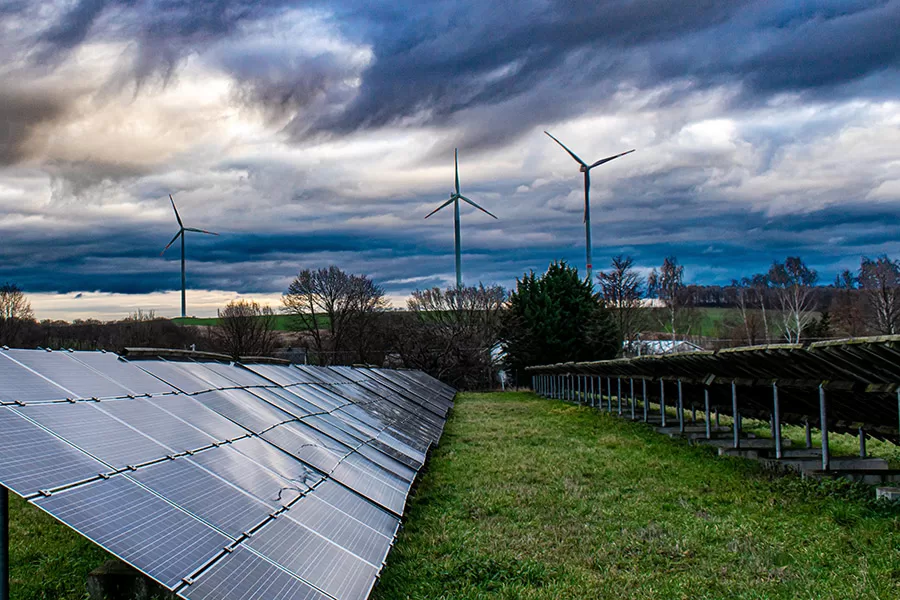
In reality, solar panels rely on visible light, not direct sunlight. Even on overcast days, the atmosphere contains a significant amount of diffuse radiation, which is sufficient to maintain system generation. In Central Europe, for example, irradiance levels on cloudy days typically range from 15% to 30% of those on clear days. Accordingly, panel output remains within that range, depending on the technology used and the system’s installation angle.

While generation efficiency does decline in cloudy conditions, it does not equate to a full shutdown. For photovoltaic investments, what truly matters is not daily weather fluctuations, but the system’s average annual performance under real-world climate conditions. This explains why countries like Germany and the Netherlands, despite frequent overcast weather, still pursue large-scale solar deployments.

In short, as long as the system is properly configured, it can deliver stable long-term returns—even under variable weather conditions.

as long as the system is properly configured, it can deliver stable long-term returns—even under variable weather conditions.

From Visible Light to Electric Current: How Solar Systems Work on Cloudy Days

To determine whether a photovoltaic system can generate power on cloudy days, it’s essential to understand the source of its energy.

Solar panels rely on photons—not the heat or intensity of sunlight. As long as there is sufficient visible light, even diffuse light scattered through thick clouds can trigger the photovoltaic effect and generate electricity.

This is not just a theoretical possibility. In Central Europe, total daily irradiance on overcast days typically ranges between 1.5 and 2.5 kWh/m², which corresponds to about 20–30% of a clear day’s levels. With a well-designed system, even if more than half the year is cloudy, the expected energy output can still be achieved.

Different panel technologies perform quite differently under these conditions. Conventional PERC modules are more sensitive to low light, whereas high-efficiency technologies such as TOPCon, IBC, and HJT maintain more stable output under reduced irradiance. For example, at 200 W/m², IBC panels can retain over 80% of their rated output, HJT comes close, and TOPCon is slightly lower but still performs better than PERC.

However, panel performance is only part of the equation. Actual system output also depends on factors such as tilt angle, inverter startup voltage, and shading optimization. When it comes to energy generation on cloudy days, the key question is whether it’s worth making structural adjustments to optimize for these lower-light conditions.

From Visible Light to Electric Current: How Solar Systems Work on Cloudy Days

From Data to Returns: Analyzing Photovoltaic Performance Under Low-Light Conditions

Understanding how a solar system performs on cloudy days is only part of the picture—what matters more is whether this performance translates into economic value. The key question is: How much of the annual energy yield comes from low-light conditions, and is it significant enough to justify the investment?

Take Central Germany as an example. According to climate data from Fraunhofer ISE, around 45% of the annual solar irradiance comes from non-clear weather—high clouds, fog, and overcast skies. This means that low-light generation is not an anomaly but a fundamental part of a system’s yearly output.

Consider a scenario with both PERC and IBC modules, each with a capacity of 10 kWp and an annual irradiance of 1,100 kWh/m². Based on actual project monitoring data, during typically cloudy months (November to February), IBC panels can contribute 22–25% of their total annual generation, while traditional PERC modules deliver only 15–18%. This performance gap translates into a noticeable difference in full-load hours over the year, directly impacting revenue stability and energy storage strategy.

From an economic standpoint, optimizing for cloudy-day generation depends on two main factors:

  • Load profile: If the energy demand is continuous throughout the day and on-site self-consumption is high, energy produced during cloudy periods can be directly monetized.

  • Marginal system costs: Whether the additional investment in high-efficiency modules can be offset by low-light energy production over the system’s lifetime determines the viability of that choice.

Furthermore, in typically cloudy regions like Northern France and Belgium, more than 60% of commercial project tenders between 2022 and 2024 specified high-efficiency modules. This indicates that developers and investors in real markets are actively integrating low-irradiance performance into system design and tariff modeling.

Low-light generation capacity is not a marginal parameter—it’s a structural variable in a system’s annual return model.

It influences not just energy output, but also load matching, storage configuration, inverter design, and the system’s payback timeline, making it a critical consideration in both technology selection and investment assessment.

From Data to Returns: Analyzing Photovoltaic Performance Under Low-Light Conditions

Limited Generation on Cloudy Days: System Configuration Defines the Boundaries of Profitability

It is a physical fact—not a misconception—that cloudy conditions significantly reduce the output of solar panels. However, for a photovoltaic system, lower energy production does not necessarily equate to reduced economic value. The key lies in whether the low-light generation capacity is effectively captured, managed, and utilized through smart system design.

In practice, if a solar system can maintain consistent operation during low-light hours, even modest energy output per hour can be economically meaningful—as long as it aligns with the site’s energy usage profile. For instance, early morning and late evening office loads, heat-retaining equipment on production lines, or continuous standby loads can all absorb this output. Conversely, if the inverter’s startup voltage is set too high or the storage system responds poorly, this energy might never make it into the system, leading to loss or waste.

Therefore, the real determinant of whether cloudy-day generation is “useful” lies in the system’s configuration for low-irradiance scenarios. This includes:

  • Whether the module type has strong low-light responsiveness

  • Whether the inverter features low startup voltage and multi-MPPT fine tracking

  • Whether a dispatchable energy storage system is in place, or load priorities are clearly defined

  • Whether shading modeling, tilt optimization, or other measures improve daily power adaptation

For owners and investors seeking stable returns, the decision to optimize for low-light performance shouldn’t hinge on individual efficiency figures, but rather on whether the system’s revenue structure aligns with its technical capabilities.

If the energy load is spread across the entire day and self-consumption is high, the system should prioritize modules with better low-light response and inverters with low startup thresholds. In regions with high electricity prices or significant time-of-use tariffs, such generation can also be monetized through arbitrage. Ultimately, whether optimization is worthwhile comes down to: Is the energy usable, do the additional returns justify the investment, and can the system reliably absorb and convert this generation?

Since 2008, Maysun Solar has been both an investor and manufacturer in the photovoltaic industry, providing zero-investment commercial and industrial rooftop solar solutions. With 17 years in the European market and 1.1 GW of installed capacity, we offer fully financed solar projects, allowing businesses to monetize rooftops and reduce energy costs with no upfront investment. Our advanced IBCHJT and TOPCon panels, and balcony solar stations, ensure high efficiency, durability, and long-term reliability. Maysun Solar handles all approvals, installation, and maintenance, ensuring a seamless, risk-free transition to solar energy while delivering stable returns.

Reference

Fraunhofer ISE. (2024). Photovoltaics Report. Fraunhofer Institute for Solar Energy Systems ISE. https://www.ise.fraunhofer.de/en/publications/studies/photovoltaics-report.html

Bundesnetzagentur. (2024). Hinweise zur Registrierung von Solaranlagen im MaStR. Federal Network Agency (BNetzA). https://www.marktstammdatenregister.de/MaStR/Help

European Commission JRC. (2023). Photovoltaic Geographical Information System (PVGIS). Joint Research Centre. https://joint-research-centre.ec.europa.eu/pvgis_en

Recommend Reading

February News in the Photovoltaic Industry

February News in the Photovoltaic Industry

February overview of Europe’s photovoltaic market: module price trends, a rebound in the German PPA market, progress in Italian agrivoltaics and regulatory shifts in France, highlighting key industry signals.
Read More »