Do different solar module grid designs really affect solar ROI?

Do different solar module grid designs really affect solar ROI?

Table of Contents

What are the key trends in solar module development?

Every technological upgrade in the solar industry is essentially a reflection on the limitations of the previous generation — yet the core objective has never changed:

to make rooftop solar systems more stable, more efficient, and faster in achieving a solid solar ROI.

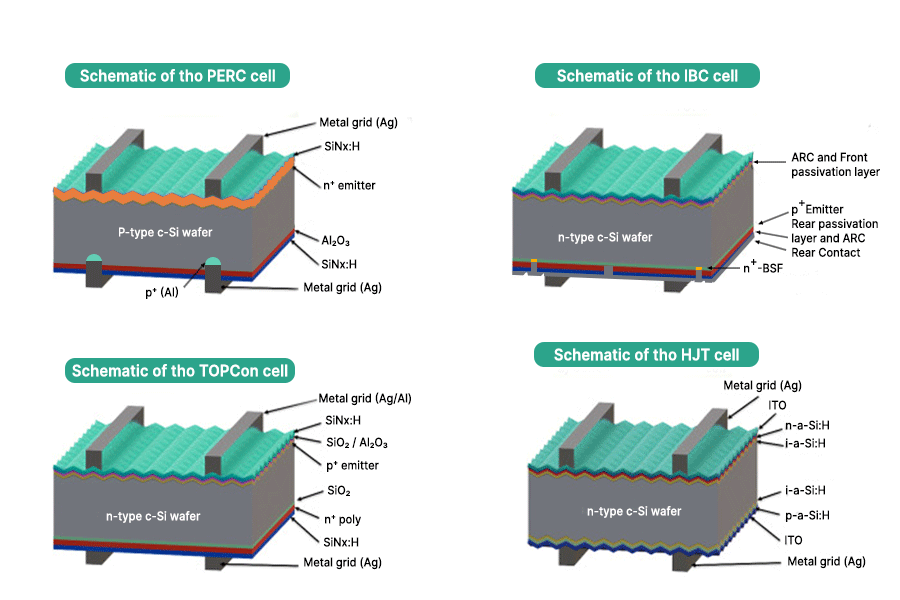
The earliest p-type cells, represented by PERC, pushed mass-production efficiency beyond 20%. With boron doping, mature processing and low cost, they scaled rapidly. However, as installations expanded, issues such as LID and LeTID became evident, causing significant early-stage degradation and ultimately extending the payback period.

To address this, the industry shifted towards n-type silicon. With phosphorus doping, natural LID resistance, bifacial gains and a longer carrier lifetime, n-type became the foundation for TOPCon, HJT and IBC technologies, raising commercial efficiencies to around 21–23%. Yet as efficiencies approach their theoretical limit, increases in silver paste usage and manufacturing complexity mean that additional layers and parameters no longer translate into linear performance gains.

Structures of PERC, TOPCon, HJT and IBC cells — illustrating the shift from p-type to n-type technologies, all aiming to deliver modules that are more efficient, more stable and deliver faster ROI.

Today, the industry is progressing along two main pathways:

perovskite–silicon tandem architecture and structural optimisation.

The former is still undergoing validation, while the latter has already entered mass production — notably through 1/3-cut solar module technology.

By dividing each TOPCon cell into three equal sections, current density is reduced, heat distribution becomes more uniform, and the risk of microcracks decreases. Under partial shading, the affected electrical path is confined to a much smaller area, reducing energy loss and hotspot formation. This results in more stable real-world performance and ultimately enhances overall solar ROI.

How is ROI calculated, and how can it be improved?

For solar ROI, the core question is simple: how long does it take for the investment to be recovered through the energy it generates?

The standard calculation is:

Payback period = Total system investment ÷ Annual energy revenue

Annual energy revenue = Annual generation × (Self-consumption ratio × Self-consumption tariff + Export ratio × Export tariff)

Assuming a 100 kW commercial and industrial solar project:

Total system investment€90,000
Estimated annual generation135,000 kWh
Business electricity tariff€0.18/kWh
Feed-in tariff€0.10/kWh
Self-consumption ratio80%
Export ratio20%

Note: The payback period varies depending on local irradiation, load profile, and installation conditions. The above is a typical example for businesses with a high self-consumption rate.

  • Revenue per kWh = 0.8 × €0.18 + 0.2 × €0.10 = €0.164/kWh

  • Annual revenue = 135,000 × €0.164 ≈ €22,140/year

  • Payback period = €90,000 ÷ €22,140 ≈ 4.07 years

So, for a 100 kW commercial rooftop solar project, the payback time is roughly four years.

From the formula, there are two main pathways to improving solar ROI:

  • Reducing system cost: using module designs that match the rooftop structure, lowering installation complexity and long-term O&M costs.

  • Increasing energy yield: prioritising modules with better temperature coefficients, low-light efficiency, shading tolerance and heat dissipation to maintain stable, high actual output.

Take temperature coefficient as an example:

A difference of 0.05%/°C can lead to around 4% variation in annual generation.

In the 100 kW scenario above, this equates to roughly 5,400 kWh more per year, adding about €972 in annual revenue.

In real rooftop solar environments — where high temperatures, low light, shading and ventilation all interact — differences in energy yield often reach 5–8%, allowing the payback period to be shortened by 6–10 months.

Ultimately, the difference in solar ROI is determined not by rated power, but by real-world generation performance.

Different structures lead to different ROI outcomes

On real rooftop solar installations, generation performance is shaped by several factors:

  • The way light enters the module and how effectively scattered light is utilised

  • How quickly the module surface responds to temperature changes

  • Architectural style and long-term maintenance requirements

  • Site function and how the space beneath the array is used

Because of this, solar modules are no longer defined by a single visual or structural format. Variations in grid design reflect different generation behaviours and different ROI models — not simply aesthetic preferences.

In the market, three typical grid design directions have now emerged:

  • Light-transmitting grids: optimise daylighting and spatial value

  • High-dissipation grids: optimise thermal management and long-term output stability

  • Full-black low-reflection grids: optimise architectural value and commercial aesthetics

Building on TOPCon technology, 1/3-cut solar modules now adopt these three grid structures to suit different rooftop scenarios and maximise solar ROI in each application.

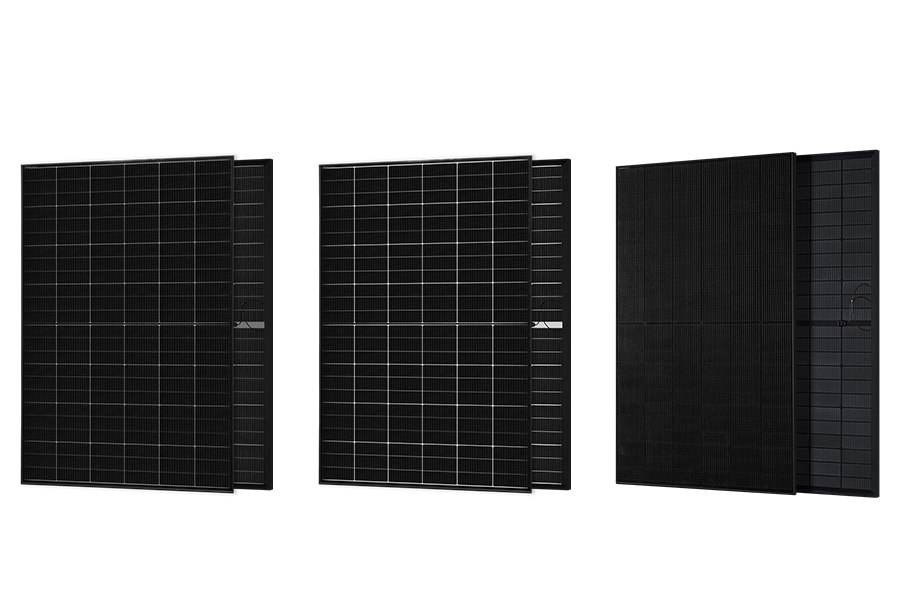
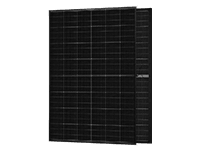
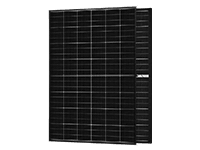
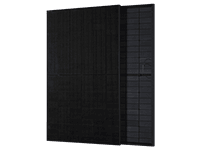
Transparent-grid module Black frame (white-grid) module Full-black module
Grid type Transparent grid Black frame (white grid) Full black
Visual appearance Clear and transparent, strong modern look Bright reflective white, industrial aesthetic Seamless all-black finish, premium look
Light-reflection behaviour High transmittance, capable of using rear-side light High reflectance, enabling secondary reflection to improve light capture Low reflectance with higher heat absorption
Operating temperature Moderate (efficient rear-side heat dissipation) Lowest temperature rise (approx. 3–5°C lower than darker grids) Higher temperature rise due to stronger heat absorption
Power output efficiency Moderate (dependent on light-transmittance conditions) Highest (1.5–3% output advantage under strong reflective conditions) Relatively lower
Recommended applications Carports, balconies, agrivoltaics, solar fencing, semi-transparent façades Commercial rooftops, regions with large temperature swings, building-integrated PV façades Residential rooftops and projects requiring uniform aesthetics
Key advantages Dual-side light utilisation, ideal for semi-transparent structures Secondary reflection for enhanced irradiance and stable thermal performance Best all-black integrated visual finish

Which type of solar module is right for my rooftop?

Different building types, roofing materials and operating environments determine how a rooftop behaves in real conditions. In practice, rooftop solar installations are no longer limited to traditional roofs—they are now widely used on carports, skylight structures, façades and semi-transparent architectural spaces.

Because each scenario has distinct climate conditions, light distribution patterns, structural requirements and spatial value, there is no single “universal best” module design.

What truly influences solar ROI is not the rated specification on paper, but how well the module structure matches the environment in which it operates.

Choosing a module is essentially choosing an ROI pathway for your rooftop—ensuring every square metre generates stable, long-term financial returns.

1. Industrial facilities and large commercial rooftops

These rooftops typically feature:

  • Metal surfaces

  • Large installation areas

  • Rapid heat accumulation during summer

  • Roof temperatures 15–25°C higher than ambient conditions

Since every 1°C increase in cell temperature reduces power output by around 0.3–0.4%, scenarios with high daytime loads depend heavily on strong heat dissipation and thermal management.

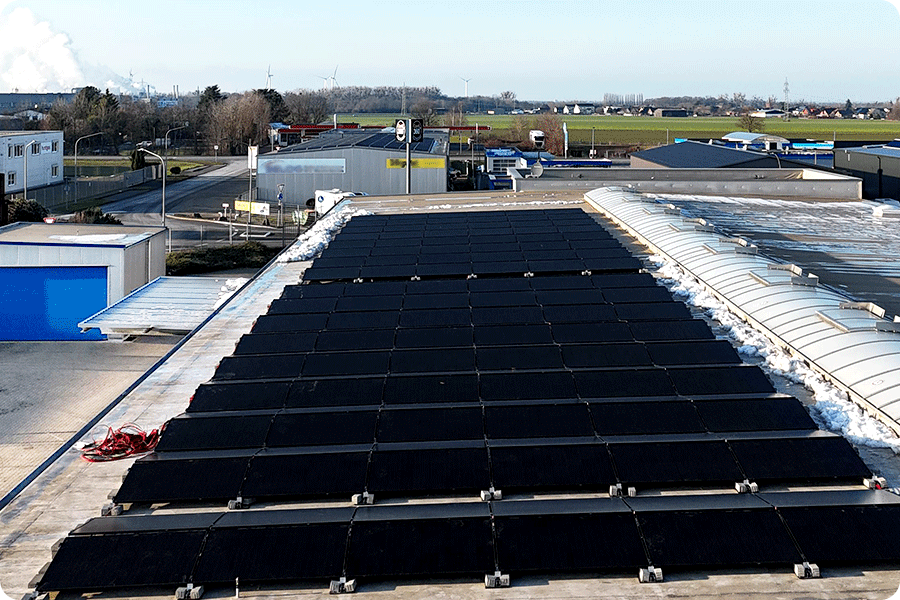
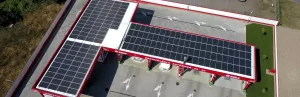
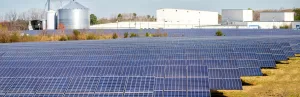
Black-frame structures offer higher thermal diffusion efficiency and more stable current pathways, making them especially suitable for commercial and industrial rooftops, regions with large temperature fluctuations, and façade-integrated systems where high temperatures and partial shading are common.

They help minimise performance drops during temperature spikes and shading events, flatten the generation curve, reduce operational uncertainty and shorten the payback period.

2. Open carports, skylights and multifunctional commercial spaces

These structures serve both shading and daylighting purposes, meaning spatial comfort and light distribution matter as much as generation.

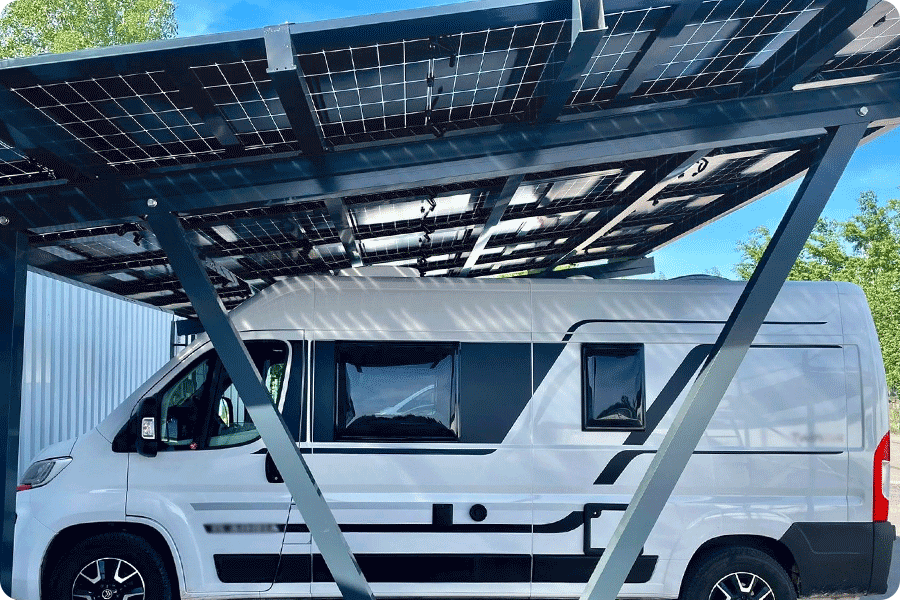
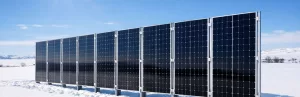
Transparent-grid designs preserve natural light channels, with a bifaciality of around 85%, delivering 5–10% rear-side gain when installed above light-coloured or reflective surfaces. The transparent areas can increase natural illuminance by 20–35%.

For carports, balconies, agrivoltaics, solar fences and semi-transparent façades, this balance between visibility and shading enhances the usability and value of the space, improving the combined return per square metre while maintaining stable generation.

3. Residential rooftops and projects focused on architectural aesthetics

Homes and high-end properties prioritise consistent appearance, long-term asset value and a stable user experience.

Rooftop area is often limited (typically 20–60 m²), and shading is unpredictable—trees, chimneys or neighbouring walls can introduce 5–15% variation in real-world generation. Additionally, summer roof temperatures in residential settings may exceed ambient conditions by 10–20°C, creating stricter requirements for module thermal stability. Visual integration with the building and low-maintenance operation are also essential.

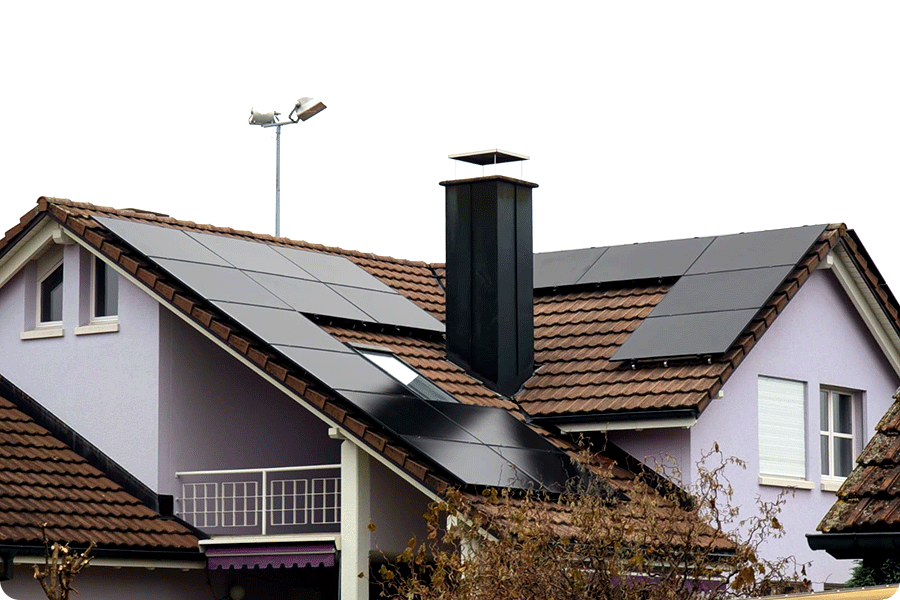
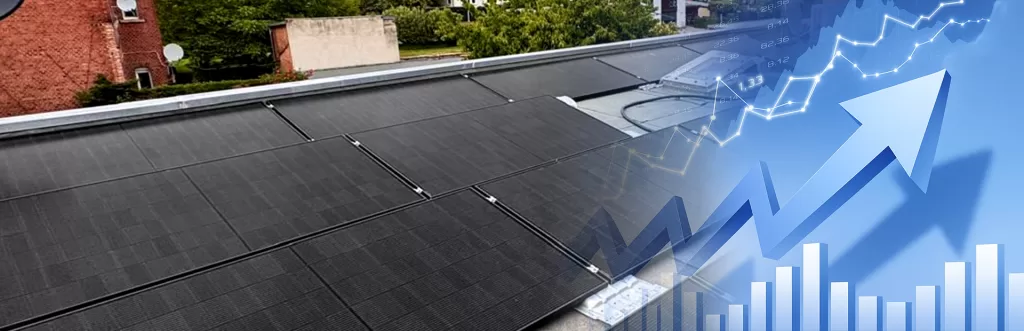
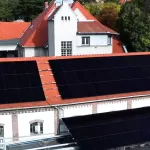
Residential installation using a Twisun Pro 450 W full-black 1/3-cut module from maysunsolar.

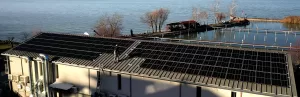
Full-black structures deliver visual uniformity and stable performance, blending seamlessly into both residential and commercial architecture. They turn solar into a long-term asset that complements building value while providing sustained energy returns—ideal for owners focused on long-term holding and multi-layered ROI.

Identifying the characteristics of your rooftop and selecting a structural design that matches it is the foundation for ensuring stable, efficient and long-term operation of your solar system.

Long-term stability is what users truly need

What determines the long-term financial return of a rooftop solar system is not a single specification, nor simply choosing the highest power rating. It is the degree of alignment between module structure, rooftop environment and real-world usage conditions.

From the moment a solar system is installed, it enters an operational lifecycle of at least a decade. Choosing a module is therefore choosing a long-term ROI pathway:

  • Industrial and commercial facilities require stable output under high temperatures and continuous operation

  • Open and semi-open spaces must balance daylighting, user comfort and energy yield

  • Residential and architecturally sensitive properties need visual consistency combined with long-lasting reliability

When a system can generate stable energy in real operating conditions, integrate naturally with the built environment and reduce long-term uncertainty, solar stops being a one-off purchase — it becomes an asset capable of delivering sustained, long-term cash returns.

With deep expertise in 1/3-cut solar module technology, Maysun Solar provides high-efficiency, high-stability solutions for rooftop projects across Europe. Through refined current distribution and advanced thermal-flow control, its 1/3-cut TOPCon modules deliver outstanding performance under high temperatures, light structural loads and long-term operation. With power outputs ranging from 430 W to 460 W, these modules support reliable system performance and strong long-term returns.

Reference

Fraunhofer ISE. (2025). Photovoltaics Report.

https://www.ise.fraunhofer.de/content/dam/ise/de/documents/publications/studies/Photovoltaics-Report.pdf

IEA-PVPS Task 1. (2024). TRENDS IN PHOTOVOLTAIC APPLICATIONS 2024.

https://iea-pvps.org/wp-content/uploads/2024/10/IEA-PVPS-Task-1-Trends-Report-2024.pdf

NREL. (2024). Irradiance Monitoring for Bifacial PV Systems’ Performance and Capacity Testing. https://docs.nrel.gov/docs/fy24osti/88890.pdf

DNV. (2024). Wind speed and rear glass breakage on bifacial PV modules mounted on trackers. https://www.dnv.com/publications/wind-speed-and-rear-glass-breakage-on-bifacial-pv-modules-mounted-on-trackers/

Recommend Reading

February News in the Photovoltaic Industry

February News in the Photovoltaic Industry

February overview of Europe’s photovoltaic market: module price trends, a rebound in the German PPA market, progress in Italian agrivoltaics and regulatory shifts in France, highlighting key industry signals.
Read More »

3 Comments

  1. Máy tính lương

    Picking the right solar panels is like finding the perfect outfit for your roof. Design may not be everything, but it certainly affects ROI. Even small details like grid reflectivity can make a noticeable difference in payback time.

  2. Bruno

    It’s fascinating how innovations like half-cell and bifacial technologies are pushing the boundaries of solar module efficiency. The question about grid designs affecting ROI is really important – understanding how different layouts influence energy output could help homeowners and businesses make more informed decisions when installing solar.

  3. James Walker

    Really useful explanation. I didn’t realise grid design could influence ROI to this extent.

Comments are closed