Table of Contents
Background of 1/3 Cut Technology
1. Origin and Early Development (2000–2014)
In the early stages, the photovoltaic industry used full-cell designs. With technological advancements, around 2014, half-cut technology emerged. By cutting full cells into two halves, this approach reduced current density and power loss, improved module efficiency, and became the mainstream technology for both commercial and residential PV systems.
2. Innovation of 1/3 Cut Technology (Around 2018)
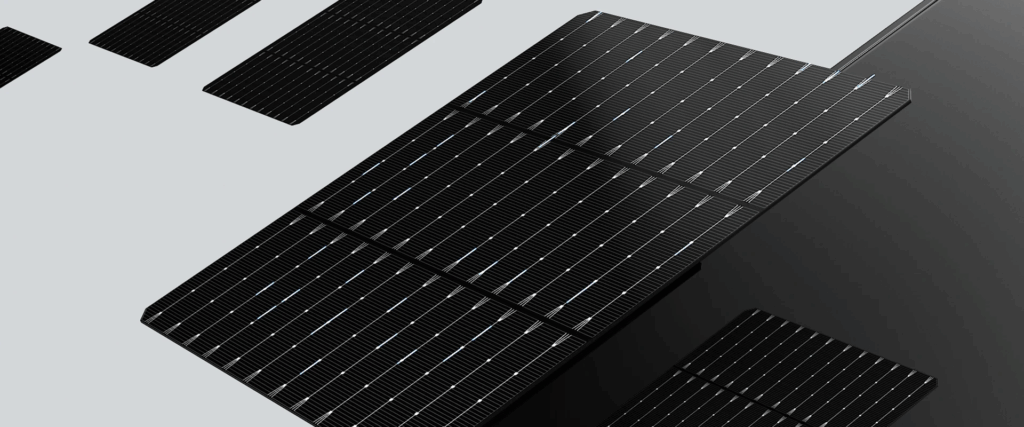
As demand for high-power PV solutions grew, 1/3 cut technology was introduced, dividing solar cells into three equal parts. This further reduced current density and thermal losses, significantly enhancing module performance and stability.
3. Industrialization and Promotion (2019–Present)
After years of R&D, 1/3 cut technology entered mass production and has been integrated with advanced cell technologies such as TOPCon and HJT. It has gradually become a core solution for high-efficiency PV modules, particularly excelling in high-density application markets such as Europe and Japan.
What is 1/3 Cut Technology?
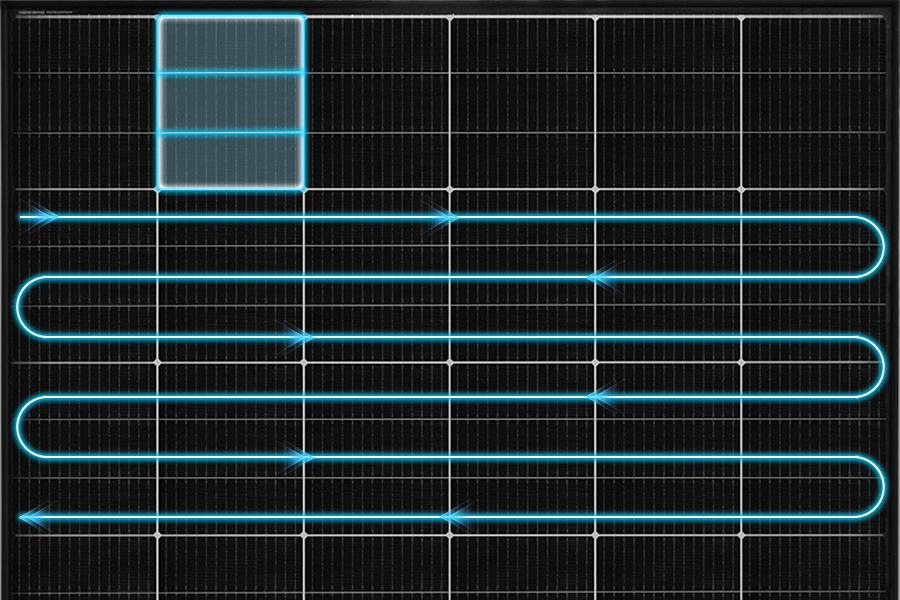
1/3 cut technology is a solar cell cutting process that further divides traditional half-cut cells into three equal parts. This reduces the current density in each cell, lowering electrical resistance losses (I²R losses). Its core advantages lie in significantly increasing module power density, reducing hotspot risks, and enhancing the long-term stability of photovoltaic systems.
1/3 cut technology represents a major breakthrough in the evolution of solar cell technologies. From monocrystalline silicon, polycrystalline silicon, and thin-film cells to today’s PERC, IBC, and TOPCon, each advancement has improved PV system efficiency and reduced costs. In particular, 1/3 cut technology is well-suited for commercial and industrial PV projects. When combined with advanced technologies like TOPCon, it can further boost power conversion efficiency and thermal management performance, making optimal use of limited space to increase power generation per unit area.
Three Key Technical Advantages
1) Lower Series Resistance for Higher System Efficiency
1/3 cut technology reduces electrical resistance losses (I²R losses) during current transmission, enabling modules to generate more electricity under the same sunlight conditions and improving overall system efficiency. For commercial and industrial PV projects, this means producing more power within limited installation space, lowering the cost per kilowatt-hour, and increasing overall profitability.
2) Lower Thermal Loss for Enhanced System Safety
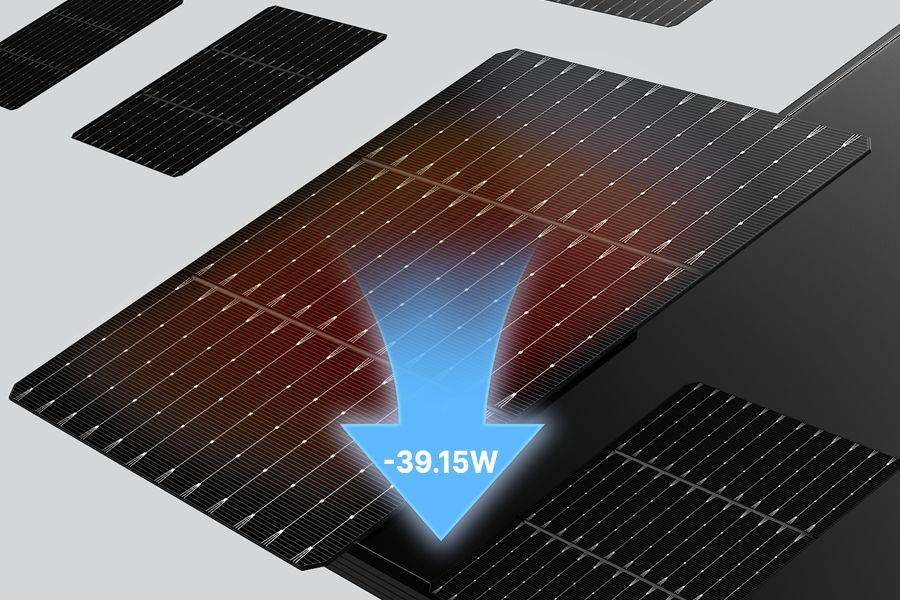
By reducing series resistance, 1/3 cut technology minimizes thermal losses, thereby lowering the risk of localized overheating. This feature is particularly important during Italy’s high-temperature seasons. As a result, system stability is improved, long-term maintenance costs are reduced, and investment returns become more predictable. By lowering current density, it effectively prevents heat accumulation, reducing the risk of hotspot formation and improving operational safety.
Note: Power loss (W) = Rated power × Power loss percentage; assuming a standard 450W PV module is used in a 10kW PV system, with an average of 4 hours of sunlight per day and an operating temperature of 60°C, the calculated power loss under these conditions is 39.15W.
3) Higher Shading Tolerance for Complex Rooftops
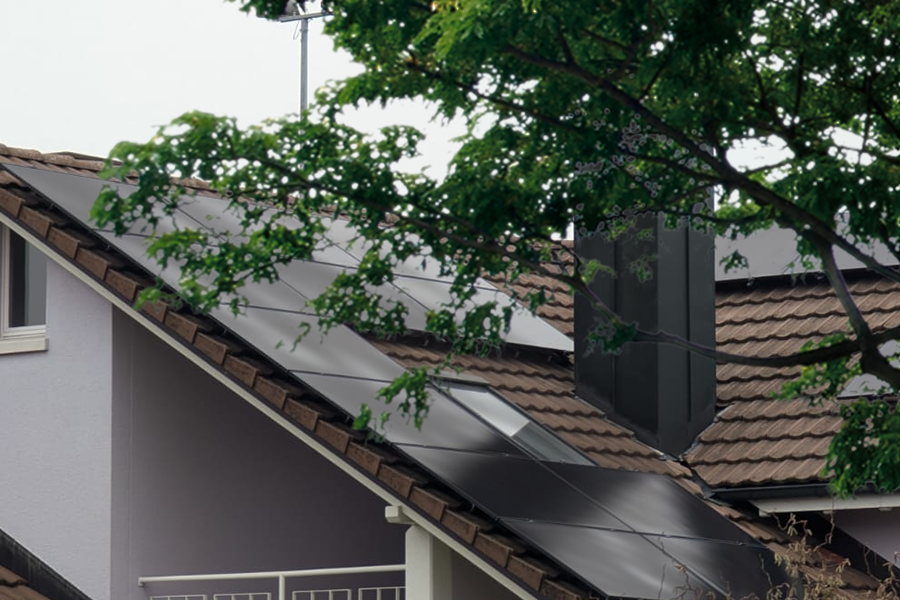
Many commercial, industrial, and residential projects in Italy face limited roof space and the presence of obstructions such as skylights or pipes. By subdividing solar cells, 1/3 cut technology greatly increases a module’s tolerance to partial shading. Even with obstacles or partial shadow on the roof, these modules can maintain high power output, improving the economic performance of the project.
Technical Significance
Reduced current density: Lowers resistance loss and temperature rise, enhancing system stability.
Improved hotspot resistance and safety: Minimizes localized heat buildup and reduces the probability of system failures.
Better thermal management: Increases long-term system reliability and safety.
Integration with high-efficiency cell technologies: Boosts module efficiency and drives overall PV system performance.
Comparison with Traditional Modules
Compared to traditional full-cell or half-cut modules, 1/3 cut modules offer clear advantages. Within the same surface area, they can generate more electricity, delivering higher power density, lower series resistance, and reduced thermal loss, thereby improving overall system efficiency.
Beyond power output, 1/3 cut technology also performs exceptionally well in terms of partial shading and shadow adaptation. Compared to half-cut technology, the finer cell segmentation of 1/3 cut modules effectively confines the impact of shading to the smallest possible area, enhancing system stability and long-term predictability.
430W PV Module Comparison
| Indicator | 1/3 Cut Twisun Pro Module | 1/2 Cut Module | Explanation of Differences |
|---|---|---|---|
| Operating Current (A) | 9.96 | 13.49 | Reduction of over 30%, lower resistive losses, helps system stability |
| Resistive Losses (Pres) | 99.2R | 181.98R | About 45% reduction, less heat accumulation |
| Temperature Rise (℃) | 30 | 54.9 | High temperatures accelerate power degradation |
| Annual Average Production Loss (kWh) | 54.62 | 99.95 | Over 45 kWh/year more production, higher revenue |
Policy Support and Market Trends
1) Policy Support
The Italian government, through the Transizione 5.0 program, strongly supports high-efficiency photovoltaic technologies. 1/3 cut technology receives priority policy recommendations, particularly in tax incentives, offering up to a 45% tax reduction, which effectively lowers initial investment costs. Compared to traditional modules, 1/3 cut technology enjoys stronger policy backing, especially for SME rooftop retrofits and energy-saving projects, where its application prospects are substantial.
2) Market Trends
As space-constrained projects become more common, 1/3 cut technology—thanks to its high power density, low thermal loss, and high shading tolerance—has become the preferred choice for commercial and industrial PV investments. Driven by policy, market demand for high-efficiency, low-maintenance PV modules continues to grow, and 1/3 cut technology is steadily securing its position as a mainstream solution.
Conclusion
As a significant innovation in the photovoltaic field, 1/3 cut technology is gradually becoming the mainstream choice in the market. It offers higher power generation efficiency within limited rooftop space, along with improved economic performance and system reliability, making it especially suitable for commercial rooftop retrofits and corporate solar investments. With the growing demand for high-efficiency, low-maintenance photovoltaic modules, 1/3 cut technology, with its cost-performance advantage, has become the ideal choice for business users. In the future, 1/3 cut technology will play a key role in high-density markets and the global energy transition.
Frequently Asked Questions (FAQ)
Yes, and it is especially well-suited for space-constrained rooftop projects, such as commercial and industrial roofs. Thanks to its high power density and lower thermal loss, 1/3 cut modules can deliver higher energy output within limited space while ensuring long-term stable operation. In addition, they perform exceptionally well on complex rooftops or in environments with obstructions, reducing the impact of partial shading.
No. Although the manufacturing process of 1/3 cut modules is more complex, their higher efficiency and lower maintenance costs make them more cost-effective overall. In commercial and industrial projects that require long-term stable output, they can reduce O&M expenses and improve return on investment.
By increasing power density, reducing thermal loss, and enhancing shading tolerance, 1/3 cut technology improves system efficiency and long-term stability, lowers hotspot risks and current losses, extends module lifespan, and reduces maintenance frequency. This ultimately boosts long-term investment returns, making it particularly suitable for commercial rooftop retrofits and low-maintenance community energy projects.
Yes. Due to optimized current distribution and lower thermal losses, 1/3 cut modules generally have a longer service life, with reduced hotspot risks and lower failure rates, thereby extending the operational cycle of the equipment.
Maysun Solar, with its expertise in IBC, TOPCon, HJT, and 1/3 cut technologies, provides high-efficiency photovoltaic solutions for the Italian market. We optimize products and solutions to enhance installation density, grid compatibility, and operational predictability, helping businesses achieve long-term stable returns in various environments. Through data-driven pre-design, we ensure project compliance, even in limited rooftop spaces, guaranteeing returns.
Reference
Ministero delle Imprese e del Made in Italy (MIMIT). (2024–2025). Piano Transizione 5.0 – Decreto attuativo. Roma. Retrieved from https://www.mimit.gov.it/it/incentivi/piano-transizione-5-0
Recom. (2020). Recom unveils tri-cut solar panel series. PV Magazine. Retrieved from https://www.pv-magazine.com/2020/08/05/recom-unveils-tri-cut-solar-panel-series/
National Renewable Energy Laboratory (NREL). (2022). Economic evaluation of photovoltaic module technologies. Retrieved from https://docs.nrel.gov/docs/fy22osti/78173.pdf
Recommend Reading

Low-Carbon PV Procurement in France: Why ECS, PEP Ecopassport and Solar Carports Matter
Table of Contents France is becoming one of Europe’s most documentation-driven solar markets. For EPC companies, developers and commercial project owners, module selection is no longer based only on price-per-watt, efficiency or linear power warranties. Carbon documentation, supply-chain traceability and project-specific compliance files

PV Module Installation Beyond Rooftops: Multi-Scenario Applications for Bifacial N-Type Modules in Europe
PV module installation is not limited to rooftops. For residential users, small commercial users and distributed PV projects in Europe, spaces such as balconies, gardens, fences, carports, terraces, façades and pergolas can also provide additional installation areas when conditions allow. As solar use

Europe’s Grid Cap Era: Why High-Efficiency Solar Panels Matter More in 2026
Introduction In 2026, the economics of distributed solar in Europe are changing. Grid congestion, export limits, negative electricity prices and zero-export requirements mean that a solar project can no longer be judged only by how much electricity it generates. The more important question

How Do Solar Panel Delivery Delays Affect Installer Costs?
Solar panel delivery delays can affect installation schedules, project acceptance and payment collection.

The Forgotten “Invisible Assets”: Why Repowering Is the Strategic Key for European Solar in 2026
As grid congestion delays new solar projects across Europe, existing PV assets are becoming a strategic source of growth. This article explains why PV repowering can help EPCs and C&I asset owners unlock hidden value from already-connected solar plants, improve LCOE, and extend long-term asset performance with high-efficiency TOPCon, IBC and HJT modules.

Solar Panel Procurement in Europe: Why Stable Supply Matters More Than a One-Off Low Price
When European installers, distributors and corporate buyers choose solar panels, a one-off low price should not be the only factor. Stable supply, model continuity, technical documents and replenishment capacity often matter more for long-term cooperation and project delivery.