Skip to content
  • Language
    • English Global
    • English EU
    • Deutschland
    • Italiano
    • Français
    • España
    • Polska
    • Portugal
    • Österreich
    • България
    • Slovensko
    • Ελλάδα
    • Sverige
    • România
    • Norge
    • Danmark
    • Suomi
    • Česká republika
    • Nederland
Professional Distributed PV Module Manufacturer
  • About
    • About Us
    • What We Believe
    • Our Technology
      • Half-Cell Technology
      • 1/3-Cut Technology
      • Bifacial Technology
      • N-TOPCon Technology
      • IBC Technology
      • HJT Technology
      • Shingled Technology
    • Our Projects
    • Development History
    • FAQ
    • YouTube Review
  • Product
    • PV Module Selector
    • All products
    • IBC Series Solar Module
    • HJT Series Solar Module
    • N-TOPCon Series Solar Module
    • Balcony Solar Power System
  • Project Investment
    • Corporate Solar
    • Photovoltaic project collaboration
  • Blog
    • All BlogsMaysun Solar offers you the most useful knowledge and the latest news from the photovoltaic industry
    • About Solar Panel
    • Industrial News
    • Solar Technology
    • PV Price
    • PV Policy
    • Maysun Client StoryThis is the story of a partnership between Maysun Solar’s Clients and  Maysun Solar.
    • Maysun News
  • Download Center
    • Company Brochures
    • Certificate
    • Installation Manual
    • Quality Assurance
  • Contact Us
    • Contact Us
    • Become Our Agent
Home » PID effect
How to Detect Hotspots and PID Effects in PV Modules to Prevent Long-Term Losses?

How to Detect Hotspots and PID Effects in PV Modules to Prevent Long-Term Losses?

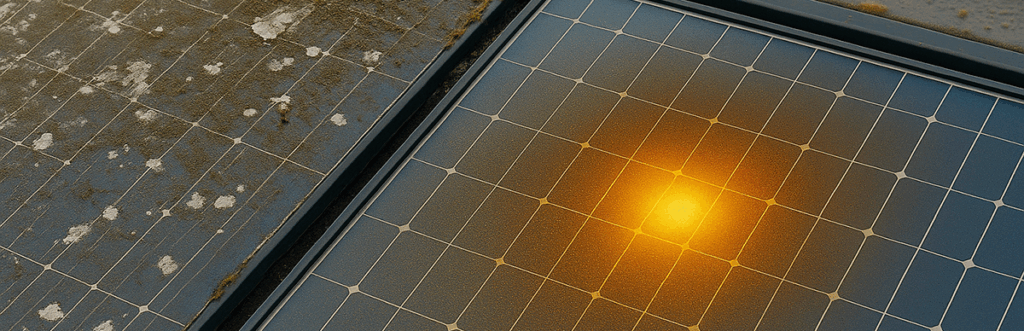
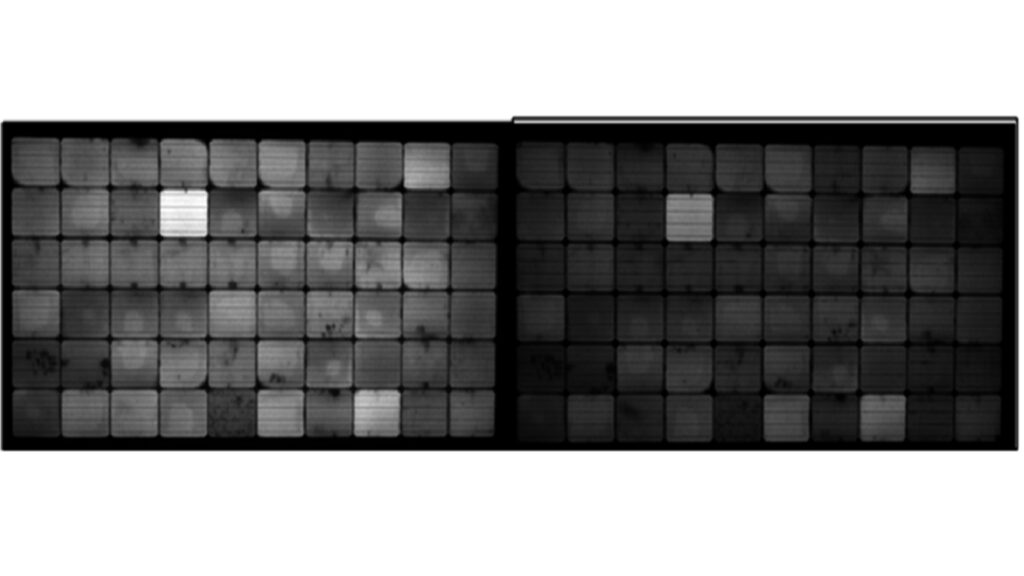
How to identify and respond to hotspots and PID effects in PV modules? This article focuses on the European market, combining detection technologies, real-world cases, and protection strategies to provide developers and investors with reliable loss warnings and yield protection solutions.
Posted by By Brian May 22, 2025Posted inAbout Solar Panel, All Blogs, Industrial News
PID (Potential Induced Degradation) effect

Understanding the PID (Potential Induced Degradation) effect: Extending the Use of Solar Panels

Solar panel installation is a long-term investment. A one-time purchase can provide consumers with a permanent source of electricity. The average lifespan of currently available crystalline silicon solar panels is 25-30 years. So, what factors affect the service life of solar panels? For…
Posted by By Brian July 7, 2023Posted inAbout Solar Panel, All Blogs, Maysun Client Story, Solar Technology

Recent Posts

  • 430–460W or 600W+? How Should You Choose Solar Panel Power for Rooftop Projects?
  • Changes in the European Solar Policy and Market in 2026
  • Why European EPCs Are Reassessing Large-Format Solar Panels
  • Do Vertical Bifacial Modules Really Deliver Additional Yield?
  • Which rooftop scenarios make 700W+ solar panels a risk?

Categories

  • 1/3-Cut-Technology
  • About Solar Panel
  • All Blogs
  • Application Scenarios
  • Fundamentals
  • Industrial News
  • Installation & O&M
  • Market & Policy Insights
  • Maysun Client Story
  • Maysun News
  • Others
  • PV Policy
  • PV Price
  • PV Risk
  • Solar PV Risks
  • Solar Technology
  • Technology & Products

Make Energy Sustainable, Make Life Better

About Us
Development History
What We Believe

Youtube Review

Our Blog
About Solar Panels
Solar Technology
Customer Cases

All Products
By Technology
IBC Solar Panel
HJT Solar Panel
N-TOPcon Solar Panel
Balcony PowerStaiton

Address:
Room 503-504, 10th Building, Kuamao City, Hangzhou, Zhejiang, China

Trends
Bifacial Solar Panel
Double Glass Solar Panel
Full Black Solar Panel

Applications
Commercial and Industrial
Residential photovoltaic
Agrivoltaics

Copyright 2026 — Professional Distributed PV Module Manufacturer. All rights reserved.
Scroll to Top
  • English