
PV Module Installation Beyond Rooftops: Multi-Scenario Applications for Bifacial N-Type Modules in Europe

Shading can directly affect both front-side and rear-side generation performance of bifacial PV modules.

PV module installation is not limited to rooftops. For residential users, small commercial users and distributed PV projects in Europe, spaces such as balconies, gardens, fences, carports, terraces, façades and pergolas can also provide additional installation areas when conditions allow.

As solar use in buildings receives more attention across Europe, new buildings, public buildings, home renovations and small distributed PV systems are all looking for more flexible installation options. However, different spaces require different module choices. Small balconies place more emphasis on module size, weight and fixing methods. Gardens, carports and pergolas are better suited for evaluating bifacial generation potential. Fences and façades require closer attention to wind load, visual integration and shading.

The long-term performance of a system does not depend simply on higher module power. It depends on whether the installation space, structural conditions and module technology are properly matched.

Table of Contents

1. Where can PV modules be installed beyond rooftops?

Rooftops remain the most common location for residential and distributed PV systems in Europe, but they are not the only option. When roof space is limited, orientation is poor, load capacity is restricted or long-term shading is present, users can treat the PV system as a small distributed energy combination rather than a single rooftop project.

1.1 Balconies and terraces: Suitable for small self-consumption systems

Balconies and terraces are suitable for small self-consumption systems. The priority is not maximum power, but suitable module size, manageable weight, safe mounting and daily usability.

Rules for balcony PV systems, plug-in solar devices, inverter capacity, grid registration and installation methods vary across European countries. Before installation, users should always check local requirements.

For these spaces, module selection should not focus only on wattage. It is also necessary to check whether the module can be securely fixed, whether it affects daily use, whether wind protection is sufficient and whether property or building management rules apply.

1.2 Gardens and ground-mounted supports: Flexible angles, but careful planning needed

Gardens, courtyards and ground-mounted supports offer more flexibility in installation angle and usually better ventilation. If the ground surface is light-coloured paving, concrete or another reflective material, the rear-side generation potential of bifacial modules is worth evaluating.

However, ground installation does not mean modules can simply be placed anywhere. Before installation, users should check shading changes, foundation stability, cable routing, maintenance space, property boundaries and local installation requirements.

1.3 Fences, façades and exterior walls: Using vertical spaces

Fences, building façades and exterior walls can make use of vertical spaces that are often unused. They can serve as supplementary areas for distributed PV systems.

However, vertical installation should not simply copy rooftop yield expectations. These scenarios require careful assessment of:

  • Mounting strength;
  • Wind load;
  • Rear-side ventilation;
  • Local shading;
  • Visual coordination;
  • Maintenance access.

If the rear side of the module is placed very close to a wall or is blocked by the structure, the bifacial gain will be limited.
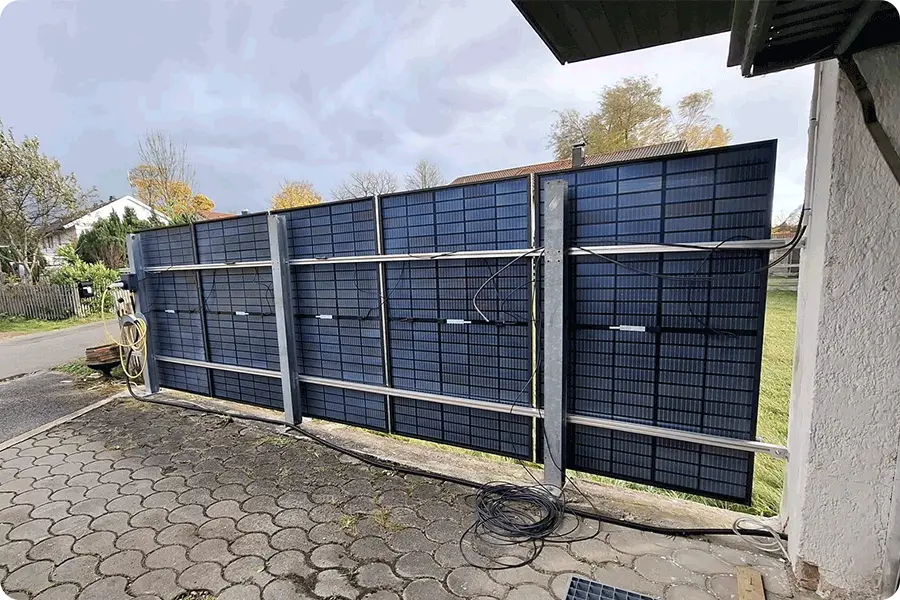
PV modules installed on a fence, showing a European residential solar application beyond the rooftop

1.4 Carports, pergolas and outdoor structures: Combining shading, protection and power generation

Carports, pergolas and outdoor structures are among the more suitable scenarios for bifacial N-type modules. These structures usually provide a certain installation height and open rear-side space. They can offer shading, protect vehicles or outdoor areas, and increase usable PV installation area.

Still, the project should confirm structural load capacity, drainage, wind resistance, cable routing and maintenance access. For applications exposed to long-term sunlight, high temperatures or higher stability requirements, TOPCon and HJT N-type module technologies can also be compared.

2. How do different installation scenarios affect module selection?

Different scenarios should not use the same module selection logic. Balconies, fences and façades are more sensitive to weight, mounting methods and appearance. Gardens, carports and pergolas require more attention to tilt angle, ventilation, reflection conditions and maintenance space.

Before comparing module power and technology, users should first determine whether the space can support stable long-term operation.

2.1 Area and load capacity determine module size

The more limited the available space, the more important module size and weight become. Small balconies, narrow fences, façade corners and irregular terraces should prioritise modules with moderate size, controlled weight and mature mounting methods.

Open spaces such as carports, garden supports and pergolas can further evaluate medium- to high-power modules and bifacial N-type modules.

Installation space

Key module selection factors

Balcony / terrace

Size, weight, mounting method

Fence / façade

Wind load, appearance, rear-side space

Garden / ground support

Tilt angle, ventilation, reflection conditions

Carport / pergola

Load capacity, drainage, wind resistance, bifacial gain

Outdoor structure / auxiliary building

Roof area, mounting method, connection route

2.2 Shading and reflection determine actual power generation

Shading in multi-scenario PV installation is often more complex than on rooftops. Balconies may be shaded by the floor above. Gardens may be affected by trees. Fences and façades may be shaded by neighbouring buildings, railing structures or walls.

Shading affects not only front-side generation, but also the rear-side light conditions of bifacial modules. If the installation environment has a light-coloured surface, concrete paving, open rear-side space and limited shading, bifacial modules are worth considering. If the module rear side is close to a wall or blocked for long periods, bifacial yield will be restricted.
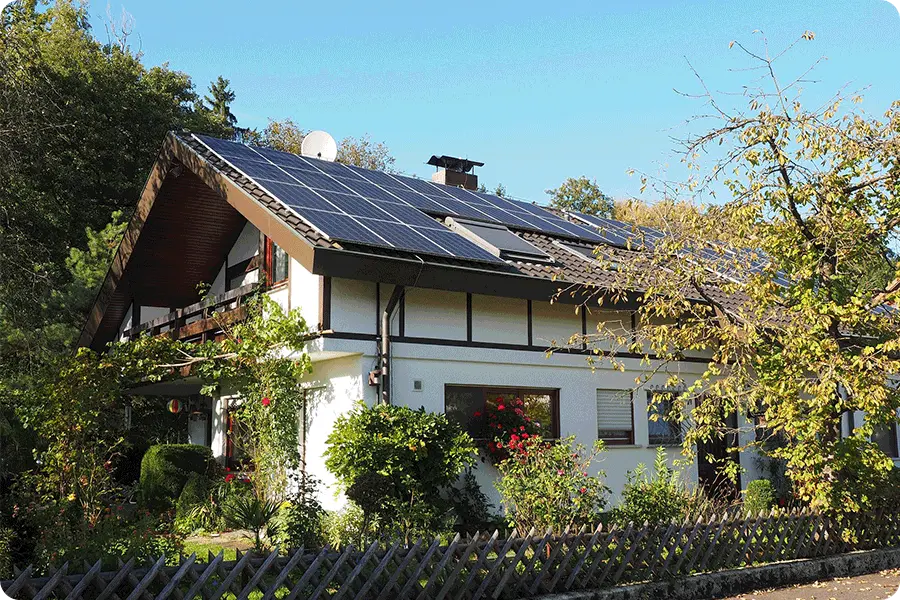
Shading can directly affect both front-side and rear-side generation performance of bifacial PV modules.

2.3 Mounting methods determine long-term safety

Balconies, fences, façades, carports and pergolas all require different mounting methods. They should not simply follow rooftop mounting logic.

  • Balconies require checks on railings, walls, wind protection and property rules;
  • Fences and façades require checks on wind load, appearance and maintenance access;
  • Carports and pergolas require checks on structural load, drainage, wind resistance and cable routing;
  • Ground-mounted supports require checks on foundation stability, tilt angle, shading and maintenance space.

Across Europe, requirements may vary by country, city and property environment. Installation should be assessed according to local rules and actual structural conditions.

3. When are bifacial N-type modules more valuable?

Bifacial N-type modules can be included in multi-scenario PV module selection, but they are not suitable for every location. Their value depends on rear-side light exposure, installation height, reflection environment and long-term operating stability.

If the module rear side is close to a wall, heavily shaded or poorly ventilated, the bifacial advantage will be limited.

3.1 Bifacial modules: Better suited for open spaces with good reflection

The value of bifacial modules comes not only from front-side generation, but also from additional rear-side light absorption. Therefore, they are more suitable for garden supports, carports, pergolas and open outdoor structures.

If they are installed on balconies, façades or fences, users need to check whether the rear side can actually receive usable light. If the rear side is too close to a wall or blocked by the structure, bifacial value decreases. In such cases, module size, weight and mounting safety become more important.
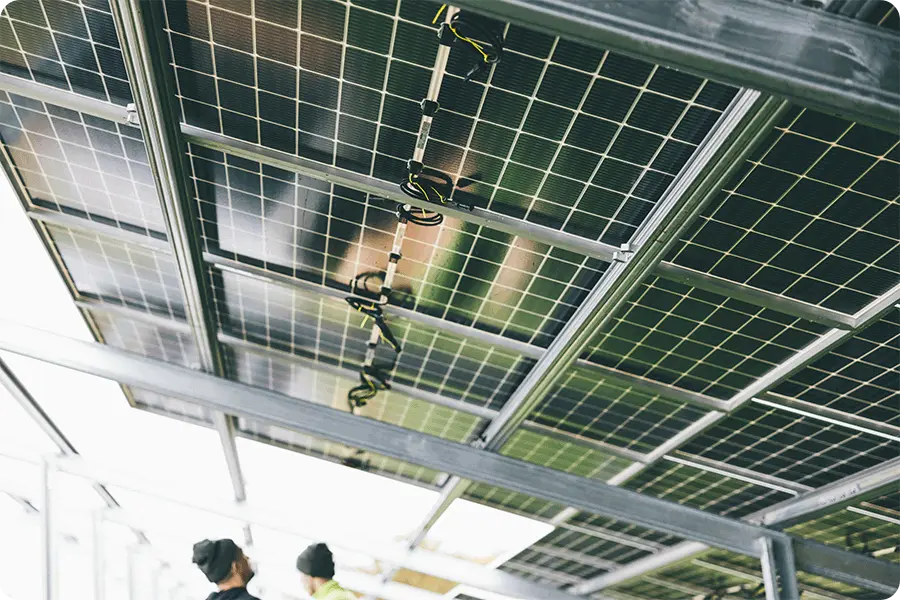
Bifacial PV modules can better use rear-side light in open spaces with suitable reflection conditions.

3.2 TOPCon modules: A balanced option for efficiency, cost and general use

TOPCon modules are a practical general-purpose choice for multi-scenario PV installation. They can be used for balconies, terraces, garden supports, auxiliary buildings and some carport projects.

Their advantage lies in broad applicability and a good balance between efficiency, cost, size and supply stability. For European residential users and small distributed PV users who mainly want to expand self-consumption capacity rather than pursue the highest-performance configuration, TOPCon is often a suitable starting point.

3.3 HJT modules: Suitable for bifacial gain and long-term stability

HJT modules are better suited for open, well-ventilated spaces, long-term sun exposure or applications affected by higher temperatures. Typical scenarios include carports, pergolas, open garden supports and higher-standard distributed PV projects.

If the installation environment offers good rear-side light and reflection conditions, the bifacial performance, temperature behaviour and long-term stability of HJT modules are worth comparing. The final choice should still consider budget, mounting method, module size and system goals, rather than relying only on technical parameters.

3.4 IBC modules: Suitable for aesthetics and architectural coordination

In some European residential and building-related applications, module appearance is also an important factor. IBC modules have no visible front busbars, giving them a cleaner and more uniform appearance. They are suitable for projects with higher requirements for aesthetics, anti-glare performance and architectural coordination.

For terraces, façades, fences, garden buildings, carports or visible living areas, IBC modules can be considered when users want the PV system to better integrate with the building environment.
4. How should module size, power and mounting methods be matched to different spaces?

Only after area, load capacity, shading, reflection and mounting conditions are clear should users move into detailed module matching. PV module installation beyond rooftops should not focus only on power. Module size, weight, technology and installation limits should match the actual space.

4.1 Balconies, terraces, fences and façades: Prioritise light weight, stable mounting and visual fit

For small spaces such as balconies, terraces, fences and façades, users should first check whether the module fits, whether it can be fixed securely and whether maintenance is convenient. Oversized modules increase handling, mounting and wind resistance requirements, and may also affect building appearance.

These scenarios are usually not suitable for selecting modules based only on high power. If rear-side light is limited, bifacial value also decreases. The main selection criteria should be size matching, controlled weight, reliable mounting and long-term safety.

4.2 Gardens and ground-mounted supports: Flexible layout and bifacial evaluation

Gardens and ground-mounted supports offer more flexible installation angles and better ventilation. They also allow the layout to be adjusted according to sunlight direction. If the ground has good reflection conditions and surrounding shading is limited, bifacial N-type modules are worth evaluating.

These scenarios can use medium- to high-power modules depending on available space, and are also suitable for comparing N-type technologies such as TOPCon and HJT. Before installation, users should still confirm foundation stability, ground conditions, shading changes, cable distance and maintenance space.

4.3 Carports, pergolas and auxiliary buildings: Supplementary power generation spaces

Carports and pergolas usually have a certain height and open rear-side space, making them suitable for bifacial N-type modules. The modules not only generate electricity, but also affect shading, protection, drainage and structural safety.

Auxiliary buildings, outdoor structures and small secondary roofs can also serve as supplementary generation areas beyond the main rooftop system. Selection should be based on available roof area, load capacity, mounting method and connection route, rather than single-module power alone.

Selection logic for different installation scenarios

Installation scenario

Selection focus

Suitable direction

Balcony / terrace

Size, weight, mounting method

Small or medium-sized modules

Fence / façade

Appearance, wind load, rear-side space

Stable mounting first

Garden / ground support

Tilt angle, ventilation, reflection conditions

Medium- to high-power or bifacial modules

Carport / pergola

Structural load, drainage, wind resistance

Bifacial TOPCon / HJT

Auxiliary building / outdoor structure

Roof area, load capacity, connection route

Supplement to main system

Visible architectural space

Appearance, anti-glare, visual integration

IBC or full-black modules

5. What should European residential and distributed PV users check before installation?

Before asking for module quotations, users should first confirm whether the space is suitable for long-term installation. Shading changes, neighbouring boundaries, access needs, future renovations, maintenance routes and mounting methods can all affect whether the project is practical.

5.1 Check the space before selecting the module

Users should first assess whether the space can remain stable and usable over the long term. If the space itself is unstable, it may not be suitable as a long-term generation area, even if installation is possible in the short term.

This is especially important for fences, balconies, outdoor structures and exterior walls, where structural boundaries, fixing positions, wind resistance and maintenance access should be confirmed in advance.

5.2 Requirements for different installation scenarios should not be mixed

Across Europe, requirements for small PV systems, balcony PV, building façades, carports, ground-mounted supports and grid registration vary by country and location. Even when they all fall under distributed PV, different installation positions may involve different rules, property agreements, building management requirements and electrical connection procedures.

Users should not apply the rules of one installation scenario directly to another. Before formal installation, local requirements should be checked separately.

Checklist for different installation positions

Installation position

Points to check before installation

Balcony

Local small PV rules, mounting method, wind protection, property requirements

Garden support

Shading, foundation fixing, cable distance, maintenance space

Fence

Wind load, boundary relationship, fixing strength, visual impact

Carport / pergola

Load capacity, drainage, wind resistance, possible building permit

Façade

Mounting system, ventilation, fire safety and building appearance

Auxiliary building

Roof load, connection route, long-term maintenance access

5.3 Suppliers should support multi-scenario module selection

For multi-scenario PV installation, users often need to compare different module sizes, power ranges and technology routes. Suppliers with TOPCon, HJT and IBC module options can help users understand module differences from an application perspective.

The focus is not brand promotion, but a practical selection method: check the scenario first, then choose the module. Different technologies suit different installation limits. A more reliable selection comes from combining space conditions, generation goals and mounting methods.

6. Conclusion

Rooftops remain the most common installation location for residential and distributed PV systems, but they are not the only option. Balconies, gardens, fences, carports, terraces, façades and outdoor structures can also help expand usable generation area when load capacity, mounting, wind resistance and maintenance conditions are suitable.

The core of multi-scenario PV installation is not simply adding more modules. It is about matching the installation position, structural conditions and module technology.

Bifacial N-type TOPCon and HJT modules are worth evaluating in open spaces, reflective environments or applications requiring higher long-term stability. IBC modules are more suitable for projects with higher requirements for aesthetics, anti-glare performance and architectural coordination. For structurally sensitive spaces such as balconies, fences and façades, module size, weight, mounting method and local installation requirements should be checked first.

There is no single answer for multi-scenario PV applications in Europe. A more practical approach is to select a module solution based on the actual space, local rules and long-term usage goals.

FAQ: Common questions about multi-scenario PV installation

Can PV modules only be installed on rooftops?

No. Rooftops are the most common location, but balconies, gardens, fences, carports, terraces, façades and outdoor structures can also be used for PV module installation when structural and regulatory conditions allow.

Which spaces beyond rooftops are suitable for PV modules?

Common options include balconies, terraces, gardens, ground-mounted supports, fences, building façades, carports, pergolas, outdoor structures and auxiliary buildings. Each space has different requirements for module size, weight, mounting method and shading conditions.

Are bifacial N-type modules suitable for all installation scenarios?

No. Bifacial N-type modules are better suited for scenarios with rear-side ventilation, good reflection conditions and limited shading, such as carports, outdoor structures, open garden supports and some ground-mounted applications. If the module rear side is close to a wall or blocked, bifacial gain will be limited.

What is the difference between TOPCon, HJT and IBC modules in multi-scenario installation?

TOPCon is suitable for scenarios that require a balance between efficiency, cost and general applicability. HJT is better suited for applications that value bifacial gain, temperature performance and long-term stability. IBC is more suitable for projects where appearance, anti-glare performance and architectural coordination matter. The final choice should depend on installation position, reflection conditions, budget, module size and system goals.

Why should PV module selection not focus only on power?

High-power modules are usually larger and heavier. They may not be suitable for balconies, fences, façades or load-sensitive outdoor structures. Multi-scenario installation should place more emphasis on module size, mounting method, fixing conditions, shading and maintenance convenience.

Maysun Solar supplies PV modules based on IBC, TOPCon and HJT technologies for the European market, suitable for residential, distributed and multi-scenario PV systems. We help partners select module types and system configurations according to project space, installation conditions and technical requirements.

References

  1. European Commission, Energy Performance of Buildings Directive, 28 May 2024
    https://energy.ec.europa.eu/topics/energy-efficiency/energy-performance-buildings/energy-performance-buildings-directive_en
  2. IEA PVPS, Bifacial PV Tracking Systems: An International Overview, 12 September 2024
    https://iea-pvps.org/wp-content/uploads/2024/08/18_IEAPVPS-bifacial-tracking-1.pdf

Comments

No comments yet. Why don’t you start the discussion?

Leave a Reply

Your email address will not be published. Required fields are marked *