EU Solar PV Capacity Surpasses 334 GW, Renewable Share Reaches 47.3%

EU Solar PV Capacity Surpasses 334 GW, Renewable Share Reaches 47.3%

1. Solar PV Capacity Reaches 334 GW as Renewable Share Hits Record High

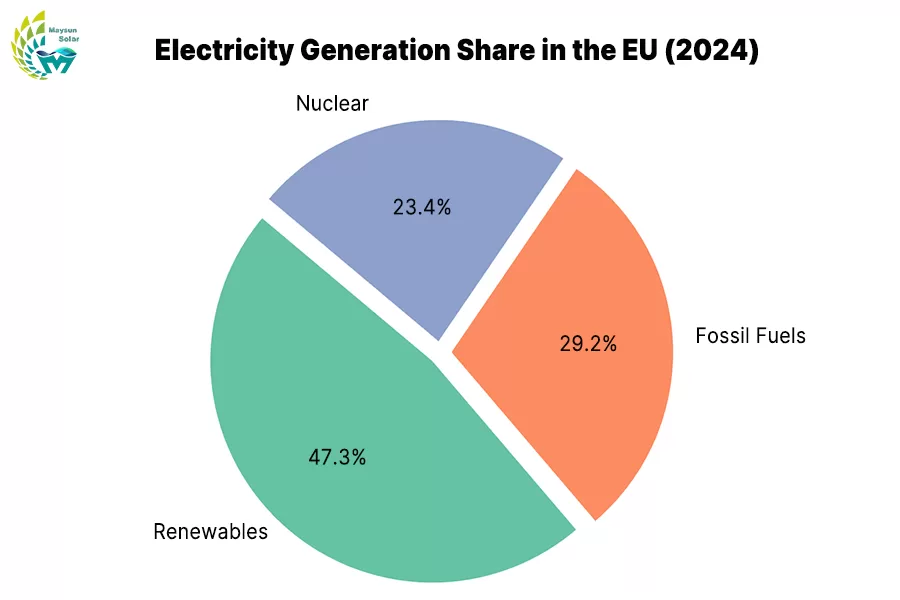
In 2024, the continued growth of solar PV and renewable energy in the EU further advanced the decarbonization of the energy mix. According to preliminary data from Eurostat, renewables accounted for 47.3% of total electricity generation—an increase of 7.7 percentage points year-on-year and a historic high. Solar PV led the way among new clean energy sources, with cumulative capacity reaching 334 GW.

At the same time, the share of fossil fuel-based power generation fell to 29.2%, the lowest level on record. Consumption of lignite and hard coal declined by 10% and 13.8%, respectively, highlighting a systemic shift away from high-carbon energy. This structural transformation marks the transition of solar PV from a marginal supplement to a core element of the EU power system, laying the groundwork for achieving climate neutrality by 2050.

Electricity Generation Share in the EU (2024)

Note: In 2024, the share of solar PV and renewables in the EU electricity mix reached new highs (source: preliminary Eurostat data). For the first time, renewables surpassed 47%, while fossil fuels dropped below 30%, signaling a critical turning point in the EU energy structure.

2. Growth in Solar and Renewables Accelerates Energy System Transformation

The development of renewable energy in the EU is expanding beyond electricity generation into the broader energy system. In 2024, total renewable electricity output reached 1,310 TWh, accounting for 47.3% of the power mix. Meanwhile, the overall renewable energy supply rose by 3.4% year-on-year, reaching 11.3 million terajoules (TJ). Penetration of clean energy continues to grow in heating, transport, and other sectors, gradually building cross-sectoral system support.

While natural gas supply experienced a slight rebound (+0.3%), the overall trend remains stable and unlikely to reverse its long-term decline. Nuclear power generation increased by 4.8%, reaching a 23.4% share of electricity output. It now works alongside renewables to form a non-fossil-dominated energy structure that delivers both stability and decarbonization.

As solar, wind, and energy storage infrastructure continue to expand, the EU’s energy dispatch model is undergoing a fundamental shift—from a centralized supply system to a more distributed, regionally coordinated, and multi-load configuration. The underlying architecture of the energy system is being redefined.

3. EU’s 90% Emissions Reduction Target Offers Long-Term Certainty for Solar Investment

In July 2025, the European Commission officially proposed a legislative draft to make the goal of a 90% net reduction in greenhouse gas emissions by 2040 (compared to 1990 levels) a legally binding mid-term target. The proposal has passed scientific advisory review and impact assessment, marking a critical shift from political commitment to institutional implementation.

For energy project developers and long-term capital, this legislative target provides a clear and predictable investment pathway. In 2024, renewable energy PPA contracts in Europe totaled 19 GW, with solar and wind accounting for approximately 80%. About two-thirds of these deals were signed by corporate offtakers, indicating strong market confidence in long-term policy signals.

Energy storage deployment is also accelerating. Around 12 GW of new capacity was added during the year, bringing the cumulative total to 89 GW, further improving the system resilience of clean energy projects. Meanwhile, Germany, Italy, Spain, and other member states are integrating the 2040 climate target into their national plans, using tools such as PPA incentives, storage subsidies, and grid connection reforms to reduce development risks and strengthen market alignment.

4. Solar Power Becomes a Key Focus for Corporate Long-Term Renewable Energy Investment

Amid the ongoing evolution of energy policies and market structures, solar PV is shifting from a short-term cost-cutting tool to a key asset allocation strategy for corporate sustainability. In 2024, more than two-thirds of new renewable energy PPAs in Europe were signed by corporate users, with solar projects accounting for over 70%, underscoring its significant role in the commercial energy sector.

The cost-driven logic remains valid. According to data from Ember and Fraunhofer ISE, the average electricity price for EU commercial users is in the range of €0.18–0.22/kWh, while the LCOE for solar PV has dropped to €0.04–0.07/kWh, with most projects achieving an investment payback period of 6–8 years, ensuring a solid cash flow foundation.

In the financial markets, solar PV is gaining wider recognition. In 2024, clean energy accounted for 48% of green bond financing, and solar assets are gradually being included in the portfolios of mainstream institutions. Some companies are integrating solar PV deployment into their CSRD and ESG compliance frameworks, linking it to self-consumption rates and carbon footprint factors as part of their long-term operational strategies.

An increasing number of companies are now incorporating solar PV into their long-term energy strategies, not just for cost reduction, but as a structural asset that provides financial stability and compliance support.

Since 2008, Maysun Solar has been both an investor and manufacturer in the photovoltaic industry, providing zero-investment commercial and industrial rooftop solar solutions. With 17 years in the European market and 1.1 GW of installed capacity, we offer fully financed solar projects, allowing businesses to monetize rooftops and reduce energy costs with no upfront investment. Our advanced IBCHJT and TOPCon panels, and balcony solar stations, ensure high efficiency, durability, and long-term reliability. Maysun Solar handles all approvals, installation, and maintenance, ensuring a seamless, risk-free transition to solar energy while delivering stable returns.

Reference

Eurostat. (2024). Energy statistics – supply, transformation and consumption. Statistical Office of the European Union. https://ec.europa.eu/eurostat/web/energy/data/database

Fraunhofer ISE. (2024). Photovoltaics Report. Fraunhofer Institute for Solar Energy Systems ISE. https://www.ise.fraunhofer.de/en/publications/studies/photovoltaics-report.html

Ember. (2024). European Electricity Review 2024. Ember Climate Intelligence. https://ember-climate.org/insights/research/european-electricity-review-2024/

Wood Mackenzie. (2024). Europe Corporate PPA Market Outlook. Wood Mackenzie Power & Renewables. https://www.woodmac.com/

Recommend Reading

1 Comment

  1. Elena

    It’s impressive to see solar PV playing such a major role in pushing EU renewables to a record 47.3% of electricity generation. I’m curious how grid infrastructure is evolving to handle this much variable energy input.

Comments are closed