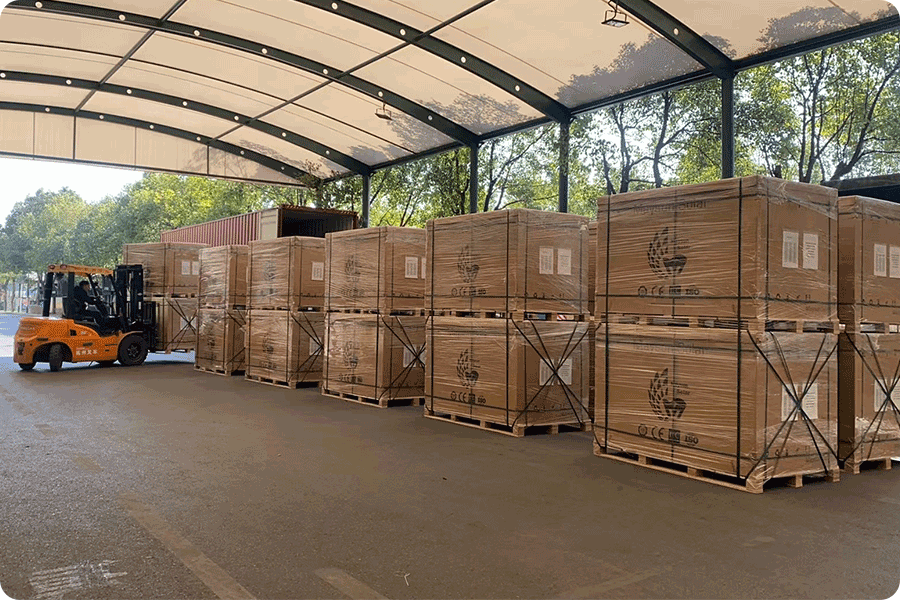
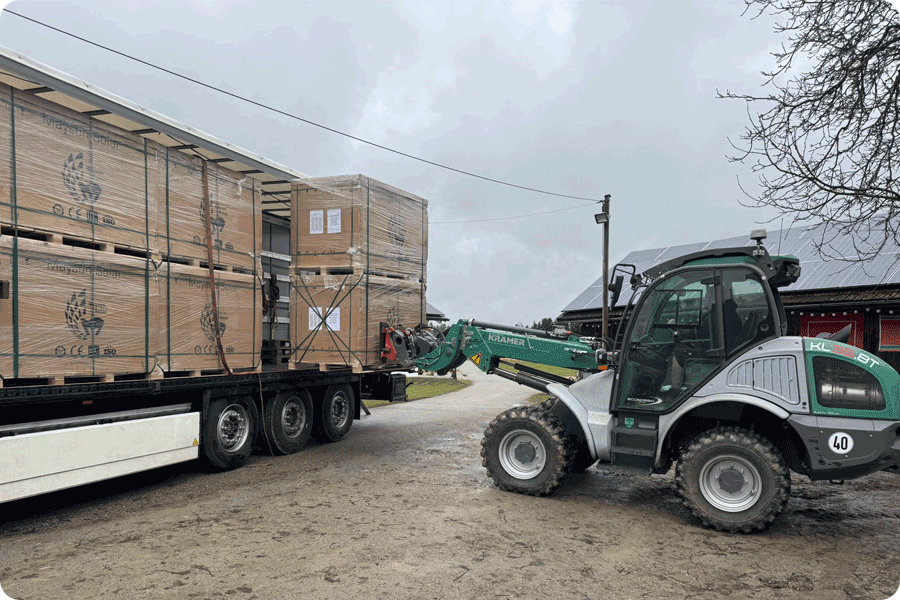
For installers, solar panel procurement should not be based only on the price per watt. Delivery delays can affect installation scheduling, customer acceptance and project payment; if the model, documentation or issue-handling process is unclear, low-cost solar panels may also lead to higher project execution costs.
Table of Contents
Why Do Low-Cost Solar Panels Not Always Mean Lower Project Costs?
For installers, the lowest price per watt does not necessarily mean the lowest overall project cost.
The unit price of a solar panel is only part of procurement cost. Project margins also depend on delivery stability and the conditions for later execution.
If the panels are cheaper but the delivery time is unclear, the model may change, or documentation is incomplete, installers may later face rescheduled work, more communication, delayed acceptance and slower payment collection.
Low-cost solar panels can still be a good purchase, provided that stock, delivery time, model, documents and issue-handling procedures are confirmed in advance.
Whether a low price has real value depends on whether the delivery conditions are clear.
How Can Delivery Delays Disrupt Installation Schedules and Payment Collection?
If solar panels do not arrive as planned, installation schedules, customer acceptance and project payment timelines can be directly disrupted.
Installation teams usually arrange their work windows based on expected delivery dates. If the panels arrive late, the original plan has to be rescheduled, affecting labour, equipment and follow-on projects. For small and medium-sized installers with tighter schedules, a delay in one project may compress delivery time for several other customers.
Acceptance and payment collection are also pushed back. If the delay is combined with model changes or incomplete documents, the installer must reconfirm technical parameters, paperwork and customer explanations.
Even when the delay comes from the supply chain, customers usually contact the installer first. Appointment changes, explanation costs and loss of trust eventually turn into scheduling costs, communication costs and cash flow pressure.
When Can Low-Cost Procurement Increase Project Risk?
The real risk in low-cost procurement is unclear supply conditions.
If the low price is linked to genuine stock, clearance inventory or a clearly defined promotion, and the stock, delivery time, model and documents can all be confirmed in advance, it can still help installers control costs.
Risk usually comes from opaque supply conditions:
- Stock is claimed to be available, but the warehouse location cannot be confirmed;
- A price is provided, but the delivery time cannot be secured;
- Only the power range is stated, but the exact model cannot be confirmed;
- Documents need to be provided later, and the issue-handling process is not explained in advance.
The problem with this kind of low price is that installers cannot judge whether the order conditions may still change after purchase. When the conditions are unclear, a low price can turn from a procurement advantage into execution uncertainty.
To decide whether a low price is worth accepting, installers should not look only at the quotation. They should also check whether the conditions can be confirmed. Only when stock, delivery time, model, documents and issue handling are all clear is a low price more likely to become a real cost advantage.
How Should Installers Assess Delivery Reliability Before Placing an Order?
Before placing an order, installers should focus on whether the delivery information is clear.
Reliable delivery does not always mean the fastest delivery. What matters more is predictability.
A clear delivery time makes installation windows easier to plan; a stable model avoids repeated adjustments to project documents; complete documentation supports smoother acceptance and after-sales work; clear handling rules make exceptions easier to coordinate.
Before ordering, installers can focus on confirming:
- Whether the delivery time is clearly defined;
- Whether stock availability can be verified;
- Whether the model is stable;
- Whether technical documents are complete;
- Whether the handling process is clear in case of delays, damage or model changes.
When choosing a supplier, installers should not look only at the price per watt. They should also assess whether the supplier’s delivery arrangements can support the project schedule.
Stable delivery is not an extra condition, but part of project cost control.
Solar Panel Delivery Times and Installer Procurement FAQs
Why should installers not look only at the price per watt when buying solar panels?
The price per watt only reflects procurement cost, not total project cost. If delivery time, model, documents or responsibility boundaries are unclear, they may later affect scheduling, acceptance and payment collection.
What impact can solar panel delivery delays have on installers?
Delivery delays can disrupt installation windows, team planning, customer appointments, acceptance milestones and payment collection. They can also increase communication pressure.
Are low-cost solar panels always risky?
Not necessarily. A low price may come from available stock, clearance inventory or a promotion. The real risk is when stock, delivery time, model, documents and issue-handling procedures cannot be confirmed.
How should installers assess delivery reliability before placing an order?
They should focus on confirming whether the delivery time is clear, stock can be verified, the model is stable, technical documents are complete, and how delays, damage or model changes will be handled.
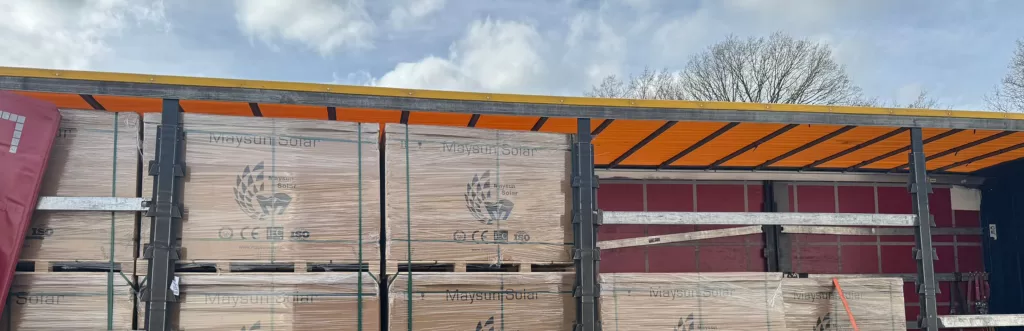
As a solar panel manufacturer, Maysun Solar provides direct panel supply, European warehouse stock and full-pallet project supply support for installers, distributors and commercial and industrial solar projects across Europe. For projects with higher requirements for delivery time, model stability and document completeness, Maysun Solar can help confirm stock, delivery arrangements and panel documents in advance, reducing procurement and delivery risks.
Recommend reading

August European Solar Industry News
In August 2026, Europe’s solar market combined record PV generation with volatile power prices driven by heat, gas costs and low wind output. Policy support also expanded, including 800 W plug-in solar in Great Britain and greater EU flexibility for PV and storage investments, while module prices largely stabilized amid renewed oversupply.
Industrial Roofs with Limited Load Capacity: Lightweight or High-Efficiency Solar Panels?
On an existing industrial roof, “lighter is better” is not a reliable module-selection rule. The first question is how much additional load the roof can safely accept. Only then does it make sense to compare module weight, power density, mounting method and the

How to Verify Solar Panels Before Buying: Datasheets, Certifications, Warranties and Delivery Inspection
A datasheet, an IEC certificate and a 25- or 30-year warranty can make a solar module look fully validated on paper. For a reliable purchasing decision, however, those documents are only the starting point. The electrical ratings, mechanical design, certificates, connectors, warranty terms

How to Choose Solar Panels for Low-Load-Bearing Industrial Roofs: A Guide to Weight, Power Density and Mounting Systems
Choosing solar panels for a low-load-bearing industrial roof requires more than checking the weight of an individual module. A more reliable process starts by determining the roof’s remaining load-bearing capacity. The complete load from the modules, rails, fasteners and ballast must then be

Why Do Solar Panels Lose Power in Hot Weather? How Temperature Coefficient and Roof Ventilation Affect Summer Energy Yield
Summer brings stronger sunlight and longer daylight hours, so it is normally one of the most productive seasons for a solar system. However, some system owners notice that solar panel output does not continue to rise during the hottest part of the day.

How to Design a Low-Maintenance Rooftop Solar System
Introduction A low-maintenance rooftop solar system is not created after installation. It is designed before installation. Over a 20–30 year operating life, rising O&M costs are rarely caused by dirty glass alone. They are more often caused by design decisions made at the