
Table of Contents
Europe’s Power Price Volatility Widens as Italy Remains at a High Level
In Q4, the European renewable energy market entered a seasonal transition marked by intensified electricity price fluctuations and clear shifts in supply and demand. In October, power prices across Europe showed a volatile trend, with Italy’s Single National Electricity Market rising sharply mid-month, temporarily surpassing €100/MWh and remaining among the highest in major markets. Analysts generally attribute this to temperature variations, natural gas price swings, and the seasonal decline in hydropower and wind generation.
Data from several energy agencies show that in the final week of October, most European power markets recorded week-on-week increases. The UK and Italy posted moderate gains of around 1%, while the Nordic, Portuguese, and Spanish markets saw stronger rebounds, with prices up by roughly 40% compared to the previous week.
Intra-day dynamics also highlighted regional disparities. The UK and Italy experienced mild fluctuations, while markets in Northern Europe and the Iberian Peninsula were far more volatile. By the end of the month, France’s electricity price briefly fell to €22/MWh, the lowest of the week. In contrast, Italy’s market stayed above €100/MWh for several consecutive days, peaking near €124/MWh at month’s end. Portugal and Spain also saw short-term spikes, while Nordic power prices hit a two-month high of about €75/MWh on October 29.
The price trajectory was closely linked to renewable energy generation. In mid- to late October, multiple European countries faced consecutive storms; dense cloud cover and adverse weather conditions reduced solar PV output by roughly 8–17% compared to seasonal averages. Although wind generation increased temporarily, it could not fully offset PV fluctuations across all time periods, increasing pressure on grid balancing. In France, a seasonal rebound in electricity demand further contributed to upward price movement.
Overall, as renewables occupy a growing share of Europe’s power mix, the system’s sensitivity to weather variability has significantly increased. Flexibility and market resilience have become central issues, prompting renewed focus on energy storage deployment, demand-response mechanisms, and interregional transmission capacity. Some energy-intensive companies have already taken proactive steps—boosting self-consumption ratios, expanding storage capacity, and reassessing power purchase agreements—to hedge against sustained price volatility.
Europe Advances Local Module Manufacturing, but Cost Remains a Key Variable
As energy security and supply chain resilience continue to gain attention, the industry is once again focusing on cost calculations and policy pathways. Several agencies and industry forums have mentioned that if raw material supply, automation equipment, and capacity utilization reach a certain level, local production costs could potentially fall to around €0.11 to €0.12 per watt. Currently, there are exploratory discussions around a €0.15 per watt cost model, with the central question being whether large-scale factories can sustain this level.
This assessment has led the industry to re-evaluate the competitiveness of European manufacturing. In recent months, the market has remained highly dependent on imported modules, with low-priced inventory present in the supply chain, and manufacturers facing significant pressure. Several agencies believe that current prices are nearing the bottom of the cycle, and after multiple rounds of adjustments, producers are adopting more cautious production scheduling strategies. The market expectation is that the focus will shift from price competition to supply-demand rebalancing.
At the same time, signals from the policy side are also emerging. In early October, the EU once again called for accelerating the local solar manufacturing support program, with discussions focusing on operational subsidies and market access tools to provide a clearer planning environment for domestic capacity. Industry associations have pointed out that the pace of policy implementation will directly affect investment decisions and production line layouts. Austria launched a new round of its “solar + storage” subsidy program this month, offering additional rewards for “European-made modules”, further reinforcing the policy inclination toward domestic production.
However, market activity remains cautious. Some developers have secured supplies at lower prices in advance, while other companies continue to wait for policy details and new capacity progress, with a more conservative procurement strategy. The industry generally believes that the sustainability of local manufacturing does not solely depend on a single cost figure but also involves factors such as capacity utilization, supply chain development, energy prices, and the financing environment. The current discussions seem more like a reassessment in the context of a price-bottom cycle and industrial restructuring, rather than a signal for immediate acceleration.
Policy Trends and the Move Towards Distributed Solar: Residential Incentives, Façade Applications, and Agricultural PV
In France, the 5.5% VAT reduction for residential solar systems has entered its implementation phase. The first batch of solar modules meeting carbon emission standards has been certified by Certisolis. This includes several modules produced by Voltec Solar, as well as products from DMEGC Solar and JinkoSolar, all of which meet the requirement of a carbon footprint of around 530 kg CO₂ per peak kilowatt. This development has made manufacturing traceability and low-carbon certification an actual threshold for entering the residential market, with clearer policy direction.
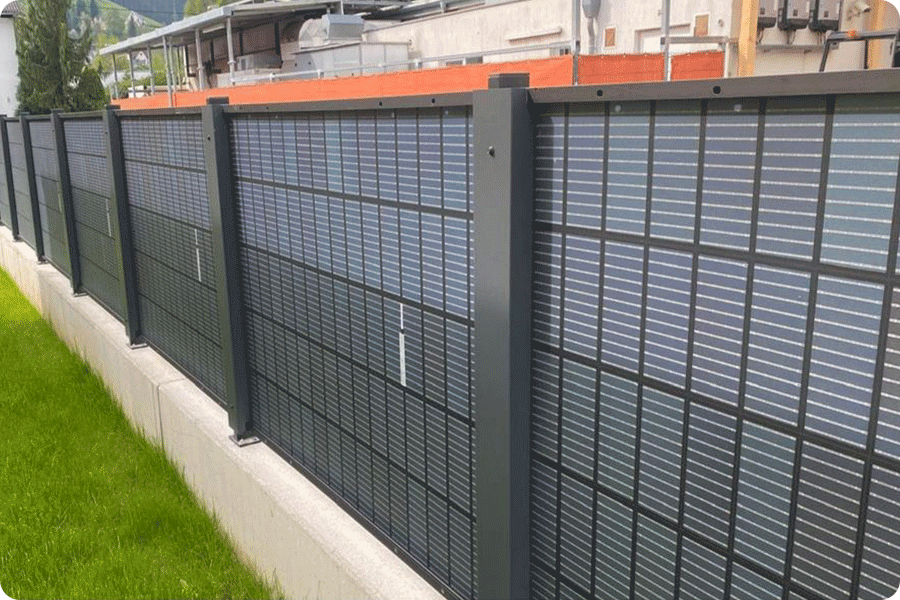
In the field of building applications, a report released by European research institutions shows that south-facing façade solar systems, when combined with battery storage, show significantly improved returns, especially in commercial buildings and urban renewal projects, where economic viability is stronger. The façade application is more sensitive to “time-shifting energy” demand, with storage systems improving energy use efficiency, thereby enhancing the stability of energy generation and returns from building-integrated photovoltaics (BIPV).
In agricultural photovoltaics, many countries are continuing discussions on land classification and revenue rules. Some regions have started small-scale demonstration projects to observe the collaboration between agricultural yields, sunlight conditions, and operational maintenance. Policy direction is increasingly focused on expanding photovoltaic scenarios without reducing agricultural output, helping to clarify future construction standards.
On the power system side, grid organizations and market research emphasize the importance of flexible resources, including user-side storage, grid connection process optimization, and inter-regional scheduling capabilities. Energy strategies for industrial and commercial enterprises are also showing signs of adjustment: some industrial and commercial users are prioritizing the “generation + storage + self-consumption” model to mitigate price fluctuations and improve energy consumption stability.
The Return of Performance in the Competition for High-Efficiency Solar Modules
Recent market feedback indicates a shift in focus for developers and EPCs when selecting modules, with greater emphasis now placed on real-world energy generation performance rather than just rated power. Factors such as high-temperature performance, low-light response, current path design, and parallel structure optimization are becoming key elements in determining levelized cost of electricity (LCOE).
The persistent high temperatures this summer have magnified issues related to module heat dissipation and temperature coefficients. Operators of some commercial projects have noted significant differentiation in the output of similarly rated products on hot days. Modules with more mature heat dissipation designs and materials exhibit more stable performance across daily curves, making them especially suitable for self-consumption projects. On the system side, the balance between Balance of System (BOS) costs and deployment efficiency has become more prominent. Factors such as rack structure, array spacing, inverter matching, and roof load have forced projects to seek a balance between power density and construction complexity. Specifications that are easier to handle, require shorter installation cycles, and are simpler to maintain are becoming increasingly preferred in certain industrial and commercial projects.
In terms of materials and processes, silver reduction and silver-free progress continue to advance, helping mitigate risks from raw material price fluctuations. Additionally, the long-term stability of encapsulant and backsheet materials, as well as their resistance to PID (Potential Induced Degradation) and hotspot formation, are increasingly being incorporated into procurement and acceptance terms. In urban distributed and commercial scenarios, visual consistency and all-black aesthetics have also started to become important considerations. As distributed generation and BIPV (Building-Integrated Photovoltaics) continue to grow, new configuration strategies are emerging. Some developers are now incorporating energy storage and inverter control strategies alongside module efficiency, aiming to optimize daily load and pricing cycles. Moreover, in more complex roofing or façade scenarios with shading, modules with higher parallel density and subdivided units are gaining attention for their smoother output under partial shading conditions.
Overall, the market’s evaluation of high-efficiency modules has shifted from theoretical metrics to full-cycle system performance, with high-temperature, low-light, shading tolerance, and long-term degradation resistance—as well as the associated maintenance costs and energy generation returns—becoming the new underlying metrics of competition.
Maysun Solar has a strong presence in the European market, offering a wide range of modules and stable supply to wholesale and distribution partners. We provide solutions covering mainstream technologies such a IBC technology, TOPCon technology, and HJT technology. Our commitment is to help customers achieve higher energy generation efficiency, faster investment recovery, and more stable system performance, even in limited space.
Reference
Bellini, E. (2025, November 4). Prezzi dell’elettricità: il mercato italiano unico sopra quota 100 €/MWh. PV Magazine Italia.
https://www.pv-magazine.it/2025/11/04/prezzi-dellelettricita-mercato-italiano-unico-sopra-quota-100-e-mwh/
Bellini, E. (2025, October 27). Solar modules could be produced in Europe at €0.15/W. PV Magazine India.
https://www.pv-magazine-india.com/2025/10/27/solar-modules-could-be-produced-in-europe-at-e0-15-w/
Bellini, E. (2025, October 31). Solar wafer prices stable with emerging downward pressure despite policy interventions. PV Magazine International.
https://www.pv-magazine.com/2025/10/31/solar-wafer-prices-stable-with-emerging-downward-pressure-despite-policy-interventions/
Bellini, E. (2025, October 22). Fraunhofer ISE identifies 37.6 GW solar potential along German railways. PV Magazine International.
https://www.pv-magazine.com/2025/10/22/fraunhofer-ise-identifies-37-6-gw-solar-potential-along-german-railways/
Bellini, E. (2025, October 29). Negative power prices surge across Europe as renewables rise. PV Magazine International.
https://www.pv-magazine.com/2025/10/29/negative-power-prices-surge-across-europe-as-renewables-rise/
Recommend reading

430–460W or 600W+? How Should You Choose Solar Panel Power for Rooftop Projects?
Compares 430–460W solar panels and 600W solar panels in C&I rooftop projects, showing that solar panel selection should prioritise roof compatibility and system stability.
Changes in the European Solar Policy and Market in 2026
Europe’s 2026 solar policy and grid changes are reshaping solar panel selection, shifting project returns towards market-driven mechanisms and highlighting the roles of TOPCon, HJT and IBC solar panels.
Why European EPCs Are Reassessing Large-Format Solar Panels
European EPCs are re-evaluating large-format solar panels. Panel size directly affects installation risk, system compatibility, and solar project ROI stability.
Do Vertical Bifacial Modules Really Deliver Additional Yield?
Vertical bifacial PV systems are gaining increasing attention across Europe. This article explores under what conditions a vertical layout can create additional value, how bifacial gain is influenced by site conditions, and which project types are best suited to this design.
Which rooftop scenarios make 700W+ solar panels a risk?
An analysis of the practical limits of 700W+ high-power solar panels on residential and commercial rooftops, and how space, load capacity, self-consumption and maintenance affect real returns.
February News in the Photovoltaic Industry
February overview of Europe’s photovoltaic market: module price trends, a rebound in the German PPA market, progress in Italian agrivoltaics and regulatory shifts in France, highlighting key industry signals.