Table of Contents
Introduction
In solar system design, module wattage is often regarded as the primary performance indicator. Many companies assume that the higher the power rating, the greater the energy output — and the faster the ROI. This is why 700W–800W high-power solar modules often become the first choice in the market.
However, in real solar module selection for rooftop systems, higher wattage does not always translate into higher returns. Larger modules mean heavier loads, greater wind-resistance requirements, and more complex shading management. If the system design does not match the site conditions, it may fail to reach expected generation goals and could even suffer long-term output loss due to hot-spots and current mismatch issues.
What truly determines a PV system’s yield is not only the rated power, but how well the module’s characteristics match the project scenario. In southern Italy and other high-temperature regions, temperature coefficient and heat-induced degradation become decisive. In northern Europe, where sunlight is weaker and winters are longer, low-light performance and structural reliability matter more.
In short, solar module selection is not about blindly chasing higher power. It is about choosing modules that best match the roof type, climate, and usage profile. High wattage reflects technological progress, but correct scenario-based application ensures financial performance.
Project Needs Determine the Direction of Solar Module Selection
In the early planning stage of a PV system, most users focus on choosing solar modules — type, wattage, brand, and so on. However, the system’s real performance depends not only on product specifications, but more importantly on the application scenario.
A system designed for self-consumption may underperform if used in an investment-oriented plant; and modules of the same technology family can deliver different energy output under different climates and irradiation conditions.
Therefore, the first step in solar module selection is not choosing wattage or brand, but clearly defining what type of project it is.
| Project Type | Typical Users | Main Objective | Key Selection Focus |
|---|---|---|---|
| Self-consumption systems | Commercial buildings, factories, households | Reduce electricity bills, maximise on-site solar consumption | Conversion efficiency, temperature coefficient, system stability |
| Investment-focused systems | Solar investors, commercial roof owners | Long-term returns, lowest LCOE | Degradation rate, bifacial performance, O&M costs |
| Brand / architectural showcase | Corporate offices, retail centres, education campuses | Premium aesthetics, compliance, safety | Uniform appearance, heat distribution control, fire-rating compliance |
| Challenging-environment systems | Agri-PV, high-temperature regions, heavy snow roofs | Durability, climate-resilience, reliable power output | Structural strength, low-light performance, anti-hot-spot capability |
1. Self-consumption projects: prioritizing energy savings and stability
For these projects, the core goal is to reduce electricity costs for businesses. Rooftop space is limited and peak tariffs are significant; therefore, efficiency and long-term stability are more important than the wattage of a single solar module.
In southern Europe — such as Italy and Spain — rooftop temperatures in summer can exceed 70 °C. Modules with a higher temperature coefficient will see noticeable generation loss, especially at midday peaks.
Different PV technologies respond differently to heat. HJT and IBC modules have lower temperature coefficients and stronger thermal tolerance, but they come at a higher cost and stricter installation requirements. In comparison, TOPCon modules maintain low temperature coefficients while offering a balanced cost-performance profile, making them a more reliable investment choice for most self-consumption systems.
2. Investment-oriented projects: focusing on ROI and long-term degradation
Investment projects aim for stable long-term returns — whether rooftop leasing, feed-in-tariff systems, or ground-mounted solar farms. Key indicators include LCOE and total payback period.
For these systems, long-term degradation and stability matter more than initial procurement cost. If module performance declines too quickly in the first few years, overall income drops and ROI is delayed. N-type technologies (TOPCon, HJT, IBC) offer lower first-year degradation and higher bifaciality than traditional PERC, improving lifecycle yield. Among them, TOPCon is favored for balanced cost and mature supply, while HJT and IBC serve high-end projects requiring maximum efficiency or architectural integration.
In short, investment projects must balance efficiency, cost, and degradation. N-type modules — particularly TOPCon — provide stable long-term financial performance.
3. Architectural & branding projects: emphasizing aesthetics and safety
In commercial complexes, schools, or corporate headquarters, PV systems are not only energy assets — they form part of the building’s identity. Located in city centers, these sites require high aesthetic consistency and strict safety standards.
Two main approaches exist:
BAPV (Building-Attached PV): solar modules installed on roofs or façades
BIPV (Building-Integrated PV): modules become part of the building envelope — requiring advanced waterproofing, fire-resistance, load-bearing and system certification
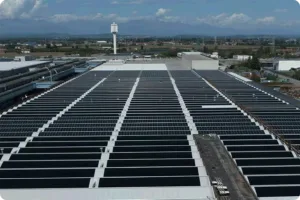
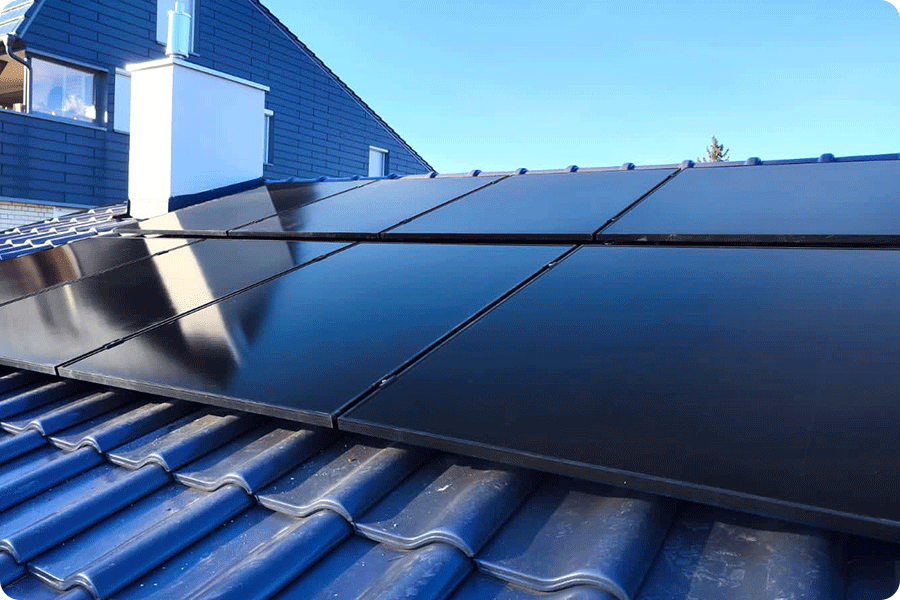
Most commercial sites still adopt BAPV. Full-black IBC single-glass modules, with busbar-free design and ultra-low reflectance, blend seamlessly into façades and rooftops, offering strong visual consistency and Class-A fire-safety. TOPCon modules deliver high efficiency and installation flexibility for large-roof applications.
For protected historical or city-center buildings, color tone and reflectivity control ensure a balance between sustainability and architectural harmony.
4. Special-environment projects: durability and adaptability first
Agrivoltaics, high-temperature regions, and Nordic snow-load rooftops place the strictest demands on module structure.
These systems face harsh conditions and long operation periods; thus, module durability and reliability become critical.
In humid and coastal regions: strong sealing and moisture-resistance prevent degradation
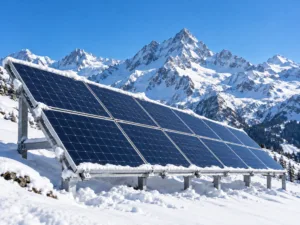
In snowy or windy areas: high mechanical strength and frame rigidity are essential
Double-glass structures excel in waterproofing and mechanical load performance, making them ideal for harsh or high-humidity environments.
Meanwhile, IBC single-glass modules with high-seal back-sheets and optimized encapsulation achieve excellent moisture resistance at lower weight — suitable for older buildings or lightweight rooftops.
Key Standards Define Module Performance
Once the project type is defined, many people assume the differentiation between solar modules comes solely from the technology route — PERC, TOPCon, HJT, or IBC. Higher efficiency and lower degradation often seem to represent better performance. However, as the industry transitions into the N-type era, these differences are narrowing quickly. Today, most modules exceed 21.5% efficiency, and temperature coefficients are commonly around −0.3%/°C. What increasingly separates real-world system performance is not just lab data, but solar module stability and structural design in complex environments.
From a system perspective, evaluation criteria are shifting from laboratory metrics to long-term operational behavior. In hot southern Europe, temperature coefficient directly impacts summer generation. In snowy or humid regions, encapsulation quality and weather-resistance determine lifespan and maintenance cost. On urban rooftops, current distribution, shading tolerance, and thermal management often matter more than peak wattage. In other words, the core of solar module selection is no longer technology labels, but whether the technology and structure can maintain stable output in real-world conditions.
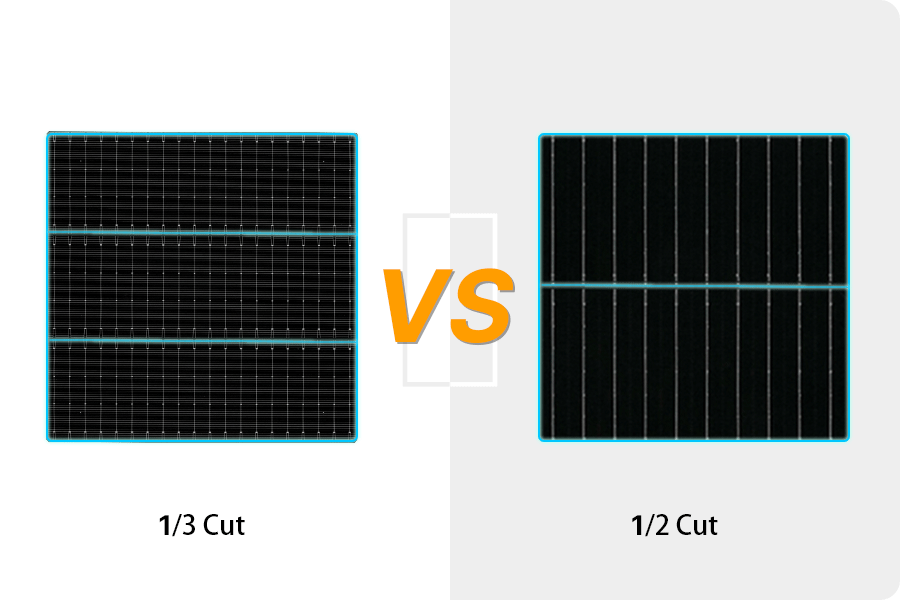
For this reason, next-generation module competition is shifting from pure efficiency gains to structural optimization. TOPCon exemplifies this trend: while maintaining high efficiency and favorable temperature performance, it enables more refined cell cutting and current control — supporting advanced structures such as 1/3-cut technology. This evolution marks a shift in industry focus from battery efficiency to system-level stability. Structural innovation is becoming a key factor in ensuring long-term reliability and protecting investment returns.
Solar Module Technology Comparison
| Technology | Typical Efficiency | Temperature Coefficient | First-Year Degradation | Annual Degradation | Cost Level |
|---|---|---|---|---|---|
| PERC | 21–22% | -0.35%/°C | ~2% | ~0.45%/yr | Low |
| TOPCon | 21.5–23.2% | -0.32%/°C | ~1.5% | ~0.4%/yr | Medium |
| IBC | 21.7–23.5% | -0.29%/°C | ~1.5% | ~0.4%/yr | High |
| HJT | 21.7–23.4% | -0.24%/°C | ~1% | ~0.35%/yr | High |
Structural Optimization Determines Long-Term Yield
As module efficiency and temperature performance become increasingly mature, differences in PV system returns are driven more by structural design than by basic cell efficiency. Structural optimization is not merely a manufacturing upgrade — it is the foundation for long-term operational stability and reliable financial returns across varied installation environments.
1. Cell segmentation structure
In daily operation, the most common risks for solar modules come from current concentration and thermal accumulation. Urban rooftops often face partial shading, chimneys, skylights, antennas, or dust buildup, all of which can cause uneven current distribution and localized heating. To mitigate these issues, module architectures are evolving from traditional half-cut to more refined current-partition designs — with TOPCon 1/3-cut modules being a key representative.
From a system-matching perspective, the 1/3-cut design does more than simply change cell cutting — it improves electrical pathways and heat distribution:
Reduces current density and conductor heating for more stable operating temperatures
Distributes shading impact, achieving more uniform heat dissipation and lowering hot-spot risk
Maintains higher energy yield in high-temperature and high-load environments
2. Encapsulation and backsheet architecture
Encapsulation affects not only material durability, but also module aging rate and environmental protection. Stronger sealing helps resist humidity and UV exposure, delaying power degradation.
In coastal, humid, or high-salt areas, double-glass structures offer superior sealing and durability
On city rooftops or lightweight structures, single-glass IBC modules with high-seal backsheets and moisture-resistant lamination ensure protection while reducing weight and installation complexity
3. Busbar-free electrode layout
For projects requiring both aesthetics and performance, busbar-free design offers a balanced solution. In IBC rear-contact systems, all electrodes are placed behind the cell, maximizing light-receiving area and eliminating stress and shading from front busbars. Visually, this creates a seamless full-black appearance — ideal for architectural and premium applications.
4. Frame and thermal management design
Higher-power modules are larger and subject to greater mechanical load. Their frames and thermal pathways must evolve simultaneously. Thicker frames and high-conductivity backsheets help reduce deformation and solder-joint fatigue, extending lifetime and ensuring stability under heavy snow, strong winds, and high-temperature operation.
Overall, structural optimization in solar module selection has become system-level reliability engineering rather than a single manufacturing tweak. For enterprise users, this translates into lower maintenance needs, more consistent energy output, and more predictable returns — precisely the factors that matter for long-term investment decisions.
Conclusion
As the PV industry enters the N-type era of high efficiency and low temperature coefficients, the differences between solar modules are shifting from pure specifications to scenario-based application and structural configuration. With costs, electricity prices, and policy frameworks becoming increasingly transparent, long-term returns are determined not by peak wattage, but by solar module selection and deployment strategy.
Choosing modules with optimized structure, stable thermal performance, and higher reliability is not only about boosting generation — it is about reducing uncertainty, extending system lifespan, and improving capital efficiency. Structural advantages — such as 1/3-cut layout, optimized current pathways, and improved encapsulation — are emerging as the next core value drivers for PV systems.
Technology will continue to advance and wattage will keep rising, but sustained return comes from systems that maintain stable output in real-world conditions. For businesses, capability in scenario matching and long-term thinking matters far more than chasing headline parameters.
Maysun Solar is deeply rooted in the European market, supplying a diverse portfolio of solar modules to wholesale and distribution partners, including IBC technology, TOPCon technology, and HJT technology. With a focus on matching performance to different roof structures and application needs — and ensuring stable availability — we support projects in achieving long-term, predictable energy output and investment returns.
Recommend reading

PV Module Installation Beyond Rooftops: Multi-Scenario Applications for Bifacial N-Type Modules in Europe
PV module installation is not limited to rooftops. For residential users, small commercial users and distributed PV projects in Europe, spaces such as balconies, gardens, fences, carports, terraces, façades and pergolas can also provide additional installation areas when conditions allow. As solar use

Europe’s Grid Cap Era: Why High-Efficiency Solar Panels Matter More in 2026
Introduction In 2026, the economics of distributed solar in Europe are changing. Grid congestion, export limits, negative electricity prices and zero-export requirements mean that a solar project can no longer be judged only by how much electricity it generates. The more important question

How Do Solar Panel Delivery Delays Affect Installer Costs?
Solar panel delivery delays can affect installation schedules, project acceptance and payment collection.

The Forgotten “Invisible Assets”: Why Repowering Is the Strategic Key for European Solar in 2026
As grid congestion delays new solar projects across Europe, existing PV assets are becoming a strategic source of growth. This article explains why PV repowering can help EPCs and C&I asset owners unlock hidden value from already-connected solar plants, improve LCOE, and extend long-term asset performance with high-efficiency TOPCon, IBC and HJT modules.

Solar Panel Procurement in Europe: Why Stable Supply Matters More Than a One-Off Low Price
When European installers, distributors and corporate buyers choose solar panels, a one-off low price should not be the only factor. Stable supply, model continuity, technical documents and replenishment capacity often matter more for long-term cooperation and project delivery.

How Important Is the Temperature Coefficient When Choosing a Solar Panel?
How important is temperature coefficient when choosing a solar panel? This article answers that question directly and explains which projects should include it in early screening and which do not need to treat it as a top priority.


The comparison between PERC, TOPCon and IBC was really helpful. I didn’t know temperature and a bit of shading can change the actual output so much. I used to just look at the efficiency number, but now I understand the difference more clear. This article actually helped me figure out what might work better for my place.