Before entering December, the European solar sector witnessed a series of structurally significant shifts. These developments span policy adjustments, market dynamics, project deployment and broader energy-system considerations. Taken together, they indicate that Europe’s solar industry is moving beyond a phase defined mainly by capacity expansion and towards a new stage centred on structural optimisation and system-level efficiency.
Table of Contents
Policy direction becomes more cautious yet more defined
Italy has confirmed the continuation of its super-depreciation policy through 2026.
Although widely anticipated, the emphasis of the policy is shifting: rather than prioritising investment stimulation, the extension is now more closely aligned with national energy-transition objectives. This provides companies with a more stable fiscal framework for planning solar PV projects and energy-efficiency upgrades. For businesses advancing self-consumption, load optimisation and retrofit measures, this level of certainty is particularly valuable.
At the same time, the Ministry of Environment and Energy Security (Mase) has issued the updated Decreto Aree Idonee, further defining areas where solar modules can be deployed and where development is restricted, while requiring regional authorities to complete their planning within set deadlines.
The decree marks a shift from case-by-case approval towards a systematic approach based on land-use priorities and grid-capacity constraints. This is expected to reduce territorial conflicts, improve transparency in permitting, and lay a regulatory foundation for large-scale projects scheduled for 2026–2028.
Aligned signals are emerging at the European level.
In its Trends 2025 report, IEA PVPS notes that as solar PV becomes core electricity infrastructure, policy priorities are evolving from growth in installed capacity to strengthening system resilience—covering grid integration, flexibility resources, storage deployment and long-term reliability. Future expansion will therefore depend more on infrastructure readiness than on the strength of subsidies alone.
Agrivoltaics is becoming a core component of the EU’s energy transition
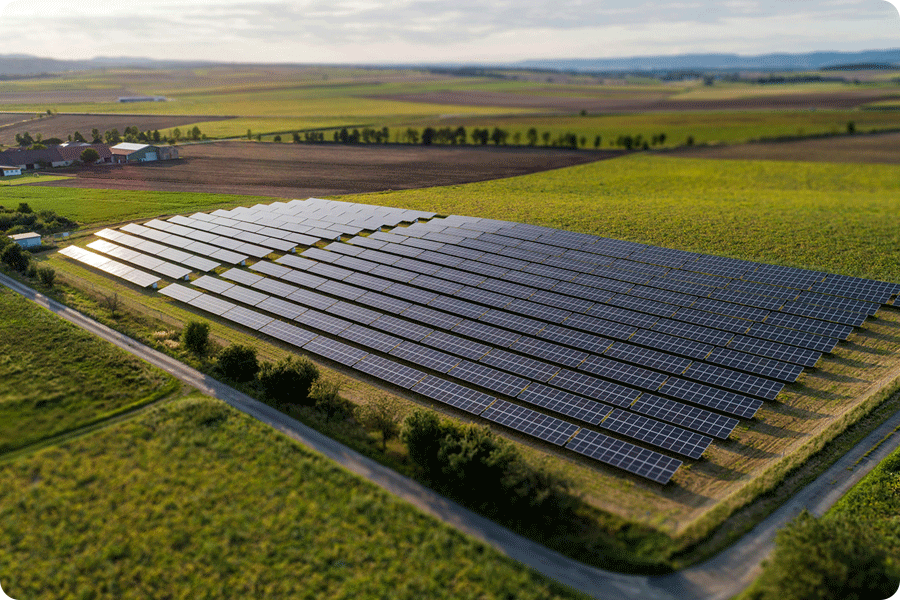
In November, agrivoltaics (Agri-PV) achieved several meaningful milestones in Italy.
The Ministry of Environment and Energy Security (Mase) issued positive VIA assessments for two projects totalling 130 MW, signalling a clear acceleration in permitting and showing that both technical standards and regulatory frameworks are maturing. At the same time, the €1 billion allocated to Agri-PV under the PNRR recovery plan has now been disbursed, supporting more than 2 GW of targeted installations and moving the sector from policy-driven momentum to real financial deployment.
These developments align closely with broader EU policy.
The European Commission, in several documents on agricultural sustainability and energy transition, identifies Agri-PV as a strategic approach that balances land protection, agricultural resilience and clean-energy expansion. As traditional ground-mounted solar parks increasingly face land-use conflicts and permitting delays, Agri-PV is evolving from a supplementary option into a medium- to long-term strategic pathway.
Across other member states, new examples also emerged in November.
France released interim results from multiple agrivoltaic pilots spanning vineyards, pastureland and crop-growing sites, showing promising outcomes in moisture retention, crop performance and livestock shading. In Germany, Solmotion began construction of a new 15 MWp agrivoltaic facility, offering an additional engineering reference for scalable applications in Central Europe.
With policy support strengthening, permitting accelerating and more project experience accumulating, Agri-PV is moving beyond the pilot stage towards scalable deployment—positioning it as a significant contributor to Europe’s new solar PV capacity between 2026 and 2028.
Ageing buildings are being brought back into scope for solar retrofits
As the expansion of solar PV becomes increasingly constrained by land availability and grid capacity, the adaptability of building-mounted systems is emerging as a new area of industry focus.
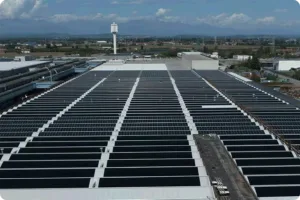
In November, the French company Enowatt introduced a PV alternative system designed specifically for existing buildings. The solution can be installed on lightweight industrial and warehouse rooftops without requiring additional structural reinforcement. According to published test data, the system reduces load per square metre and uses a distributed support structure, enabling many ageing roofs—previously excluded due to weight limits—to once again become viable for solar module deployment. These products have now entered commercial validation and have attracted the interest of several regional energy agencies in France.
With the EU’s Energy Performance of Buildings Directive (EPBD) accelerating, multiple European countries are exploring retrofit pathways tailored to legacy buildings.
Technical agencies in several German states have issued new guidelines on PV suitability for lightweight roofs, emphasising low-load components, distributed mounting systems and non-penetrative installation methods as core technical directions for coming years. In southern Europe, asset-management companies in Italy and Spain are evaluating similar solutions to address structural constraints in industrial buildings and warehouses constructed throughout the 20th century.
From an industry perspective, these signals all point towards the same trend: as land scarcity and permitting pressure continue to intensify, the solar-readiness of existing buildings is becoming a key variable in future solar PV trends. Technologies that reduce structural risk without reinforcement will unlock previously unusable rooftop potential and create new space for distributed solar growth between 2026 and 2028.
Cybersecurity becomes a new focal point in an increasingly digital energy system
In November, several French media outlets highlighted new notices issued by the national cybersecurity agency (ANSSI) and the energy regulator, stressing that the growing connectivity of PV systems, storage units and inverters is turning them into potential entry points for attacks on critical infrastructure.
Solar infrastructure is now highly networked, yet many mid- and lower-end systems used in residential, commercial and industrial settings still operate with weak or default passwords. Remote-access interfaces are often exposed to public networks, making external control surprisingly easy in certain scenarios. The rapid diffusion of low-cost solutions is amplifying this risk, bringing cybersecurity into mainstream discussion within distributed solar PV for the first time.
Testing bodies in Germany and the Nordic region published similar findings in November.
Network scans of distributed energy devices revealed that some inverters, home storage systems and monitoring units continue to run outdated firmware without encrypted communication or two-factor authentication. As a result, device ports and data interfaces may be detectable and exploitable. Agencies are urging operators to review device configurations before winter, when grid loads typically increase, to avoid operational issues caused by remote-control vulnerabilities.
European industry associations have likewise elevated digital-security risks to a priority topic.
As solar modules and PV systems continue to scale, and as remote monitoring and cloud-based management become standard practice, inverters, data loggers and storage systems are now integral network nodes within the power system. The more devices deployed, the larger the exposure surface—and the more significant the risks associated with poor baseline configuration.
This growing focus forms part of broader solar PV trends, highlighting that digital security will increasingly shape how distributed energy resources are managed and safeguarded.
Conclusion
Recent developments indicate that Europe’s solar sector is entering a phase defined less by rapid expansion and more by quality, planning discipline and system-wide optimisation.
As 2026 approaches, these solar PV trends are likely to strengthen: policy frameworks will further refine requirements related to land use, buildings and digital assets, while companies deploying solar modules will place greater emphasis on system boundaries, lifecycle costs and long-term operational resilience.
For developers, installers and end users alike, anticipating and adapting to these structural shifts will be essential for smoother project execution and for reducing uncertainties over the system’s operational lifetime.
Maysun Solar has long served the European market, providing wholesalers and distribution partners with a diverse portfolio of solar modules and reliable supply across mainstream technologies including IBC technology, TOPCon technology, and HJT technology. Our focus is to help customers achieve higher energy yield, faster payback and more stable system performance — even where installation space is limited — in line with evolving solar PV trends across the region.
Reference
PV Magazine Italia. Iperammortamento 2026: continuità degli incentivi e orientamento alla transizione energetica. 2025. https://www.pv-magazine.it
PV Magazine Italia. Il Mase rilascia due VIA positive per 130 MW di agrivoltaico. 2025. https://www.pv-magazine.it
PV Magazine Italia. Agrivoltaico PNRR: assegnato 1 miliardo di euro per oltre 2 GW di potenza. 2025. https://www.pv-magazine.it
PV Magazine Italia. Pubblicato il nuovo Decreto Aree Idonee: punti di forza e criticità. 2025. https://www.pv-magazine.it
PV Magazine France. Cybersécurité : un pilier central de la sécurité énergétique et du secteur solaire. 2025. https://www.pv-magazine.fr
Recommend reading

Low-Carbon PV Procurement in France: Why ECS, PEP Ecopassport and Solar Carports Matter
Table of Contents France is becoming one of Europe’s most documentation-driven solar markets. For EPC companies, developers and commercial project owners, module selection is no longer based only on price-per-watt, efficiency or linear power warranties. Carbon documentation, supply-chain traceability and project-specific compliance files

PV Module Installation Beyond Rooftops: Multi-Scenario Applications for Bifacial N-Type Modules in Europe
PV module installation is not limited to rooftops. For residential users, small commercial users and distributed PV projects in Europe, spaces such as balconies, gardens, fences, carports, terraces, façades and pergolas can also provide additional installation areas when conditions allow. As solar use

Europe’s Grid Cap Era: Why High-Efficiency Solar Panels Matter More in 2026
Introduction In 2026, the economics of distributed solar in Europe are changing. Grid congestion, export limits, negative electricity prices and zero-export requirements mean that a solar project can no longer be judged only by how much electricity it generates. The more important question

How Do Solar Panel Delivery Delays Affect Installer Costs?
Solar panel delivery delays can affect installation schedules, project acceptance and payment collection.

The Forgotten “Invisible Assets”: Why Repowering Is the Strategic Key for European Solar in 2026
As grid congestion delays new solar projects across Europe, existing PV assets are becoming a strategic source of growth. This article explains why PV repowering can help EPCs and C&I asset owners unlock hidden value from already-connected solar plants, improve LCOE, and extend long-term asset performance with high-efficiency TOPCon, IBC and HJT modules.

Solar Panel Procurement in Europe: Why Stable Supply Matters More Than a One-Off Low Price
When European installers, distributors and corporate buyers choose solar panels, a one-off low price should not be the only factor. Stable supply, model continuity, technical documents and replenishment capacity often matter more for long-term cooperation and project delivery.