Table of Contents
Introduction
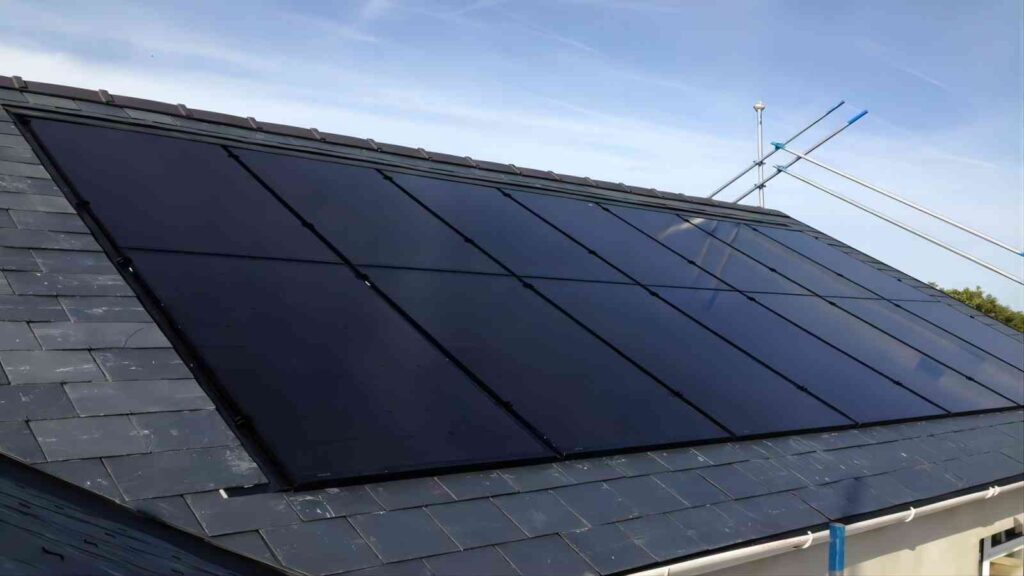
In terms of cost and power output, the most efficient solar panels are often the first choice for many homeowners. While these factors remain crucial for anyone considering a solar system, in 2025, aesthetics and compliance have become equally important. In residential projects, homeowners often choose full black solar panels to maintain a clean and elegant appearance; in commercial and industrial projects, their low glare and architectural integration make them even more appealing. This article will examine the latest trends, exploring the origins, benefits, limitations, and investment value of full black solar panels.
Why Do Full Black Solar Panels Exist?
Full black modules were first introduced in high-end residential projects, initially because homeowners felt that “blue panels looked like patches” and wanted a more uniform appearance. To achieve this, full black solar panels adopt a range of design and manufacturing techniques to minimize reflection and color variation, ensuring overall visual consistency. The main factors include:
Monocrystalline Cells
Monocrystalline cells appear almost black from a distance, while polycrystalline cells look more blue. As a result, full black modules are typically made with monocrystalline cells, offering better stability and more consistent coloration. With N-type monocrystalline technologies (such as TOPCon and IBC) becoming mainstream, full black solar panels now achieve a stronger balance between performance and aesthetics.
Black Frame
Panel frames are generally made of black anodized aluminum to achieve the desired all-black finish. Black frames are particularly common in residential projects, and they are increasingly popular on commercial rooftops thanks to their low glare and high efficiency.
Full Black Backsheet and Dual-Glass Design
Traditional full black modules often use black backsheets (such as EVA or black-coated materials) to further reduce reflection. With the rapid adoption of dual-glass designs, more full black modules now feature black grids or coatings on the rear glass. This not only ensures visual consistency but also enhances durability, fire resistance, and resistance to damp heat—an especially important advantage in commercial and industrial projects.
Glass
The front glass is typically high-transmittance, low-iron photovoltaic glass to improve light absorption and conversion efficiency. In dual-glass modules, the rear glass—usually 1.6–2.0 mm thick—is also made of ultra-clear, semi-tempered, low-iron PV glass and may feature black or white grid patterns depending on application needs. This design conceals heat sinks and busbars, preserves the uniform black appearance, and enhances weather resistance and protection. Compared with traditional backsheets, this rear glass solution offers unmatched advantages and is gaining market share rapidly.
Encapsulation Materials
Solar cells are normally encapsulated between the front and back glass using EVA and a white Tedlar insulating layer. In full black modules, however, black Tedlar or other dark encapsulation materials are used to maintain a consistent black aesthetic.
Busbars and Contacts
The ribbons and contacts connecting cells are usually silver, making them noticeable in standard panels. To minimize visual distraction, full black modules darken these parts using black conductive adhesives or dark coatings, blending them seamlessly with the cells.
Black Silicone
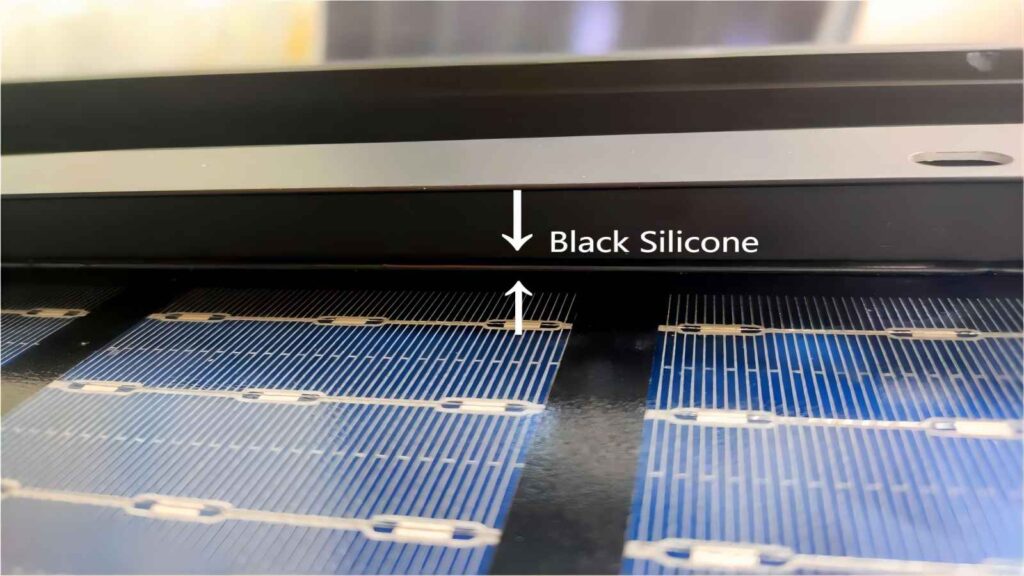
Silicone is widely used in solar module production to encapsulate and bond glass. In full black modules, manufacturers typically use black silicone to firmly bond the frame and glass, avoiding light-colored traces that would disrupt the uniform look. This not only maintains a consistent deep-black appearance but also enhances the overall aesthetic appeal of the module.
Through these processes, full black solar panels achieve a deep, low-reflective, and highly consistent appearance. They are expanding from meeting “residential aesthetic needs” to addressing “commercial and industrial demands for low glare and durability,” gradually becoming a common market choice. Some users worry that the focus on aesthetics might compromise efficiency. However, with advances in N-type technology and manufacturing processes, the performance gap has become negligible, allowing full black modules to deliver both elegant design and high efficiency.
Advantages of Full Black Solar Panels
The Unique Value of IBC Full Black
In the development of full black modules, the introduction of IBC technology marked a major turning point. Unlike conventional modules, IBC full black solar panels move all electrodes to the back, ensuring a seamless pure-black appearance on the front while reducing energy loss from busbar shading. Compared with standard full black panels, IBC modules feature a lower temperature coefficient in high-heat environments and deliver more stable output under low-light conditions. This allows them to meet the aesthetic demands of building-integrated applications while maintaining top-tier power generation efficiency, making them the preferred choice for premium residential projects, commercial landmarks, and BIPV applications.
Elegant Appearance
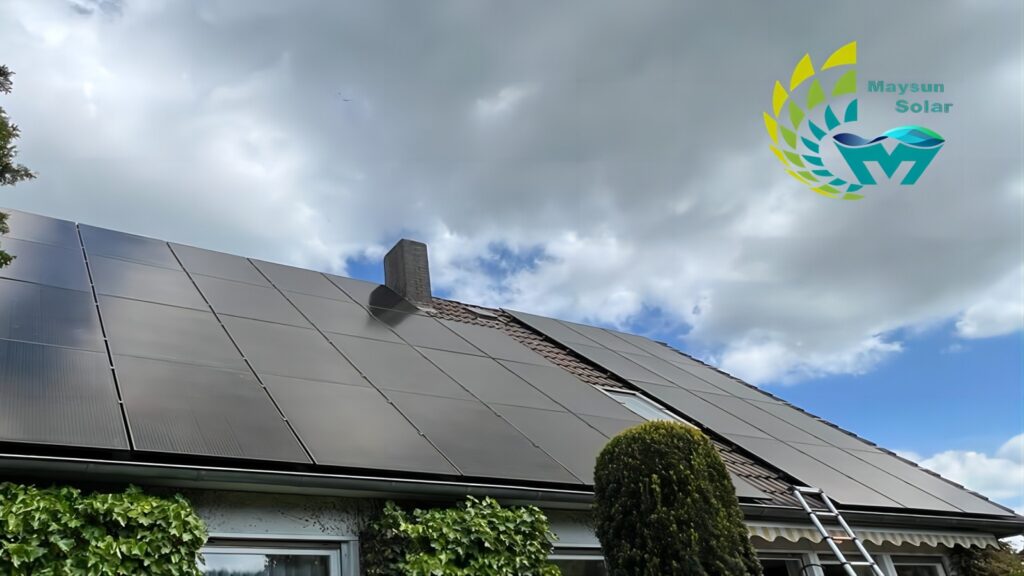
Full black solar panels present a uniform, refined look that blends harmoniously with various roofing materials and surroundings, preserving the overall visual integrity of a building. Their sleek black design enhances the appeal of residential homes and adds architectural value to commercial or corporate properties. In particular, for BIPV (Building-Integrated Photovoltaics), full black modules stand out for their visual consistency, integrating seamlessly with curtain walls, roof tiles, or façade materials to truly realize the concept of “building as photovoltaics.”
Reduced Glare
Standard mounting systems often use silver aluminum with high reflectivity, which can cause light pollution. By using black mounting systems (such as black solar panels, black mounting blocks, and black brackets), glare and reflection can be minimized. This is particularly beneficial in densely populated residential areas or environments with narrow building spacing. Moreover, low-glare designs align with European requirements for environmentally friendly and community-friendly architecture, helping reduce light pollution and enhance sustainability.
Enhanced Snow-Melting Capability
Full black solar panels absorb heat more effectively, enabling snow to melt faster in cold regions. This shortens downtime during winter months and increases energy yield. For areas with long snowy seasons, such as Northern Europe and the Alps, this feature provides significant practical value.
Limitations and Suitable Applications of Full Black Solar Panels
Efficiency Differences
Many users worry that the stronger heat absorption of full black designs may reduce energy efficiency. Indeed, because of their black backsheets and encapsulation layers, full black modules generally operate at slightly higher temperatures, leading to some power loss. For example, a study on backsheet reflectivity (H. Lim et al., 2022) found that compared with white backsheets, black backsheets result in about 2–3% output loss, with overall efficiency typically reduced by around 0.5%. However, in modern N-type and IBC full black modules, improvements in temperature coefficients and encapsulation processes have narrowed this gap, making it practically negligible in real-world applications.
Higher Cost
The production of full black modules is more demanding than that of conventional panels, particularly in terms of color control and material selection. Every component—frame, backsheet, EVA encapsulation layer, and busbars—must maintain a consistent dark tone, otherwise the visual effect is compromised. This raises manufacturing complexity and can lower yield rates. In addition, most full black modules are produced using high-efficiency monocrystalline cells that require extra processing steps, resulting in prices generally higher than standard panels. For users primarily focused on achieving the lowest levelized cost of electricity (LCOE), full black modules are not the optimal choice; however, for projects emphasizing brand image or aesthetics, the extra cost is often considered worthwhile.
Suitable Applications
Best suited for:
- Residential and villa rooftops where overall appearance is a priority
- Commercial buildings in city centers where community-friendly, low-glare solutions are required
- BIPV applications (curtain walls, solar roof tiles, façade designs) that demand a pure black, uniform look
- Cold, snowy regions where faster snowmelt from higher heat absorption improves energy output
- High-end projects that seek both efficiency and aesthetics (e.g., IBC full black rooftops or landmark commercial buildings)
- Small to medium projects with limited budgets but a desire for aesthetics, where three-cut TOPCon full black panels offer a balance between efficiency and appearance
Less suited for:
- Large-scale ground-mounted power plants or solar farms where LCOE sensitivity is high
- Small businesses or households under strong cost pressure, where return on investment outweighs aesthetic considerations
Are Full Black Solar Panels Worth Investing in 2025?
With growing demand and heightened aesthetic expectations, full black modules are becoming increasingly popular in residential and certain commercial projects. Full black solar panels are gradually becoming the market’s “new normal,” driven not only by technological progress but also by shifting user preferences. In the past, solar investment was focused mainly on efficiency and cost, but today, more households and businesses are willing to pay for architectural appearance, community compatibility, and harmony with surrounding environments. Recent projects show that homeowners are placing greater value on the overall look of their rooftops, while commercial users emphasize brand image and seamless building integration—trends that continue to fuel the adoption of full black modules.
From an investment perspective, the value of full black modules extends beyond energy yield to include higher market recognition and potential asset premiums. They are steadily becoming mainstream solutions for residential rooftops, urban commercial buildings, and BIPV applications. Although their price remains slightly higher than standard panels, in a market where aesthetics and sustainability are equally important, the return on investment is increasingly reflected through stronger demand and broader social acceptance.
Therefore, choosing full black modules in 2025 is not only an aesthetic decision but also a forward-looking one. The final choice should align with project needs and investment priorities: if appearance and image are central concerns, full black modules are the better fit; if the primary goal is the lowest cost and maximum efficiency, standard modules remain the more suitable option.
Since 2008, Maysun Solar has been dedicated to providing high-quality photovoltaic modules for the European market. We continuously expand our product lines with advanced technologies such as IBC technology, HJT technology, and TOPCon technology and have introduced a full black series to meet the demand for aesthetics, integration, and low glare in residential and commercial projects. With local warehouses and offices established in multiple countries and regions, we are able to respond quickly to customer needs and maintain long-term cooperation with experienced installers.

Do Solar Panels Lose Efficiency Over Time?
Solar panels lose efficiency over time. Key indicators include first-year degradation, annual degradation rate, temperature coefficient, and long-term power retention.

March European Solar Industry News
This article outlines recent developments in the European solar market, including the EU cross-border solar auction scheme, structural shifts in Germany, updated GSE regulation in Italy, and the recent recovery in solar panel prices.

430–460W or 600W+? How Should You Choose Solar Panel Power for Rooftop Projects?
Compares 430–460W solar panels and 600W solar panels in C&I rooftop projects, showing that solar panel selection should prioritise roof compatibility and system stability.

Changes in the European Solar Policy and Market in 2026
Europe’s 2026 solar policy and grid changes are reshaping solar panel selection, shifting project returns towards market-driven mechanisms and highlighting the roles of TOPCon, HJT and IBC solar panels.

Why European EPCs Are Reassessing Large-Format Solar Panels
European EPCs are re-evaluating large-format solar panels. Panel size directly affects installation risk, system compatibility, and solar project ROI stability.

Do Vertical Bifacial Modules Really Deliver Additional Yield?
Vertical bifacial PV systems are gaining increasing attention across Europe. This article explores under what conditions a vertical layout can create additional value, how bifacial gain is influenced by site conditions, and which project types are best suited to this design.