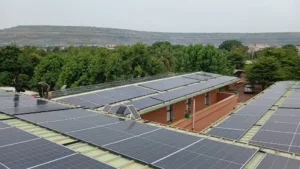
1. Strong Sunlight Doesn’t Mean More Power Generation
Irradiance and module temperature are the two key factors affecting the power output of a PV system.
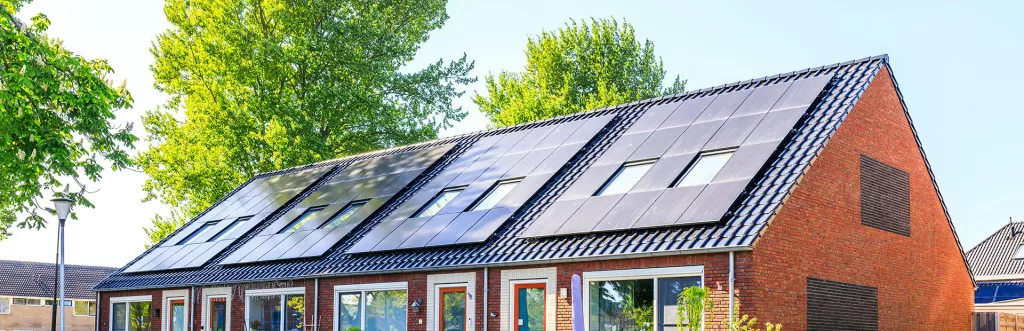
Although summer offers longer daylight hours and higher irradiance, rising ambient temperatures cause a significant increase in module temperature, which leads to a drop in output efficiency.
Under high summer irradiance, rooftop module surface temperatures can reach 65–75 °C, far exceeding the standard test condition of 25 °C. For most crystalline silicon modules, output power decreases by approximately 0.3%–0.35% for every 1°C increase in temperature.
Therefore, despite abundant sunlight in summer, the performance loss caused by higher module temperatures directly affects total energy production. In fact, for the same system in high-temperature regions, the output per kilowatt during midday in summer is often lower than under similar irradiance levels in spring or autumn. This explains why strong sunlight doesn’t necessarily mean higher energy generation.
2. Temperature Coefficient Determines Performance Gap
The performance degradation of PV modules under high temperatures is mainly determined by their electrical sensitivity to heat. This is typically measured by the power temperature coefficient (%/°C), which indicates the percentage drop in maximum power output for every 1°C increase in temperature. The smaller the temperature coefficient, the better the module’s thermal resistance.
Temperature Coefficients and Power Loss of Different Modules (Based on 40°C Temperature Rise)
| Module Type | Temperature Coefficient (%/°C) | Power Loss at 40°C Temperature Rise |
|---|---|---|
| PERC | –0.34 | –13.6% |
| TOPCon | –0.32 | –12.8% |
| IBC | –0.29 | –11.6% |
| HJT | –0.24 | –9.6% |
In southern Europe’s summer with high irradiance, module surface temperatures often exceed 65–70°C, resulting in a temperature rise of 35–45°C compared to the standard 25°C.
Taking a 40°C rise as an example, the power loss is:
PERC: –0.34 × 40 = –13.6%
HJT: –0.24 × 40 = –9.6%
This results in an instantaneous power difference of around 4% under the same operating temperature. According to PVsyst simulations and real-world data from southern Europe, the annual energy yield gap between HJT and PERC modules in high-temperature regions typically ranges from 3% to 6%. Based on an average annual yield of 1,500 kWh/kWp, the cumulative yearly gain amounts to 45–90 kWh/kWp, which directly impacts the project’s LCOE and financial forecasting models.
The temperature coefficient also affects system-level considerations such as electrical design and inverter matching. For self-consumption projects or those targeting stable returns, ignoring heat-induced performance degradation could lead to underestimating actual energy production, impacting revenue forecasts and technical solution integrity.
3. Structural Design Influences Thermal Performance
The structural design of PV modules directly affects their thermal stability and operational efficiency in high-temperature environments. Encapsulation materials, conductive pathways, and thermal distribution uniformity are the key factors that determine a module’s heat resistance—especially under high loads and strong irradiance in summer, where differences become more pronounced.
Encapsulation materials are critical for heat dissipation.
Single-glass modules are still widely used in Central Europe and temperate regions due to their mature manufacturing process, lightweight, and cost-effectiveness, delivering stable performance. However, their commonly used polymer backsheet materials (such as TPT or PPE) have low thermal conductivity—only 0.2–0.3 W/m·K—which limits heat dissipation under high-temperature conditions. In contrast, glass-glass modules use tempered glass on the rear side, offering much higher thermal conductivity of 1.0–1.4 W/m·K, allowing heat to be conducted and released more efficiently. Field measurements show that in installations with strong irradiance and limited airflow, glass-glass modules operate at 2–3°C lower temperatures. For modules with a temperature coefficient of –0.3%/°C, this translates to an additional 0.6%–0.9% power retention advantage, particularly significant in Southern Europe and Mediterranean regions.
The conductive structure also affects thermal distribution uniformity.
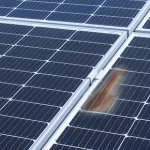
Conventional aluminum-framed modules use front-side busbars for conduction. When exposed to partial shading, microcracks, or soldering defects, they are prone to hotspots forming around areas with dense busbars, leading to localized overheating. In contrast, modules with back-contact conduction, rear-side busbars, or fine-grid structures show lower surface temperature differences (ΔT), helping suppress thermal concentration and reduce efficiency fluctuations. Field data indicates that modules with optimized thermal distribution can reduce surface ΔT by 1.5–2°C, providing better operational stability under high-temperature conditions.
Structural design also impacts stress relief, thermal expansion matching, and material aging.
Accelerated aging tests (85°C / 85% RH for 2,000 hours) show that glass-glass modules typically have a power degradation rate of less than 2%, whereas some single-glass modules degrade by 3–4%. However, due to their higher weight, glass-glass modules impose greater demands on roof load capacity and installation processes. For projects with lightweight rooftop requirements, a balance must be struck between structural compatibility and performance gains
4. High Temperatures Amplify Technology Differences
Under STC conditions, the performance differences between module technologies are less noticeable. However, in prolonged high-temperature environments, these differences accumulate over time and translate into measurable deviations in system output and financial return models.
At an operating temperature of 65°C, the temperature coefficient gap between PERC and HJT (0.10%/°C) results in a daily output difference of about 3–4%. If high-temperature periods account for one-third of annual operating hours, the annual energy yield gap can reach 2–3%, directly impacting LCOE calculations and return on investment models.
Under conditions of high heat and strong irradiance, module structure significantly affects both cooling efficiency and aging rates. Glass-glass modules, with their higher thermal conductivity and symmetrical encapsulation, offer better thermal stability. Accelerated aging tests (85°C / 85% RH) show that their power degradation is typically below 2%, while some single-glass modules degrade by 3–4%. However, the actual gap still depends on manufacturing processes and material systems, so module selection should consider ambient temperature, structural load capacity, and the intended service life.
High temperatures accelerate hotspot formation, microcrack propagation, and thermal fatigue at soldering points. If the structural design lacks proper thermal distribution management and stress relief mechanisms, encapsulation edges become zones of thermal stress accumulation, which compromises structural stability and increases O&M intervention frequency.
In Southern Europe and other high-temperature-dominant markets, temperature rise should be treated as a key factor for evaluating technology suitability. A module’s ability to maintain high-temperature performance, ensure thermal field uniformity, and resist heat-induced degradation should be considered as critical criteria during the system design phase.
Since 2008, Maysun Solar has been both an investor and manufacturer in the photovoltaic industry, providing zero-investment commercial and industrial rooftop solar solutions. With 17 years in the European market and 1.1 GW of installed capacity, we offer fully financed solar projects, allowing businesses to monetize rooftops and reduce energy costs with no upfront investment. Our advanced IBC, HJT and TOPCon panels, and balcony solar stations, ensure high efficiency, durability, and long-term reliability. Maysun Solar handles all approvals, installation, and maintenance, ensuring a seamless, risk-free transition to solar energy while delivering stable returns.
Reference
Fraunhofer ISE. (2024). Photovoltaics Report. Fraunhofer Institute for Solar Energy Systems ISE. https://www.ise.fraunhofer.de/en/publications/studies/photovoltaics-report.html
NREL. (2020). Temperature Coefficients for PV Modules. National Renewable Energy Laboratory. https://www.nrel.gov/docs/fy20osti/76876.pdf
PVsyst SA. (2023). PVsyst Software Documentation – Thermal Behavior of PV Modules. https://www.pvsyst.com/help/thermal_behavior.htm
Recommend Reading

Low-Carbon PV Procurement in France: Why ECS, PEP Ecopassport and Solar Carports Matter
Table of Contents France is becoming one of Europe’s most documentation-driven solar markets. For EPC companies, developers and commercial project owners, module selection is no longer based only on price-per-watt, efficiency or linear power warranties. Carbon documentation, supply-chain traceability and project-specific compliance files

PV Module Installation Beyond Rooftops: Multi-Scenario Applications for Bifacial N-Type Modules in Europe
PV module installation is not limited to rooftops. For residential users, small commercial users and distributed PV projects in Europe, spaces such as balconies, gardens, fences, carports, terraces, façades and pergolas can also provide additional installation areas when conditions allow. As solar use

Europe’s Grid Cap Era: Why High-Efficiency Solar Panels Matter More in 2026
Introduction In 2026, the economics of distributed solar in Europe are changing. Grid congestion, export limits, negative electricity prices and zero-export requirements mean that a solar project can no longer be judged only by how much electricity it generates. The more important question

How Do Solar Panel Delivery Delays Affect Installer Costs?
Solar panel delivery delays can affect installation schedules, project acceptance and payment collection.

The Forgotten “Invisible Assets”: Why Repowering Is the Strategic Key for European Solar in 2026
As grid congestion delays new solar projects across Europe, existing PV assets are becoming a strategic source of growth. This article explains why PV repowering can help EPCs and C&I asset owners unlock hidden value from already-connected solar plants, improve LCOE, and extend long-term asset performance with high-efficiency TOPCon, IBC and HJT modules.

Solar Panel Procurement in Europe: Why Stable Supply Matters More Than a One-Off Low Price
When European installers, distributors and corporate buyers choose solar panels, a one-off low price should not be the only factor. Stable supply, model continuity, technical documents and replenishment capacity often matter more for long-term cooperation and project delivery.