
What Are the Main Components of Solar Panels? A Structural Overview of 6 Key Parts

Solar Panel Structure Explained: 6 Key Components and Their Roles

Solar panels are not a single functional element, but modules composed of multiple structural units. Each component plays a distinct role in optical protection, electrical energy conversion, mechanical support, and electrical connection. While power rating and efficiency are often the most intuitive indicators used to assess solar panel performance, the structural design of the module also has a significant impact on stability and consistency under real operating conditions. Understanding these fundamental component parts helps form clearer judgement criteria for subsequent technical comparisons and system-level evaluations.

Table of Contents

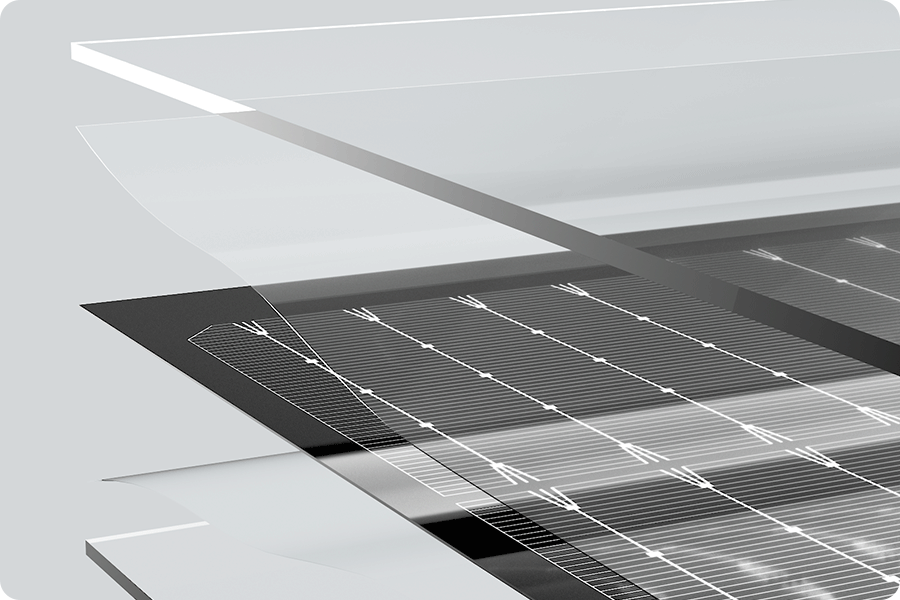
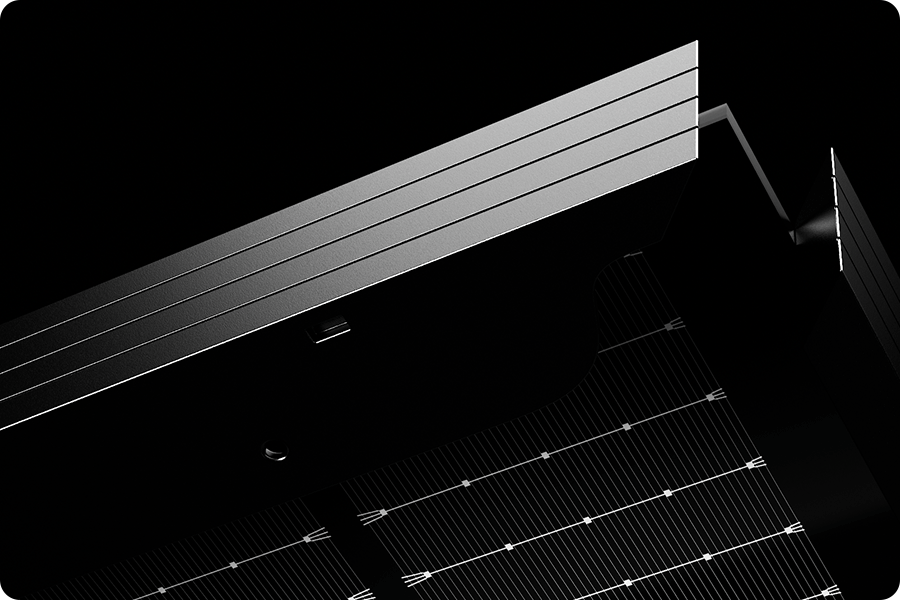
Overall solar panel structure diagram, showing the layered relationship between the front glass, solar cells, encapsulation layer, and rear-side structure

Optical and Protective Structure

The optical and protective structure is the part of solar panels responsible for managing incident light and isolating the internal components from the external environment. Located at the outermost layer of the module, it is the first structure exposed to environmental impacts. Although this structure does not participate directly in electrical energy conversion, its design quality has a direct influence on light utilisation efficiency, mechanical safety, and long-term operational consistency.

From a structural perspective, the optical and protective structure mainly includes the following two key components:

1.1 Front Glass

The front glass is positioned on the outermost side of the module and represents the first structural interface through which light enters the solar panel. At the same time, it provides mechanical protection for the internal components. Its main functions include:

  • Ensuring optical transmittance:
    Standard tempered glass typically has a light transmittance of around 91.5%, while photovoltaic glass treated with anti-reflective coatings can achieve transmittance levels of approximately 93.5%. Over long-term operation, this difference is consistently reflected in the energy output of solar panels.

  • Effective spectral utilisation:
    Photovoltaic glass effectively covers the main solar radiation range of approximately 380–1100 nm and reflects part of the infrared spectrum, helping to reduce unnecessary heat absorption under high irradiance conditions.

  • Mechanical protection capability:
    Common 3.2 mm fully tempered photovoltaic glass can withstand the impact of a 1 kg steel ball dropped freely from a height of 1 m, as well as hail impact loads with a diameter of around 2.5 mm. This provides a basic level of mechanical protection for solar panels under wind loads, hail, and extreme weather conditions.

In practical applications, the structural design of the front glass must strike a balance between light transmittance and protective performance. Its stability is directly related to how solar panels perform under different climatic conditions.

1.2 Encapsulation Materials (EVA / POE / EPE)

Encapsulation materials are located between the front glass and the solar cells. Their primary role is not to enhance optical performance, but to maintain the long-term structural stability of the module’s internal components. From a functional standpoint, their key roles include:

  • Fixing and positioning solar cells:
    After lamination, the encapsulation layer stabilises the position of the solar cells, preventing structural displacement caused by thermal expansion, contraction, or external forces during transport, installation, and operation, which could otherwise affect internal stress distribution.

  • Buffering mechanical and thermal stress:
    Under conditions of large day–night temperature variations or high operating temperatures, encapsulation materials absorb part of the mechanical and thermal stress, reducing direct stress transfer to the solar cells and interconnect ribbons.

  • Environmental isolation and electrical insulation support:
    Together with the front glass, the encapsulation layer forms an environmental barrier that helps limit the ingress of moisture and other external factors, providing a relatively stable operating environment for the solar cells.

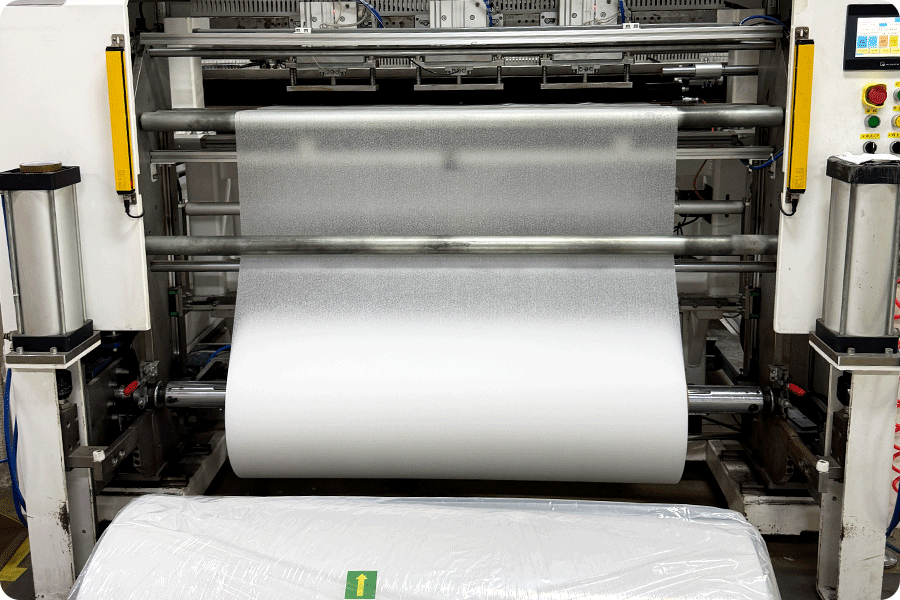
In practical solar panel structures, the choice of encapsulation materials is usually matched to the cell type and overall module design. For example, traditional single-glass P-type modules commonly use EVA encapsulation, while N-type cells and double-glass structures more frequently adopt POE or composite EPE solutions. Different encapsulation options vary in their resistance to damp heat, water vapour barrier performance, and long-term insulation stability. Their selection depends more on structural design and operating environment requirements than on any single material property.

Solar panel encapsulation materials diagram, illustrating the film materials used for module encapsulation

Power Conversion Unit

The power conversion unit is the core structure within solar panels responsible for converting incident light energy into electrical energy. Its performance directly determines the output level of the module under real operating conditions.

2.1 Solar Cells

As the basic units of photoelectric conversion, the size, cutting method, and arrangement of solar cells within a solar panel also have a significant impact on current distribution and real-world operating performance.

At the cell technology level, the solar cells used in mainstream photovoltaic panels today are mainly divided into P-type and N-type. With increasing demands for higher efficiency and long-term stability, N-type cells now account for a larger share of newly added capacity and mainstream solar panels, while P-type cells continue to be used in parallel in certain application scenarios.

At the module design level, however, the form of solar cells is no longer limited to full-size cells. Instead, it has gradually evolved towards segmented designs to optimise performance under real operating conditions:

  • Half-cut cells:
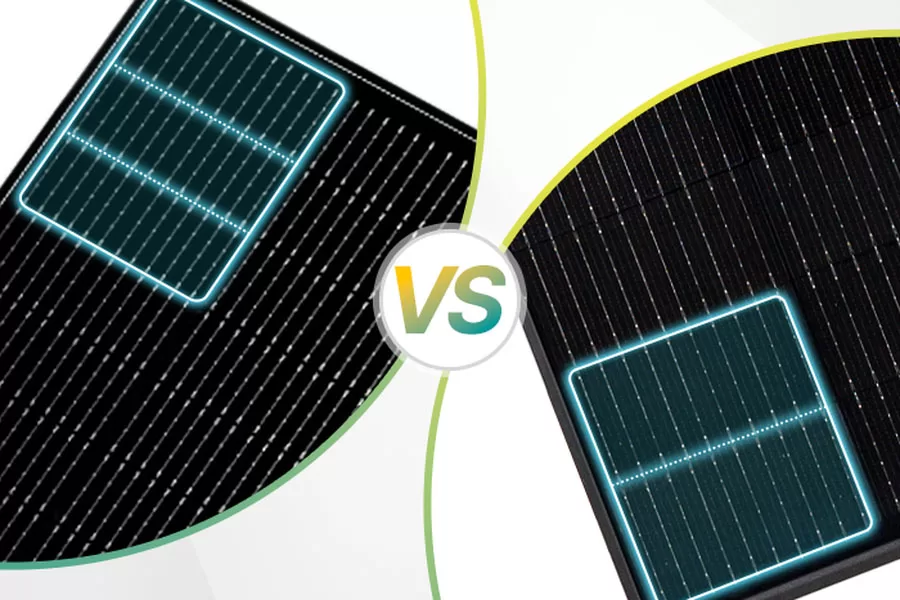
    Half-cut designs split a full solar cell into two parts, reducing the current intensity in each individual current path and thereby lowering internal resistive losses within solar panels. This configuration has become a common feature in mainstream photovoltaic panels and helps improve output stability under high irradiance and partial shading conditions.

  • 1/3-cut cells:
    Building on the half-cut concept, 1/3-cut designs further segment the cells, reducing current intensity per path even more and achieving a more uniform current distribution. Under complex operating conditions, this helps enhance output stability and has increasingly been adopted in high-power solar panels in recent years.

Comparison diagram of half-cut and 1/3-cut solar cell structures, illustrating how different cell segmentation methods affect current paths

From the perspective of structural evolution, the trend towards segmented solar cell designs is not solely about improving nominal efficiency. Instead, it focuses more on reducing operational losses, improving thermal management, and enhancing the consistency of actual power generation across solar panels in real-world conditions.

Mechanical Support and Mounting Structure

The mechanical support and mounting structure is the part of solar panels responsible for carrying the internal components, maintaining the overall form, and withstanding external mechanical loads. Although this structure does not directly participate in the power generation process, the soundness of its design is closely linked to the structural stability and reliability of the module during transport, installation, and long-term operation.

From a structural perspective, the mechanical support and mounting structure mainly consists of the backsheet or rear glass and the frame structure. Together, these elements are responsible for load distribution, shape retention, and adaptation to external environmental conditions.

3.1 Backsheet / Rear Glass: The Base Layer for Structural Support and Environmental Isolation

The backsheet or rear glass is located on the rear side of the module and serves as a key structural layer that supports the internal laminated stack and maintains overall module stability. Differences in this structure directly affect module rigidity, environmental adaptability, and suitable application scenarios.

  • Single-glass modules:
    In single-glass solar panels, the backsheet primarily provides structural support and environmental isolation. These modules are relatively lightweight, making them more suitable for projects with stricter roof load limits and higher requirements for installation flexibility. As a result, they are commonly used in standard commercial and industrial applications as well as certain rooftop installations.

  • Double-glass modules:
    In double-glass solar panels, the rear glass works together with the front glass to form a symmetrical structure, increasing overall rigidity and helping to improve long-term structural consistency. Due to the inherent weather resistance and stability of glass, double-glass designs offer advantages in high-humidity, highly corrosive environments or applications with higher demands for long-term reliability.

From a structural selection standpoint, backsheets place greater emphasis on lightweight design and installation adaptability, while rear glass focuses more on structural stability and environmental durability. There is no absolute superiority between the two; their suitability depends largely on project type, installation conditions, and long-term operational stability requirements.

3.2 Frame Structure: A Key Component for Overall Rigidity and Installation Compatibility

The frame structure is located around the perimeter of the module and serves as the critical interface between the internal laminated structure and the external mounting system. Its design directly influences overall module rigidity, edge protection capability, and installation compatibility.

A well-designed frame structure typically enables solar panels to:

  • Maintain overall shape stability under long-term external loads such as wind and snow;

  • Distribute mechanical stresses generated during installation and operation, preventing stress concentration from affecting the laminated structure at the module edges;

  • Integrate reliably with different types of mounting systems, improving installation consistency and long-term fixation stability.

From an engineering perspective, there is no single standard for an “ideal” frame structure. The key lies in achieving an appropriate balance between structural strength, overall weight, and mounting system compatibility. This balance directly determines the structural safety of solar panels over their operational lifetime.

Electrical Connection and Safety Structure

The electrical connection and safety structure is the functional unit within solar panels responsible for current collection, power output, and basic electrical protection. Although this structure does not affect the optical or mechanical performance of the module, it plays a critical role in defining the system’s risk boundaries in real-world applications.

4.1 Junction Box: A Key Node for Power Output and System Safety

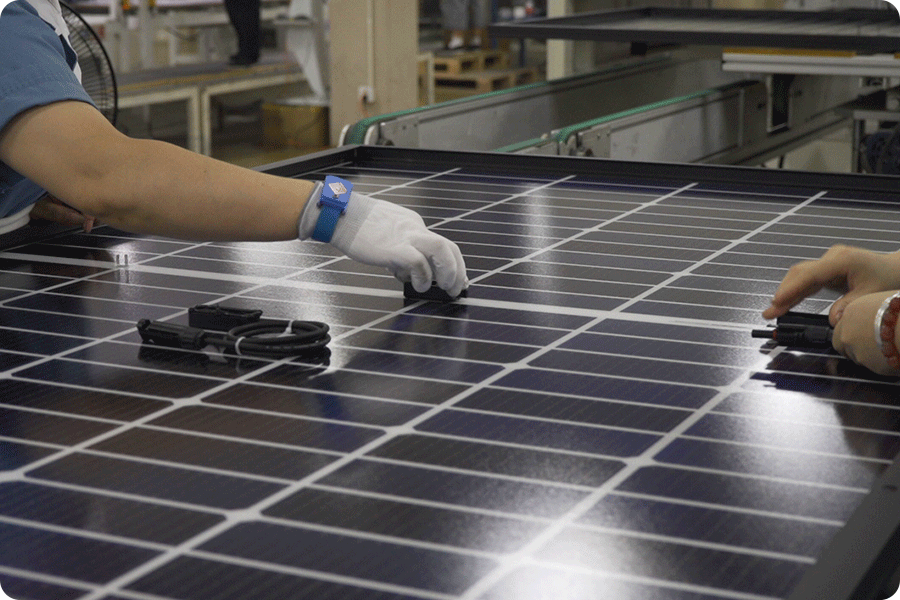
The junction box (J-box) is located on the rear side of the module and serves as the electrical interface between the internal circuitry of solar panels and the external system. Its core functions include:

  • Current collection and power output:
    Through its internal busbar and connection design, the junction box collects the current generated by the solar cells and delivers it in an orderly manner, forming a stable output interface for the module.

  • Basic electrical protection:
    Under abnormal operating conditions, it provides a degree of isolation and protection for the internal circuitry, reducing the spread of electrical risks to the system side.

  • Limiting the impact of local anomalies:
    By means of internal bypass structures, the junction box helps restrict the influence of abnormal currents on overall module operation in cases of shading or local faults.

Electrical connection structures are often overlooked, yet their failure can have more systemic consequences during actual operation. Understanding the structural role of the junction box within solar panels helps provide a more comprehensive assessment of overall system risk over long-term operation.

Solar panels are the result of multiple structural units working together, each fulfilling a distinct functional role. Design choices made at the component level are ultimately reflected in the module’s operational performance. In practical evaluations, power rating and efficiency are often the most immediate reference indicators, but these metrics alone do not fully represent how solar panels perform under different application conditions.

A clear understanding of basic solar panel structure supports more informed comparisons between different technical solutions and helps avoid decisions based solely on surface-level parameters. Only by combining structural considerations with specific application scenarios and system requirements can module selection discussions be grounded in real-world relevance.

Maysun Solar supplies a broad range of solar panels to the European market, covering mainstream technologies such as IBC technologyTOPCon technologyand HJT technology. Its solutions are designed for commercial and industrial rooftops, utility-scale projects, and varied system configurations, with a focus on structural compatibility, operational stability, and reliable real-world performance to support engineering-led decision-making.

Recommend reading

March European Solar Industry News

March European Solar Industry News

This article outlines recent developments in the European solar market, including the EU cross-border solar auction scheme, structural shifts in Germany, updated GSE regulation in Italy, and the recent recovery in solar panel prices.

Read More »

1 Comment

  1. Duranka

    The information was useful, thank you very much

Comments are closed