
When Are More Expensive N-Type Solar Panels Worth Choosing?

When Are More Expensive N-Type Solar Panels Worth Choosing?

N-type solar panels are becoming the market standard, but that does not mean every project should automatically choose them. The real question is whether the higher cost of N-type solar panels can deliver more stable returns over the life of the project.

For a deeper look at the differences between N-type and P-type cells, see the article N-type vs P-type Solar Cells: Which Is Better and Why?

Table of Contents

Why N-type Solar Panels Are Becoming the Market Mainstream

N-type solar panels are becoming mainstream not simply because of stronger specifications, but because their long-term return profile is better aligned with current project needs.

Solar panel technology is shifting from P-type to N-type. More and more P-type production lines have been upgraded, and most new manufacturing capacity is now focused on N-type solar panels.

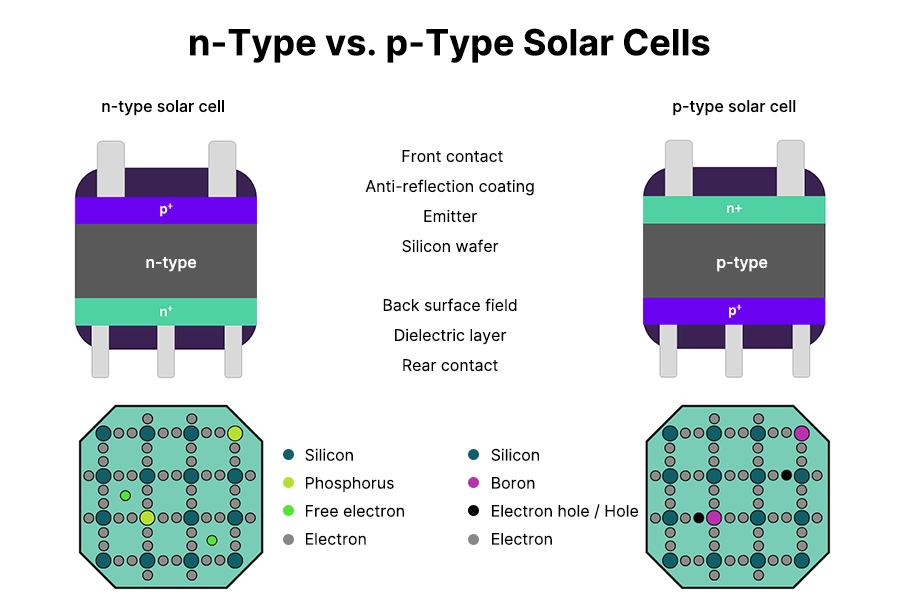
Comparison diagram of N-type and P-type solar cells, showing doping principles, carrier differences and cell layer structure.

The criteria used in project evaluation are also changing. Price and efficiency are no longer the only benchmarks. Output stability, degradation control and high-temperature performance now matter more.

What determines the value of a solar panel is not the specification itself, but whether that performance can be converted into real project returns.

Are N-type Solar Panels Worth the Extra Cost?

Whether N-type solar panels are worth the premium depends on whether the additional return over the project lifetime can cover the higher upfront cost.

From a procurement perspective, N-type solar panels usually cost more than P-type solar panels. But from a project perspective, purchase price alone does not determine overall economics. The real issue is whether differences in energy yield, degradation and temperature performance can translate into measurable returns during operation.

There are usually 3 main points to assess:

  • Whether higher power generation can create usable additional revenue
  • Whether the degradation gap has a long enough project period to become visible
  • Whether temperature will continue to affect system output over time

The premium for N-type solar panels does not suit every project.

Where additional generation is hard to monetise, the project period is too short, or temperature is not a major variable, the extra cost is often difficult to recover. In projects with longer operating periods, more stable revenue structures and greater sensitivity to system output, the economics of N-type solar panels are more likely to hold up.

The key to judging whether N-type solar panels are worth choosing is whether the performance gap can be converted into measurable project returns.

Which Projects Are Better Suited to N-type Solar Panels

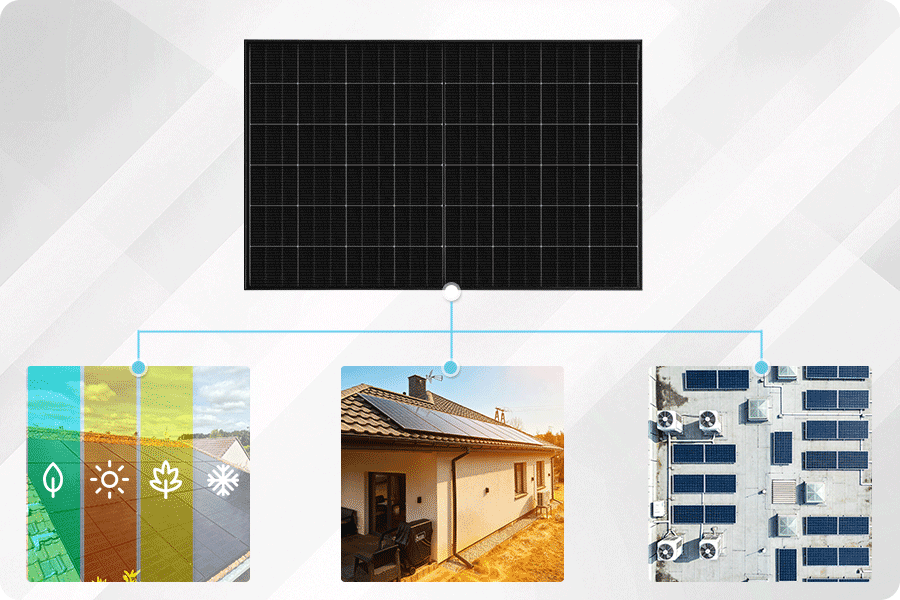
N-type solar panels do not offer the same economic value in every project. Projects with longer operating periods, higher temperature loads and tighter roof constraints are usually in a better position to recover the premium.

N-type solar panels perform better in projects with longer operating periods, higher temperature loads and limited roof space.

1. Projects with Longer Operating Periods

The key factor in long-life projects is whole-lifecycle return.

Differences in power generation and degradation are often limited in the early years. It is only over 15, 20 or more years that they are more likely to build into cumulative gains. The longer the project duration, the more weight long-term output stability carries in the investment decision.

2. Projects Under Higher Temperature Stress

Projects exposed to higher heat loads need to pay closer attention to the temperature performance of solar panels.

The power temperature coefficient of common P-type solar panels is often around -0.35%/°C, while the typical range for N-type solar panels is around -0.32%/°C to -0.24%/°C. In operating conditions with sustained heat and clear roof-level heat build-up, this difference continues to affect system output. The higher the temperature load, the more likely this performance gap is to translate into financial return.

3. Projects with Limited Roof Space

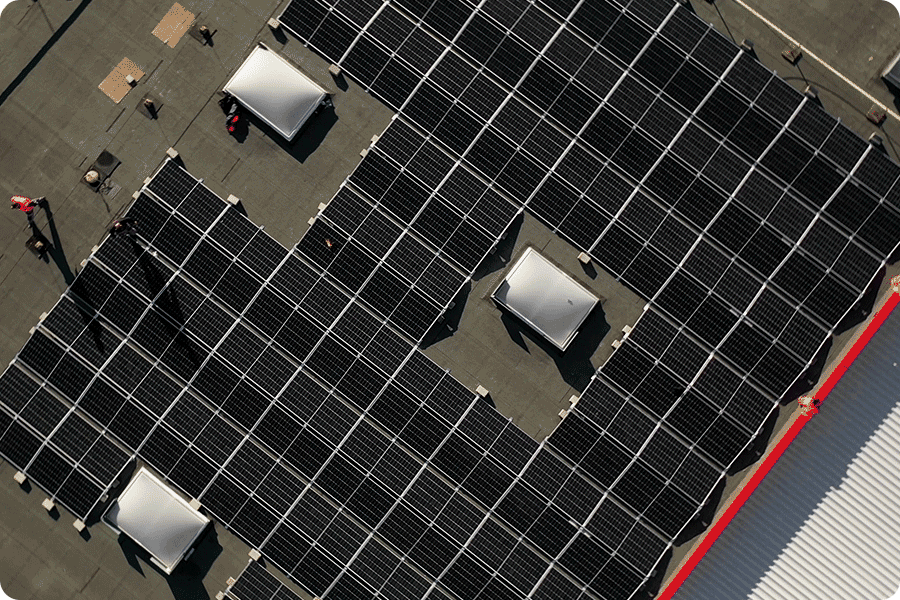
For roof-constrained projects, the starting point is system output per unit area.

When layout flexibility is restricted, equipment avoidance is more complex, or usable roof space is fragmented, system design options narrow significantly. In these cases, differences in solar panel performance are more likely to affect final returns. The tighter the roof space, the more the premium for N-type solar panels needs to be assessed in terms of yield per square metre.

The Key Conditions for Judging Whether N-type Solar Panels Are Worth It

The value of N-type solar panels mainly depends on 3 factors: project duration, temperature load and roof constraints. The more of these conditions a project meets, the more worthwhile it is to prioritise N-type solar panels in the evaluation process.

Assessment Criteria When N-type Solar Panels Are More Suitable When More Caution Is Needed
Project Duration and Revenue Structure Long operating period, with returns dependent on long-term accumulation Shorter project duration, with greater focus on upfront investment
Operating Environment and Temperature Conditions Sustained high temperatures, with clear roof-level heat build-up Limited temperature impact, with relatively stable operating conditions
Roof Conditions and System Design Limited roof area, complex layout, and greater importance of yield per unit area Relatively ample roof area, with greater flexibility in system design

When long project duration, high temperature stress and limited roof space are present at the same time, N-type solar panels are usually more deserving of priority assessment. When these conditions do not apply, the additional cost of N-type solar panels often lacks a clear basis for payback.

The key to solar panel selection is not which option looks better on paper, but which one delivers stronger economics in the specific project.

Frequently Asked Questions About Choosing N-type Solar Panels

1. When are N-type solar panels more worth choosing?

N-type solar panels are usually more worth prioritising when the project has a longer operating life, higher temperature load and more limited roof space. In these cases, differences in output stability, degradation control and temperature performance are more likely to translate into real returns.

2. Are N-type solar panels always better?

Not necessarily. N-type solar panels usually perform better under high temperatures and offer stronger long-term degradation control, but they are not the more cost-effective choice in every project.

3. N-type solar panels are more expensive. Is the extra cost worth it?

That depends on the project conditions. Only when the project has a longer duration, or when the system relies more heavily on stable long-term output, is the additional cost more likely to show clear value.

4. Why does temperature performance affect solar panel selection?

Because the higher the temperature, the more noticeable the output loss usually becomes. For projects exposed to prolonged summer heat and clear roof-level heat build-up, more stable temperature performance is more likely to affect actual energy yield.

5. Which projects do not need to prioritise N-type solar panels?

If the project duration is shorter, the budget is more sensitive, the temperature impact is limited, or the available roof area is relatively ample, N-type solar panels usually do not need to be prioritised. In these cases, the performance gap may not clearly translate into measurable returns.

As a solar panel manufacturerMaysun Solar has been providing a stable supply of panels for the European wholesale and distribution market, covering mainstream N-type battery technologies such as IBC technologyTOPCon technology, and HJT technology. We assist EPCs and project buyers in achieving higher power output per unit area and system efficiency, ensuring compatibility with project conditions.

Recommend reading

2 Comments

  1. James Bennett

    Seen this come up quite a lot. N-type does not automatically win just because the spec sheet looks better. If the roof is constrained and the owner is thinking long term, the premium can hold up. If the budget is tight and the site is straightforward, the extra cost is not always easy to recover.

  2. Stefan Müller

    We priced both options on a few roofs and the gap was not really about the module itself, but whether the extra yield could actually be used. Where roof space was tight and the system was planned for long-term operation, N-type was easier to justify. Where space was less of an issue, PERC often still made more sense on cost.

Comments are closed