
Why “the best solar panel” is a false premise?

Why “the best solar panel” is a false premise: a return-based view of TOPCon, HJT and IBC

From a return-oriented perspective, this article discusses whether there is such a thing as the best solar panel, and where the practical boundaries lie for different photovoltaic technologies in real-world operation.

By analysing the limitations of technical parameters, differences in operating behaviour, and constraints of time and space, it shows that there is no universal answer when it comes to solar panel options. Instead, more rational decisions can only be made under specific conditions, where solar project returns are evaluated in context rather than in abstraction.

Table of Contents

Why there is no “best solar panel” for every scenario

The returns of a photovoltaic system are always determined by specific project conditions. For this reason, there is no single best solar panel that applies to all scenarios.

A common misconception in the industry is to equate technological progress and improved specifications with a “better” module, assuming that higher efficiency or greater nominal power automatically makes a panel more attractive. This line of reasoning only holds true when all other conditions are identical.

In real-world projects, roof characteristics, operating environments and the expected service life all have a direct impact on energy yield and overall solar project returns.

What truly matters is not which panel is objectively the best, but which of the available solar panel options represents the most rational choice under a given set of conditions.

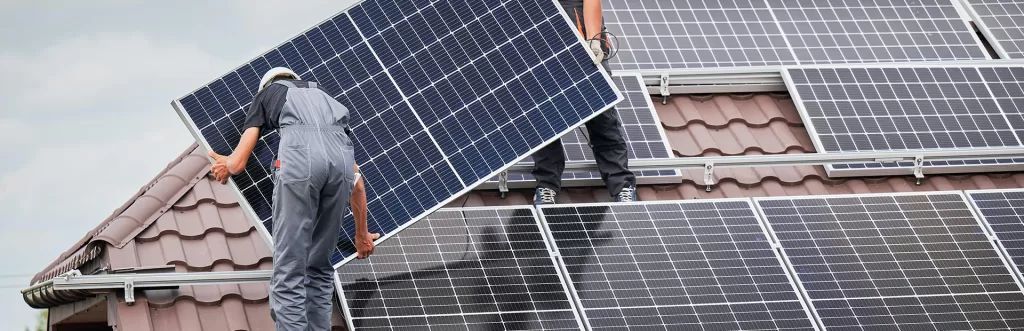
A Polish residential rooftop equipped with sixteen 515 W full-black HJT solar panels.

Why efficiency or power alone cannot determine whether a solar panel is more cost-effective

Efficiency and nominal power are the easiest parameters to compare when assessing solar panels. However, using them as the primary criteria to judge whether a module is “more cost-effective” is, in itself, a logical mistake.

Efficiency describes a panel’s ability to convert sunlight into electricity under standard test conditions, while power refers to its rated output under those same conditions. In real projects, however, solar panels almost never operate under standard test conditions.

Temperature, mounting methods, system configuration and operating lifetime continuously alter how a module performs in practice. Datasheets describe an ideal starting point, not the actual operating process.

Today’s market offers solar panels with nominal power ratings ranging from around 410 W to 800 W, yet these figures alone cannot answer which solar panel option delivers better value in a specific project or leads to higher solar project returns.

PV Comparison Table

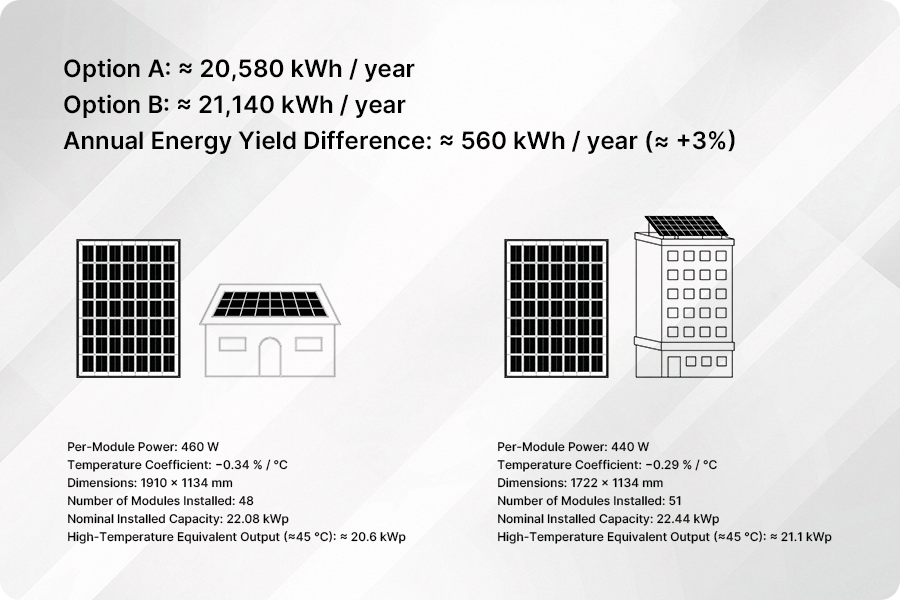
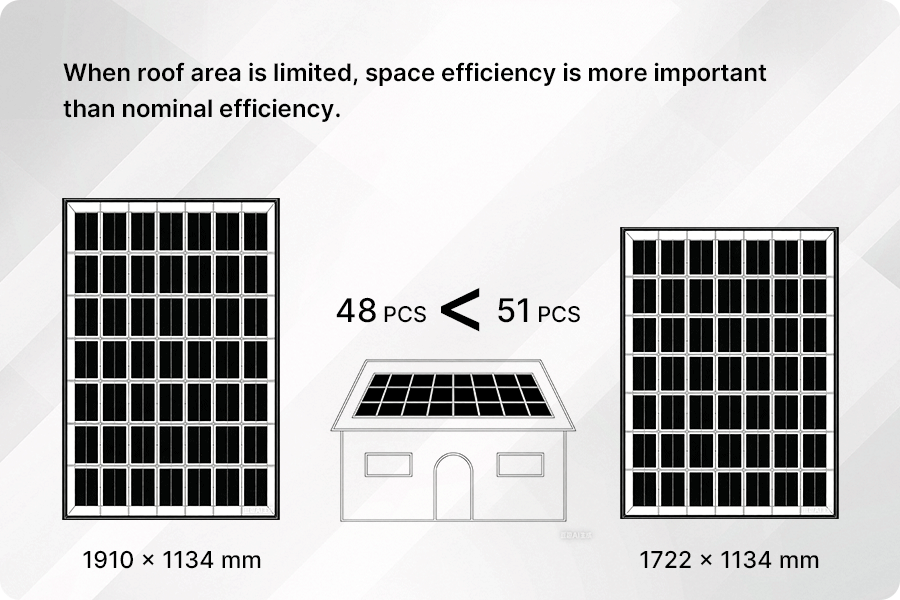
Using an approximately 120 m² German residential or small commercial rooftop as an example, this comparison assumes identical system layout, orientation, inverter and operating conditions, with an effective utilisation factor of 0.88. The only differences lie in the module parameters.

Module option A Module option B
Rated power per module 460 W 440 W
Temperature coefficient -0.34 %/°C -0.29 %/°C
Module dimensions 1910 × 1134 mm 1722 × 1134 mm
Number of installable modules 48 modules 51 modules
Nominal installed capacity 22.08 kWp 22.44 kWp
High-temperature equivalent output (≈ 45 °C) ≈ 20.6 kWp ≈ 21.1 kWp
Annual equivalent energy yield (≈ 1,000 kWh/kWp) ≈ 20,580 kWh ≈ 21,140 kWh

Note: This comparison illustrates that once operating conditions are taken into account, a higher nominal power rating on the datasheet does not automatically translate into higher usable energy output. In this scenario, the difference in annual energy yield between the two options is around 560 kWh per year, or approximately 3% of total production.

Comparison of two solar panel options on an approximately 120 m² German residential or small commercial rooftop, showing how differences in module size and temperature coefficient result in an annual energy yield gap of around 560 kWh per year (≈3%), despite similar nominal power.

What users really need to focus on is how much usable electricity these parameters can be converted into under real operating conditions, and whether that conversion is predictable over time.

Efficiency and power are therefore not irrelevant, but they should not be treated as decisive indicators when assessing whether a solar panel is truly more cost-effective.

How do the technical differences between TOPCon, HJT and IBC affect long-term energy generation?

Different photovoltaic technologies do not determine project returns directly at the parameter level. Instead, they continuously influence how modules behave under real operating conditions through structural differences.

Over long operating periods, module encapsulation and power-generation structures also shape performance behaviour. Structural variations such as double-glass modules, bifacial modules and bifacial double-glass modules are reflected primarily in operational stability and in how rear-side conditions continue to contribute over multi-year cycles.

  • Double-glass modules: structural stability influences performance consistency under temperature fluctuations and environmental stress.

  • Bifacial modules: the availability of rear-side irradiance determines how sustainable additional energy yield is across different scenarios.

  • Bifacial double-glass modules: with structural stability and rear-side generation combined, performance becomes more dependent on long-term environmental conditions.

As operating time extends, these differences are gradually reflected in energy output and in the overall return structure.

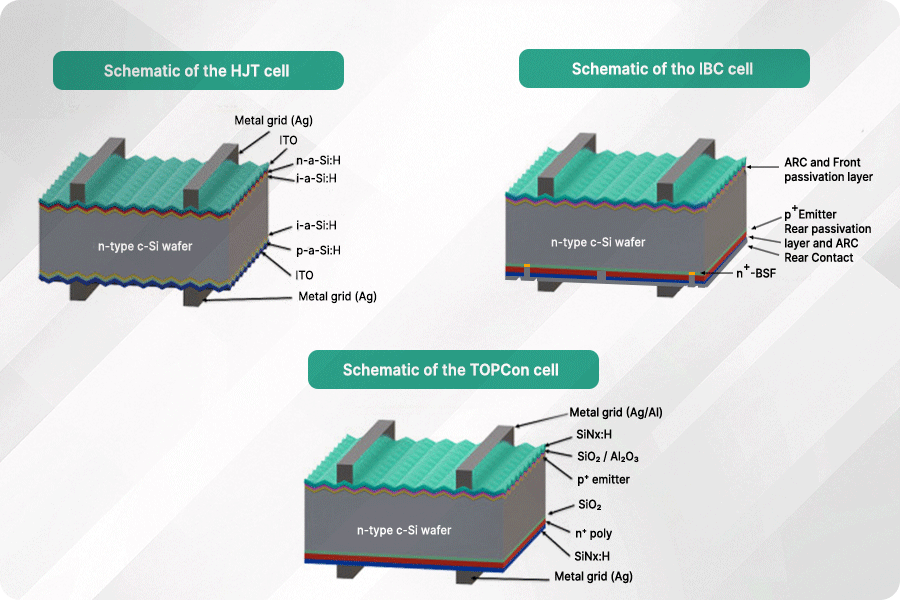
TOPCon technology

TOPCon is based on a tunnel oxide passivated contact structure, optimising the conventional crystalline silicon route. Its core advantage lies in improving the stability of charge-carrier collection, allowing modules to maintain more predictable output under high temperatures or low-light conditions.

In long-term operation, the stability of TOPCon modules is more easily amplified at system level. Standardised string design and consistent operating behaviour help control system losses and reduce BOS costs, with return differences arising mainly from overall efficiency management over many years of operation.

When project scale is large, operating environments are relatively hot, or irradiance conditions fluctuate significantly, these structural characteristics are more likely to translate into stable, quantifiable long-term solar project returns.

HJT technology

HJT shortens current paths through its heterojunction structure and reduces sensitivity to temperature changes. Bifacial double-glass HJT modules can continuously utilise rear-side reflected and diffuse ambient light.

The value of this structure is realised through the accumulation of additional energy over long-term operation.

When stable rear-side irradiance conditions are present, bifacial gain increases its impact over time. As a result, return differences are more evident in total energy production after many years of operation, rather than in initial parameter performance.

IBC technology

IBC adopts a back-contact design that eliminates front-side grid shading, structurally enhancing effective light utilisation per unit area and reducing energy losses caused by local shading or reflection.

In long-term operation, the core return driver of IBC modules is space utilisation efficiency.

When installation area becomes a limiting factor, returns depend on how much usable energy each square metre can deliver over the entire lifecycle. Accordingly, the structural advantages of IBC are most apparent in applications where area is constrained and shading conditions are complex.

Why technical differences may be marginal in the short term, yet become amplified over the long term

In the early stages of system commissioning, the energy yield of different photovoltaic technology routes is often very similar.

However, solar project returns are not determined by initial data alone. Instead, they are shaped by continuous changes and environmental influences throughout long-term operation, ultimately reflected in generation stability and overall returns.

4.1 Why early performance data are often very close

In real operation, photovoltaic systems typically start out under relatively ideal conditions. Modules are cleaner, maintenance intervention is limited, and system configurations have not yet been adjusted in response to long-term operation. The effects of material ageing, electrical characteristics and environmental stress on performance have not yet become apparent.

At the same time, early performance data are constrained by limited observation periods, often covering only the first few months or the first one to two years after commissioning, making it difficult to identify meaningful differences.

As operating years accumulate, these continuously compounding effects gradually reshape the return structures of different technologies.

4.2 Which mechanisms accumulate over long-term operation

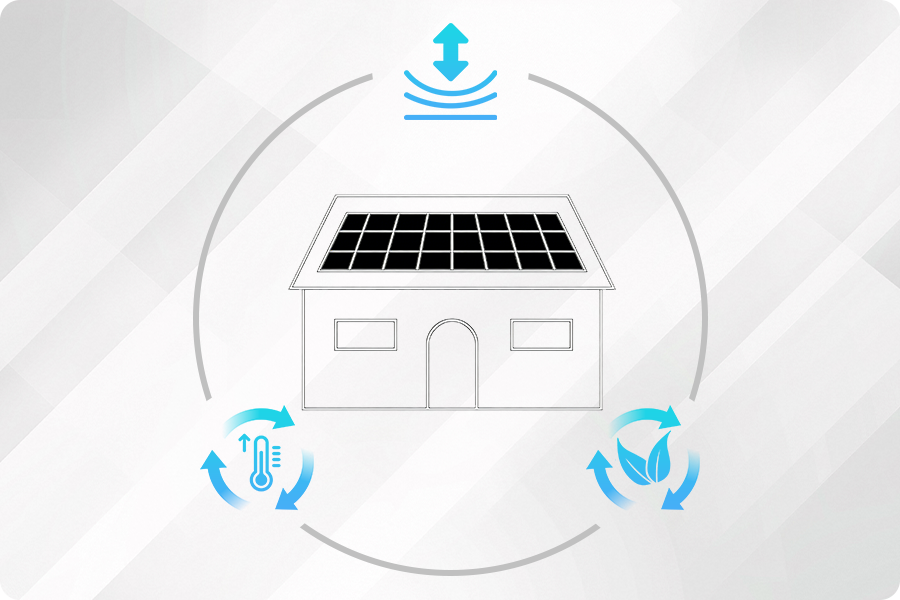
Temperature variation, load fluctuations and external environmental factors overlap cyclically, creating cumulative impacts on module and system performance.

Temperature cycling is one of the most common mechanisms. Repeated heating and cooling between day and night, and across seasons, subject modules to ongoing thermal expansion and contraction. Over long-term operation, this process gradually affects electrical interconnections, encapsulation structures and overall stability, ultimately influencing actual system output.

Environmental conditions also exert long-term influence on system performance. Variations in temperature and humidity, irradiance fluctuations, airborne pollutants or localised shading continuously alter the operating boundaries of modules.

It is precisely these ongoing, gradually accumulating processes that cause technical differences to become more evident in long-term operating results, rather than in short-term data comparisons.

4.3 Which differences only emerge after many years of operation

As operating periods extend, differences that were initially compressed begin to manifest in the magnitude of output fluctuations and in predictability. Some systems are able to maintain relatively stable generation profiles, while others gradually exhibit more pronounced variability.

At the same time, long-term operation amplifies the relationship between maintenance requirements and performance outcomes, allowing stability differences to translate more clearly into actual energy generation results. It is along this time dimension that the return curves of different photovoltaic technologies begin to diverge, with long-term operating performance becoming the primary basis for distinguishing differences in solar project returns.

When roof area is limited, why space efficiency matters more than nominal efficiency

In scenarios where roof area is constrained, the key factor determining returns is not the module parameters themselves, but how much actual output the system can ultimately deliver per unit area through space efficiency.

Across European residential rooftops and small to mid-sized commercial projects, usable roof area is often fixed before any other conditions are considered. Roof geometry, fire safety setbacks and maintenance access corridors impose clear upper limits on system layout.

For this reason, certain structural differences become magnified when space is limited. They may not appear as clear advantages on a datasheet, yet can concentrate long-term output per square metre by improving effective light utilisation and reducing losses from shading or reflection.

Area constraints do not change the fundamental differences between technologies, but they do change how those differences are amplified.

At this point, the focus of evaluation shifts away from absolute parameter values towards identifying which structural design is more likely to convert potential generation capacity into stable, long-term usable energy within a confined area.

Under space-limited conditions, module selection decisions therefore tend to revolve around trade-offs between structural attributes.

  • Double-glass modules are better suited to environments with large temperature differentials, higher humidity or clearly defined requirements for long-term structural stability. In projects with mild operating conditions and shorter return horizons, they are not necessarily essential.

  • Bifacial modules only deliver meaningful additional returns when rear-side irradiance conditions are real and sustainable; only then can the extra energy be reliably included in return calculations.

  • Bifacial double-glass modules combine structural stability with rear-side generation, with their value being most evident in projects where long-term environmental conditions can be predicted with a high degree of certainty.

  • When projects prioritise upfront investment control or overall cost-effectiveness, the decision to adopt more complex structural configurations must likewise be weighed against the intended return objectives.

These considerations do not point to a single mandatory choice. Instead, they help clarify which structural characteristics are more likely to be converted into long-term usable energy within a limited installation area.

How to determine which photovoltaic technology is more suitable based on return objectives

The selection of photovoltaic technology should begin with roof constraints and return objectives.

In any specific project, what truly determines the outcome is how different technologies behave under the given conditions.

Non-negotiable constraints are usually defined at an early stage of the project. These include available roof area, structural characteristics, orientation and tilt, as well as grid-connection conditions, fire-safety requirements and maintenance accessibility.

Return objectives further shape the focus of evaluation. Projects centred on self-consumption tend to prioritise the match between generation and load profiles, while investment-driven systems place greater emphasis on long-term stability and the predictability of solar project returns.

Only once both constraints and return objectives are clearly defined do technical differences become relevant to decision-making.

Some differences only emerge at scale or depend on overall system configuration, while others are more apparent in confined spaces or complex environments.

Likewise, certain advantages are visible in early-stage performance, whereas others only become evident through long-term operation.

A rational selection process therefore involves assessing, under specific conditions, which operational characteristics are most likely to align positively with the project’s objectives.

There is no single “best solar panel” that applies to all photovoltaic applications.

Maysun Solar provides photovoltaic module solutions for the European market, with a strong focus on structural stability and controllable risk under long-term operating conditions, in order to improve the predictability of long-term performance. Its product portfolio covers mainstream technology routes such as IBC technologyTOPCon technologyand HJT technology, and offers a range of structural configurations, including double-glass, bifacial and bifacial double-glass modules.

Recommend reading

February News in the Photovoltaic Industry

February News in the Photovoltaic Industry

February overview of Europe’s photovoltaic market: module price trends, a rebound in the German PPA market, progress in Italian agrivoltaics and regulatory shifts in France, highlighting key industry signals.
Read More »